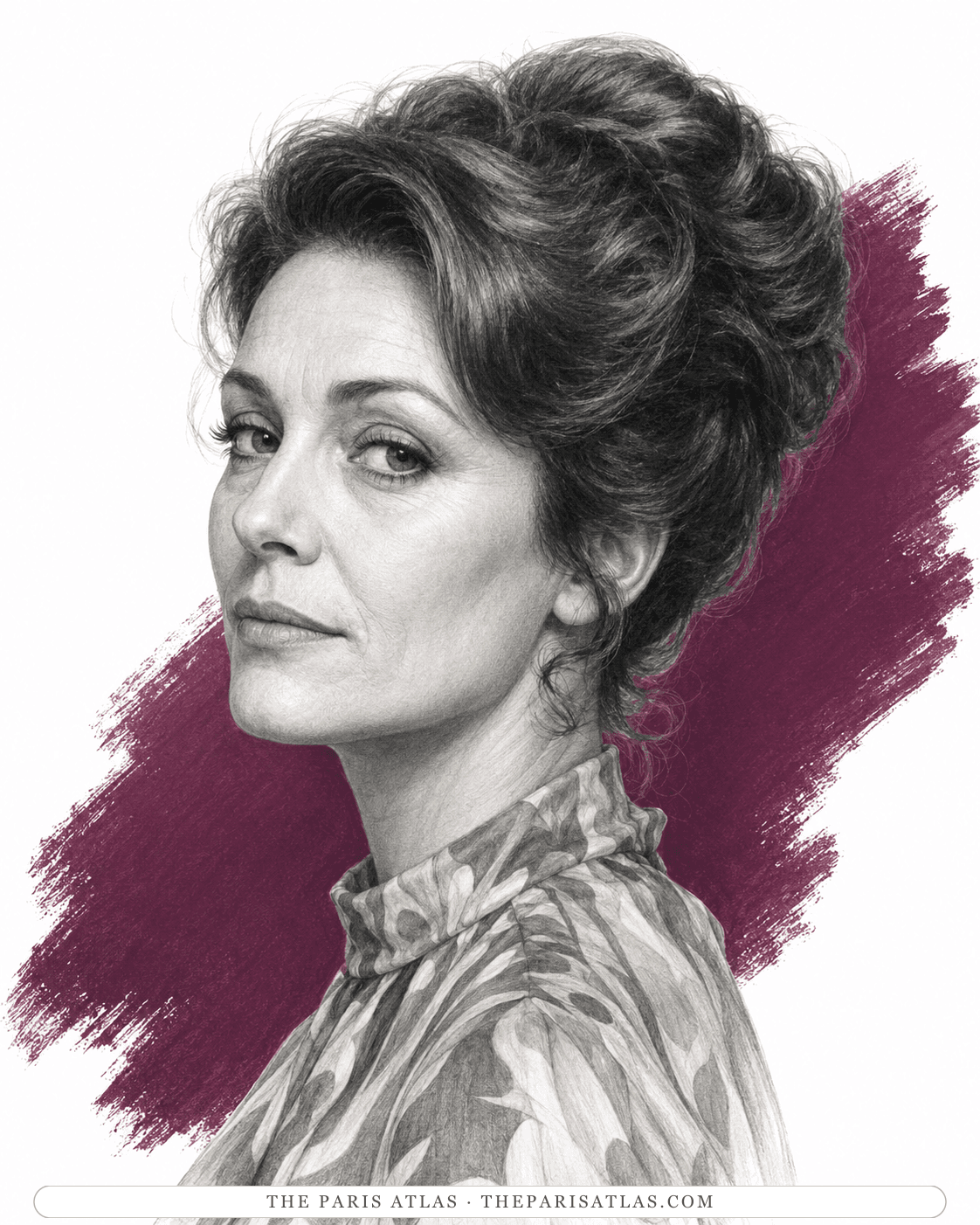
Barbara
A white actress Leo met as a student, and his closest ally for two decades — a partnership neither the profession nor the country made easy.
To act, and to keep Leo. She says that if she had taken the advice she was given in Kentucky she would be one more drying-out Southern belle looking for a rich husband, and that she and Leo could not have been friends and she could not be sitting at this table.
The book

At a glance
- An actress; Leo's closest friend and sometime lover for about twenty years
- Barbara King
- Kentucky, a landowning family; she left as soon as she could
- Still in her teens
- Mother and father, a brother called Ken, and Ken's wife Elena
- Artists' model at the Art Students League; waitress
- The Actors' Means Workshop, alongside Leo
- To be a writer
- A very small part on Broadway that got noticed, followed by Hollywood offers she turned down
- Never married; no children
Who they are in the book
Spoiler-freeBarbara King is an invented character in James Baldwin's fourth novel, and the person the narrator, Leo Proudhammer, has been closest to for about twenty years. She is white, from a landowning family in Kentucky, and she left as early as she could.
Leo meets her in Paradise Alley, a falling-down Village building where the tenants climbed in and out of each other's windows. She is still in her teens: boyish figure, long legs, almost always in trousers, which caused her trouble in some quarters. Twice she is transformed in front of him, once by putting her hair up and wearing a dress, once by the summer sun, and both times he finds her intimidating rather than simply pretty. They both model naked at the Art Students League for money. She becomes pregnant by a hometown boyfriend who has joined the Marines and comes to tell her what he thinks of girls who leave respectable homes, and Leo helps raise the money for the abortion by waiting tables and hustling. She is very ill afterwards, and after that the two of them are inseparable.
She wanted to write before she wanted to act. At parties in Kentucky, she says, she used to pretend she was Jane Austen. What she brought to the stage was a trick borrowed from the actress Margaret Sullavan: dropping her voice until a room has to lean in to hear her. Leo says nobody ever recognised where it came from and that it stopped being a trick and became a fact about her.
Her career moves faster than his, exactly as Lola San-Marquand predicted. She spends years trapped in teenage parts she hates, gets a small role on Broadway that is noticed, turns down the Hollywood offers that follow, and by the present day of the novel she is a star, in mink, sharing the stage with Leo on the night he collapses.
They never marry and have no children. She calls herself his white, incestuous sister and asks whether that is not part of the American dream. Leo's account of the arrangement is that she organised the whole of the rest of her life so that his place in it could never be threatened, and that it cost her more refusals than she would ever tell him about.
How Barbara Is Portrayed
- The girl from KentuckyLeo's first description: she looked like what she was, a refugee schoolgirl from Kentucky, still in her teens, boyish, with small breasts and wonderful long legs. She wore trousers nearly all the time. When she put her hair up, put on lipstick and wore a dress, she became extraordinarily pretty and looked like the proud daughter of proud Kentucky landowners, which frightened him a little, because it was ground he could not meet her on.
- The voiceShe drops it until it sounds as though she has laryngitis and the room has to work to hear her. It is lifted from Margaret Sullavan, an actress she admired. Leo says she mastered it so completely that it stopped being borrowed, and that it later made her fortune.
- Paradise AlleyNothing locked, nothing belonged to anyone, and everyone climbed through everyone's window. She modelled at the Art Students League on 57th Street and lasted at it much longer than Leo did. She was rounder-faced then, with high colour and long brown curly hair worn in bangs and pigtails.
- The MarineShe became pregnant by a childhood sweetheart from home who had joined the Marines and came to visit chiefly in order to tell her what he thought of girls who ran away from respectable homes and lost their morals. She had an abortion, Leo helped raise the money, and she was badly ill afterwards.
- Answering the workshopTold by Saul San-Marquand that she has not given the class enough to criticise, she argues back that she has never lived Lady Macbeth's life either, and that no actress has. He replies that she is far from being able to play anything at all, that the workshop cannot tolerate showing off, and that she may step down.
- Walking into townThat summer she and Leo walk the road into the New Jersey town for the first time without Jerry, who had been the town's proof that nothing was going on. Three young men say what they say as the two of them pass. Barbara touches the flower in her hair, and Leo knows she is wishing it were a rose so she could rake the thorns across their faces.
- JerryShe was with Jerry before she was with Leo, and she ends it herself. Afterwards she walks up and down Leo's room in a big bathrobe, trying not to cry, and says she had planned to do it differently or later or not at all, that she hopes Jerry comes back at least to say goodbye, and that she loves him too.
- Twenty years onTime has thinned her face and dulled its colour, and the theatre has put her hair through so many changes that the shade her present part requires is about as close to the original as she will get. No silver locks yet, but silver strands. She arrives at the hospital splendidly dressed in something dark with a heavy dull brooch at the neck, her hair piled as she wears it in the play.
- Her family in the roomMother, father, her brother Ken, his wife Elena and a family friend called Tyrone Bennett come to Leo's apartment for brunch. Her mother tells Leo it makes her feel good that a boy like him could make so much of himself, and that she could cry. Barbara sits among them dry and cold, looking very young, and lets Christopher run the argument.
- The window ledgeLeo's memory, given in passing. After what they both thought was their final fight, he walked out, watched the lift indicator climb, turned back at six, let himself in with his own key, and found her sitting on the bedroom window ledge eight storeys above Sutton Place, swinging her feet like a child and about to drop. He pulled her back by the hair. He says he has since used the moment in his work.
If you like Tell Me How Long the Train's Been Gone


If you like James Baldwin
Explore authors with a similar voice, perspective, and influence.

Louis-Ferdinand Céline
The doctor of the Paris slums who wrote the century's blackest, funniest novel — and changed the sound of French prose.
View author
Henry Miller
The Brooklyn dropout who arrived in Paris broke at thirty-eight and wrote the exuberant, banned books that ended American censorship.
View author
Ernest Hemingway
Author of The Sun Also Rises and A Moveable Feast; his pared-down style, developed in 1920s Paris, became the most imitated in American prose.
View author