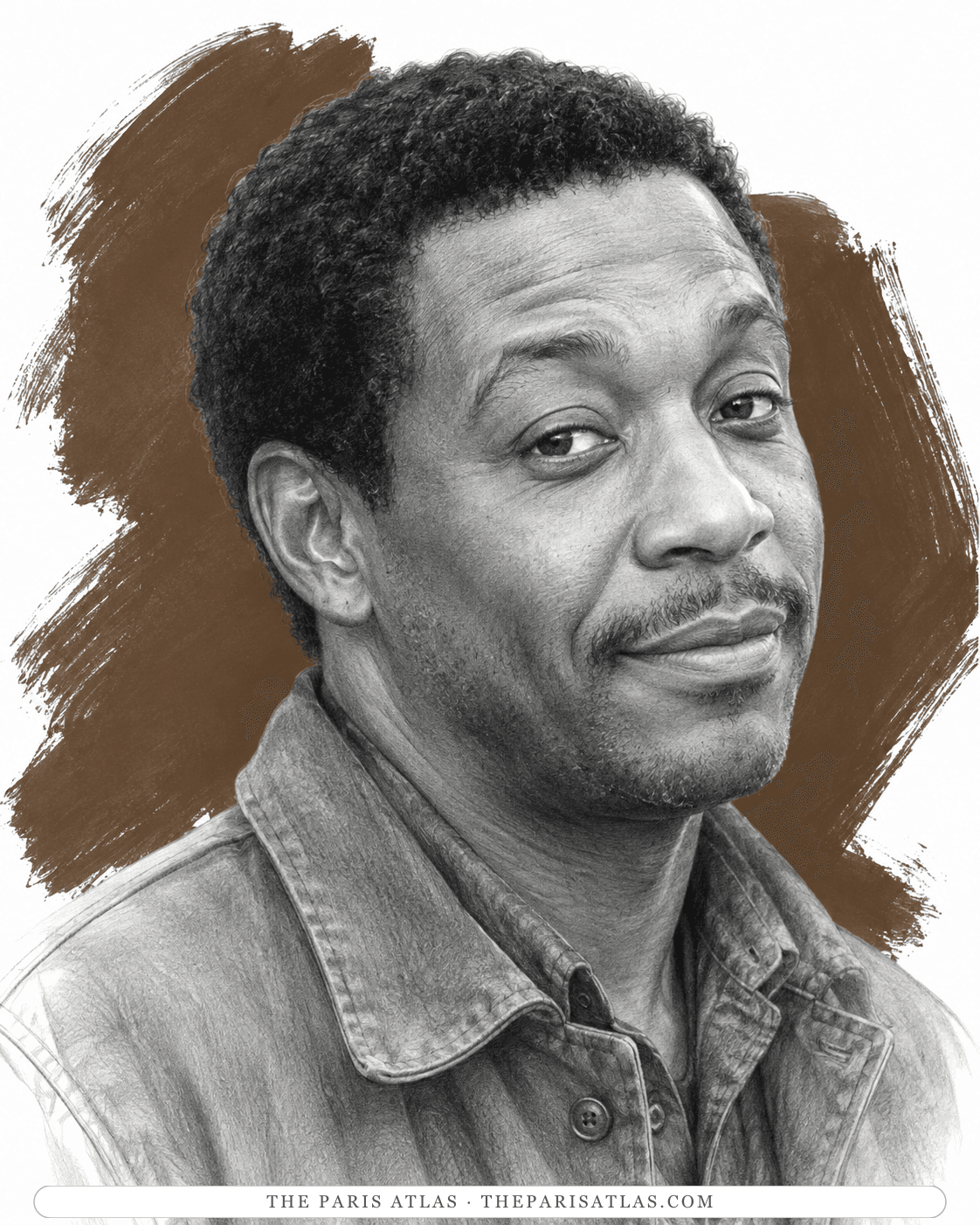
Jerry
A friend from Leo's years in the theatre before the work came.
Barbara. He tells Leo she is quite a girl, blushes, and says he does not think he is good enough for her.
The book

At a glance
- A friend of Leo and Barbara from the years before the theatre paid
- Never given
- Italian-American; speaks Italian
- Artists' model in town, and mowing lawns; not a workshop student
- Paradise Alley, then a shack on Bull Dog Road shared with Leo and Barbara
- Barbara, until that summer
Who they are in the book
Spoiler-freeJerry is an invented supporting character in James Baldwin's fourth novel, and one of the three young people at the centre of its long summer section. The novel never gives him a surname. He is a big, cheerful, open-hearted Italian-American boy, and the narrator, Leo Proudhammer, calls him a very gentle creature.
He lived in Paradise Alley, the collapsing Village building where Leo and Barbara King also had rooms, and he was Barbara's boyfriend before Leo was. He was not a student at the Actors' Means Workshop and had no ambitions in the theatre. He came out to New Jersey for the summer because Leo and Barbara asked him to and because he had nothing else to do, worked as an artists' model in the town, and mowed lawns with Leo for the little money there was.
The three of them shared a two-storey shack on Bull Dog Road for about twelve dollars a month, Jerry and Barbara downstairs and Leo upstairs. Jerry was the only one who could cook. That summer Barbara ends things with him, and he drives away.
How Jerry Is Portrayed
- How Leo describes himA big, cheerful, open-hearted Italian boy and a very gentle creature. Not at the workshop, no interest in acting, working as an artists' model in town and helping the other two out because they asked him to.
- Painting the signsStanding in black trunks in front of the toolshed, sweat glistening on his brown back, throwing his hair out of his eyes, being fast and careless with the word Bernard while Barbara knelt beside him being meticulous with the small a in play. Between them they got nearly as much paint on themselves as on the signs.
- The kitchenSmall and dark, with battered pots and heavy stone mugs, strung with his Italian spices and smelling of gorgonzola. The three of them loved it, which was fortunate, because he was the only one of them who really knew how to cook. He and Leo also rigged a shower of sorts in the yard, which amounted to a way of tipping pails of water over yourself.
- Walking through town with LeoThe town assumed that two young men walking together could only be one thing, so the two of them sometimes walked with their arms around each other. Leo's account is that Jerry's size confused people and his own boldness confused them further, and that between them they were too strange to be easy to attack.
- Speaking ItalianAt the pizza place he and Giuliano disappear into Italian and into laughter that leaves the rest of the table out. Giuliano's father Salvatore treats him like a son, and Leo says that watching the two of them was the only time he saw the pain and the love in Jerry, and understood why Barbara really cared about him.
- The end of itBarbara tells him during that summer, and tells Leo afterwards that she hurt him very much, that she had meant to do it differently or later or not at all, and that she hopes he comes back at least to say goodbye. Jerry does not appear at the appointed hour. He has driven off in the workshop's car, which Leo, who is responsible for it, notices is technically stolen.
If you like Tell Me How Long the Train's Been Gone


If you like James Baldwin
Explore authors with a similar voice, perspective, and influence.

Louis-Ferdinand Céline
The doctor of the Paris slums who wrote the century's blackest, funniest novel — and changed the sound of French prose.
View author
Henry Miller
The Brooklyn dropout who arrived in Paris broke at thirty-eight and wrote the exuberant, banned books that ended American censorship.
View author
Ernest Hemingway
Author of The Sun Also Rises and A Moveable Feast; his pared-down style, developed in 1920s Paris, became the most imitated in American prose.
View author