The Abbé Faria
The Italian priest in the next cell, called mad by the governor, who educates Dantès and leaves him the treasure of Monte Cristo.
He wants to pass on what he knows before he dies, and he wants the treasure used for something better than a ransom.
The book
The Count of Monte Cristo
Alexandre Dumas
At a glance
- Number 27, the Château d'If, since 1811
- Italian
- The Spada treasure on the island of Monte Cristo
Who they are in the book
Spoiler-freeFaria is an Italian priest and scholar who has been in the Château d'If since 1811, and who the governor believes is mad because he keeps offering millions for his freedom. He has spent years digging a tunnel with tools made from a candlestick and a bed frame, and it comes out in the wrong cell: Dantès's.
He becomes the young man's teacher and, he says, his son's father. He also works out, question by question, who denounced Dantès and why. His secret is the treasure of the Spada family, hidden on the island of Monte Cristo, which he confides before the third attack of his illness kills him.
How The Abbé Faria Is Portrayed
- The mad prisonerIn Chapter 14 the inspector visits the prisoner the governor calls mad, who calmly offers six million francs for his liberty. The inspector writes him down as incurable.
- Number 27In Chapter 15 Dantès hears scraping in the wall, answers it, and the voice on the other side identifies itself only as number 27. The tunnel took the priest four years and came out in the wrong cell.
- What he looks likeIn Chapter 16 he is a man of small stature with hair blanched by suffering rather than age, a keen eye, and a grey beard, and might be sixty or sixty-five years old.
- The teacherIn Chapter 17 he shows Dantès his cell: a rope ladder, a pen made from a fish bone, ink he made himself, and a treatise on Italian unity written on strips of shirt. Then he begins the lessons.
- The treasureIn Chapter 18 he tells the story of Cardinal Spada's hidden fortune and calls Dantès his son, saying the young man is the child of his captivity.
- The third attackIn Chapter 19 the illness returns. He tells Dantès where the potion is, makes him promise to use the treasure, and dies in the night in his own cell.
He dies in Chapter 19, and his body is what gives Dantès the way out: the guards sew corpses into a sack and throw them from the cliff. Dantès changes places with the body. The treasure is exactly where Faria said, and Dantès later has masses said for him and keeps his memory as the source of everything the count knows.
If you like The Count of Monte Cristo


If you like Alexandre Dumas
Explore authors with a similar voice, perspective, and influence.
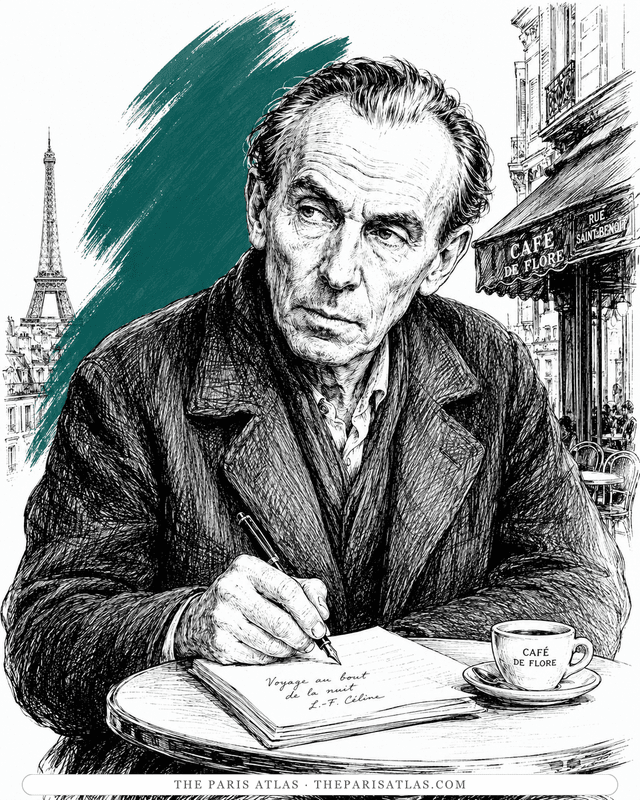
Louis-Ferdinand Céline
The doctor of the Paris slums who wrote the century's blackest, funniest novel — and changed the sound of French prose.
View author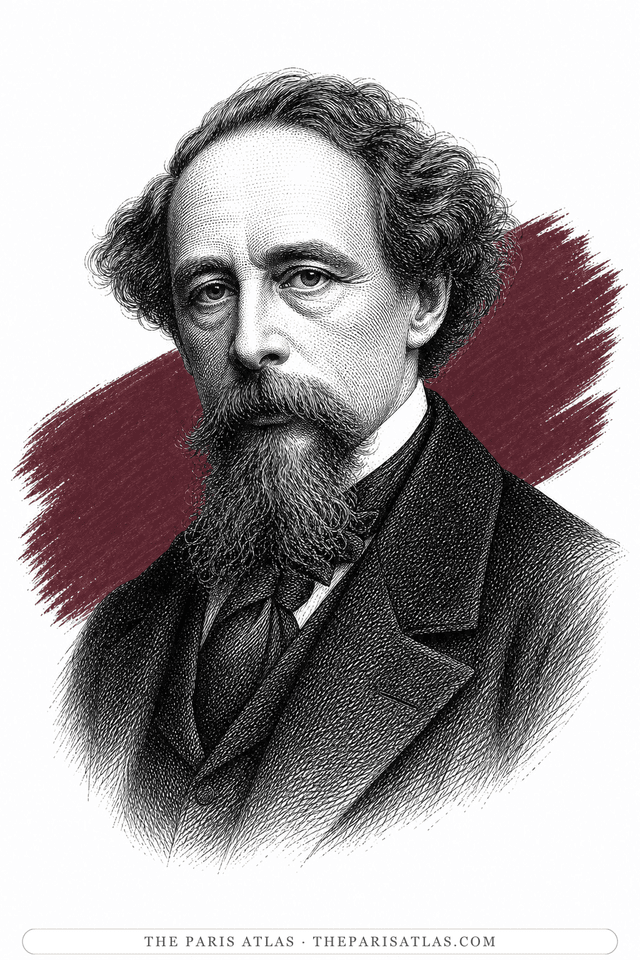
Charles Dickens
The most popular English novelist of the nineteenth century, who was never a Paris resident in the ordinary sense but kept coming back for twenty-five years: one winter in a rented mansion on the rue de Courcelles, a second winter on the Champs-Élysées writing Little Dorrit, repeated compulsive visits to the Paris Morgue — the riverside building where the city displayed its unidentified dead to the public — and a novel of the French Revolution, A Tale of Two Cities, that has shaped how English readers picture Paris ever since.
View author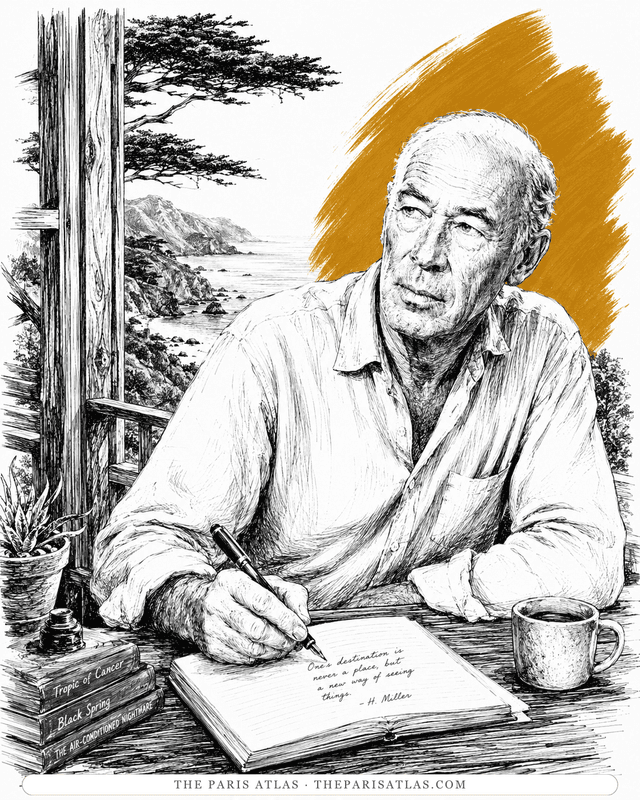
Henry Miller
The Brooklyn dropout who arrived in Paris broke at thirty-eight and wrote the exuberant, banned books that ended American censorship.
View author