Gaspard Caderousse
The tailor next door who watched the denunciation being written and said nothing, later an innkeeper, a thief and a murderer.
He wants money without work, and he tells himself each theft is the last.
The book
The Count of Monte Cristo
Alexandre Dumas
At a glance
- Tailor, then innkeeper
- The inn at the Pont du Gard, then the streets of Paris
Who they are in the book
Spoiler-freeCaderousse is a tailor living in the same house as Dantès's father in Marseille. He is drinking with Danglars and Fernand when the denunciation is written and is too drunk to stop it. He is the one enemy who feels guilty, and the only one the count gives a chance to.
How Gaspard Caderousse Is Portrayed
- The neighbourIn Chapter 2 he arrives at old Dantès's room in time to see the young man's return, and mentions with a smile that the father has been living on nothing.
- The inn at the Pont du GardIn Chapters 26 and 27 he keeps a failing inn on the Beaucaire road and tells the whole story of 1815 to a priest calling himself the Abbé Busoni, in exchange for a diamond.
- The beggarIn Chapter 64 he reappears in Paris as an escaped convict, recognises Andrea Cavalcanti as his prison companion Benedetto, and begins to blackmail him.
- The burglaryIn Chapter 82 he breaks into the count's house on the Champs-Élysées, warned off in advance by an anonymous note, and is met inside by the Abbé Busoni.
Benedetto stabs him as he leaves the count's house. Dying, he is told by the count who the Abbé Busoni really is, and he is the first of the four to hear the name Edmond Dantès.
If you like The Count of Monte Cristo


If you like Alexandre Dumas
Explore authors with a similar voice, perspective, and influence.
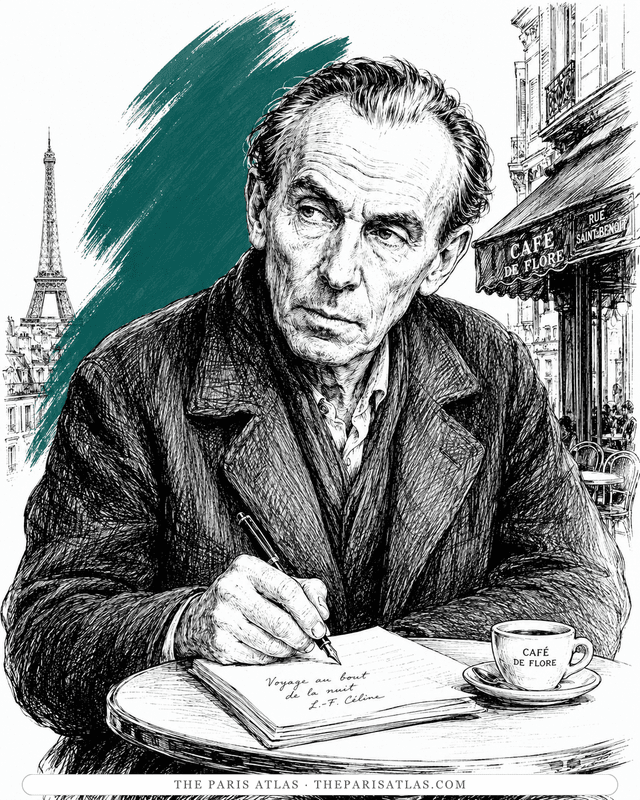
Louis-Ferdinand Céline
The doctor of the Paris slums who wrote the century's blackest, funniest novel — and changed the sound of French prose.
View author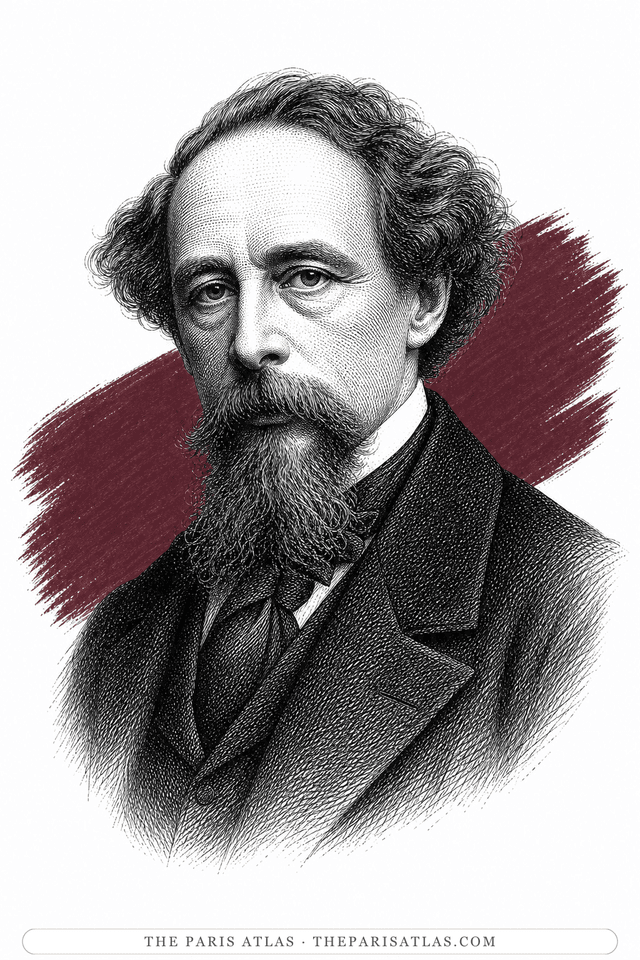
Charles Dickens
The most popular English novelist of the nineteenth century, who was never a Paris resident in the ordinary sense but kept coming back for twenty-five years: one winter in a rented mansion on the rue de Courcelles, a second winter on the Champs-Élysées writing Little Dorrit, repeated compulsive visits to the Paris Morgue — the riverside building where the city displayed its unidentified dead to the public — and a novel of the French Revolution, A Tale of Two Cities, that has shaped how English readers picture Paris ever since.
View author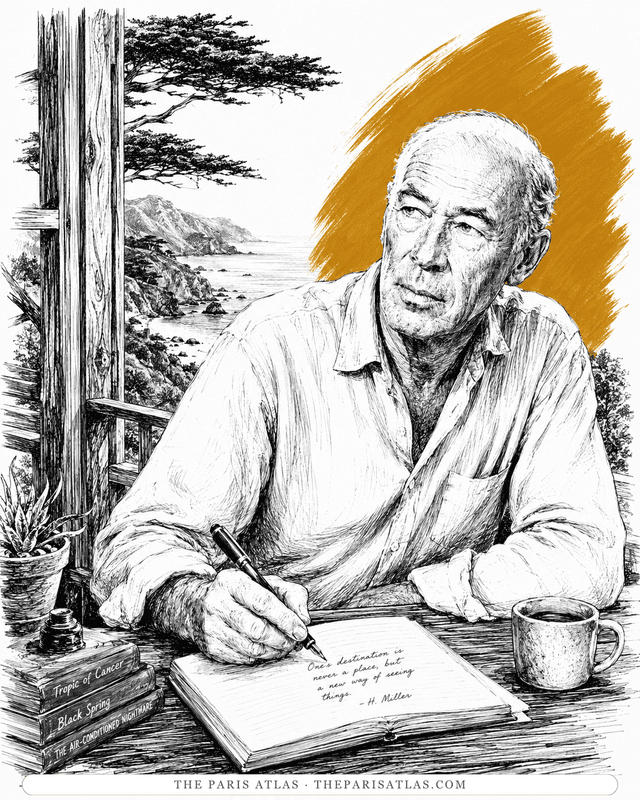
Henry Miller
The Brooklyn dropout who arrived in Paris broke at thirty-eight and wrote the exuberant, banned books that ended American censorship.
View author