Gérard de Villefort
The deputy prosecutor who burns the letter and jails Dantès to protect his own career, and the king's attorney whose house the count fills with poison.
He wants the law, which he serves, never to be turned on his own family.
The book
The Count of Monte Cristo
Alexandre Dumas
At a glance
- Deputy prosecutor at Marseille, aged twenty-seven
- King's attorney in Paris, Faubourg Saint-Honoré
- Father Noirtier; daughter Valentine; second wife Héloïse; son Edward
Who they are in the book
Spoiler-freeVillefort is twenty-seven and deputy prosecutor at Marseille when Dantès is brought before him, on the day of his own betrothal to a royalist marquis's daughter. His father, Noirtier, is a famous Bonapartist, and the letter Dantès carries is addressed to him. Villefort burns it and sends the sailor to the Château d'If so that nothing can connect the Villefort name with a plot.
In Paris he is the king's attorney, a public prosecutor of terrible reputation, with a paralysed father in an upstairs room, a second wife, a daughter Valentine by his first marriage, and a small son. The count knows about the house at Auteuil and about the child Villefort buried there, and builds the whole revenge on it.
How Gérard de Villefort Is Portrayed
- The deputy prosecutorIn Chapter 6 he is at his betrothal dinner with the Saint-Méran family when the arrest is announced, defending himself against his future mother-in-law's reminder that his father was a Girondin and a Bonapartist.
- The letter in the fireIn Chapter 7 he reads the address on the letter Dantès has carried, sees his father's name, and puts the letter in the flames in front of the prisoner while promising him freedom.
- The TuileriesIn Chapter 10 he rides to Paris and tells King Louis XVIII about a Bonapartist plot, using what he learned from Dantès to make his own name at court.
- The garden at AuteuilIn Chapter 44 Bertuccio tells the count how he watched Villefort bury a box in the garden of the house on the Rue de la Fontaine, stabbed him, and found a newborn child inside the box.
- Poison in the houseIn Chapter 52 he hears the count lecture his wife on toxicology in his own drawing room. From Chapter 72 the deaths begin: the Marquise de Saint-Méran, the marquis, the servant Barrois, and, apparently, Valentine.
- The judgeIn Chapter 108 he confronts his wife with the evidence and orders her to take her own poison, then goes to court to prosecute a young man for murder as if nothing had happened.
Gérard de Villefort quotes
I wish to be Providence myself, for I feel that the most beautiful, noblest, most sublime thing in the world, is to recompense and punish.
The prisoner he is prosecuting, Andrea Cavalcanti, announces in open court that his name is Benedetto and that his father is the king's attorney, who buried him alive at Auteuil. Villefort goes home to find his wife dead by her own poison and their son dead beside her. The count finds him in the garden with a spade, digging for the child and shouting that it is not here. The count says he is mad, and the text does not bring him back.
If you like The Count of Monte Cristo


If you like Alexandre Dumas
Explore authors with a similar voice, perspective, and influence.
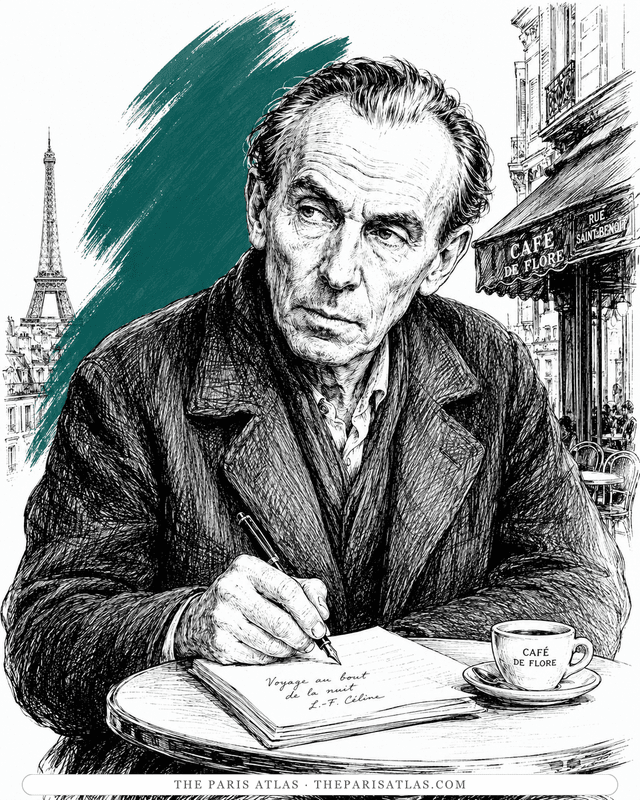
Louis-Ferdinand Céline
The doctor of the Paris slums who wrote the century's blackest, funniest novel — and changed the sound of French prose.
View author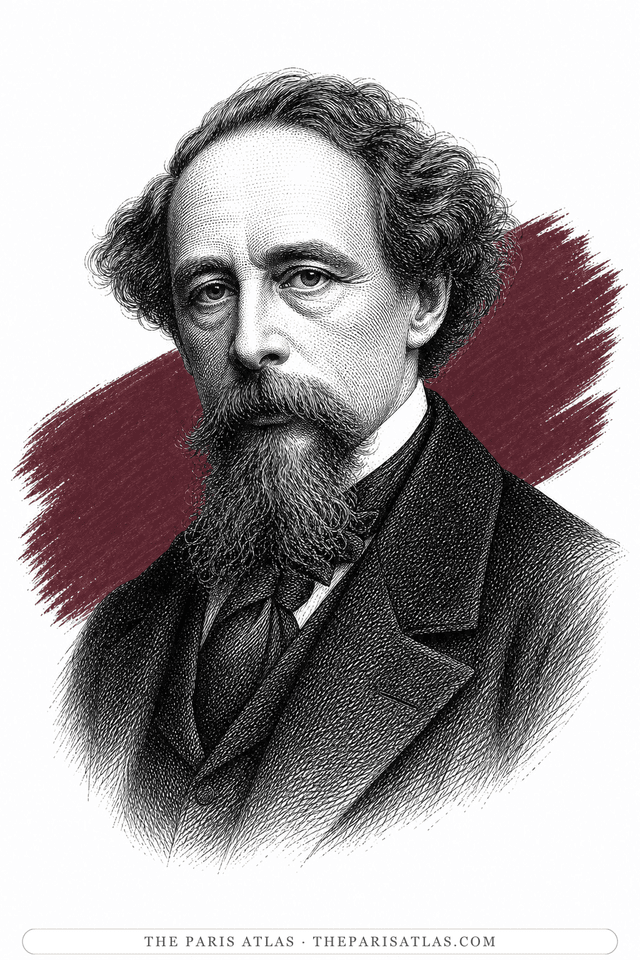
Charles Dickens
The most popular English novelist of the nineteenth century, who was never a Paris resident in the ordinary sense but kept coming back for twenty-five years: one winter in a rented mansion on the rue de Courcelles, a second winter on the Champs-Élysées writing Little Dorrit, repeated compulsive visits to the Paris Morgue — the riverside building where the city displayed its unidentified dead to the public — and a novel of the French Revolution, A Tale of Two Cities, that has shaped how English readers picture Paris ever since.
View author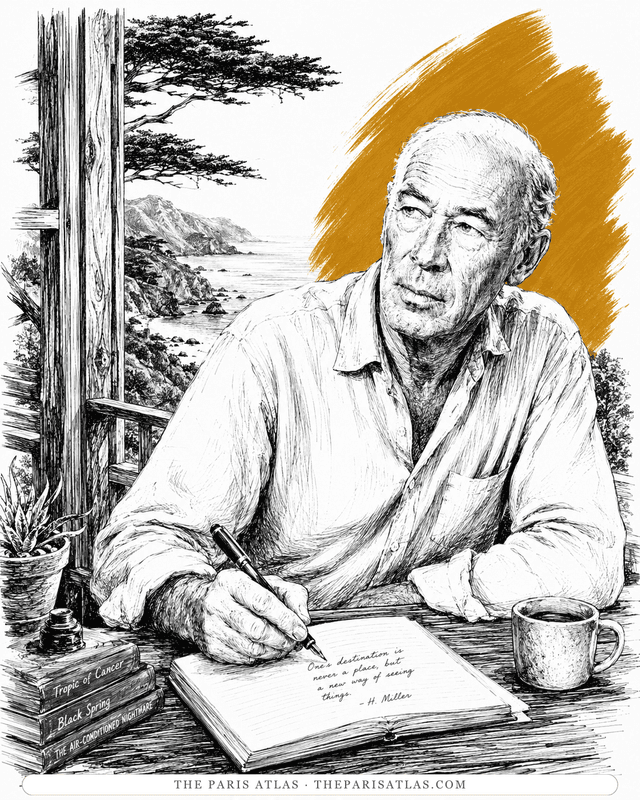
Henry Miller
The Brooklyn dropout who arrived in Paris broke at thirty-eight and wrote the exuberant, banned books that ended American censorship.
View author