Edmond Dantès
The sailor betrayed on his wedding day, and the count who comes back fourteen years later under four different names.
He wants the three men who put him in the Château d'If to lose what they gained by it, and to know who took it from them.
The book
The Count of Monte Cristo
Alexandre Dumas
At a glance
- Nineteen, in February 1815
- Marseille; his father lives on the Allées de Meilhan
- The Château d'If, fourteen years, number 34
- No. 30, Avenue des Champs-Élysées, from May 1838
- Sinbad the Sailor, the Abbé Busoni, Lord Wilmore
Who they are in the book
Spoiler-freeEdmond Dantès is nineteen when the book opens, first mate of the merchant ship Pharaon and about to be made its captain. His father lives in a poor room in Marseille; his fiancée Mercédès lives in the Catalan fishing village outside the town. He is arrested at his own betrothal feast on a charge he does not understand and sent to the Château d'If without a trial.
The prison makes him a different man. The Abbé Faria educates him and works out for him who betrayed him and why. Dantès comes out with a fortune and a set of names: Sinbad the Sailor for the smugglers, the Abbé Busoni for confessions, Lord Wilmore for English business, and the Count of Monte Cristo for Paris. The book is mostly about what he does with them.
How Edmond Dantès Is Portrayed
- The young sailorIn Chapter 1 he is a fine, tall, slim young fellow of eighteen or twenty, with black eyes and hair as dark as a raven's wing, bringing the Pharaon into Marseille after the captain has died at sea.
- Prisoner number 34In Chapter 14 the prison inspector finds him after a year in the dungeon, asking only for a trial. The governor's register records him as number 34, and the inspector's note is never acted on.
- Faria's pupilIn Chapter 17 the Abbé Faria teaches him Italian, English, German and Spanish, and mathematics, physics and history, in the two years the tunnel gives them. Dantès says the priest has made him think for the first time.
- The burial sackIn Chapter 20 he sews himself into the sack meant for Faria's body. The guards carry him to the cliff and throw him into the sea with a thirty-six-pound shot tied to his feet.
- Four namesIn Chapters 25 to 31 he appears as the Abbé Busoni at Caderousse's inn and as an English agent named Lord Wilmore in the Morrel affair. On the island he is Sinbad the Sailor. Paris meets him last, as the count.
- Providence, in his own wordsIn Chapter 48 he tells Villefort that he has always heard of Providence and never seen it, and that he wishes to be Providence himself, because to reward and punish is the noblest thing in the world.
Edmond Dantès quotes
until the day when God shall deign to reveal the future to man, all human wisdom is summed up in these two words,—‘Wait and hope.’
There is neither happiness nor misery in the world; there is only the comparison of one state with another, nothing more. He who has felt the deepest grief is best able to experience supreme happiness.
I wish to be Providence myself, for I feel that the most beautiful, noblest, most sublime thing in the world, is to recompense and punish.
All three revenges succeed. Fernand shoots himself after Mercédès and Albert leave him. Villefort goes mad in his garden after his wife poisons herself and their son. Danglars is starved in the Roman catacombs until he repents, and the count, giving his real name for the last time, forgives him. The count's own doubt arrives in Chapter 111, when the death of Villefort's child makes him ask whether he had the right. He leaves Paris the next day, restores Valentine to Maximilien on the island, and sails away with Haydée. His farewell letter ends on the words Wait and hope.
If you like The Count of Monte Cristo


If you like Alexandre Dumas
Explore authors with a similar voice, perspective, and influence.
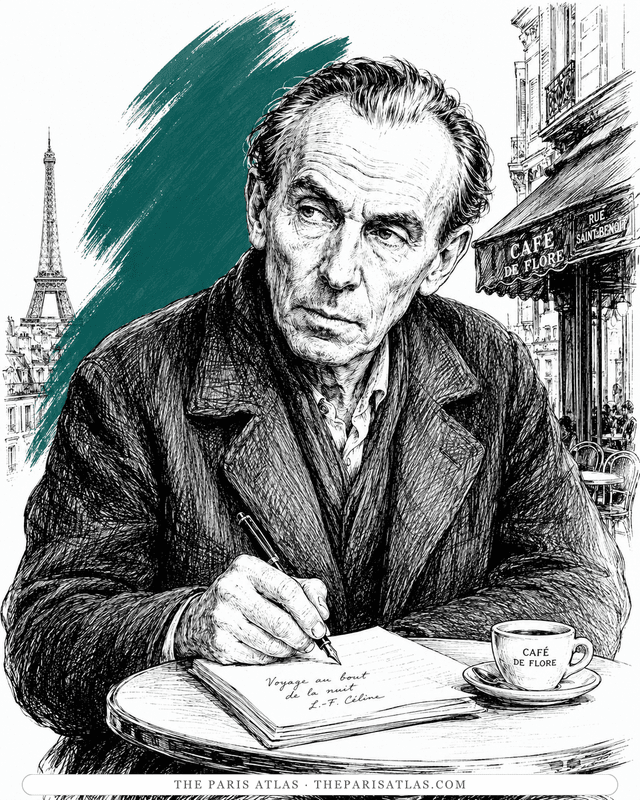
Louis-Ferdinand Céline
The doctor of the Paris slums who wrote the century's blackest, funniest novel — and changed the sound of French prose.
View author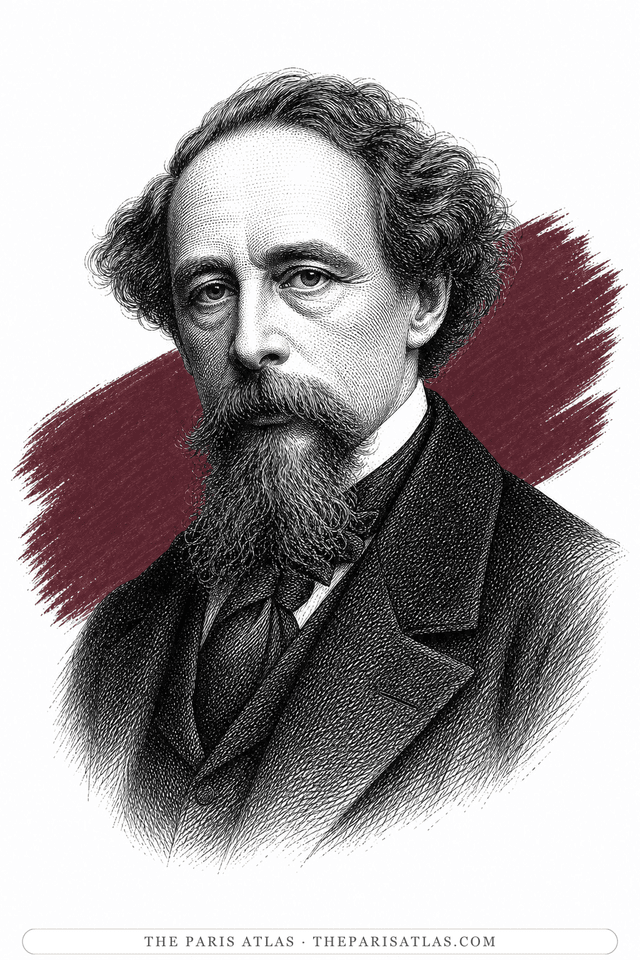
Charles Dickens
The most popular English novelist of the nineteenth century, who was never a Paris resident in the ordinary sense but kept coming back for twenty-five years: one winter in a rented mansion on the rue de Courcelles, a second winter on the Champs-Élysées writing Little Dorrit, repeated compulsive visits to the Paris Morgue — the riverside building where the city displayed its unidentified dead to the public — and a novel of the French Revolution, A Tale of Two Cities, that has shaped how English readers picture Paris ever since.
View author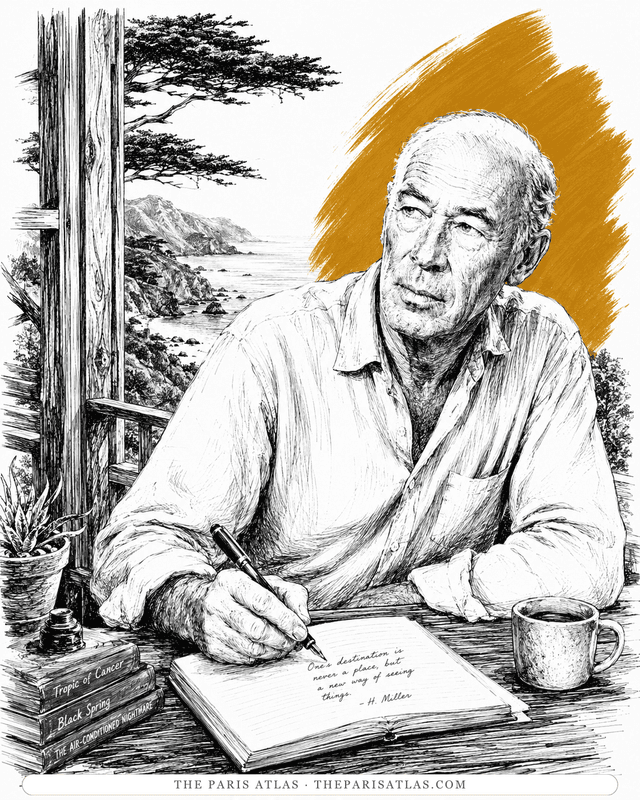
Henry Miller
The Brooklyn dropout who arrived in Paris broke at thirty-eight and wrote the exuberant, banned books that ended American censorship.
View author