
Larry Keevil
Sally Jay’s old summer-theater acquaintance, whose experimental productions and romantic intensity hide theft, violence, and exploitation.
To build influence and opportunity through theater while keeping Sally, Lila, and others available to schemes that benefit him.
The book

At a glance
- Actor and aspiring theatrical director
- Sally’s acquaintance from American summer theater
- Sally’s dangerous romantic fixation
Who they are in the book
Spoiler-freeLarry attracts Sally because he appears to unite romance, rebellion, and theatrical ambition. He is as skilled at staging himself offstage as he is at organizing a production.
The plot steadily replaces Sally’s fantasy of him with evidence about how he treats women when they no longer serve his plans.
How Larry Keevil Is Portrayed
- Young American theater manHe and Sally know each other from summer stock.
- Intense expressionAmbition gives him a charged presence.
- Slightly disheveledHis clothes suggest rehearsal rather than polish.
- Controlled charmHe can look exciting before he looks dangerous.
- Close engraved bustScript pages are omitted under the prop-free portrait standard.
- Muted rust accentThe color carries energy without glamour.
Larry steals Sally’s passport for illegal use and tries to exploit her through Baxter. After Sally sees him assault Lila, she leaves him; he later confesses to the passport theft.
If you like The Dud Avocado


If you like Elaine Dundy
Explore authors with a similar voice, perspective, and influence.
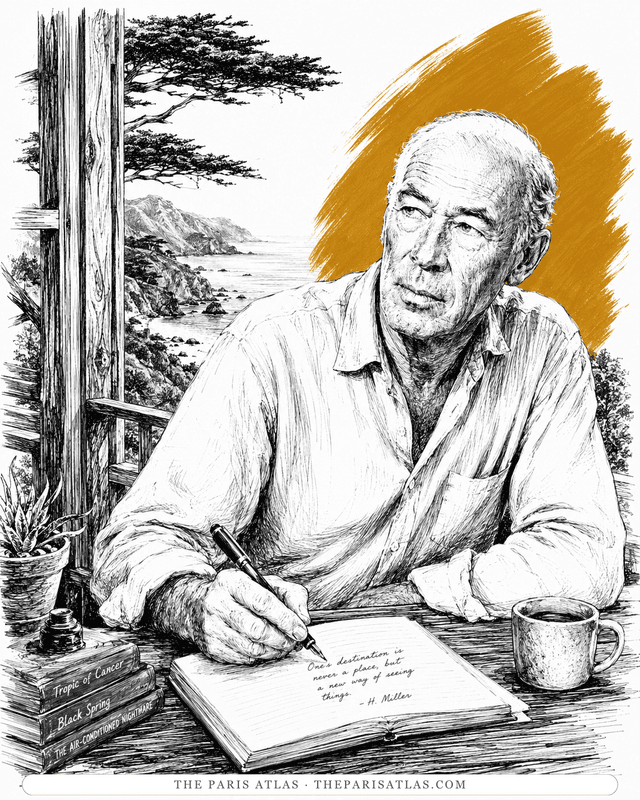
Henry Miller
The Brooklyn dropout who arrived in Paris broke at thirty-eight and wrote the exuberant, banned books that ended American censorship.
View author
André Breton
Wrote the Surrealist manifestos and decided who belonged to the movement. Dalí joined in 1929 and was expelled ten years later, by which time Breton had renamed him Avida Dollars.
View author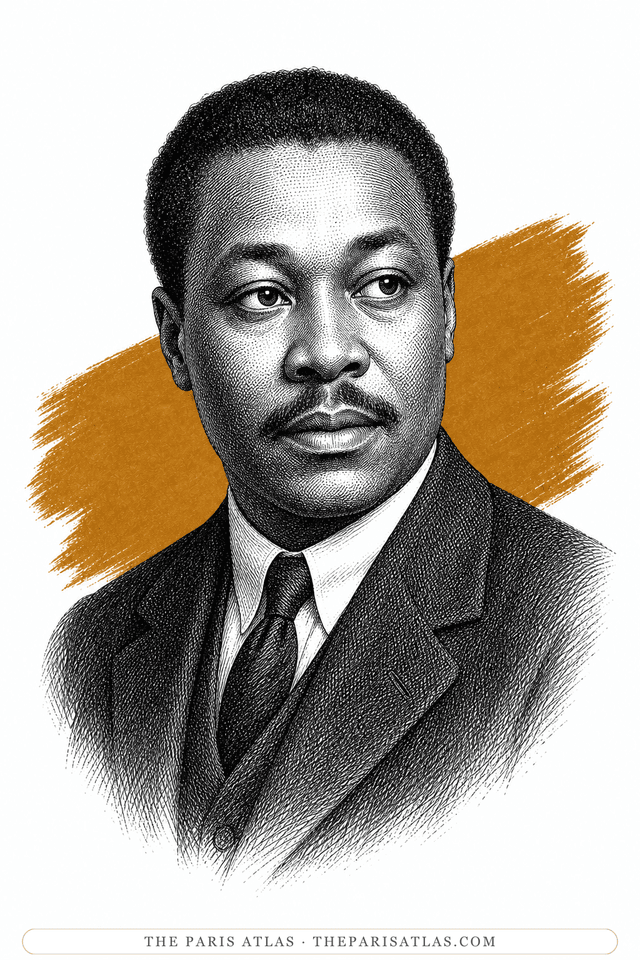
Claude McKay
Jamaican-born poet and novelist, and one of the essential writers of the Harlem Renaissance. He arrived in Paris from Moscow in 1923 and stayed in France until 1928, writing Home to Harlem there — and forming a low opinion of the rich, white expatriate scene that dominates most accounts of the period. His Paris is the same years as Hemingway's and almost nothing like it.
View author