
Sally Jay Gorce
The pink-haired American narrator who treats Paris as an experiment in freedom and learns that comic recklessness does not make her invulnerable.
To use her two funded years abroad completely: pursuing theater, sex, friendship, travel, and whatever feels least like the conventional life planned for her.
The book

At a glance
- First-person narrator
- Paris, the French coast, and later New York
- Her uncle Roger finances two years abroad
Who they are in the book
Spoiler-freeSally Jay is twenty-one, quick-witted, theatrical, vain, candid, and determined to experience everything her temporary freedom allows.
Because she tells the story herself, readers see both her self-invention and the moments when her jokes cannot protect her from what other people are doing.
How Sally Jay Gorce Is Portrayed
- Young American womanShe is twenty-one and newly independent.
- Pink-tinted hairHer deliberately unconventional color is one of her signatures.
- Stylish 1950s clothesHer appearance changes with the role she wants to play.
- Amused direct gazeConfidence and self-mockery coexist.
- Close engraved bustThe Left Bank setting stays in the body art.
- Muted blue accentThe cool color keeps the pink hair from becoming cartoonish.
Larry steals and misuses Sally’s passport and she sees him assault Lila. She escapes, leaves Paris, and later agrees to marry Maximilian Ramage.
If you like The Dud Avocado


If you like Elaine Dundy
Explore authors with a similar voice, perspective, and influence.
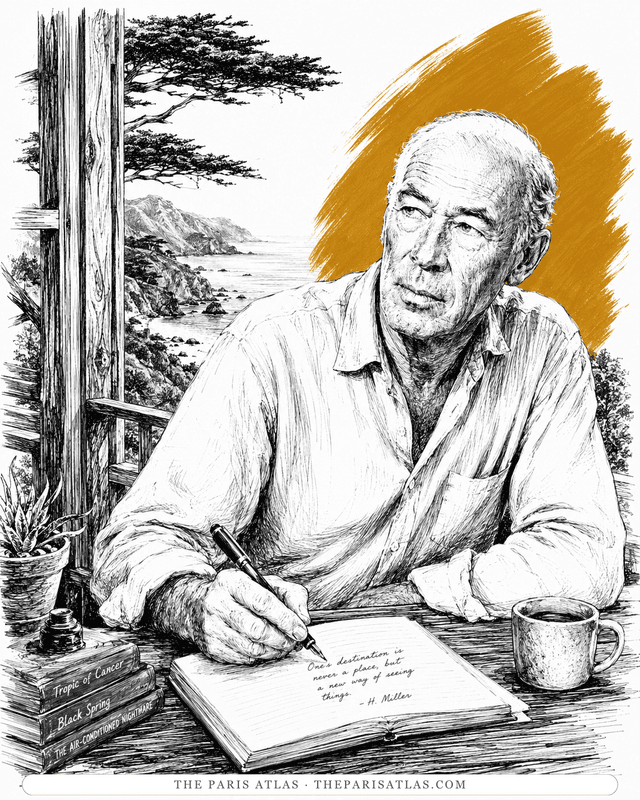
Henry Miller
The Brooklyn dropout who arrived in Paris broke at thirty-eight and wrote the exuberant, banned books that ended American censorship.
View author
André Breton
Wrote the Surrealist manifestos and decided who belonged to the movement. Dalí joined in 1929 and was expelled ten years later, by which time Breton had renamed him Avida Dollars.
View author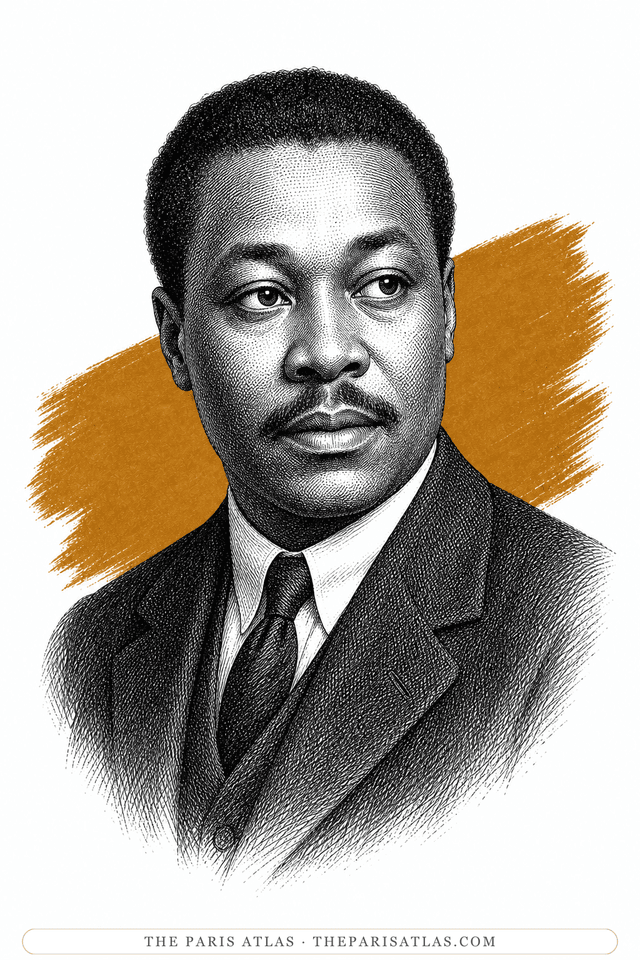
Claude McKay
Jamaican-born poet and novelist, and one of the essential writers of the Harlem Renaissance. He arrived in Paris from Moscow in 1923 and stayed in France until 1928, writing Home to Harlem there — and forming a low opinion of the rich, white expatriate scene that dominates most accounts of the period. His Paris is the same years as Hemingway's and almost nothing like it.
View author