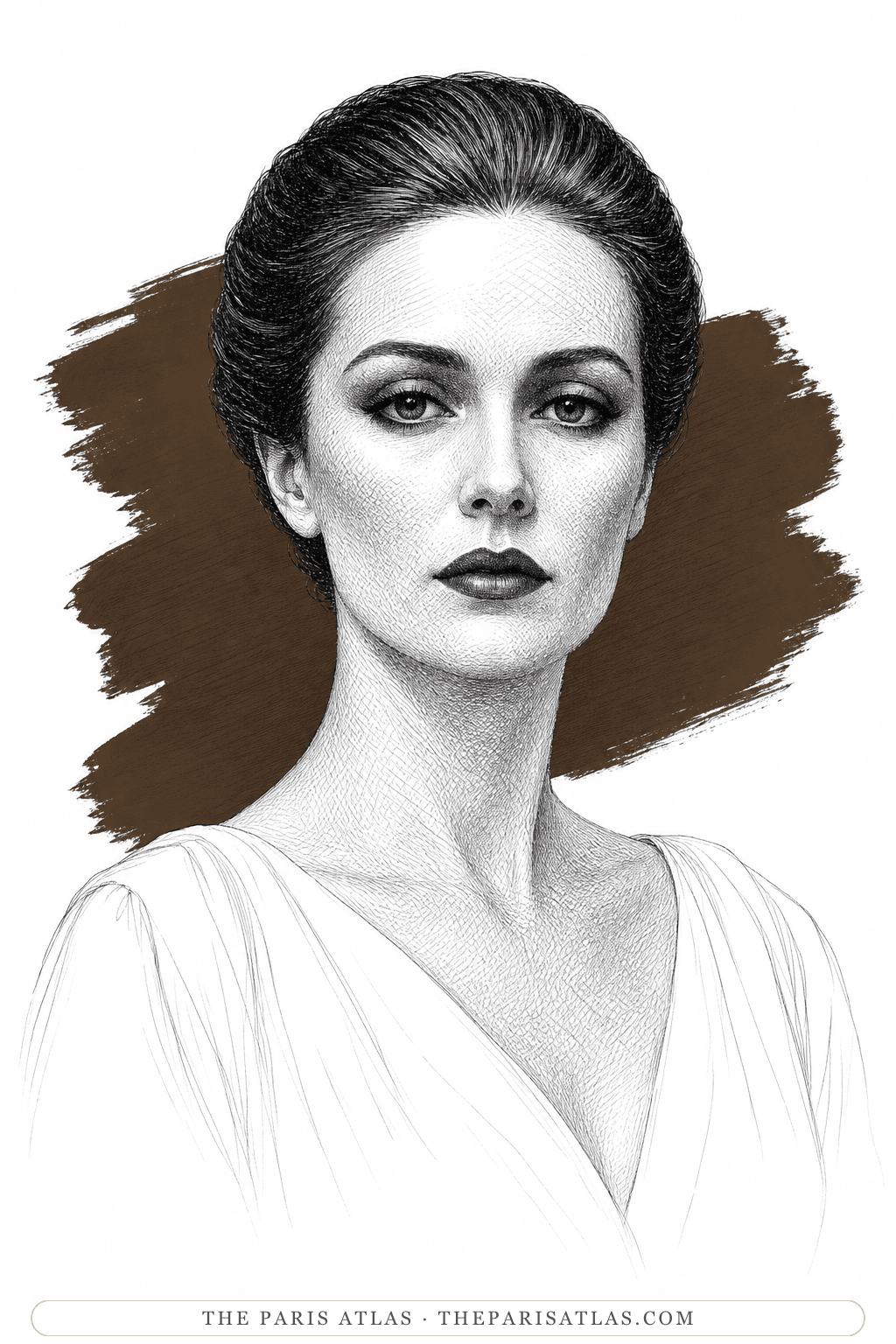
Madame Dalleray
The older 'lady in white' who takes an interest in Phil — the adult world arriving in the middle of a childhood.
For Phil to come back out of appetite rather than good manners — she tells him not to repay her with flowers, and that if he returns he should return with his hand held out.
The book

At a glance
- About thirty; Colette puts her at thirty to thirty-two
- Camille Dalleray, used once in the whole novel. Phil calls her Madame Dalleray or the lady in white
- Ker-Anna, a walled villa on the hill above the coast road, rented for the season
- A chauffeur, a servant she calls Totote, another woman who carries the tray, and a red and blue macaw that never speaks
- Monsieur Phil, gravely, from their first meeting on the seaweed track
- On the page in five chapters, from the middle of August to the second week of September
Who they are in the book
Spoiler-freeMadame Dalleray is a woman of about thirty who has taken a villa called Ker-Anna on the Brittany coast for the summer, a few kilometres from the house where Philippe Audebert's family holidays. She has a car and a chauffeur, at least two servants, and a red and blue macaw that never makes a sound. She is dark, her hair pulled back and shiny, her mouth reddened and her eyes ringed with brown, and she wears white every time she appears, which is why Phil thinks of her as the lady in white. Colette gives her a first name only once, three quarters of the way through the book: Camille.
She is an adult woman who takes a sixteen-year-old boy as a lover, and the novel states it without scandal and without excuse. It runs for about a fortnight at the turn of August and September. Phil walks over the hill to her villa once every light in his own house has gone out, and comes out of hers at half past one in the morning; the nights themselves happen off the page, and everything the reader gets of them comes from what he remembers afterwards.
She does not chase him. She gives him one glass of orangeade and lets him go, and when he comes back with an armful of flowers to settle the debt she asks whether he picked them to please her or to please himself, dislikes his answer, and puts him out at the gate. Colette gives her one line that states her terms outright: «Je n'aime que les mendiants et les affamés, monsieur Phil.» She likes only beggars and starving men, she tells him, and if he comes back he should come with his hand held out.
She is unsentimental about him without being untouched. She asks him once whether he loves her, then takes it back and says she asked in order to play, and Colette gives her a small painful tightening at the heart as she walks away from the question. Her own reading of the situation is cold: a grown man would have said yes, and this boy, if pressed, would cry and tell her through the tears that he does not love her. She also knows what she has not got. What he gives her, she thinks, was within reach of any woman passing through; the one thing she cannot get near is the name Vinca, which he keeps behind a wall of silence.
How Madame Dalleray Is Portrayed
- The car stuck in the seaweed laneHer chauffeur has driven too far down a sand track used by carts collecting seaweed, and she comes to ask the way, sinking her high white heels and her cane into the ruts. She calls Phil boy, then apologises and calls him monsieur once he stands up bare-chested, laughs at him, and looks him straight in the eye the way a man would.
- She asks how old he isAt the end of that first conversation she asks whether Vinca is a friend his own age. He says Vinca is fifteen and he is sixteen. She repeats the number sixteen, offers no comment at all, and after a pause tells him he has sand on his cheek.
- White, every timePhil never sees her in another colour, and never learns to think of her by name: he calls her Madame Dalleray, the lady in white, or simply her. Later, privately, he calls her his mistress and sometimes his master.
- The dark roomHer salon is kept shuttered and cold against the August heat, hung in red and white with black and gold curtains, with resin and geranium burning in a dish. Phil walks into it out of full sun, trips over the furniture, sits down on a cushion, and nearly faints. She sends the iced orangeade in and tells the servant off for using ice, because the cellar is cold enough.
- What she gives himCold red melon in slices, dusted with sugar and soaked in a light spirit that tastes of aniseed; late peaches; black coffee poured over crushed ice. On one visit he is wearing a loose embroidered silk garment of hers that makes him look like an oriental prince, and he knows it suits him.
- She throws him outHe hurls a bunch of blue sea thistles over her wall rather than hand them over, and one of them cuts her cheek. She holds him at the gate, works out that he came to settle a debt, and tells him to go and not come back — unless, one day, he turns up for a different reason.
- The afternoon she takes his armHe drops a spoon, she says he is clumsy, and she catches his wrist and pushes his sleeve up to the elbow, holding his bare arm in her warm hand. He shouts at her and pulls free, breaking a saucer. She does not move or speak; she leaves the hand open on her knee until he puts his arm back into it.
- Do you love me?Late in the affair, talking to him about the date his family goes back to Paris, she asks the question quietly. He is frightened and asks why she wants to know. She recovers her usual doubtful smile and says she asked in order to play. She never asks again, and he never says it.
- CamilleHer first name arrives in the middle of a sentence when she tells him that the subject under discussion is Philippe Audebert, not Camille Dalleray. Phil is startled: Camille can belong to a man or a woman, and he thinks she could have done without it.
She ends it herself, and not in person.
If you like The Ripening Seed


If you like Colette
Explore authors with a similar voice, perspective, and influence.

Henry Miller
The Brooklyn dropout who arrived in Paris broke at thirty-eight and wrote the exuberant, banned books that ended American censorship.
View author
Louis-Ferdinand Céline
The doctor of the Paris slums who wrote the century's blackest, funniest novel — and changed the sound of French prose.
View author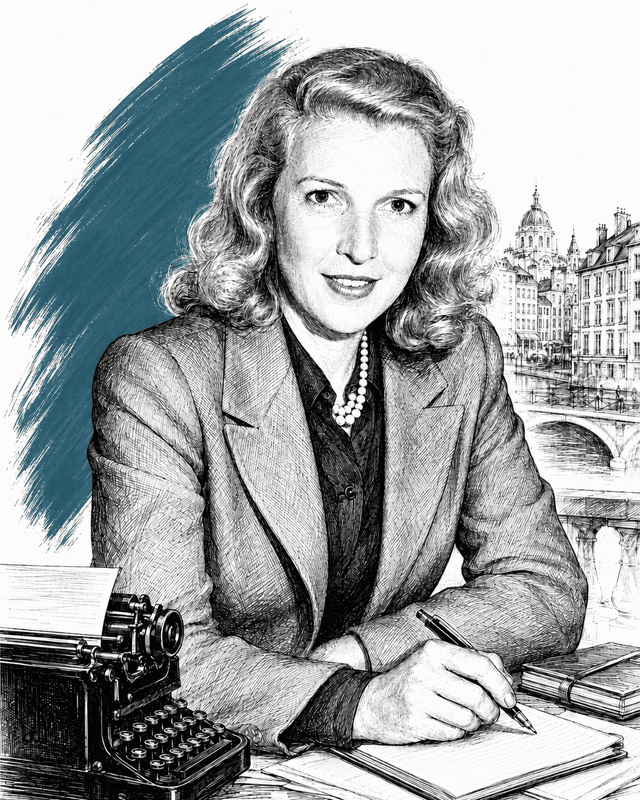
Martha Gellhorn
War correspondent who covered the Spanish Civil War, D-Day, and conflicts across five more decades; Hemingway's third wife, 1940–1945.
View author