Louis
A banker's son from Brisbane, ashamed of his Australian accent, who becomes a powerful businessman and reads one poem a night in his attic.
He wants to be accepted, and to bring the world's disorder into order.
The book
The Waves
Virginia Woolf
Who they are in the book
Spoiler-freeLouis is proud, clever and always an outsider. He knows the lesson better than anyone but will not come top. He wants to put the world in order and to be accepted, and he never forgets being mocked. Herbert Marder links him to Woolf's husband, Leonard Woolf.
How Louis Is Portrayed
- Rooted by the wallOn pages 10 to 11, left alone by the garden wall, he imagines he is a plant stalk with roots going down to the centre of the earth. Then Jinny finds him and kisses him.
- The Australian accentOn pages 18 to 19 he says his father is a banker in Brisbane and he speaks with an Australian accent. He knows the lesson by heart but waits to copy Bernard.
- Liking chapelOn page 36 he likes the dim, orderly chapel and the headmaster, Dr Crane, reading the lesson. Neville, beside him, hates the same sermon.
- Fixing the momentOn pages 41 to 42, lying in the grass, he tries to fix the moment in a ring of steel. He also admits he resents Percival's power intensely.
- The eating-houseOn pages 99 to 103, now a clerk in the City, he props his poet against a bottle of Worcester sauce and tries to look like the other men. He leaves the waitress too large a tip.
- Twenty signaturesOn pages 181 to 185 he signs his name twenty times at his office desk and gives orders by telephone to Paris, Berlin and New York. He still keeps an attic room, where Rhoda comes.
Louis becomes rich and respectable in a shipping business. He keeps a mistress, a little actress, and still reads one poem at night in his attic. Rhoda, his lover for a time, leaves him. At Hampton Court he and Rhoda stay behind by a stone urn while the others walk to the lake.
If you like The Waves


If you like Virginia Woolf
Explore authors with a similar voice, perspective, and influence.
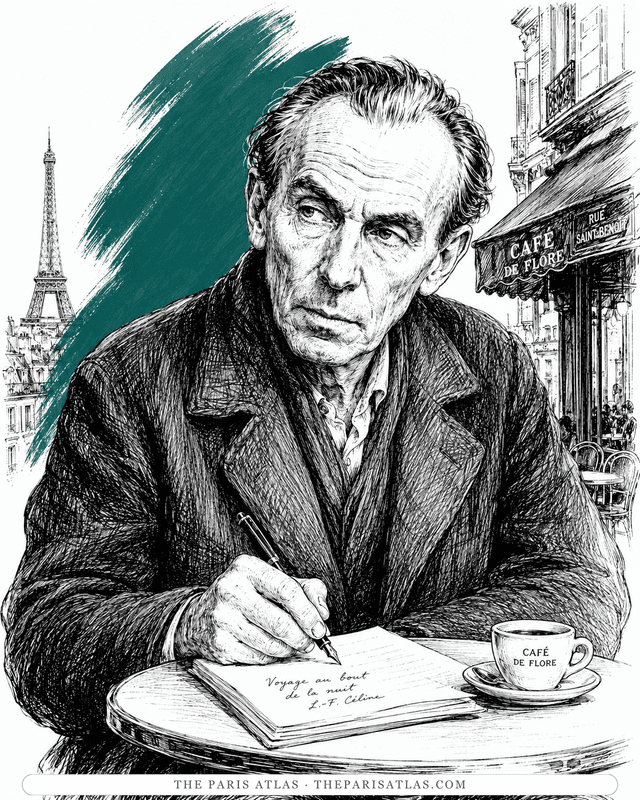
Louis-Ferdinand Céline
The doctor of the Paris slums who wrote the century's blackest, funniest novel — and changed the sound of French prose.
View author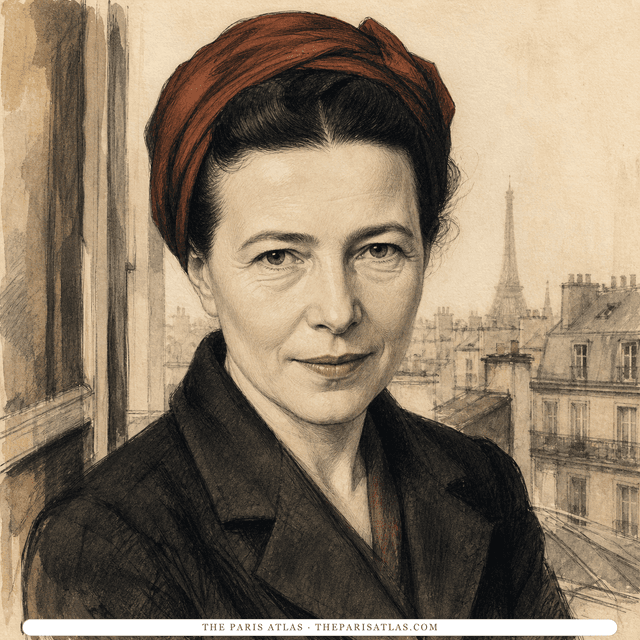
Simone de Beauvoir
French writer and philosopher whose novels, memoirs, and social analysis examined freedom, gender, responsibility, aging, and the material conditions that shape a life.
View author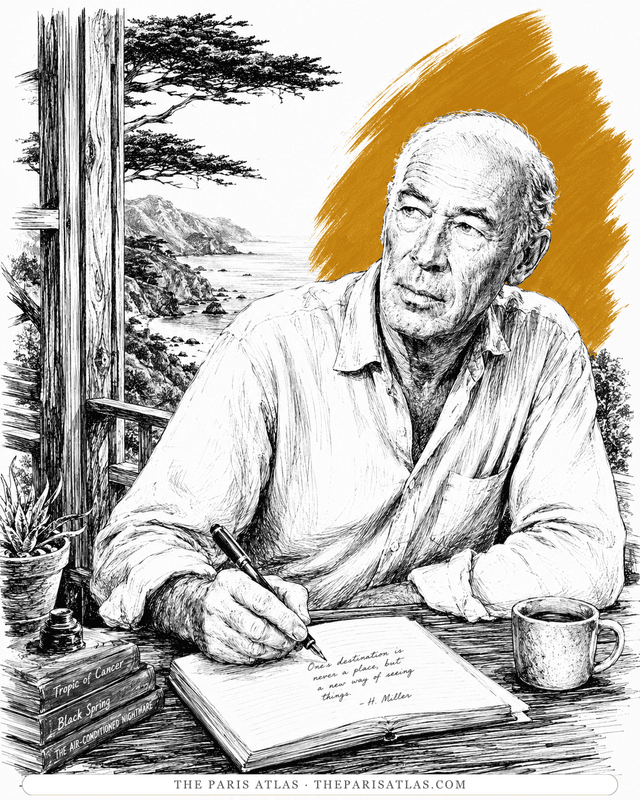
Henry Miller
The Brooklyn dropout who arrived in Paris broke at thirty-eight and wrote the exuberant, banned books that ended American censorship.
View author