Rhoda
A fatherless girl who feels she has no face, dreads other people, and lives in daydreams of pools and marble pillars far away.
She wants to escape the pressure of other people and reach a world she calls immune from change.
The book
The Waves
Virginia Woolf
Who they are in the book
Spoiler-freeRhoda is shy, frightened and full of private visions. She copies the other girls so that nobody notices her, and each opening door feels to her like a tiger leaping. Herbert Marder calls her the most inward of the six, a visionary appalled by society.
How Rhoda Is Portrayed
- White petals in a basinOn pages 17 to 18 she floats white petals in a brown basin and calls them her fleet of ships. The others sink in the storm she makes. One ship sails on alone, and it is hers.
- The sum she cannot doOn pages 20 to 21 the teacher writes figures on the blackboard. The others hand in their answers and leave. Rhoda cannot find hers, and is left alone with the ticking clock.
- No faceOn pages 35 and 45 she says she has no face. She ducks behind Susan so that the looking-glass on the stairs will not show her.
- Copying the othersOn pages 45 to 46 and 142 she admits she copies Susan and Jinny, down to the way they pull on their stockings. She does it so that she seems to have an end in view.
- The Empress in the bathroomOn pages 59 to 61, washing her hands, she imagines herself a Russian Empress facing a hostile mob from a balcony. Then Miss Lambert walks past, and the dream falls down like a paper tree.
- Terror at a partyOn pages 113 to 116 every opening door at a party is the tiger leaping. She escapes to the balcony and sees two faceless figures against the sky, a world immune from change.
Rhoda quotes
But here I am nobody. I have no face.
After Percival's death Rhoda walks down Oxford Street in disgust, sits through a concert and throws violets into the water at Greenwich. She becomes Louis's lover, then leaves him because she fears embraces. On a hill in Spain she imagines lying on her deathbed and falling into the sea. In the last section Bernard mentions that she has killed herself.
If you like The Waves


If you like Virginia Woolf
Explore authors with a similar voice, perspective, and influence.
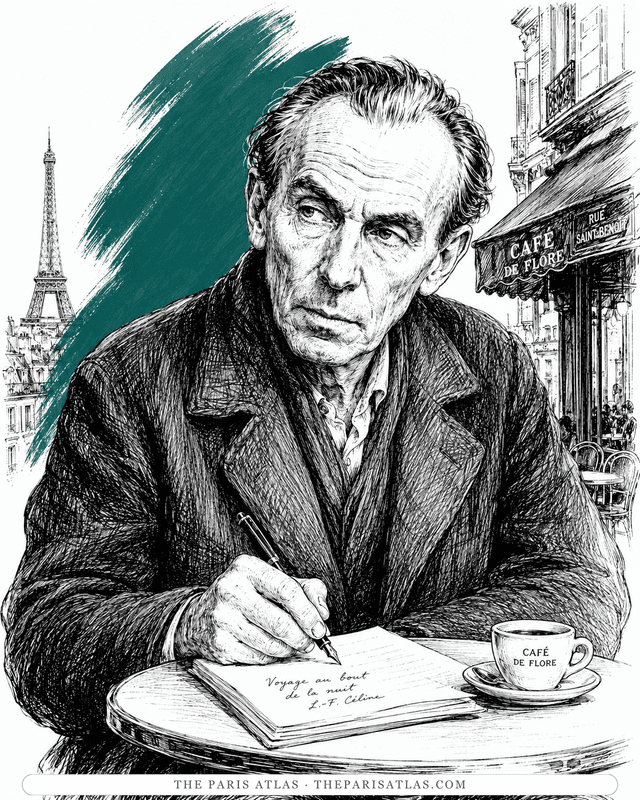
Louis-Ferdinand Céline
The doctor of the Paris slums who wrote the century's blackest, funniest novel — and changed the sound of French prose.
View author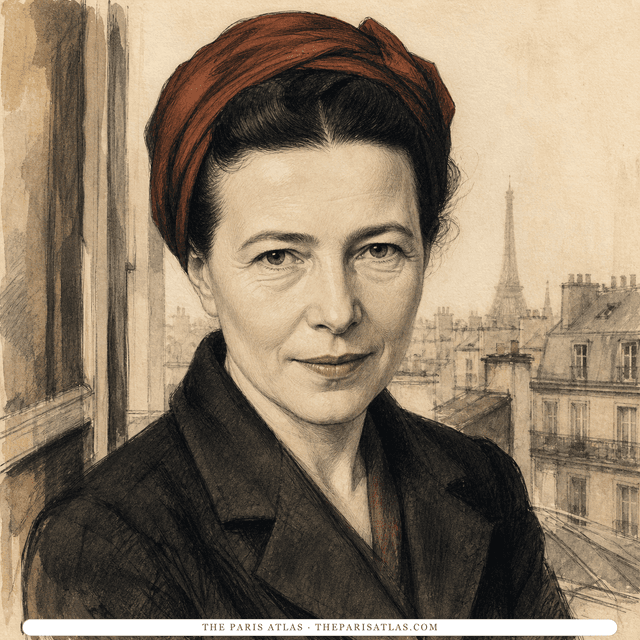
Simone de Beauvoir
French writer and philosopher whose novels, memoirs, and social analysis examined freedom, gender, responsibility, aging, and the material conditions that shape a life.
View author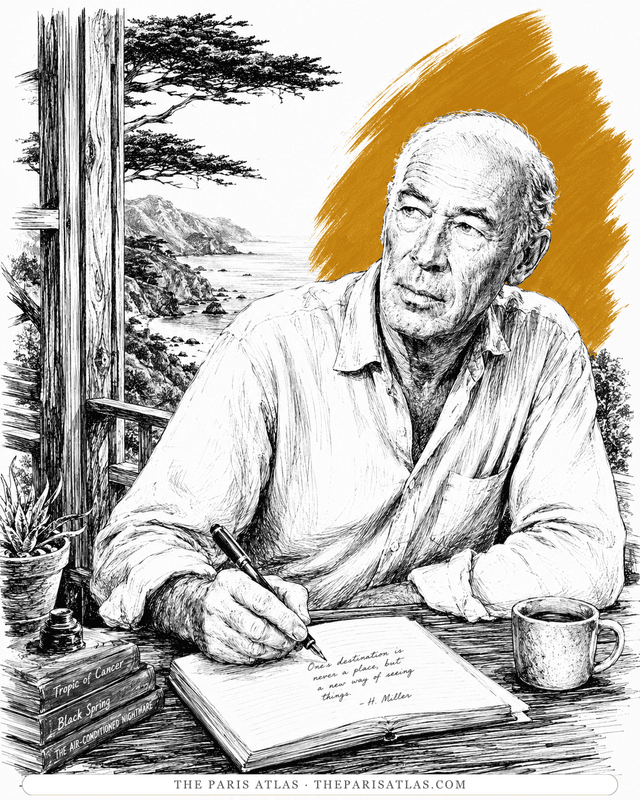
Henry Miller
The Brooklyn dropout who arrived in Paris broke at thirty-eight and wrote the exuberant, banned books that ended American censorship.
View author