Neville
A delicate, precise boy who loves Percival, wants to be a poet, and later lives for one lover at a time.
He wants one person, firelight and privacy, and a life with a precise order.
The book
The Waves
Virginia Woolf
Who they are in the book
Spoiler-freeNeville is clever, sharp-tongued and orderly. He loves Latin poets and hates mess and religion's pomp. He falls in love with Percival at school and becomes a successful scholar and poet. Herbert Marder links him to the writer Lytton Strachey.
How Neville Is Portrayed
- Death among the apple treesOn pages 23 to 24, kept home from a walk as too delicate, he remembers overhearing that a man was found with his throat cut. He could not climb the stairs past an apple tree in the moonlight, and names it death among the apple trees.
- Order and differencesOn pages 18 and 20 he complains that Bernard has run off with his knife. He hates dangling, damp things and wandering. In the Latin lesson he says there is an order in the world.
- Watching Percival in chapelOn pages 37 to 38 he leans sideways as if to scratch his thigh so he can see Percival. He says a gesture like Percival's makes you fall in love for a lifetime.
- Percival cannot readOn pages 50 to 51 he knows Percival despises his weakness but is kind to it. He also knows Percival cannot read, and yet understands Shakespeare and Catullus better than Louis.
- The poemOn pages 93 to 95, at college, he teases Bernard about playing Byron. Then he asks Bernard to take his life in his hands, gives him a poem, and rushes out.
- Waiting at the restaurantOn pages 128 to 133 he arrives ten minutes early for the farewell dinner. Each time the door opens and it is not Percival, the waiting sharpens.
Neville quotes
Bernard says there is always a story. I am a story. Louis is a story.
Neville gets the telegram about Percival's death and cannot bring himself to climb the stairs. Later he lives with a series of lovers, one at a time, in a firelit room. In middle age he no longer needs walls and firelight, and he brings his success to Hampton Court like a set of credentials.
If you like The Waves


If you like Virginia Woolf
Explore authors with a similar voice, perspective, and influence.
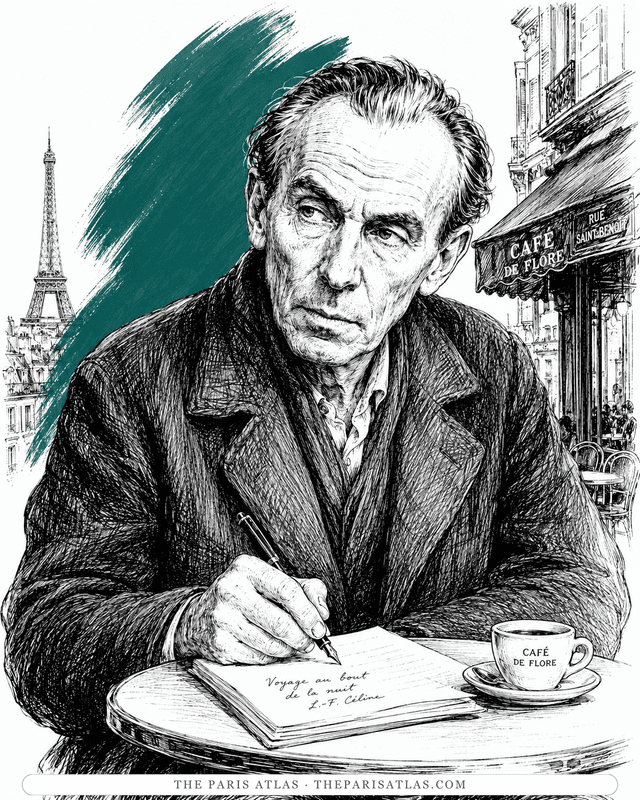
Louis-Ferdinand Céline
The doctor of the Paris slums who wrote the century's blackest, funniest novel — and changed the sound of French prose.
View author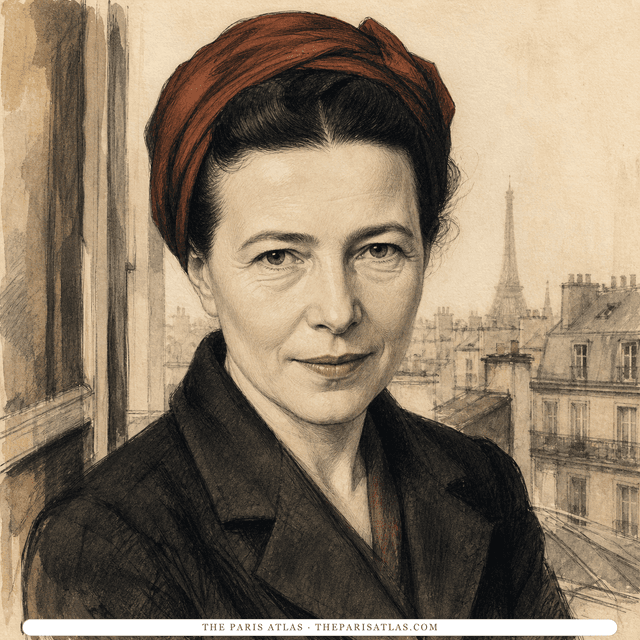
Simone de Beauvoir
French writer and philosopher whose novels, memoirs, and social analysis examined freedom, gender, responsibility, aging, and the material conditions that shape a life.
View author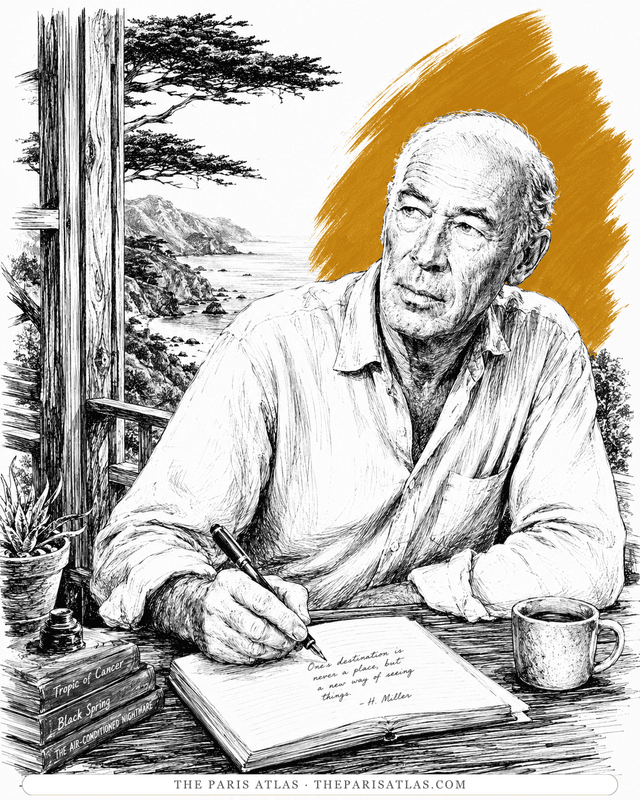
Henry Miller
The Brooklyn dropout who arrived in Paris broke at thirty-eight and wrote the exuberant, banned books that ended American censorship.
View author