Bernard
The storyteller of the group, who makes phrases for everything and keeps a notebook of them. He speaks first and last.
He wants to find the phrase that will hold a whole life, and to tell the story of all six friends.
The book
The Waves
Virginia Woolf
Who they are in the book
Spoiler-freeBernard is sociable, untidy and always late. He needs other people to feel real, and turns everything that happens into a story. He marries, has children and becomes a heavy, grey-haired man, and in the last section he sums up all six lives. Herbert Marder hears in him the voices of Bloomsbury talkers like Desmond MacCarthy and E. M. Forster.
How Bernard Is Portrayed
- The ring above the bedOn page 7 Bernard speaks first: he sees a ring of light hanging above him. A few pages later he explains why he is always late. He stops to wonder whether to free a fly from a spider's web.
- Following SusanOn pages 12 to 16 he drops the boat he is carving with Neville and follows Susan into the beech wood. He tells her stories and takes her to look over the wall at Elvedon, where a lady sits writing.
- Phrases against tearsOn page 31, on his first day at school, he tells himself he must make phrases. The phrases will stand between him and the staring housemaids, or he will cry.
- The letter that falls flatOn pages 83 to 84, at college, he starts a dashing letter to a girl he loves. The letter fizzles out. He admits she would think he is posing and thinking of his biographer, and that she would be right.
- Neville's poemOn pages 93 to 95 Neville mocks him for marking passages in Byron and spilling tea, then hands him a poem and runs out. Bernard is deeply moved and promises himself to keep the confidence.
- Strangers in the restaurantOn pages 155 to 157, just engaged, he looks round the restaurant and invents stories about the other diners. Then he wonders whether there are any real stories at all.
Bernard quotes
“I see a ring,” said Bernard, “hanging above me. It quivers and hangs in a loop of light.”
Bernard says there is always a story. I am a story. Louis is a story.
Is it Paris, is it London where we sit, or some southern city of pink-washed houses lying under cypresses, under high mountains, where eagles soar?
Bernard's son is born on the day Percival dies, and he goes to the National Gallery to think about his friend. Later he spends ten days alone in Rome. In the last section he tells a near-stranger the story of all six lives. He describes a day when his sense of self vanished, lets his notebook of phrases fall under the table, and rides out against death.
If you like The Waves


If you like Virginia Woolf
Explore authors with a similar voice, perspective, and influence.
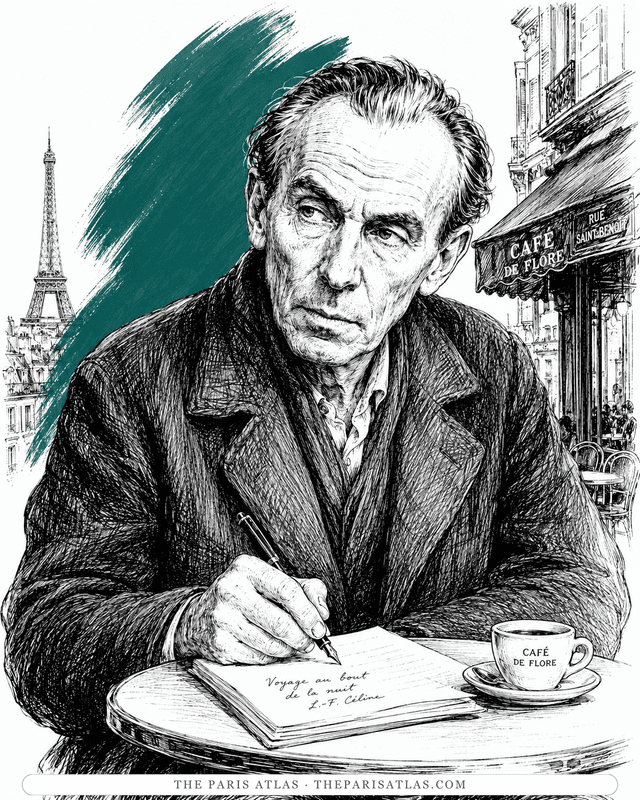
Louis-Ferdinand Céline
The doctor of the Paris slums who wrote the century's blackest, funniest novel — and changed the sound of French prose.
View author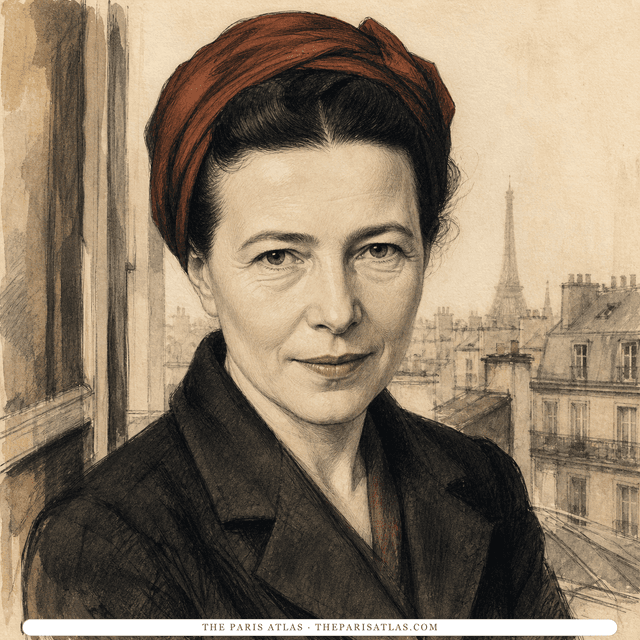
Simone de Beauvoir
French writer and philosopher whose novels, memoirs, and social analysis examined freedom, gender, responsibility, aging, and the material conditions that shape a life.
View author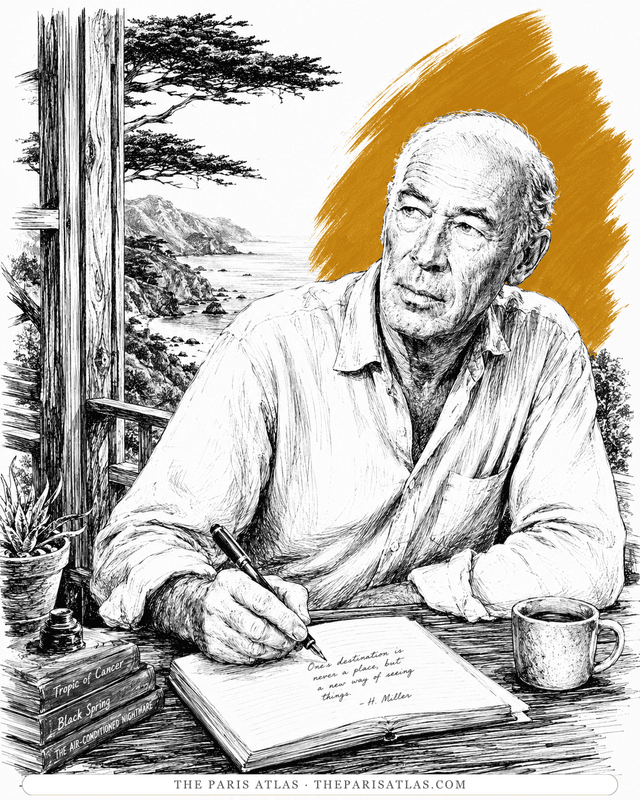
Henry Miller
The Brooklyn dropout who arrived in Paris broke at thirty-eight and wrote the exuberant, banned books that ended American censorship.
View author