Two Profiles
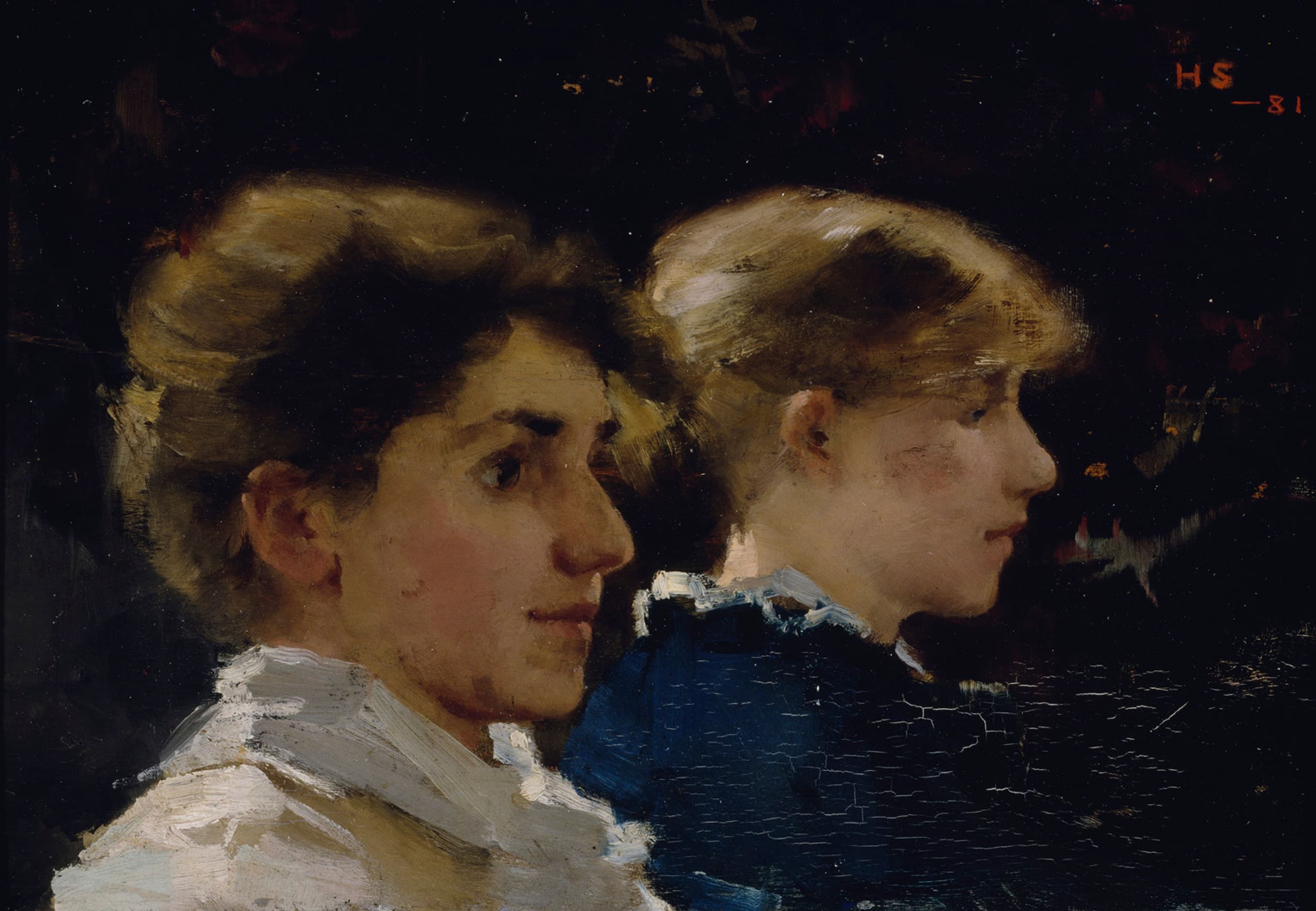
Two young women sit in profile, facing right, against a black ground on a small wooden panel. The nearer one is Marianne Preindlsberger, an Austrian painter who was Helene Schjerfbeck's closest friend at the Académie Colarossi in Paris. Schjerfbeck painted it in 1881, her first full year in Paris, and it is at the Ateneum Art Museum in Helsinki.
- 1881
- Oil on panel
- Ateneum Art Museum, Finnish National GalleryHelsinki, Finland
About Helene Schjerfbeck
What the painting shows
The two sitters face right, one behind the other, cut off at the shoulders. The nearer one, Marianne Preindlsberger, has dark blonde hair piled high on her head, a dark brow, a straight nose and a closed mouth, with a patch of pink on her cheek. She wears a white blouse with a high collar, put on in thick strokes of white and gray. The second woman is fairer and set further back, her hair in a bun and her lips slightly parted, in a dark blue dress with a pale ruffled collar.
The ground is black, with dabs of dark red and orange at the left and right that are too loose to name. Fine cracks run across the blue of the dress. In the upper right corner Schjerfbeck signed with her initials, HS, and the date, painted as a dash and the figures 81 in orange-red.
The panel is 22 by 34 centimeters, about nine by thirteen inches, and the paint is oil on wood. The Finnish National Gallery's full title is Two Profiles (Marianne Preindlsberger in front).
Who the two women are
Marianne Preindlsberger, born in 1855, was an Austrian painter who had studied for several years in Munich before coming to Paris. She and Schjerfbeck met at the Académie Colarossi in 1881, when Schjerfbeck was eighteen and had just moved there from Madame Trélat de Vigny's studio for women. Marja Lahelma's 2023 biography describes Preindlsberger as lively and strong-willed, caring toward her younger friend, and inclined to find Helene timid and impractical. The two stayed close until Preindlsberger's death in 1927.
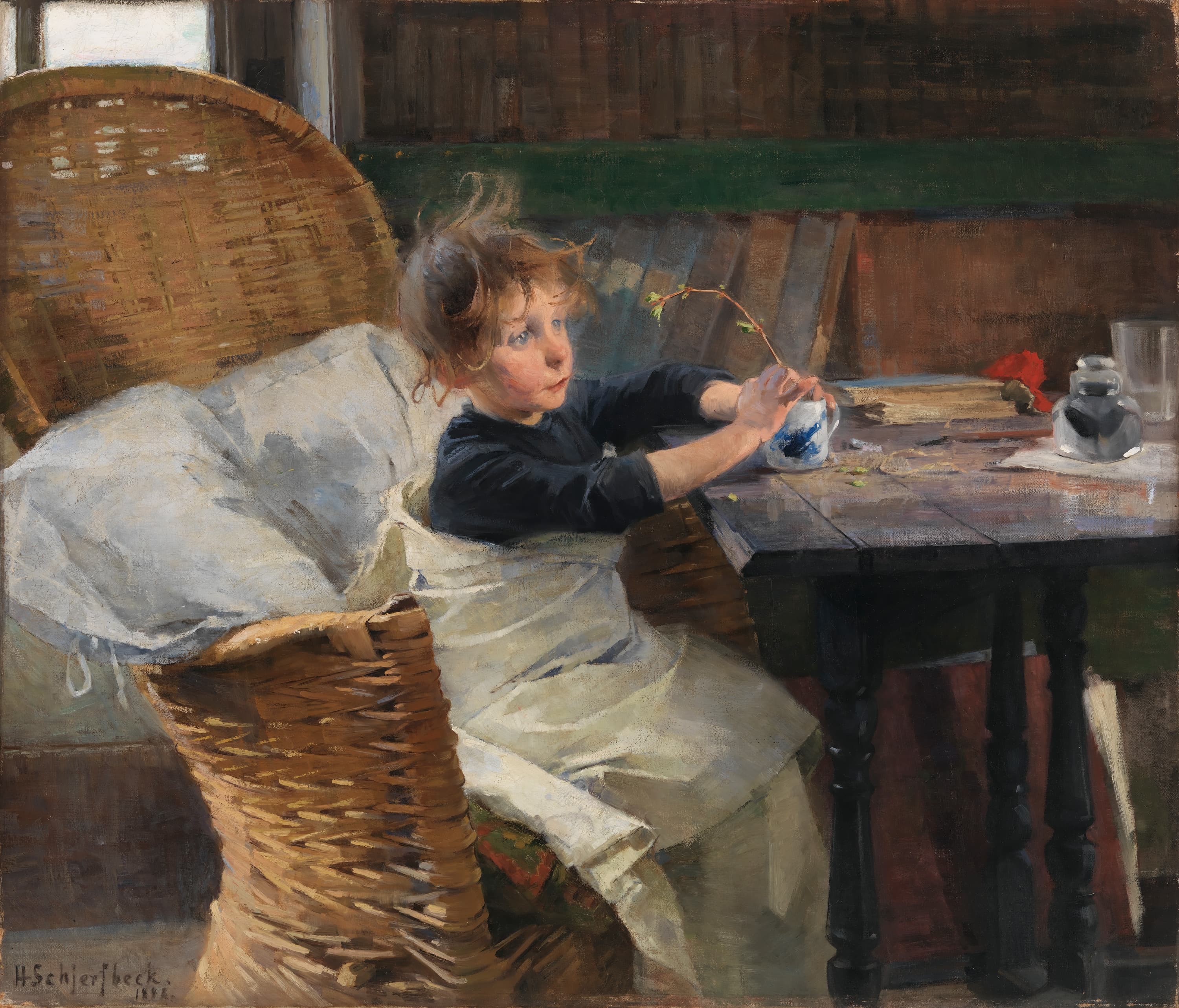
In 1884 Preindlsberger married the British landscape painter Adrian Scott Stokes and moved to England, where she painted as Marianne Stokes. In 1887 she persuaded Schjerfbeck to join them at the artists' colony at St Ives in Cornwall, where Schjerfbeck painted The Convalescent.
The museum's title names only the woman in front. Lahelma writes that the second profile probably belongs to Annie Anker, a Norwegian painter born in 1851 who had moved with Schjerfbeck from Madame Trélat's school to Colarossi's. Anker painted her own small studio scene in 1881 of Schjerfbeck and Helena Westermarck at work side by side at the academy. She died in 1885.
Painted in the studio, probably at work
Marianne Preindlsberger and the woman behind her look at something outside the picture. Lahelma reads the panel as having been painted while all three artists were working together in the studio, with the two sitters concentrating on their own easels rather than posing.
She places it in a type the art historian Carina Rech calls the friendship image, in which a woman artist's friend serves as her model. Such pictures, Rech argues, gained currency in the 1880s as women moved from amateur to professional status, and they show artists at work in a way that reads as professional and independent while staying respectable. The Metropolitan Museum of Art's 2026 essay on Schjerfbeck by Patricia G. Berman makes the same point, calling the panel emblematic of the working life these women shared.
That shared life was the point of Paris. At Colarossi the women students were taught by Gustave Courtois and visited by leading Naturalist painters, though Westermarck later recalled that the students learned most from their more advanced peers. Schjerfbeck came to call Westermarck, Maria Wiik and Ada Thilén her sisters of the brush.
Concarneau, the summer after
In the summer of 1881 Schjerfbeck and Preindlsberger left Paris for Concarneau, a fishing port on the Breton coast, and stayed from July to September. The American novelist Blanche Willis Howard was there the same summer and put the colony into her 1884 novel Guenn, where Preindlsberger appears as a Danish art student and Adrian Stokes as an amiable young English landscape painter.
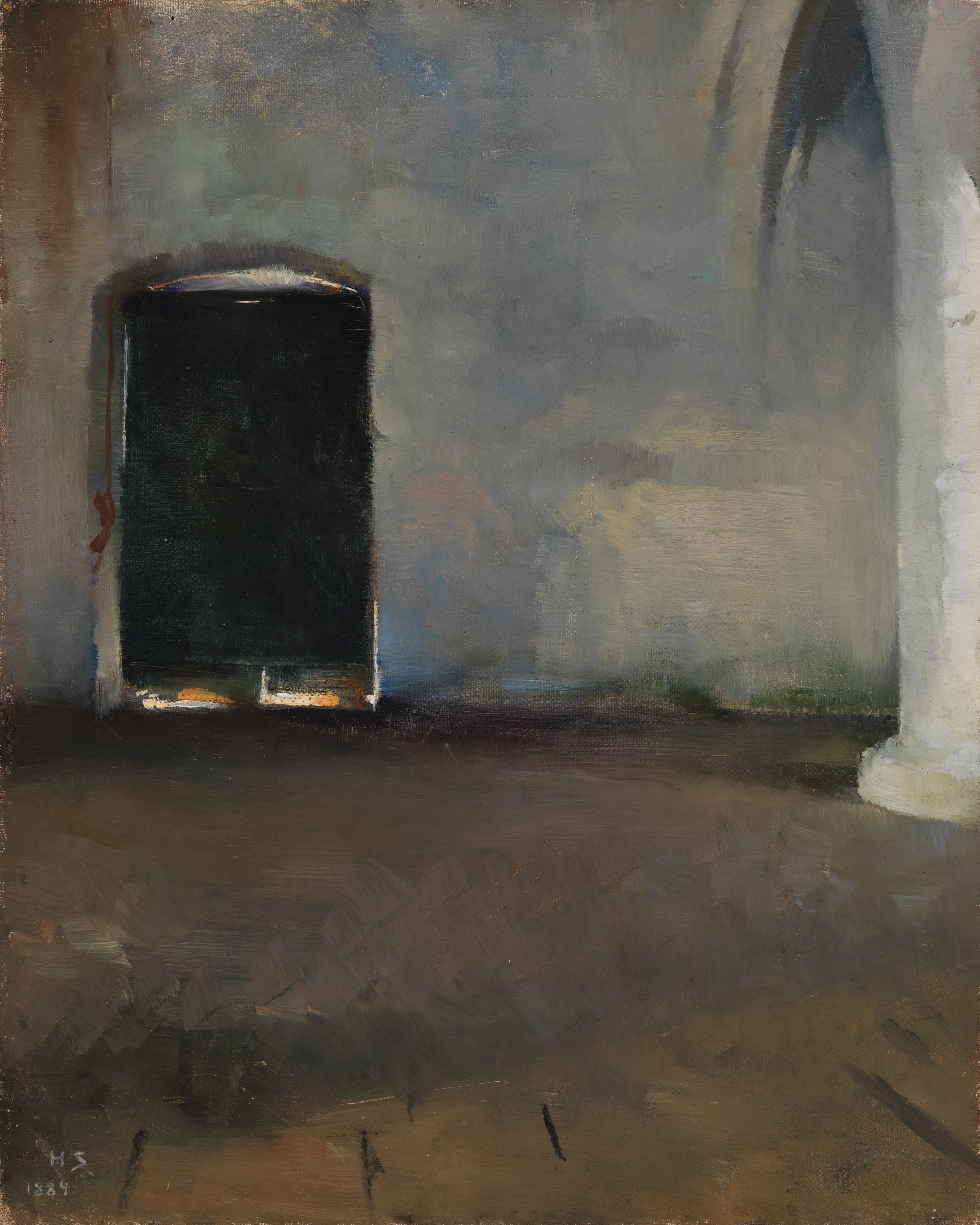
Back in Paris that autumn, Schjerfbeck gave up her lodgings with the Runeberg family and moved with Preindlsberger into a run-down boarding house in Montparnasse. In July 1883 the two went back to Brittany with Maria Wiik, to Pont-Aven, where Schjerfbeck painted The Door.
From a private collection to the Ateneum
The Finnish National Gallery's exhibition history for the panel begins in February 1924, at the Artists' Guild jubilee exhibition in the Ateneum, and continues at Liljevalchs in Stockholm in 1934. It belonged to the collectors Gerda and Salomo Wuorio, and the Finnish National Gallery's record dates its arrival as a bequest, with their collection, to 30 November 1965. Its inventory number is A IV 3650.
It has since traveled to the Phillips Collection in Washington and the National Academy of Design in New York in 1992. In 2019 it went to the Royal Academy of Arts in London and then to the Ateneum's Through My Travels I Found Myself. In 2021 to 2022 it was at Prins Eugens Waldemarsudde in Stockholm.
Where it is
The Ateneum Art Museum in Helsinki, part of the Finnish National Gallery, in the Gerda and Salomo Wuorio Collection, inventory number A IV 3650. The museum's online record does not say whether the panel is currently on view, so check before traveling to see it.
The Finnish National Gallery releases its photographs of works whose copyright has expired under the CC0 licence, and its record for Two Profiles carries the museum's photograph on those terms.
Close reading
Reading the work, detail by detail
A panel 22 by 34 centimeters, painted in oil on wood. Close views show how differently the two heads are finished, the thick white of the front collar, the cracked blue of the dress behind, and the orange-red initials in the corner.
1.Marianne Preindlsberger's profile
The front profile is the most finished passage on the panel. The brow is dark and level, the nose straight, the lips closed, and a patch of pink sits high on the cheek. The eye looks ahead at something outside the picture.
2.Hair piled high
The hair is built up from brown and ochre strokes into a loose mass on top of the head, with pale yellow touches where the light catches it. Loose strands escape at the forehead and the nape. Behind it the black ground is worked in with a few reddish dabs.
3.The second woman
The second head is set back and painted paler, with fair hair drawn into a bun, a pink ear, and lips a little apart. Her eye is barely marked. Marja Lahelma suggests she is the Norwegian painter Annie Anker, though the museum's title names only the woman in front.
4.The white blouse in thick strokes
The blouse is the roughest paint on the panel: thick strokes of white, cream and gray dragged across each other, with the collar standing up against the jaw. Where the face is blended smooth, the clothing is left as brushwork.
5.The blue dress and its cracks
The dress is a deep blue with a pale blue-white ruffle at the neck, put on in a few loaded strokes. Fine cracks run across the blue in a web, a sign of paint that has aged unevenly. The nearer woman's chin and collar overlap it at the left.
6.HS and the date in orange-red
In the top right corner Schjerfbeck signed with her initials, HS, and under them a dash and the figures 81 for the year. The letters are in orange-red, the warmest color on the panel, and they sit on a ground that is not quite black: dark reds and browns show through it.
Timeline
1881
Schjerfbeck moves to the Académie Colarossi, meets Marianne Preindlsberger and paints the panel, signing it HS 81.
1881
The two friends spend July to September at Concarneau in Brittany.
1884
Preindlsberger marries Adrian Scott Stokes and moves to England.
1924
First recorded showing, at the Artists' Guild jubilee exhibition in the Ateneum, Helsinki.
1965
Bequeathed to the Finnish National Gallery with the Gerda and Salomo Wuorio Collection, recorded on 30 November.
2019
Shown at the Royal Academy of Arts in London and at the Ateneum.
Where to see it
Ateneum Art Museum, Finnish National Gallery
Helsinki, Finland
A public viewing address has not yet been confirmed for this holding.
The museum's online record does not state whether the panel is currently on view.
Frequently asked questions
Where is Helene Schjerfbeck's Two Profiles?
The Ateneum Art Museum in Helsinki, part of the Finnish National Gallery, inventory number A IV 3650. It came to the museum in 1965 with the Gerda and Salomo Wuorio Collection. The museum's online record does not say whether it is currently on view.
Who is the woman in front in Two Profiles?
Marianne Preindlsberger, an Austrian painter born in 1855 who studied with Schjerfbeck at the Académie Colarossi in Paris in 1881. She married the British painter Adrian Scott Stokes in 1884 and is better known under her married name, Marianne Stokes. The Finnish National Gallery names her in the painting's full title.
Who is the second woman in Two Profiles?
The museum's title does not say. Marja Lahelma's 2023 biography of Schjerfbeck for the Finnish National Gallery says the second profile probably belongs to Annie Anker, a Norwegian painter who had moved with Schjerfbeck from Madame Trélat's studio to Colarossi's. Anker died in 1885.
When and where was Two Profiles painted?
In Paris in 1881, Schjerfbeck's first full year there, and probably in the studio while the three women were working. She signed it with her initials and the date, HS 81, in the upper right corner.
How big is Two Profiles?
22 by 34 centimeters, about nine by thirteen inches. It is painted in oil on a wooden panel.
Can I reuse the image of Two Profiles?
Yes. Helene Schjerfbeck died in January 1946, so the painting is out of copyright, and the Finnish National Gallery releases its photograph of it under CC0, which allows any use without permission.
More by Helene Schjerfbeck
If you like Helene Schjerfbeck
Explore painters from the same movements and circles.
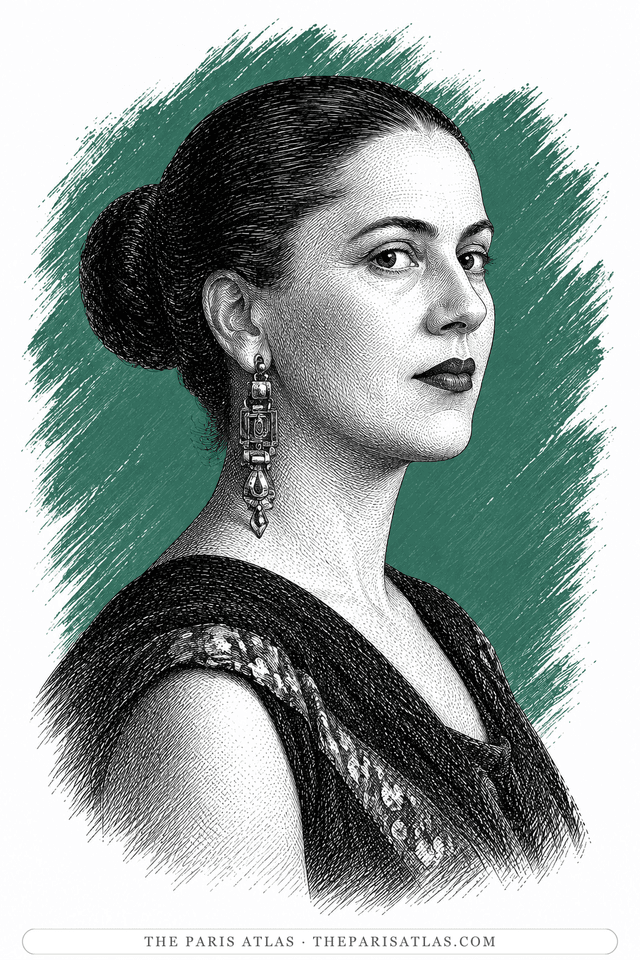
Tarsila do Amaral
Brazilian painter who spent the 1920s moving between São Paulo and Paris, studied Cubism under André Lhote, Albert Gleizes and Fernand Léger, and used what she learned to paint Brazilian towns, railways, plants and bodies. Her 1928 painting Abaporu prompted the manifesto that gave the Anthropophagic movement its name.
View artist
Arman
French-American artist, lifelong friend of Yves Klein, and a founder of New Realism.
View artist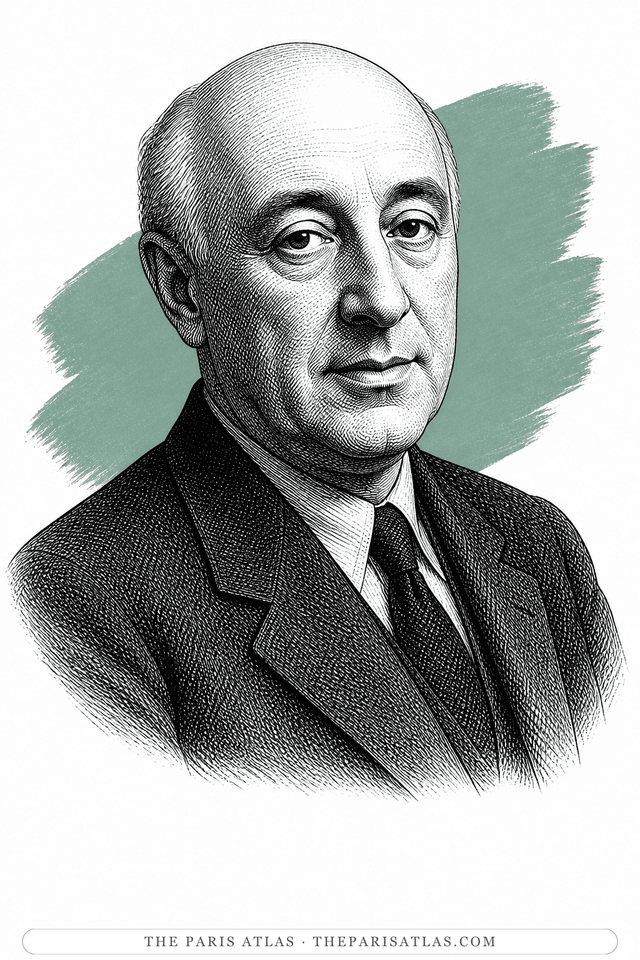
Jean Arp
Strasbourg-born sculptor and poet — Hans in German, Jean in French, both all his life — who co-founded Dada at the Cabaret Voltaire in 1916, composed collages by dropping torn paper 'according to the laws of chance', and settled at Meudon outside Paris in a house his wife Sophie Taeuber-Arp designed.
View artist
References
The sources below include collection records, catalogues, scholarly research, and primary materials that informed this page. They document Two Profiles, its making, and its place in cultural history.

1Two Profiles (Marianne Preindlsberger in front) (Helene Schjerfbeck, 1881) — Finnish National Gallery collection record
WebsiteFinnish National GalleryUsed forWeb source consulted for documented facts and historical context presented on the Two Profiles page.
2Helene Schjerfbeck: An Artist's Life — screen PDF
BiographyFinnish National Gallery / Ateneum Art Museum, 2023Used forBiographical evidence used to verify chronology, relationships, and historical context connected to Two Profiles.
3Helene Schjerfbeck's Portraiture
WebsiteThe Metropolitan Museum of Art, 2026Used forWeb source consulted for documented facts and historical context presented on the Two Profiles page.
4Important Years — Helene Schjerfbeck Chronology
WebsiteHelene Schjerfbeck SocietyUsed forWeb source consulted for documented facts and historical context presented on the Two Profiles page.
5The Convalescent and Under the Yoke Released into the Public Domain
WebsiteAteneum Art Museum, Finnish National GalleryUsed forWeb source consulted for documented facts and historical context presented on the Two Profiles page.
These references provide the documented foundation for this work's history and interpretation. Claim-level citations remain attached to the specific claims they support.
 Explore more resources