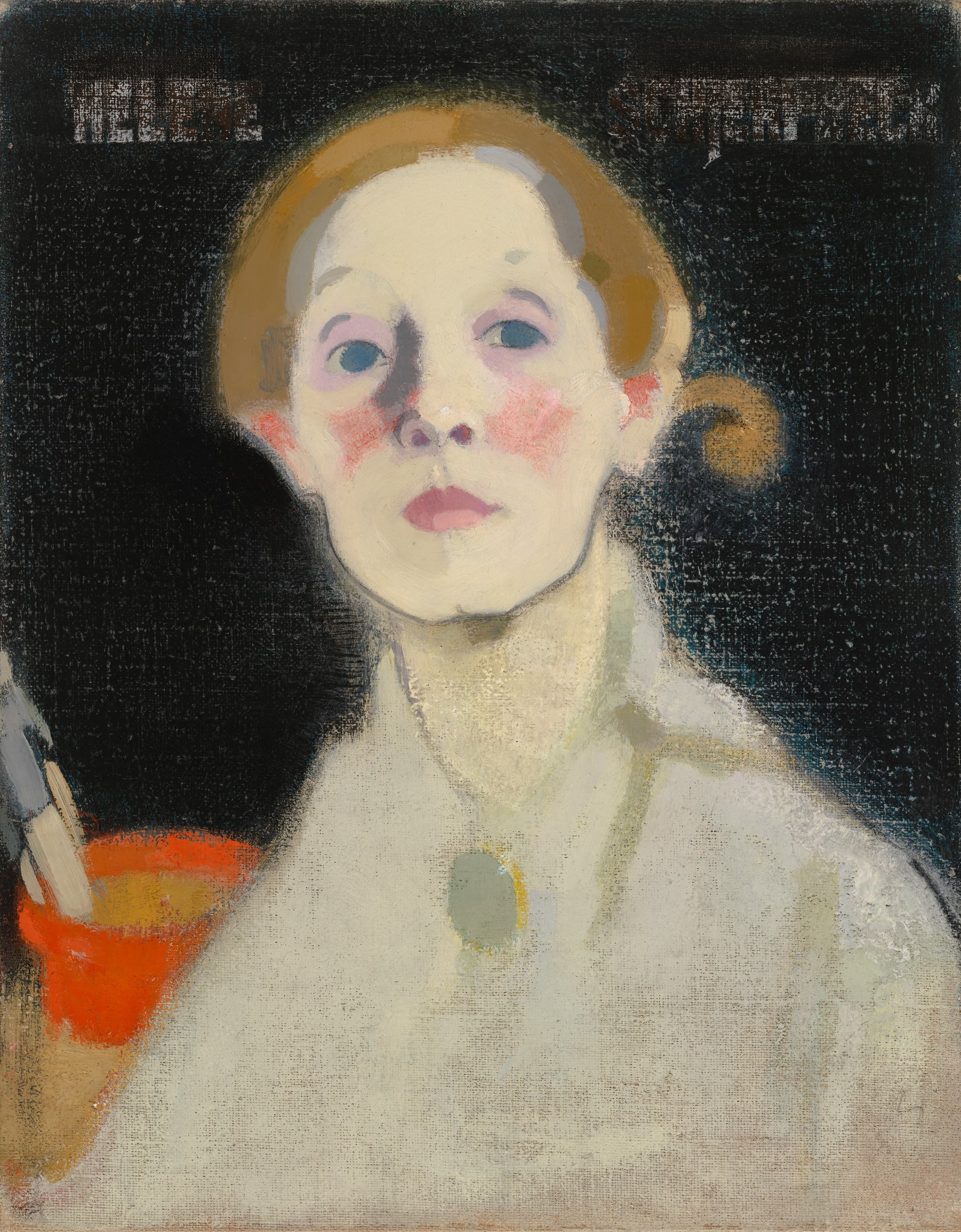
Self-Portrait, Black Background
A pale face looks straight out from a black ground, under the name HELENE SCHJERFBECK in worn silver capitals, with a pot of brushes at the lower left. The Finnish Art Society asked ten artists for self-portraits in October 1914, and Helene Schjerfbeck, the only woman among them, sent this one in 1915. It is at the Ateneum Art Museum in Helsinki.
- 1915
- Oil on canvas
- Ateneum Art Museum, Finnish National GalleryHelsinki, Finland
About Helene Schjerfbeck
What the painting shows
Schjerfbeck shows herself head-on, cut off at the chest, with her chin raised a little. The face is cream-white with two patches of red on the cheeks and a small pink mouth. The eyes are blue-gray under lids of mauve, and the right one sits slightly askew. A gray shadow runs down one side of the nose, and a thin gray line draws the edge of the chin.
Golden-brown hair caps the head and ends in a coil at the right. Above it, at the top of the canvas, the words HELENE and SCHJERFBECK are lettered in pale silvery capitals that have been rubbed until they are hard to read. The dress or blouse is a pale gray-white, brushed so thinly that the canvas weave shows, with a small gray-green oval brooch at the throat.
In the lower left corner a red-orange pot with an ochre inside holds two or three brushes. The ground is black, and across it white specks of bare canvas show through, thickest at the right. There is no signature anywhere but the name at the top. The canvas is 45.5 by 36 centimeters, about eighteen by fourteen inches.
A commission for the Finnish Art Society
In October 1914 the Finnish Art Society invited ten artists to paint self-portraits for the meeting room of its governing board. The other nine were Väinö Blomstedt, Magnus Enckell, Antti Favén, A. W. Finch, Akseli Gallen-Kallela, Pekka Halonen, Juho Rissanen, Hugo Simberg and Verner Thomé. Schjerfbeck was the only woman. The invitation fixed the size of the canvas and said a committee would have to approve the result.
The Metropolitan Museum of Art's 2026 essay on Schjerfbeck by Patricia G. Berman reads the invitations as part of a campaign to present Finnish painting as part of European art, inside the new Ateneum building. Schjerfbeck worried that hers would be refused. In October 1915 she told her friend Maria Wiik that it had been accepted with acclamation, and the Finnish National Gallery's record dates the purchase to 25 September 1915.
Marja Lahelma, in her 2023 biography for the Finnish National Gallery, points out how much the picture differs from the self-portrait Schjerfbeck had painted only three years earlier, in 1912. The face is almost symmetrical, the skin nearly white, the contours firm against a solid black ground. The brushes in the red pot are unusual: her self-portraits rarely show the tools of the trade, and Lahelma suggests she added them with the commission in mind.
The name in silver letters
The inscription above the head is the most unusual thing in the picture. Lahelma links it, with the white head floating on black, to a lithograph Edvard Munch made in 1895, Self-Portrait with Skeleton Arm, where the artist's name runs along a strip at the top like the lettering on a tomb. Schjerfbeck knew Munch's work and was wary of it, but in 1915 she wrote to Maria Wiik that she had discussed his paintings with her friend Einar Reuter and now understood them better.
Lahelma also describes the halo-like effect of the golden-brown hair around the head and the sense of grandeur the block capitals give the small canvas. In the context of Finnish art in 1915, she writes, the self-portrait is extremely modern in style and technique, and its self-assurance was not something usually associated with women artists.
From the board room to the Ateneum
The painting has belonged to the Finnish Art Society's collection, now the Finnish National Gallery, since 1915. The museum catalogues it in the Herman and Elisabeth Hallonblad Collection, named for two art patrons from Ladoga Karelia, with the inventory number A II 1065.
The museum's record of its exhibitions begins abroad. The Artists' Guild of Finland sent it to Oslo in a show of Finnish contemporary art at the Norwegian National Gallery, from 9 April to 9 May 1929. That summer it went on to the Kunsthalle in Kiel. Since then it has traveled often. It went to the Phillips Collection in Washington in 1992, to Hamburg, The Hague and Paris in 2007 and 2008, and to Japan in 2015 and 2016. It was at the Royal Academy of Arts in London in 2019 and the Van Gogh Museum in Amsterdam in 2020. From December 2025 to April 2026 it hung in Seeing Silence at the Metropolitan Museum of Art in New York.
Where it is
The Ateneum Art Museum in Helsinki, part of the Finnish National Gallery, inventory number A II 1065. The museum's online record does not say whether the painting is currently on view, so check before traveling to see it.
The Finnish National Gallery releases its photographs of works whose copyright has expired under the CC0 licence, and its record for this painting carries the museum's photograph on those terms. The image can be copied and reused, including commercially, without permission.
Close reading
Reading the work, detail by detail
A canvas 45.5 by 36 centimeters with a black ground and a pale face. Close views show the rubbed silver letters of the name, two eyes that do not quite match, the brushes in the red pot, and where the canvas shows through the paint.
1.HELENE in silver capitals
The first name runs across the top left in block capitals of silver-gray paint. The letters have been rubbed until they are broken and faint, so the word reads as much as a trace as a label. Below them the black ground is scored with fine marks.
2.SCHJERFBECK, running into the hair
The surname fills the top right in the same worn capitals, and its final letters are cut by the curve of the hair. Marja Lahelma links the device to Edvard Munch's 1895 lithograph Self-Portrait with Skeleton Arm, which carries the artist's name in a strip at the top.
3.Two eyes that do not match
The eyes are blue-gray with dark pupils, and their lids are painted in a mauve that appears nowhere else on the face. The right eye sits a little higher and turns slightly outward. Between them a gray shadow drops down one side of the nose, and two patches of red sit on the cheeks below.
4.The mouth and the drawn chin
The mouth is a small pink shape with a darker line between the lips. Below it the chin is outlined with a thin gray stroke, as if drawn rather than modeled, and the neck under it is a flat cream with faint green-gray shading. Lahelma describes the whole face as drawn with clearly defined contours against the black.
5.Brushes in a red pot
A red-orange pot with an ochre interior stands at the lower left, cut by the edge of the canvas, with two or three brushes leaning out of it in gray and cream. It is the only strong warm color in the picture. Lahelma reads the brushes as a deliberate reminder of her profession, put in for the Finnish Art Society's commission.
6.A brooch on thin paint
At the throat a small oval brooch, gray-green with a yellow rim, hangs at the neckline. The garment around it is a scrubbed gray-white so thin that the canvas texture shows everywhere. Above it the neck is edged with a soft gray line rather than a shadow.
Timeline
1912
Schjerfbeck paints the self-portrait Lahelma sets against this one, now also at the Ateneum.
1914
In October the Finnish Art Society invites ten artists, Schjerfbeck among them, to paint self-portraits for its board room.
1915
The painting is accepted; the Finnish National Gallery dates the purchase to 25 September. Inventory number A II 1065.
1929
First recorded exhibitions, at the Norwegian National Gallery in Oslo and the Kunsthalle in Kiel.
2019
Shown at the Royal Academy of Arts in London, then at the Ateneum.
2025–26
Shown in Seeing Silence: The Paintings of Helene Schjerfbeck at the Metropolitan Museum of Art, New York.
Where to see it
Ateneum Art Museum, Finnish National Gallery
Helsinki, Finland
A public viewing address has not yet been confirmed for this holding.
The museum's online record does not state whether the painting is currently on view.
Frequently asked questions
Where is Helene Schjerfbeck's Self-Portrait, Black Background?
The Ateneum Art Museum in Helsinki, part of the Finnish National Gallery, inventory number A II 1065, in the Herman and Elisabeth Hallonblad Collection. The museum's online record does not say whether it is currently on view.
Why did Schjerfbeck paint Self-Portrait, Black Background?
Because the Finnish Art Society asked her to. In October 1914 the society invited ten artists to paint self-portraits for its board room, with the size fixed in advance and a committee to approve the results. Schjerfbeck was the only woman invited. She feared rejection, but the portrait was accepted in 1915, with acclamation, as she told Maria Wiik.
What is written at the top of the painting?
Her name, HELENE at the left and SCHJERFBECK at the right, in silver-toned block capitals that have been rubbed back until they are faint. Marja Lahelma compares the device to Edvard Munch's 1895 lithograph Self-Portrait with Skeleton Arm, which carries the artist's name on a strip at the top.
What is in the bottom left corner?
A red-orange pot with brushes standing in it. Schjerfbeck's self-portraits rarely include the tools of painting, and Lahelma suggests she put them in because the picture was a commission meant to present her as an artist.
How big is Self-Portrait, Black Background?
45.5 by 36 centimeters, about eighteen by fourteen inches. It is oil on canvas.
Is this the self-portrait with the silver background?
No. Schjerfbeck painted a second self-portrait in 1915 with a silver-leaf background, in pencil, watercolor and charcoal on paper, which is at the Turku Art Museum. The Ateneum's painting is the one with the black background and her name across the top.
Can I reuse the image of this painting?
Yes. Helene Schjerfbeck died in January 1946, so the painting is out of copyright, and the Finnish National Gallery releases its photograph of it under CC0, which allows any use without permission.
More by Helene Schjerfbeck
If you like Helene Schjerfbeck
Explore painters from the same movements and circles.
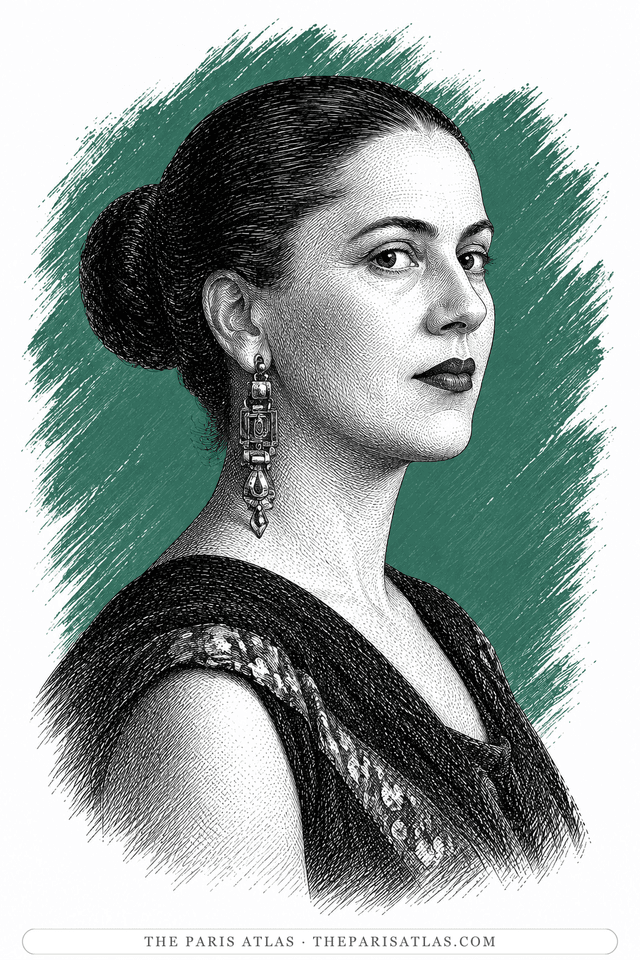
Tarsila do Amaral
Brazilian painter who spent the 1920s moving between São Paulo and Paris, studied Cubism under André Lhote, Albert Gleizes and Fernand Léger, and used what she learned to paint Brazilian towns, railways, plants and bodies. Her 1928 painting Abaporu prompted the manifesto that gave the Anthropophagic movement its name.
View artist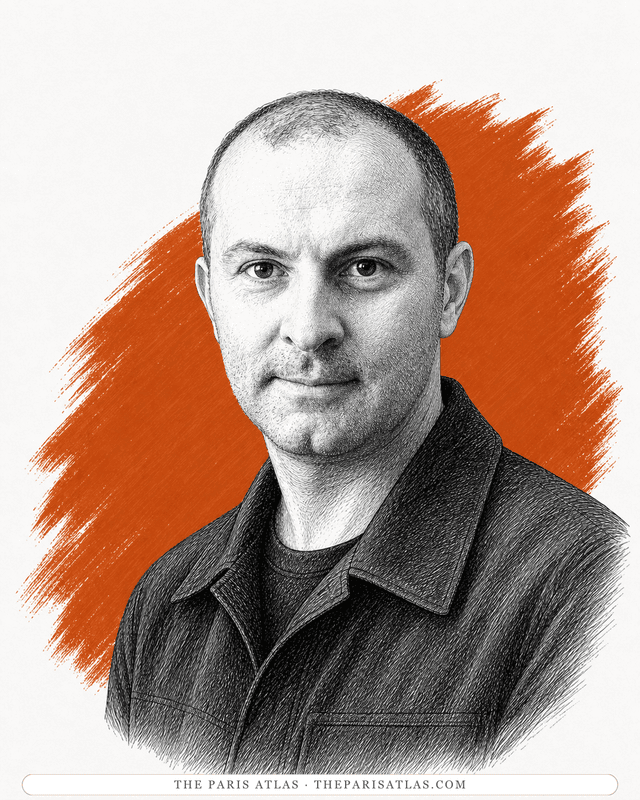
Arman
French-American artist, lifelong friend of Yves Klein, and a founder of New Realism.
View artist
Jean Arp
Strasbourg-born sculptor and poet — Hans in German, Jean in French, both all his life — who co-founded Dada at the Cabaret Voltaire in 1916, composed collages by dropping torn paper 'according to the laws of chance', and settled at Meudon outside Paris in a house his wife Sophie Taeuber-Arp designed.
View artist
References
The sources below include collection records, catalogues, scholarly research, and primary materials that informed this page. They document Self-Portrait, Black Background, its making, and its place in cultural history.

1Self-Portrait, Black Background (Helene Schjerfbeck, 1915) — Finnish National Gallery collection record
WebsiteFinnish National GalleryUsed forWeb source consulted for documented facts and historical context presented on the Self-Portrait, Black Background page.
2Helene Schjerfbeck: An Artist's Life — screen PDF
BiographyFinnish National Gallery / Ateneum Art Museum, 2023Used forBiographical evidence used to verify chronology, relationships, and historical context connected to Self-Portrait, Black Background.
3Helene Schjerfbeck's Portraiture
WebsiteThe Metropolitan Museum of Art, 2026Used forWeb source consulted for documented facts and historical context presented on the Self-Portrait, Black Background page.
4Important Years — Helene Schjerfbeck Chronology
WebsiteHelene Schjerfbeck SocietyUsed forWeb source consulted for documented facts and historical context presented on the Self-Portrait, Black Background page.
5The Convalescent and Under the Yoke Released into the Public Domain
WebsiteAteneum Art Museum, Finnish National GalleryUsed forWeb source consulted for documented facts and historical context presented on the Self-Portrait, Black Background page.
These references provide the documented foundation for this work's history and interpretation. Claim-level citations remain attached to the specific claims they support.
 Explore more resources