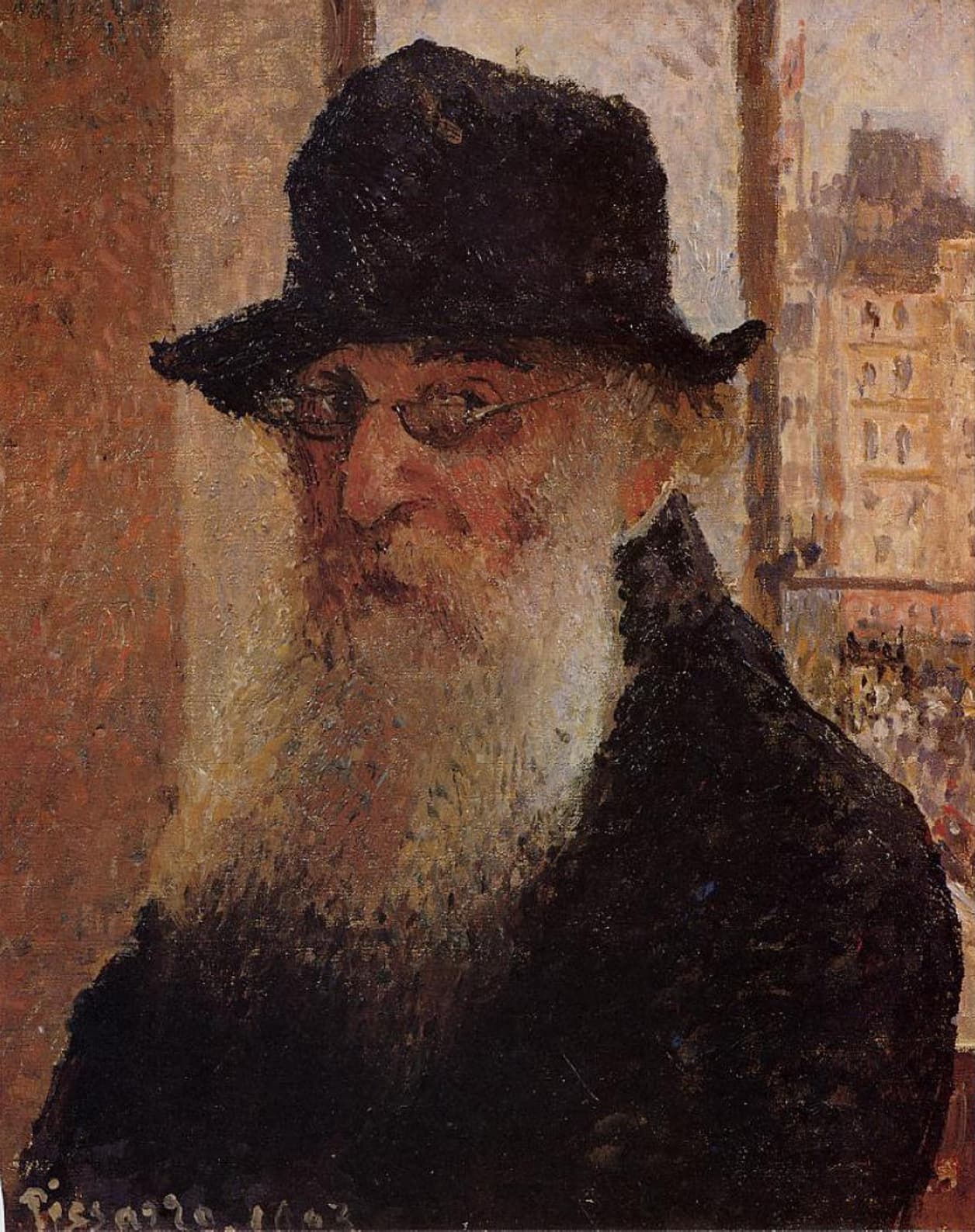
Self-Portrait
Camille Pissarro painted himself in a hat and spectacles in 1903, the year he died at seventy-three. It is his last signed and dated self-portrait. His son Lucien Pissarro gave it to the Tate in London in 1931.
- 1903
- Oil on canvas
About Camille Pissarro
What the painting shows
Camille Pissarro is shown from the chest up, turned to one side, his eyes lowered behind small oval spectacles. He wears a dark hat with a rounded crown and a heavy dark coat with the collar turned up, and a long white beard covers most of his chest. The face is the only lit thing in the picture, worked in warm reds and ochres over a brown ground.
Behind him, to the left, is a reddish-brown wall. To the right is the edge of a window, and through it a Paris apartment building with a slate mansard roof, its facade and the street below indicated in small dabs of pale paint. It is signed and dated at lower left, Pissarro 1903.
The window is often identified as the one in his rented apartment at 28 place Dauphine, where he painted the Pont-Neuf over his last three years. That identification is widely repeated but could not be confirmed on the museum's own record, which makes it a reading rather than a documented fact.
The last of three
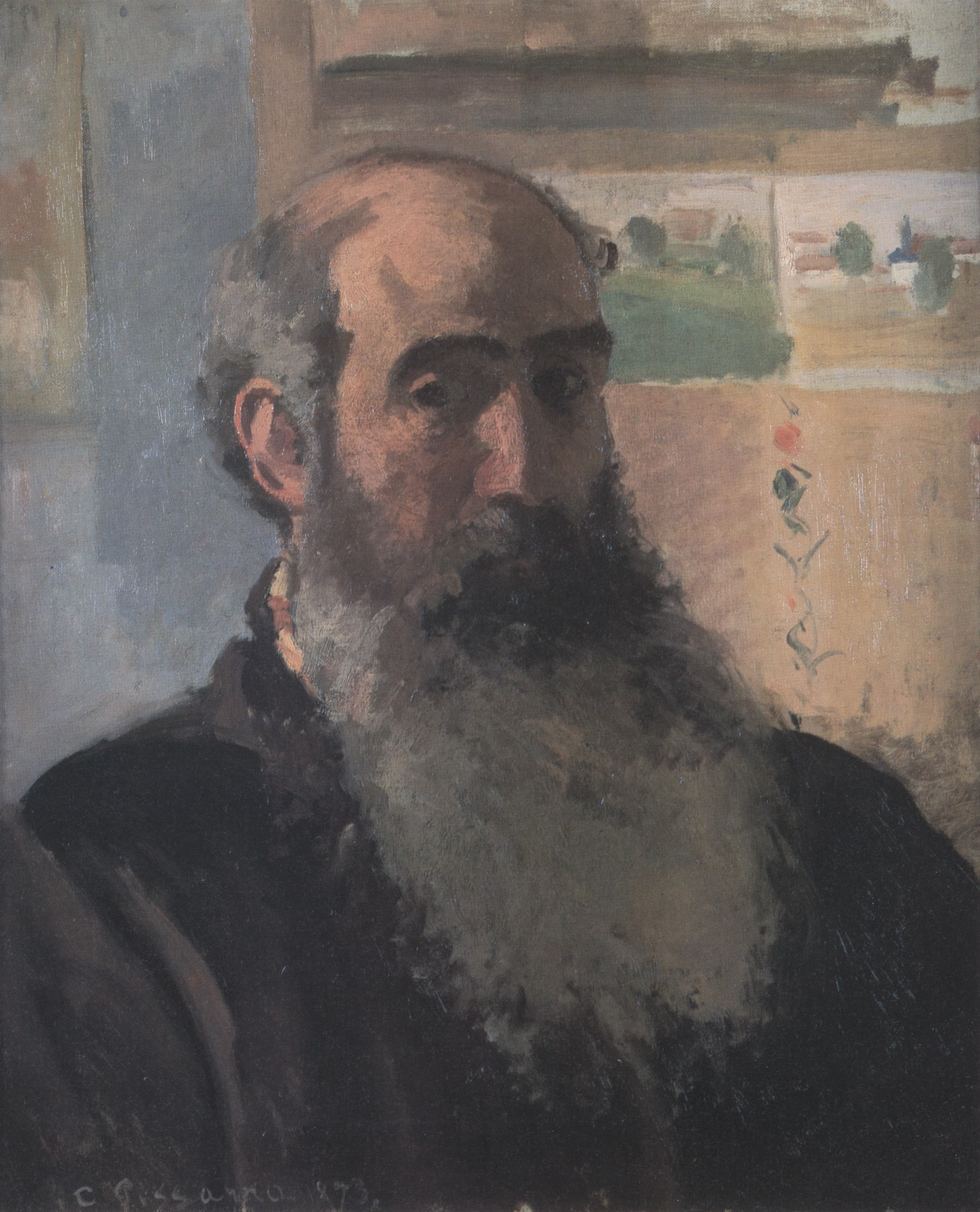
Camille Pissarro painted few pictures of himself, and scholarship generally treats three as the main sequence: one of 1873, now in the Musée d'Orsay in Paris; one of 1895, in the Dallas Museum of Art; and this one, of 1903, at the Tate.
The safe description of it is his last signed and dated self-portrait. One account holds that of three late self-portraits only the Tate picture was finished, signed and dated by him, the other two being unsigned and stamped with his initials after his death. That account could not be traced to a museum record or to the catalogue of his paintings, and it should not be taken as settled.
1903
He was the oldest of the Impressionists and the only one to show in all eight of their exhibitions, held between 1874 and 1886, which he had also helped to organise. By 1903 he was still working steadily and still working indoors, since the eye trouble that had pushed him behind windows years earlier had not gone away.
He died in Paris on 13 November 1903, of sepsis, aged seventy-three, with his family around him, and was buried at Père Lachaise. The portrait was painted in the same year.
How it reached London
The painting was given to the Tate in 1931 by Lucien Pissarro, his eldest son, who had settled in England and painted there with the artists of the Camden Town Group. The credit line records it plainly: presented by Lucien Pissarro, the artist's son, 1931.
It is a small canvas, 41 by 33.3 centimetres, and the Tate's record lists it as not on display. Its reference number is N04592.
Close reading
Reading the work, detail by detail
The late self-portrait records age plainly but refuses passivity. Its close views show an older face assembled from vigorous color, with the white beard and searching eyes holding their own against a restless surface.
1.Age sharpens rather than softens the gaze
The eyes remain dark and concentrated beneath the brow. Around them, broken touches refuse a smooth mask, so looking and being looked at feel like active work.
2.The white beard gathers many colors
The beard is not simply white. Cool blues, warm creams, and darker strokes model its volume, showing how the late Impressionist palette can describe age without smoothing away material paint.
3.The whole face remains visibly painted
Marks remain separate across skin, hair, jacket, and ground. The sitter is coherent at viewing distance, but enlargement preserves the portrait as a collection of decisions rather than an illusion of untouched likeness.
4.The eyes acknowledge fatigue without softening attention
Heavy lids and surrounding shadows register age, yet the gaze remains directed and present. The portrait permits physical wear without turning it into helplessness.
5.The cap closes the head into a compact silhouette
The dark cap joins hair and upper background, concentrating contrast around the exposed face. It makes the white beard and flesh tones appear brighter.
6.The coat is allowed to remain a field of rough paint
Broad strokes describe weight and direction without carefully rendering cloth. The unresolved garment keeps the viewer from mistaking direct observation for photographic finish.
Timeline
1873
Paints the self-portrait now in the Musée d'Orsay, Paris.
1895
Paints the self-portrait now in the Dallas Museum of Art.
1903
Paints this portrait in Paris; signed and dated at lower left, Pissarro 1903.
13 November 1903
Dies in Paris of sepsis, aged 73, and is buried at Père Lachaise.
1931
Presented to the Tate by his son Lucien Pissarro; Tate reference N04592.
Where to see it
Tate
Tate has several galleries. A specific viewing address has not been confirmed here; check which venue, if any, is displaying this work before travelling.
Plan your visit on the museum’s official website (opens in a new tab)Frequently asked questions
Is this Camille Pissarro's last self-portrait?
It is his last signed and dated one, painted in 1903, the year he died. Some accounts describe other late self-portraits left unsigned and stamped with his initials after his death, but that could not be traced to a museum record or to the catalogue of his paintings. The accurate description is the narrower one: his last signed and dated self-portrait.
How old was Pissarro when he painted it?
In his early seventies. Camille Pissarro was born in 1830 and died on 13 November 1903, aged seventy-three, in the same year he painted it.
How did Camille Pissarro die?
Of sepsis, in Paris, on 13 November 1903, aged seventy-three, with his family around him. He was buried at Père Lachaise cemetery in the east of the city.
What is behind him in the painting?
A window, and beyond it a Paris apartment building with a mansard roof and a street below, painted in small dabs. To the left is a plain reddish-brown wall. The window is often said to be the one in Camille Pissarro's apartment at 28 place Dauphine on the Île de la Cité, though the museum's record does not confirm it.
Where is the painting?
The Tate in London, which has held it since 1931, when the painter's son Lucien Pissarro presented it. The Tate's record lists it as not on display.
What is the Tate accession number?
N04592. The number N04380 is sometimes given for it by mistake; that belongs to a watercolour by John Thirtle.
How many Impressionist exhibitions did Pissarro take part in?
All eight, held between 1874 and 1886, which he also helped to organise. He was the only one of the group to show in every one of them, and the oldest of them.
More by Camille Pissarro
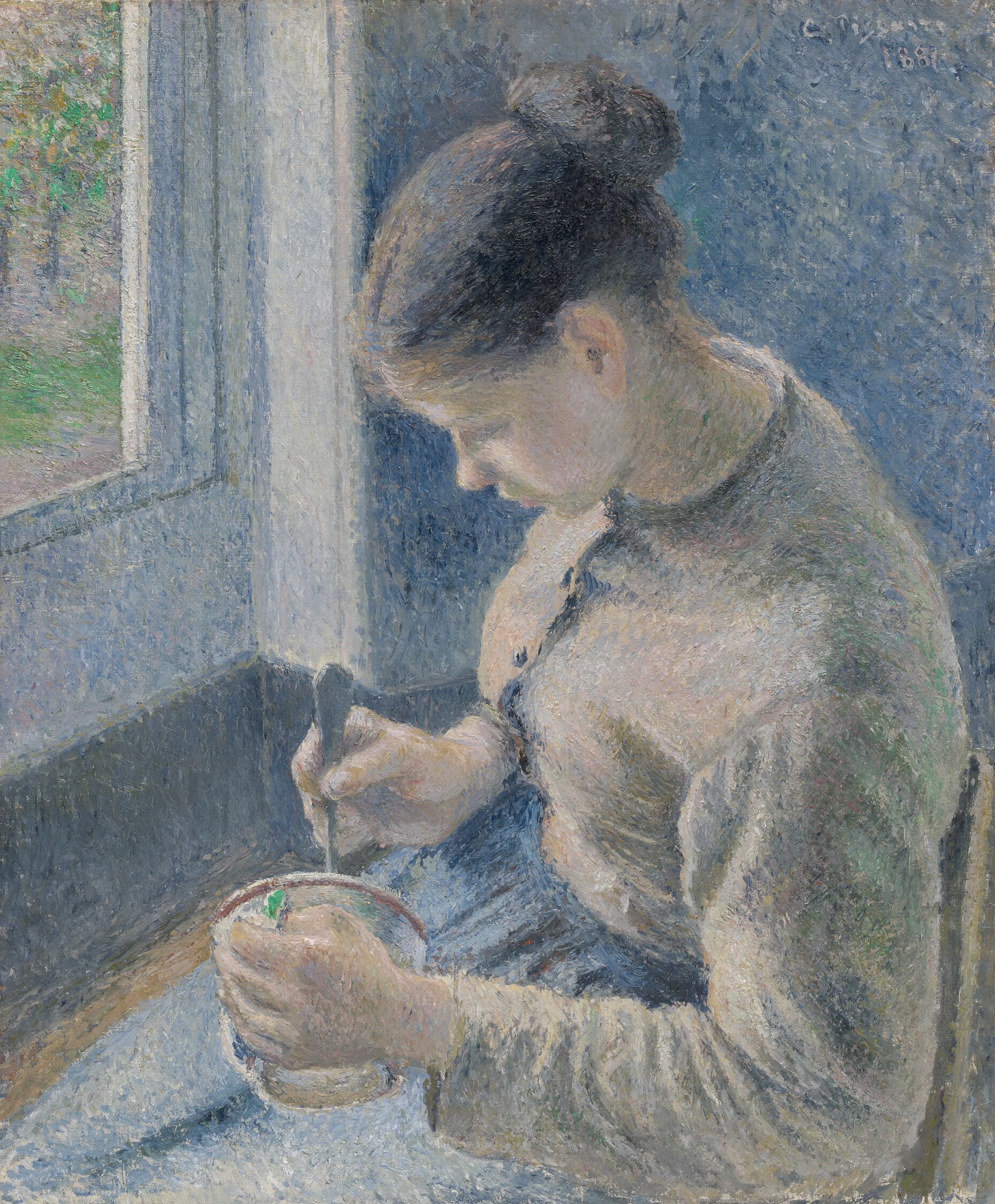
If you like Camille Pissarro
Explore painters from the same movements and circles.
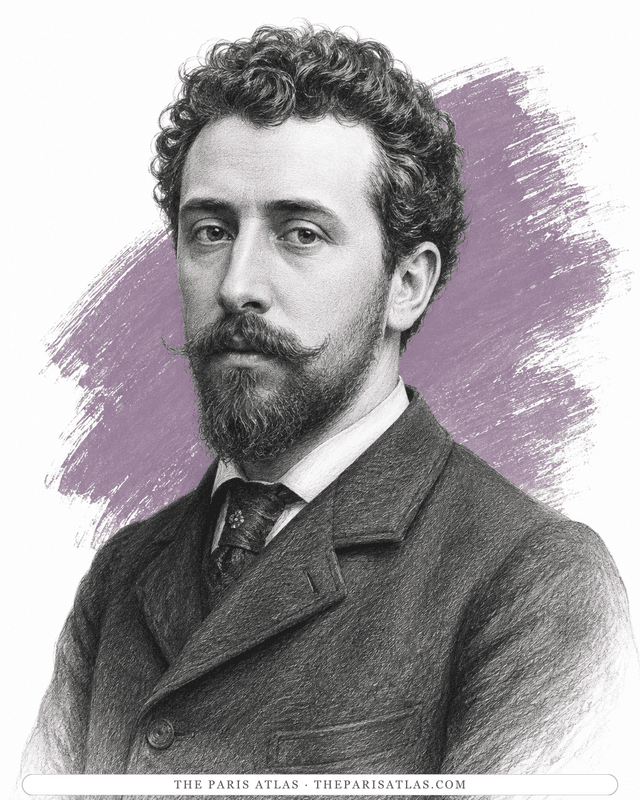
Georges Seurat
Parisian painter who built pictures from small dots of pure colour on optical principle, co-founded the Salon des Indépendants, and detonated the last Impressionist exhibition of 1886 with A Sunday on La Grande Jatte. He died at thirty-one.
View artist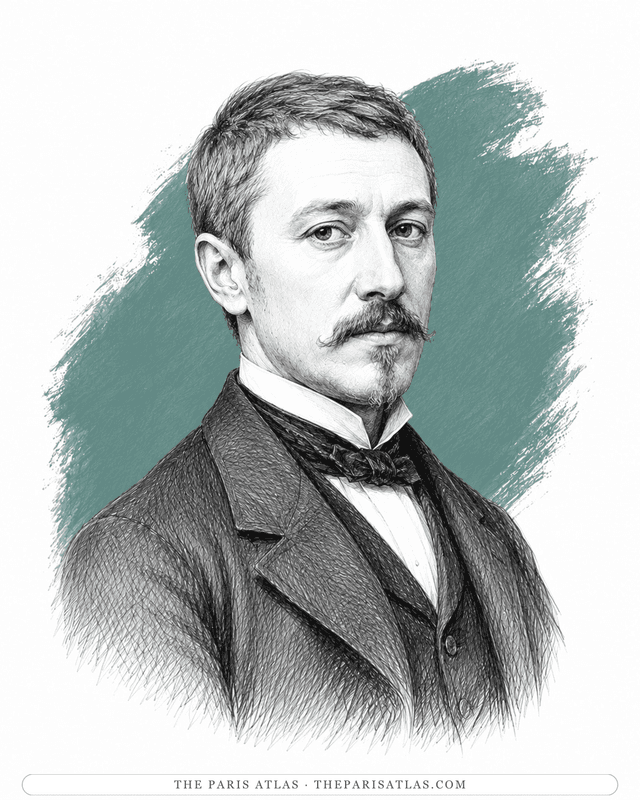
Gustave Caillebotte
Painter of Haussmann's geometry and the group's organizer-financier; his bequest of Impressionist paintings forced the French state to take the movement in.
View artist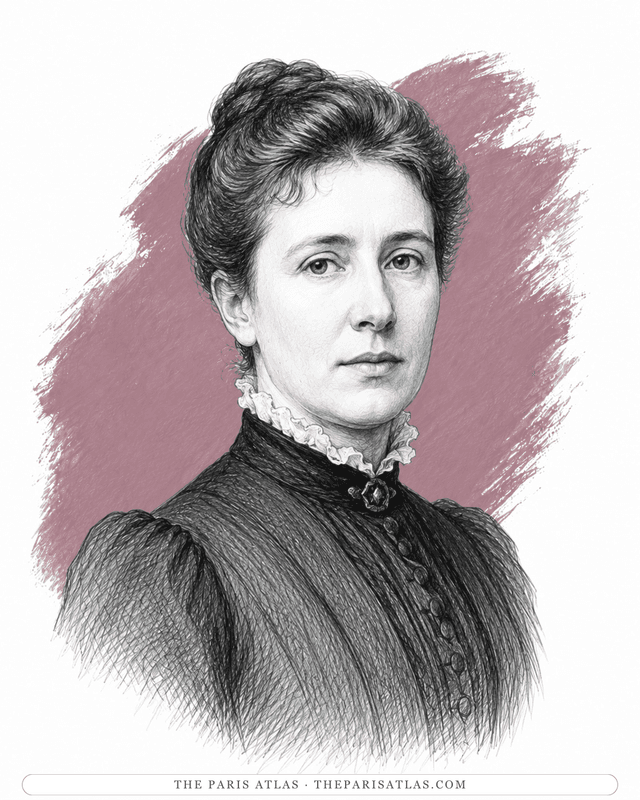
Mary Cassatt
Mary Cassatt was an American painter and printmaker known for her depictions of women and children. Based in France for the last fifty-two years of her life, she was the only American to exhibit with the original French Impressionist group, participating in four of its eight exhibitions. Edgar Degas invited her to exhibit with the group in 1877 after the Salon jury rejected her submissions.
View artist
References
The sources below include collection records, catalogues, scholarly research, and primary materials that informed this page. They document Self-Portrait, its making, and its place in cultural history.


1Camille Pissarro, Self-Portrait, 1903 (N04592)
WebsiteTateUsed forWeb source consulted for documented facts and historical context presented on the Self-Portrait page.
2Self-Portrait (Portrait de Camille Pissarro par lui-même), 1903
WebsiteArt UKUsed forWeb source consulted for documented facts and historical context presented on the Self-Portrait page.
3Pissarro Exhibition Guide: Sights of Paris
WebsiteDenver Art MuseumUsed forWeb source consulted for documented facts and historical context presented on the Self-Portrait page.
4Pissarro: Father of Impressionism — exhibition press release
WebsiteAshmolean MuseumUsed forWeb source consulted for documented facts and historical context presented on the Self-Portrait page.
5Lucien Pissarro — The Camden Town Group in Context
WebsiteTateUsed forWeb source consulted for documented facts and historical context presented on the Self-Portrait page.
These references provide the documented foundation for this work's history and interpretation. Claim-level citations remain attached to the specific claims they support.
 Explore more resources