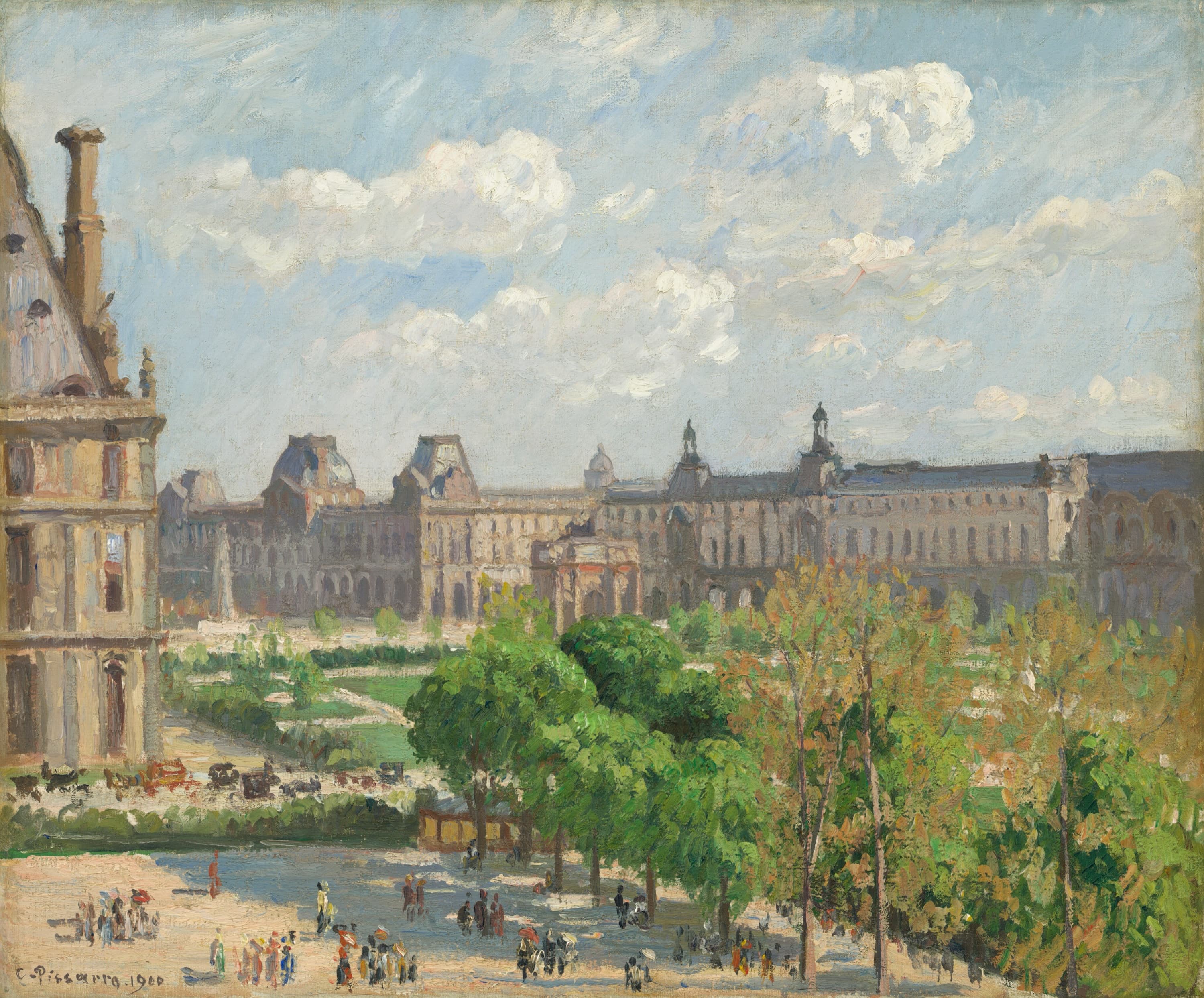
Place du Carrousel, Paris
Camille Pissarro painted the gardens beside the Louvre from a rented room on the rue de Rivoli in 1900. It is one of twenty-eight canvases he made of that view. German forces seized it in occupied France, Hermann Göring took it in 1941 and traded it away, and it was restituted after the war.
- 1900
- Oil on canvas
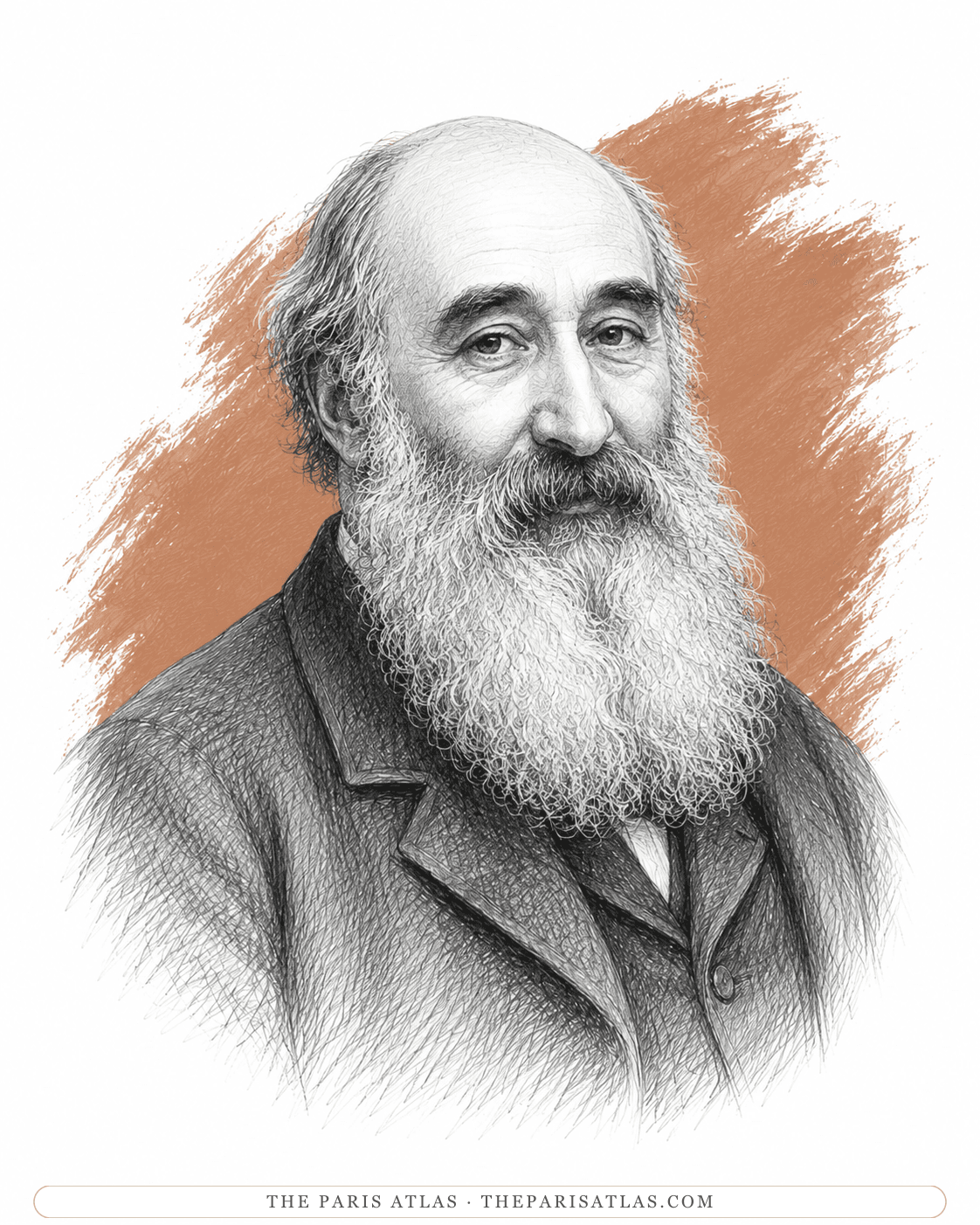
About Camille Pissarro
What the painting shows
The view is from a window, high enough that the people below are two or three brushstrokes each. At the left edge, cut off by the frame, stands the corner of a pale stone building with a steep slate roof and a chimney stack. Across the whole background runs a long range of the same pale stone, floor above floor of arched windows, with domed pavilions breaking the roofline. The National Gallery of Art in Washington, which owns the painting, identifies those buildings as part of the Louvre.[1]
Between the viewer and the Louvre lies the garden: clipped lawns, gravel walks, and trees in leaf, one of them a dense green mass at the centre, the rest thinner and lighter towards the right. The bottom of the canvas is an open sweep of pale ground crossed by carriages, a yellow omnibus, and small groups of walkers, some carrying parasols. The top third is sky, blue with heavy white cloud.[1]
It is inscribed at lower left, C. Pissarro.1900.[1]
Twenty-eight canvases from one window
Camille Pissarro spent most of his working life painting the countryside. He came to city subjects late, and for a practical reason: recurring trouble with his eyes made it painful to work outdoors, so he rented rooms above the streets he wanted and painted through the glass. By the end of his life he had made close to a hundred and fifty views of Paris that way, grouped by the address he was staying at.[2]
“This is one of twenty-eight views he painted of the Tuileries Gardens from a hotel room in the rue de Rivoli.”
The Washington museum adds that he probably took the idea of working in series from Claude Monet, and that he set up several easels at once so he could move between canvases as the light and the weather changed. A series painter cannot wait for the same conditions to come back; he keeps a canvas going for each of them.[1]
The wheels
“Notice the wheels of the carriages and buggies, where scoured circles of paint trace motion. With the movement of his brush, Pissarro does not simply paint but reenacts the wheels' rolling progress.”
It is worth looking for. At this scale a carriage is barely a centimetre of canvas, and the wheel is a single turned stroke rather than a drawn circle.
Confiscated in 1941, returned in 1946
The painting stayed in the family after Camille Pissarro died in 1903, passing to his widow Julie Pissarro. It was sold from the Pissarro sale at the Galerie Georges Petit in Paris on 3 December 1928, and by the outbreak of war it belonged to Bruno Stahl, a collector who had moved from Berlin to Brussels and later to New York.[1]
What happened next is set out in the National Gallery of Art's provenance record. The Einsatzstab Reichsleiter Rosenberg, the German unit that seized art in occupied France, confiscated the picture and filed it under the card number UNB331 as Ansicht des Louvres, Paris, a view of the Louvre. It was moved to the Jeu de Paume, the gallery that stands in the Tuileries garden the painting depicts.[1]
- 17 March 1941: Hermann Göring takes the painting from the Jeu de Paume, listed as Louvreansicht.[1]
- Göring trades it to the dealer Gustave Rochlitz in exchange for a Raffaellino del Garbo and a Wouters.[1]
- After the war it is found in Rochlitz's possession and restituted to France on 27 March 1946.[1]
- It is shown in Paris that year in the exhibition of masterpieces from French private collections recovered in Germany.[1]
- On 24 October 1947 it is restituted to the dealers Wildenstein, who return it to Bruno Stahl the same year.[1]
Stahl sold it back to Wildenstein in 1949, and on 30 March that year the American collector Ailsa Mellon Bruce bought it. It has been in Washington ever since.[1]
Where it is now
Ailsa Mellon Bruce left the painting to the National Gallery of Art in 1970, where it carries the accession number 1970.17.55 and the credit line Ailsa Mellon Bruce Collection. The museum's record lists it on view in the West Building, gallery M89.[1]
In the catalogue of Pissarro's paintings compiled by Joachim Pissarro and Claire Durand-Ruel Snollaerts in 2005 it is number 1330. The earlier Venturi catalogue of 1939 lists it as number 1136, under the French title La Place du Carrousel, Tuileries. Exhibition labels have varied too: it has been shown as Place du Carrousel, the Tuileries Gardens and as The Carousel Courtyard.[1]
Close reading
Reading the work, detail by detail
From an elevated window, Pissarro turns the Place du Carrousel into a field of intersecting routes. The details show architecture holding still while traffic and weather continually redraw the open square.
1.The square is painted as moving space
Tiny dark vehicles and figures travel in different directions across the pale ground. Their scattered paths prevent the plaza from reading as an empty foreground and make circulation its real subject.
2.The Louvre gives movement a fixed edge
Long stone fronts establish scale and continuity around the square. Pissarro keeps their details abbreviated so that the institution registers as structure rather than architectural inventory.
3.The high viewpoint turns people into marks
Seen from several floors above, bodies and carriages flatten into strokes of color. The distance lets Pissarro paint the city as a collective rhythm instead of a series of individual anecdotes.
4.The garden edge separates near order from distant traffic
A controlled strip of greenery provides a slower pattern before the open square. It makes the moving vehicles beyond appear even more dispersed and temporary.
5.A carriage cluster suggests routes crossing rather than a procession
Vehicles point and turn at different angles, so the square has no single ceremonial direction. Pissarro shows circulation as overlapping everyday decisions.
6.The palace roofline steadies the moving square
The long architectural band remains fixed above scattered traffic. Its continuity gives the eye a stable measure while the activity below changes from moment to moment.
Timeline
1900
Painted; inscribed lower left, C. Pissarro.1900.
3 December 1928
Sold from the Pissarro sale at the Galerie Georges Petit, Paris, lot 44.
By March 1941
Confiscated in occupied France by the Einsatzstab Reichsleiter Rosenberg, card UNB331, and moved to the Jeu de Paume in Paris.
17 March 1941
Taken from the Jeu de Paume by Hermann Göring and traded to the dealer Gustave Rochlitz.
27 March 1946
Restituted to France after being found in Rochlitz's possession.
1946
Shown at the Orangerie in Paris, in the exhibition of works recovered in Germany, as number 33.
24 October 1947
Restituted to Wildenstein and returned to Bruno Stahl the same year.
30 March 1949
Bought by the collector Ailsa Mellon Bruce.
1970
Enters the National Gallery of Art, Washington, as part of the Ailsa Mellon Bruce Collection; accession 1970.17.55.
1980–81
Included in the Pissarro retrospective at the Hayward Gallery, the Grand Palais and the Museum of Fine Arts, Boston, as number 86.
1992–93
Included in The Impressionist and the City: Pissarro's Series Paintings, Dallas, Philadelphia and the Royal Academy, as number 89.
2013–14
Included in The Art of the Louvre's Tuileries Garden, shown in Atlanta, Toledo and Portland.
Where to see it
National Gallery of Art, Washington
Constitution Avenue NW, between 4th and 6th Streets, Washington, DC 20565, United States
The West Building entrance is at 6th Street; the East Building entrance is at 4th Street. Check the museum’s current display information for the work’s building and gallery.
Plan your visit on the museum’s official website (opens in a new tab)Frequently asked questions
What does Place du Carrousel, Paris show?
The gardens beside the Louvre in Paris, seen from a window above them. Camille Pissarro painted lawns and gravel walks with trees in leaf, a long range of the Louvre across the background, and carriages and pedestrians crossing the open ground in the foreground. The National Gallery of Art identifies the buildings as part of the Louvre.
Where did Pissarro paint it from?
From a rented room on the rue de Rivoli, the street that runs along the north side of the Tuileries. The National Gallery of Art calls it a hotel room and counts twenty-eight views of the gardens painted from it. This is a different campaign from the Pont-Neuf pictures, which Camille Pissarro painted from an apartment at 28 place Dauphine on the Île de la Cité.
Why did Pissarro paint from windows instead of outdoors?
Because of his eyes. The National Gallery of Art records that eye trouble stopped Camille Pissarro working outdoors, and that he turned to city subjects late in life for that reason, renting rooms with a view in Rouen, Paris and elsewhere. Working behind glass also fixed the viewpoint, which is what made a series possible.
Was this painting looted by the Nazis?
Yes. The National Gallery of Art's provenance record shows it was confiscated in occupied France by the Einsatzstab Reichsleiter Rosenberg, catalogued as a view of the Louvre, and taken from the Jeu de Paume by Hermann Göring on 17 March 1941. Göring traded it to the dealer Gustave Rochlitz. It was found with Rochlitz after the war, restituted to France on 27 March 1946, and returned to its owner Bruno Stahl in 1947.
Who was Ailsa Mellon Bruce?
The American collector who bought the painting in 1949 and left it to the National Gallery of Art in 1970. Her name is on the credit line: Ailsa Mellon Bruce Collection.
Where can I see it?
The National Gallery of Art in Washington, accession number 1970.17.55. The museum's record lists it on view in the West Building, gallery M89.
How big is the painting?
54.9 by 65.4 centimetres, a little under two feet across.
More by Camille Pissarro
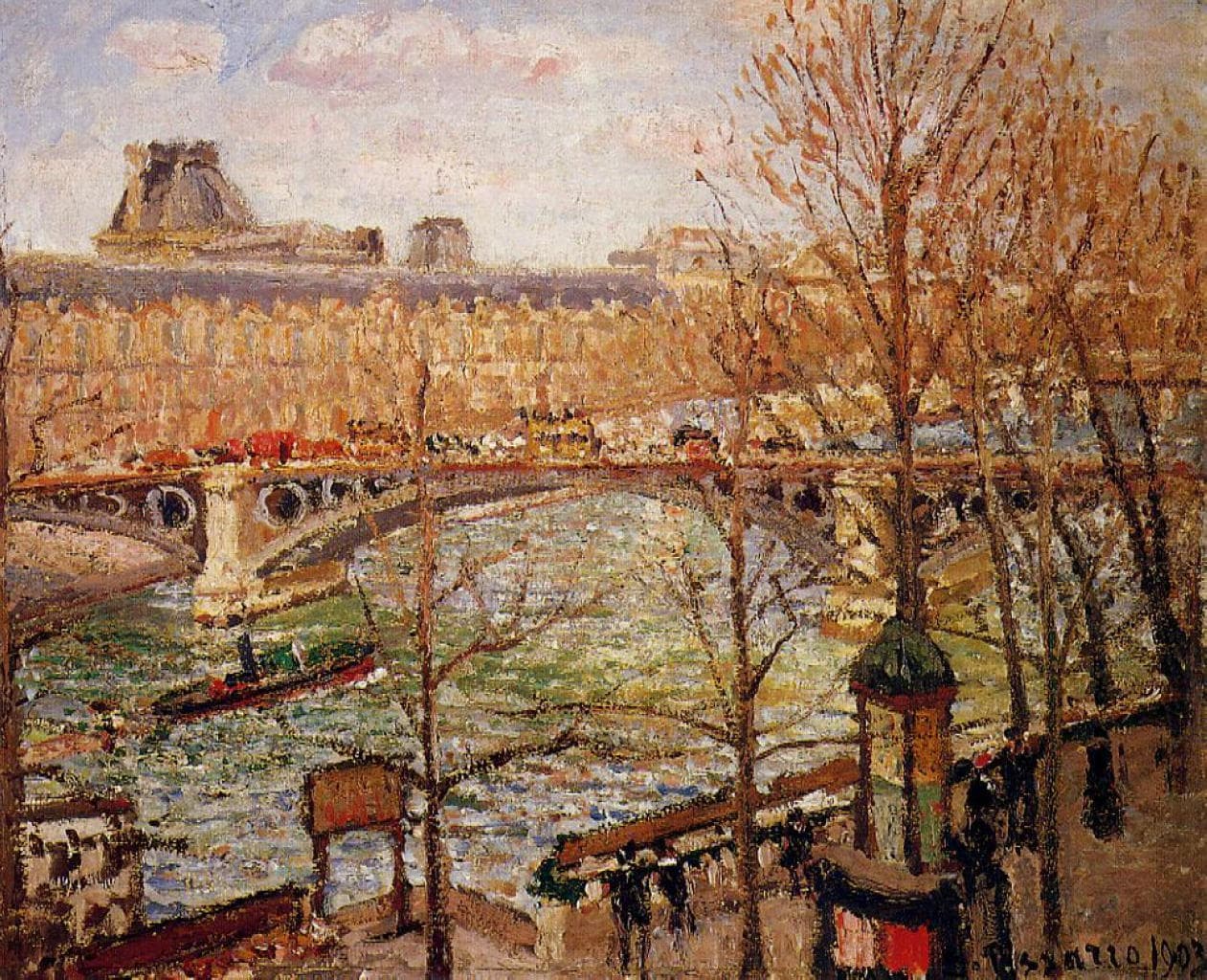
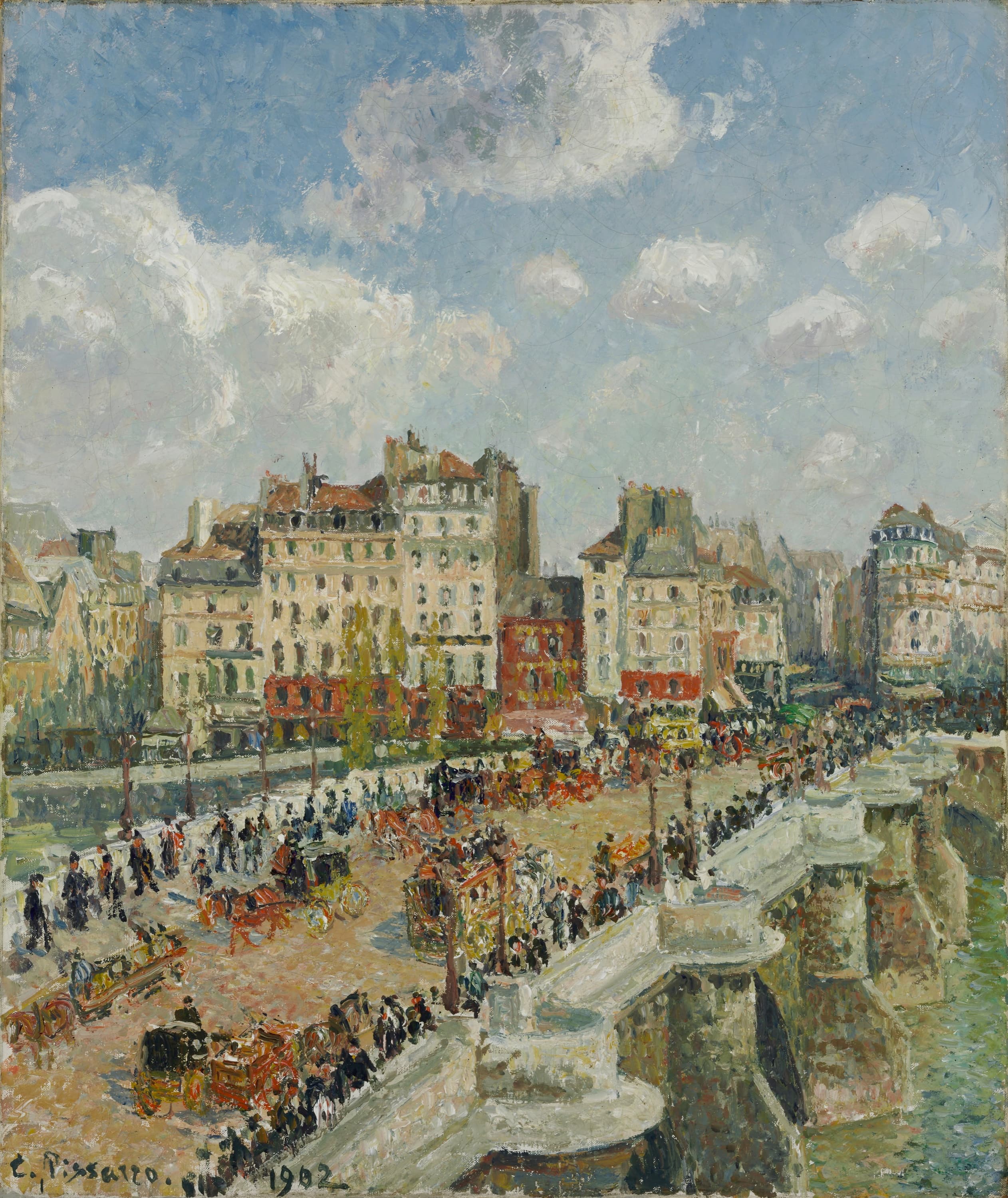
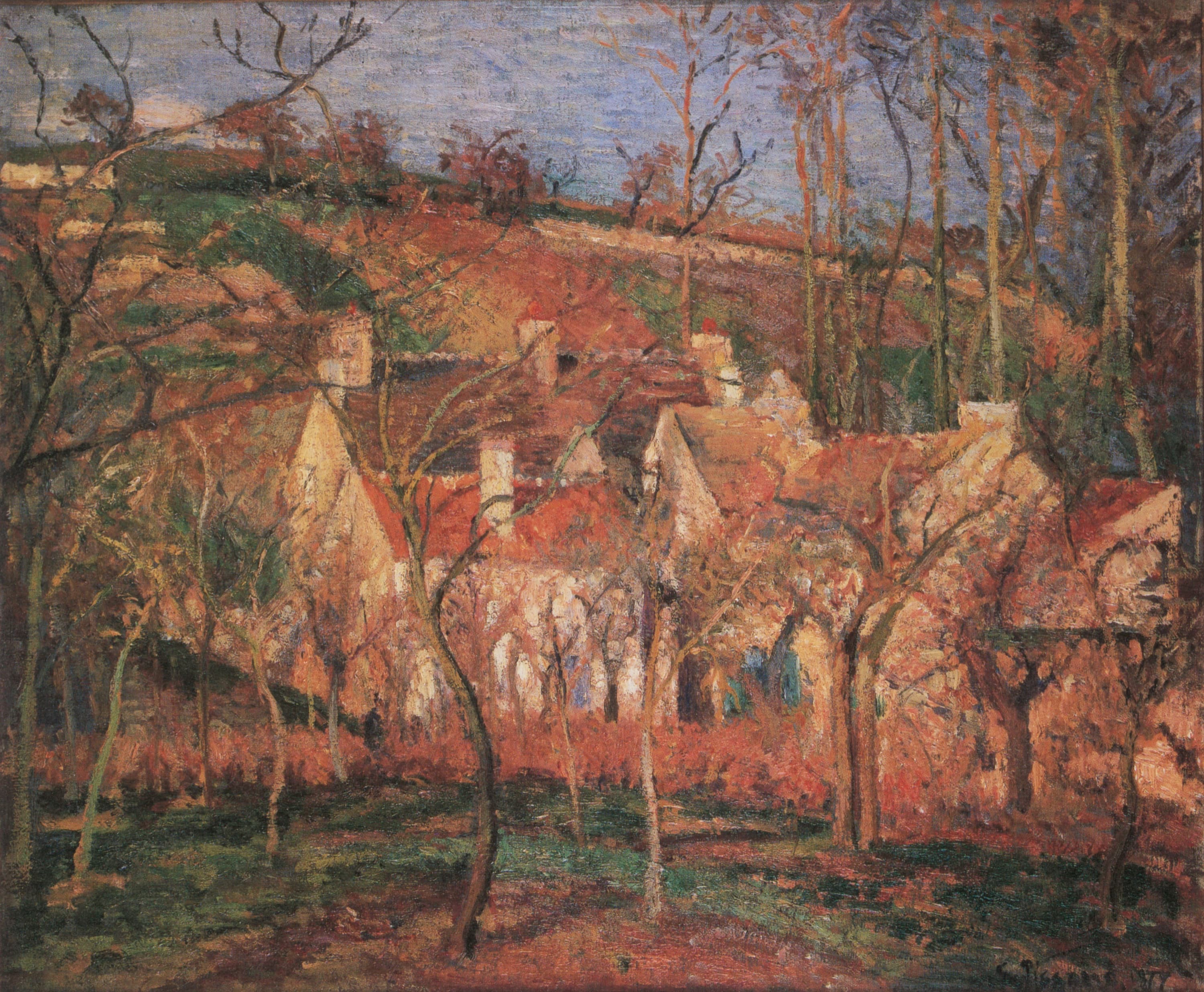
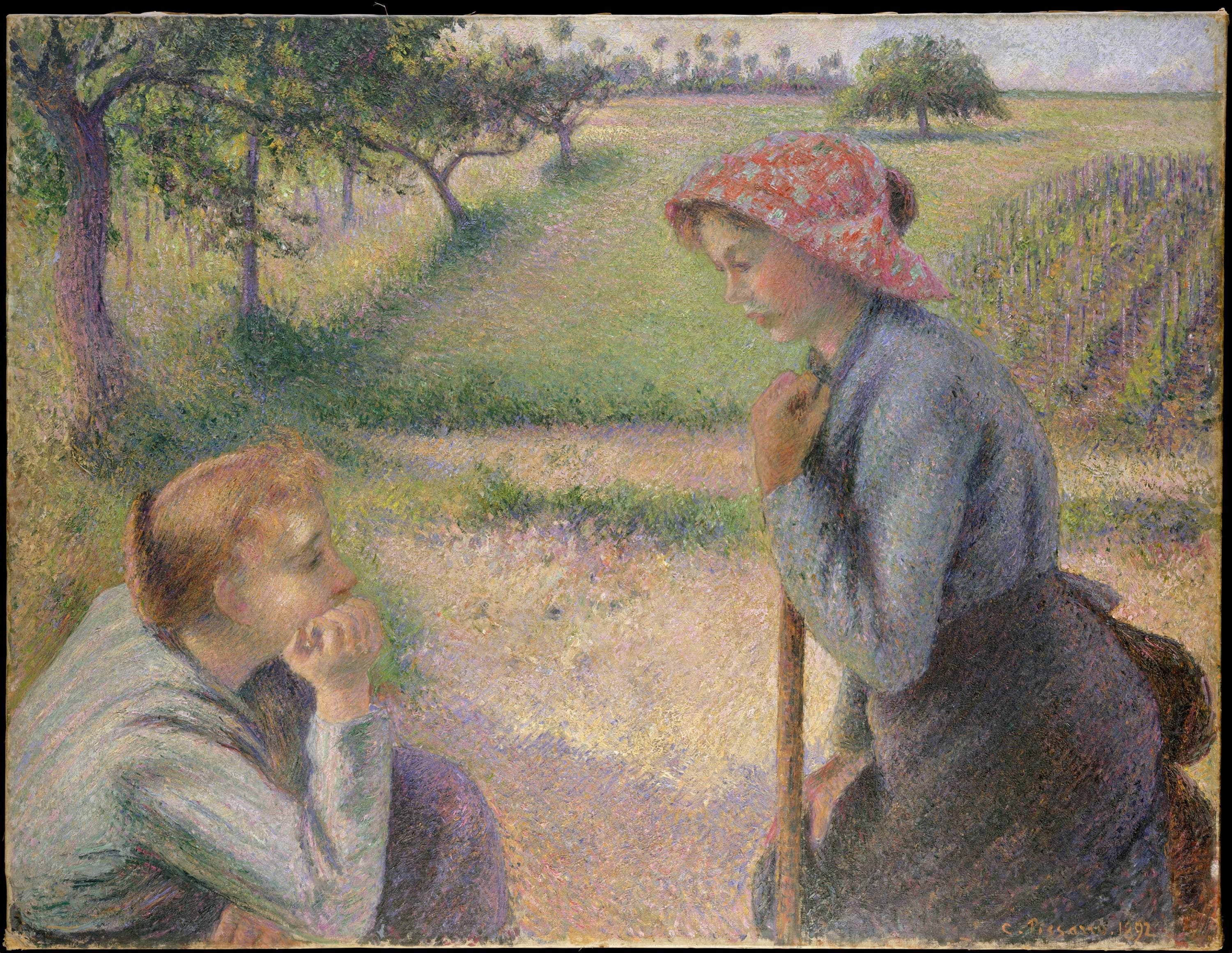
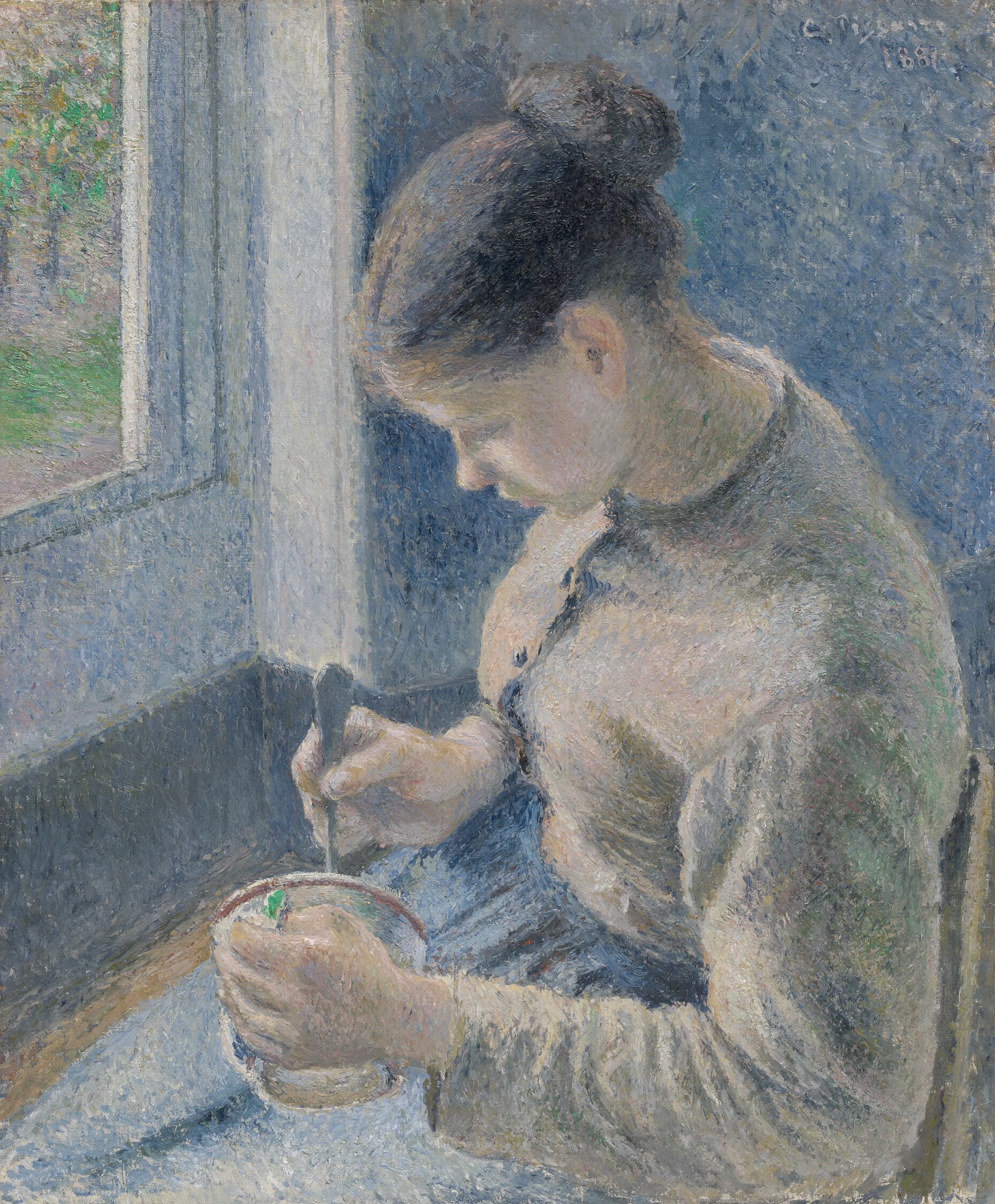
If you like Camille Pissarro
Explore painters from the same movements and circles.
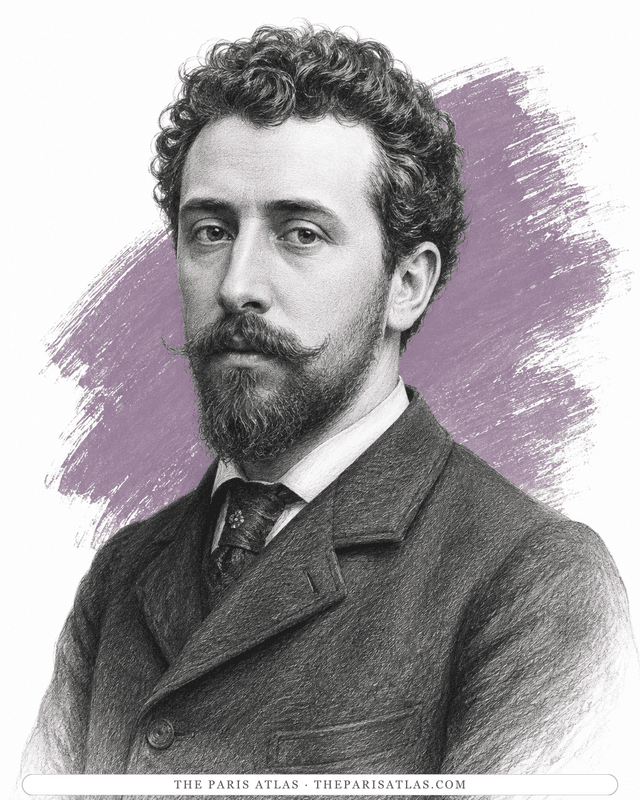
Georges Seurat
Parisian painter who built pictures from small dots of pure colour on optical principle, co-founded the Salon des Indépendants, and detonated the last Impressionist exhibition of 1886 with A Sunday on La Grande Jatte. He died at thirty-one.
View artist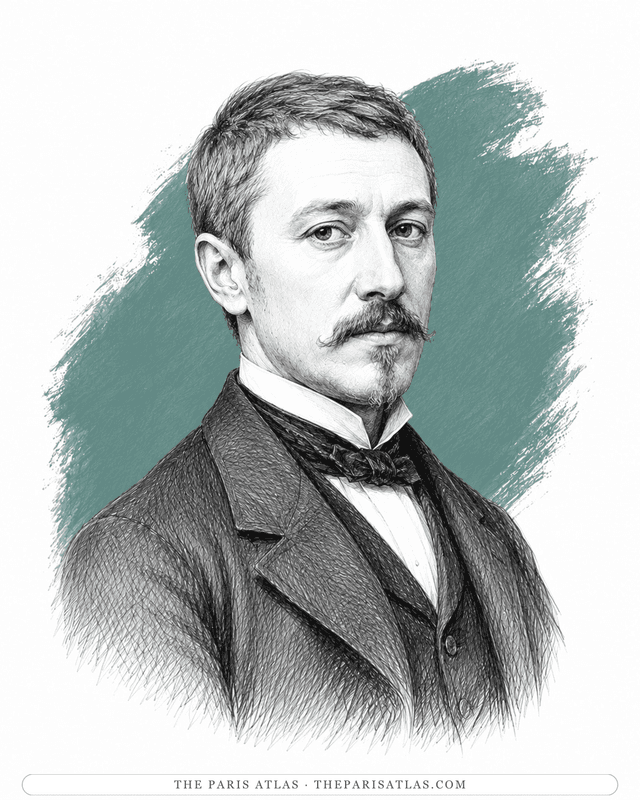
Gustave Caillebotte
Painter of Haussmann's geometry and the group's organizer-financier; his bequest of Impressionist paintings forced the French state to take the movement in.
View artist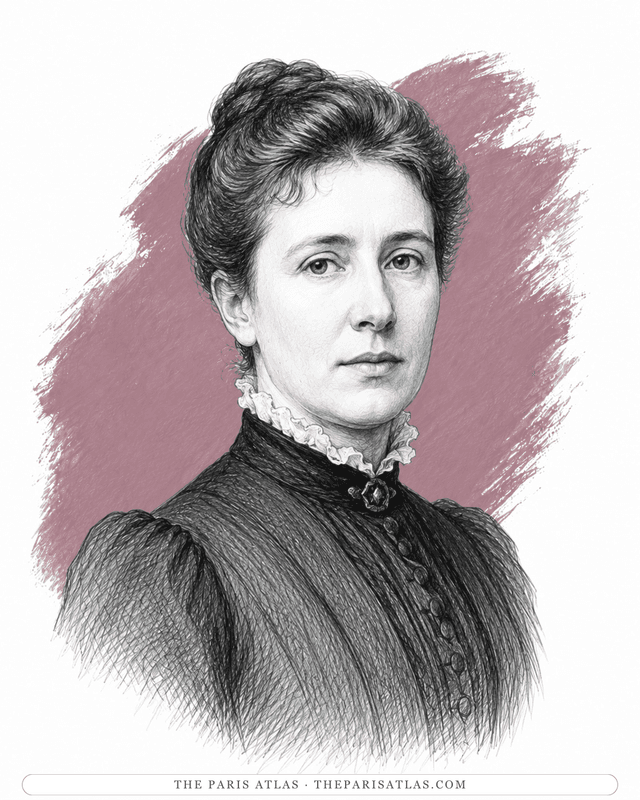
Mary Cassatt
Mary Cassatt was an American painter and printmaker known for her depictions of women and children. Based in France for the last fifty-two years of her life, she was the only American to exhibit with the original French Impressionist group, participating in four of its eight exhibitions. Edgar Degas invited her to exhibit with the group in 1877 after the Salon jury rejected her submissions.
View artist
References
The sources below include collection records, catalogues, scholarly research, and primary materials that informed this page. They document Place du Carrousel, Paris, its making, and its place in cultural history.


2↑Pissarro Exhibition Guide: Sights of Paris
WebsiteDenver Art MuseumUsed forWeb source consulted for documented facts and historical context presented on the Place du Carrousel, Paris page.
3Camille Pissarro — artist record
WebsiteMusée d'OrsayUsed forThe Musée d'Orsay artist record provides institutional context for Pissarro's Paris cityscapes and mature career.
4Camille Pissarro — artist biography
WebsiteMuseo Nacional Thyssen-BornemiszaUsed forThe Museo Thyssen-Bornemisza biography supplies an independent chronology of Pissarro's urban series and Impressionist practice.
These references provide the documented foundation for this work's history and interpretation. Claim-level citations remain attached to the specific claims they support.
 Explore more resources