Hoar Frost
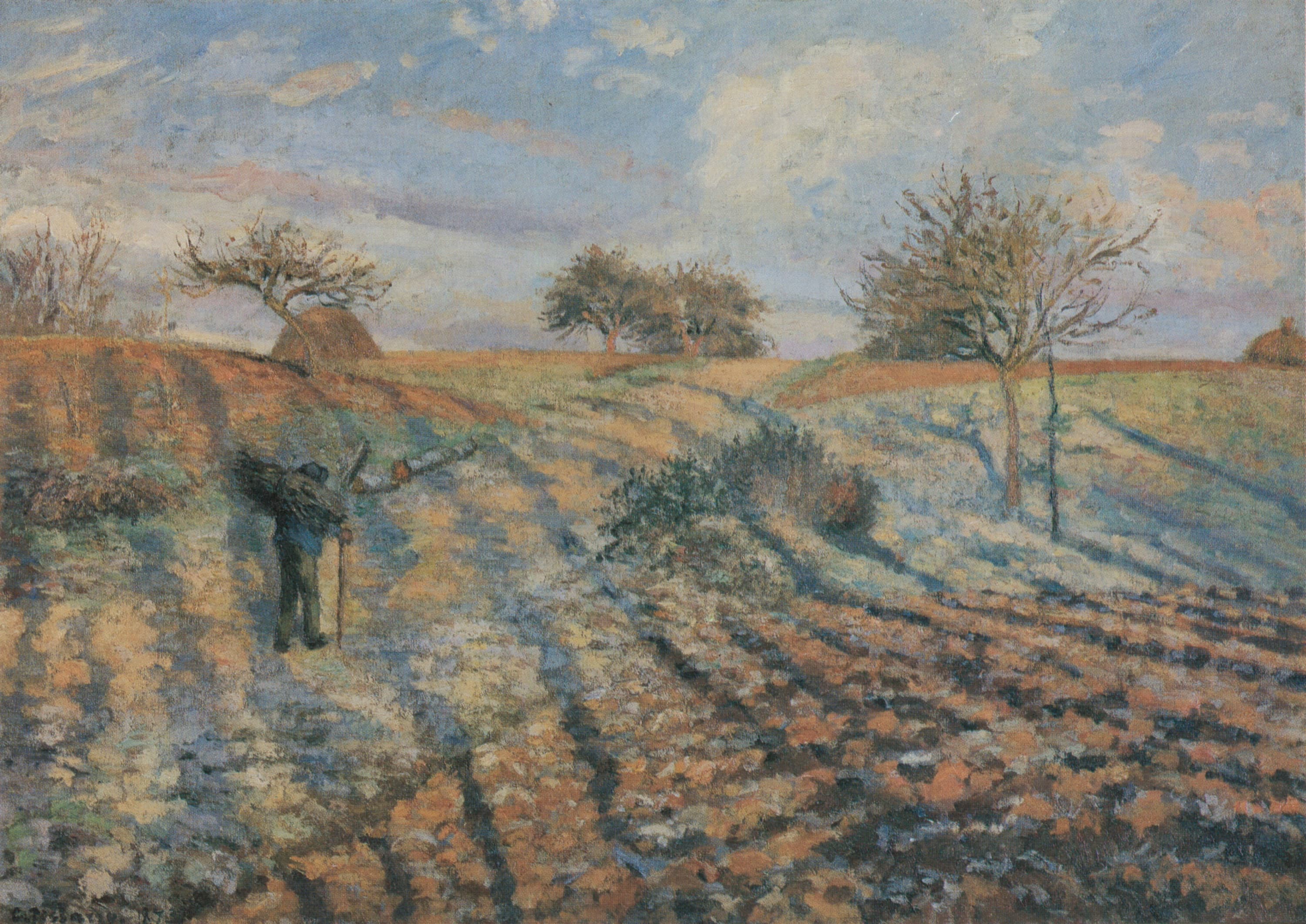
Camille Pissarro painted this frost-covered field near Pontoise in 1873 and showed it at the first Impressionist exhibition in April 1874, where the critic Louis Leroy used it as his example of everything wrong with the new painting. It is at the Musée d'Orsay.
- 1873
- Oil on canvas
About Camille Pissarro
What the painting shows
A ploughed field in winter, seen from close up and slightly above, filling most of the canvas. The furrows run diagonally away to the right. Frost lies in the ridges in short strokes of pale blue, violet and white, laid over and beside strokes of orange and brown earth, so that the ground is a mesh of cold and warm colour rather than a field of white.[1]
A man crosses the middle of the picture from left to right, in a dark blue smock, a bundle of sticks strapped to his back and a stick in his hand. He is the only figure. Behind him the land rises to a low ridge with a haystack, a bare apple tree, and a line of trees along the horizon. To the right a young tree stands alone in a strip of grass.[1]
Broad diagonal bands cross the field from the left, thrown by trees standing outside the picture. They are the strongest lines in it, and they are shadows. The canvas is signed and dated at the lower left: C. Pissarro 1873. The Musée d'Orsay records that it was painted near Pontoise, the town on the Oise where Pissarro worked through the 1870s.[1]
The first Impressionist exhibition
The painting hung in the exhibition that started everything. It opened on 15 April 1874 in the photographer Nadar's studio on the boulevard des Capucines in Paris, ran to 15 May, and was mounted by a company of artists who had given up on the Salon jury and hung their own work instead. Pissarro was one of its organisers. Hoar Frost was catalogue number 137.[2][1]
The Musée d'Orsay confirms the appearance twice in its own record, on its exhibitions tab and in its sources, the second citing the 1874 catalogue itself.[1]
What Louis Leroy wrote about it
Ten days after the opening, the critic Louis Leroy published a review in the satirical paper Le Charivari, on 25 April 1874, under the heading “L'exposition des impressionnistes.” He wrote it as a conversation, giving the objections to a companion walking the rooms with him. This picture is where the companion loses his temper.[1]
“What is that? – You see, white frost on deep ridges. – Ridges, that? That, frost?… But those are sheer scratches of paint uniformly put on a dirty canvas. It has neither head or tail, neither top or bottom, neither front or back.”
The wording above is the museum's English; the original is French, and other translations differ. The article matters beyond this one canvas. Leroy took the word from the title of Claude Monet's Impression, Sunrise, also in the exhibition, and used it to mock the whole group. The name stuck, and the painters ended up using it themselves.[1][3]
The complaint was about the visible marks of the brush. Leroy's companion could see the paint where he expected to see frost, and could not find the front, back, top or bottom of a field built out of separate strokes.[1]
The other verdict, and a buyer
Not every critic at the 1874 exhibition agreed with Leroy. Philippe Burty, reviewing the same rooms, reached for the most respectable comparison available in French landscape painting.[1]
“A White Frost effect by Mr Pissarro reminds one of the best Millets.”
The comparison is to Jean-François Millet, the older painter of French peasant labour whose scenes of gleaners and sowers were already famous, and it puts Pissarro's man with his bundle of sticks in a line readers already knew.
In the same year, Jean-Baptiste Faure bought the painting directly from Pissarro. Faure was an opera singer and a serious collector of the new French painting, and he kept this canvas for forty years.[1]
How the museum reads the surface
The Musée d'Orsay's commentary is not uncritical either. It describes the paint as worked with the knife and densely stroked, and it says the result closes the landscape up:[1]
“The knife work and density of the stroke produce a compact, closed landscape in which air no longer seems to circulate.”
The museum credits the diagonals of the furrows for that effect, and adds that the analysis of light here is less accurate than Claude Monet's in the same years. It is unusual for a museum to publish that comparison about a picture on its own walls.[1]
Three titles, and where it is now
The painting is catalogued by the Musée d'Orsay as Gelée blanche. The museum's own English text calls it White Frost. Wikidata files it as Hoar-Frost at Ennery. The longer form, Gelée blanche, ancienne route d'Ennery, Pontoise, appears on Wikimedia Commons and in the art trade but is not the museum's title. All four refer to this canvas.
It has had few owners. Jean-Baptiste Faure bought it from the artist in 1874 and held it until 1914, when it passed to Louis Maurice Faure. Durand-Ruel in New York and Georges Petit bought it jointly from Madame Maurice Faure on 1 February 1919. It went to the collector Eduardo Mollard in about 1928 and reached the state in 1972 as a bequest from Enriqueta Alsop in Mollard's name. It hung at the Jeu de Paume until 1986 and then moved to the Musée d'Orsay, where it is on view on the upper level, room 32.[1]
Close reading
Reading the work, detail by detail
Hoar Frost is a winter landscape made from warm earth and cold light rather than a blanket of white. The enlarged passages reveal how furrows, a solitary worker, and dense strokes make frozen ground feel physically resistant.
1.The furrows turn paint into frozen soil
Pale marks lie beside orange and brown rather than covering them. The eye reads frost and earth at once, while the diagonal ridges make the field feel rough enough to slow anyone crossing it.
2.The figure measures the field's resistance
The worker is small, dark, and bent into the slope. Rather than supplying picturesque incident, the body shows the effort demanded by the ground and gives the broad field a human scale.
3.A narrow horizon keeps attention on the earth
Trees and houses are compressed into a thin upper band. With so little sky available, the painting remains weighted toward the worked surface that contemporary critics found so aggressively material.
4.The carried bundle gives the figure visible weight
The load bends the figure forward and makes progress across the field look difficult. Human movement is shaped by work and weather rather than added merely to enliven the landscape.
5.Pale ridges show where cold sits on worked earth
Light paint gathers on raised ground while darker color remains in the cuts. That contrast lets the viewer read both the field's rough structure and the thin covering of frost.
6.Warm buildings keep winter from becoming monochrome
Muted oranges and browns remain at the horizon behind the colder foreground. The small warm interval prevents the season from being described through white and gray alone.
Timeline
1873
Painted near Pontoise; signed and dated at the lower left, C. Pissarro 1873.
1874
Shown at the first Impressionist exhibition, in Nadar's studio in Paris, 15 April to 15 May, as catalogue number 137.
1874
Louis Leroy ridicules it in Le Charivari on 25 April; Philippe Burty compares it to the best of Jean-François Millet.
1874
Bought from the artist by the singer Jean-Baptiste Faure, who keeps it until 1914.
1919
Bought jointly by Durand-Ruel in New York and Georges Petit from Madame Maurice Faure on 1 February.
1928
Enters the collection of Eduardo Mollard.
1972
Bequeathed to the French state by Enriqueta Alsop in the name of Dr Eduardo Mollard. Accession number RF 1972 27.
1974
Shown in Centenaire de l'Impressionnisme at the Grand Palais, Paris, as number 34, a hundred years after the exhibition that made it notorious.
1986
Assigned to the Musée d'Orsay from the Jeu de Paume.
Where to see it
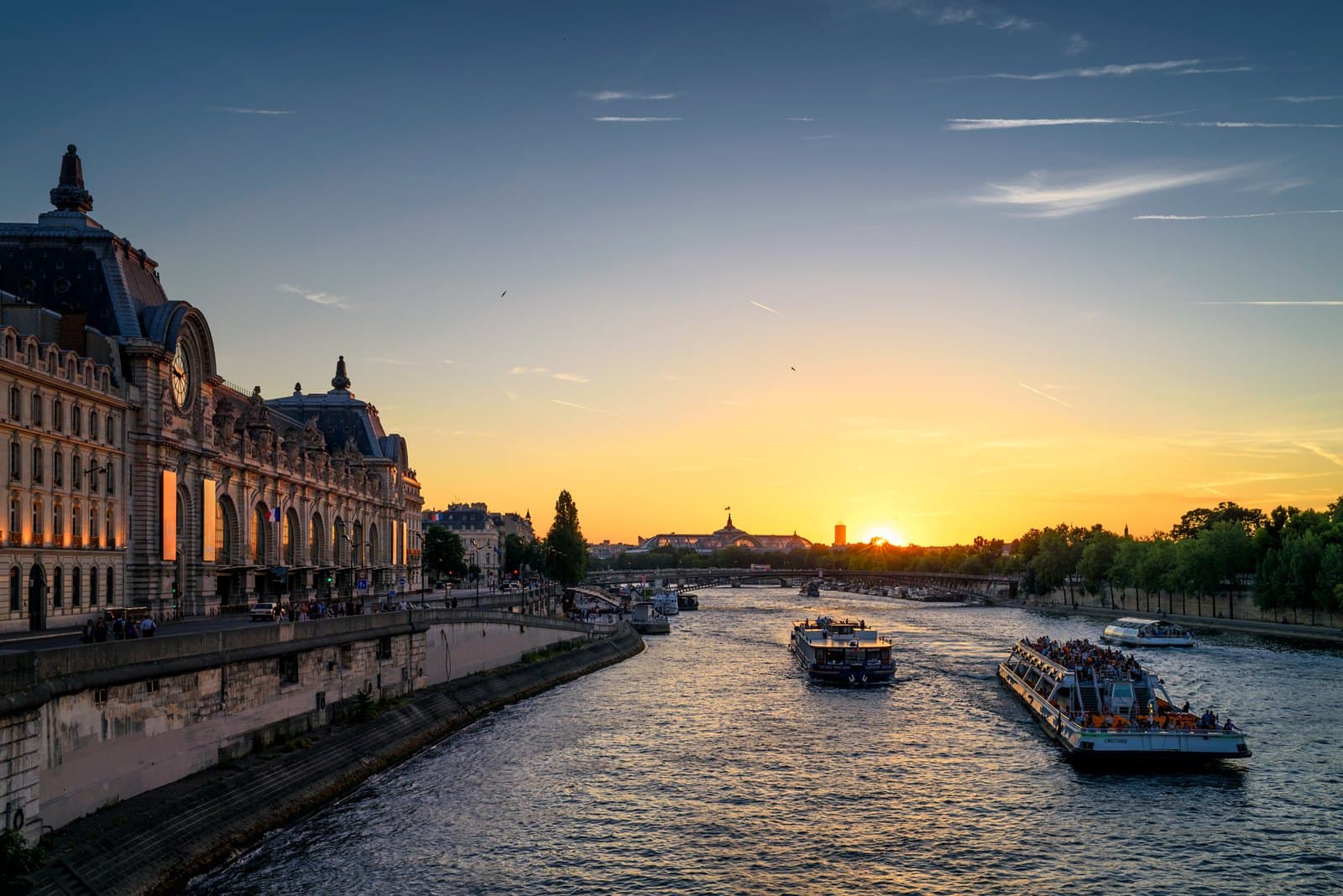
Musée d'Orsay, Paris
Esplanade Valéry Giscard d’Estaing, 75007 Paris, France
Displays and loans can change. Check whether this work is on view before making a special trip.
Plan your visitFrequently asked questions
What is Hoar Frost by Camille Pissarro?
It is a winter landscape of 1873 showing a ploughed field near Pontoise with frost in the furrows, a man carrying a bundle of sticks across it, and long tree shadows falling over the ground. Pissarro showed it at the first Impressionist exhibition in April 1874, where it became the picture critics argued about.
What did Louis Leroy say about Hoar Frost?
He called it scratches of paint on a dirty canvas. In Le Charivari on 25 April 1874, Leroy wrote his review as a dialogue, and in front of this painting his companion asks what it is meant to be, then says the ridges and the frost are “sheer scratches of paint uniformly put on a dirty canvas” with “neither head or tail, neither top or bottom, neither front or back.” The English is the Musée d'Orsay's translation of the French.
Is this the review that named Impressionism?
Yes. Leroy's article of 25 April 1874 was headed “L'exposition des impressionnistes,” a word he took from the title of Claude Monet's Impression, Sunrise in the same exhibition and used against the whole group. The name outlived the insult and the painters adopted it.
Where can I see Hoar Frost?
At the Musée d'Orsay in Paris, accession number RF 1972 27, on the upper level in room 32 at the last check of the museum's record. It entered the French state collections in 1972 as a bequest from Enriqueta Alsop in the name of Dr Eduardo Mollard.
Why does the painting have so many different titles?
Because the museum, the databases and the trade each settled on a different one. The Musée d'Orsay catalogues it as Gelée blanche and calls it White Frost in its English text; Wikidata files it as Hoar-Frost at Ennery; and the longer Gelée blanche, ancienne route d'Ennery, Pontoise circulates on Wikimedia Commons and in sale records. They are all the same canvas.
What is hoar frost?
It is the white frost that forms overnight when water vapour freezes directly onto cold ground, grass and branches, leaving a crust of ice crystals. Pissarro painted it not as white but as a mixture of blue, violet and orange strokes, which is exactly what Leroy objected to.
Who is the man in the field?
He is not identified. He is a rural worker carrying a bundle of sticks on his back, painted small and near the centre. Philippe Burty's review compared the effect to the best of Jean-François Millet, the painter most associated with French peasant labour.
More by Camille Pissarro
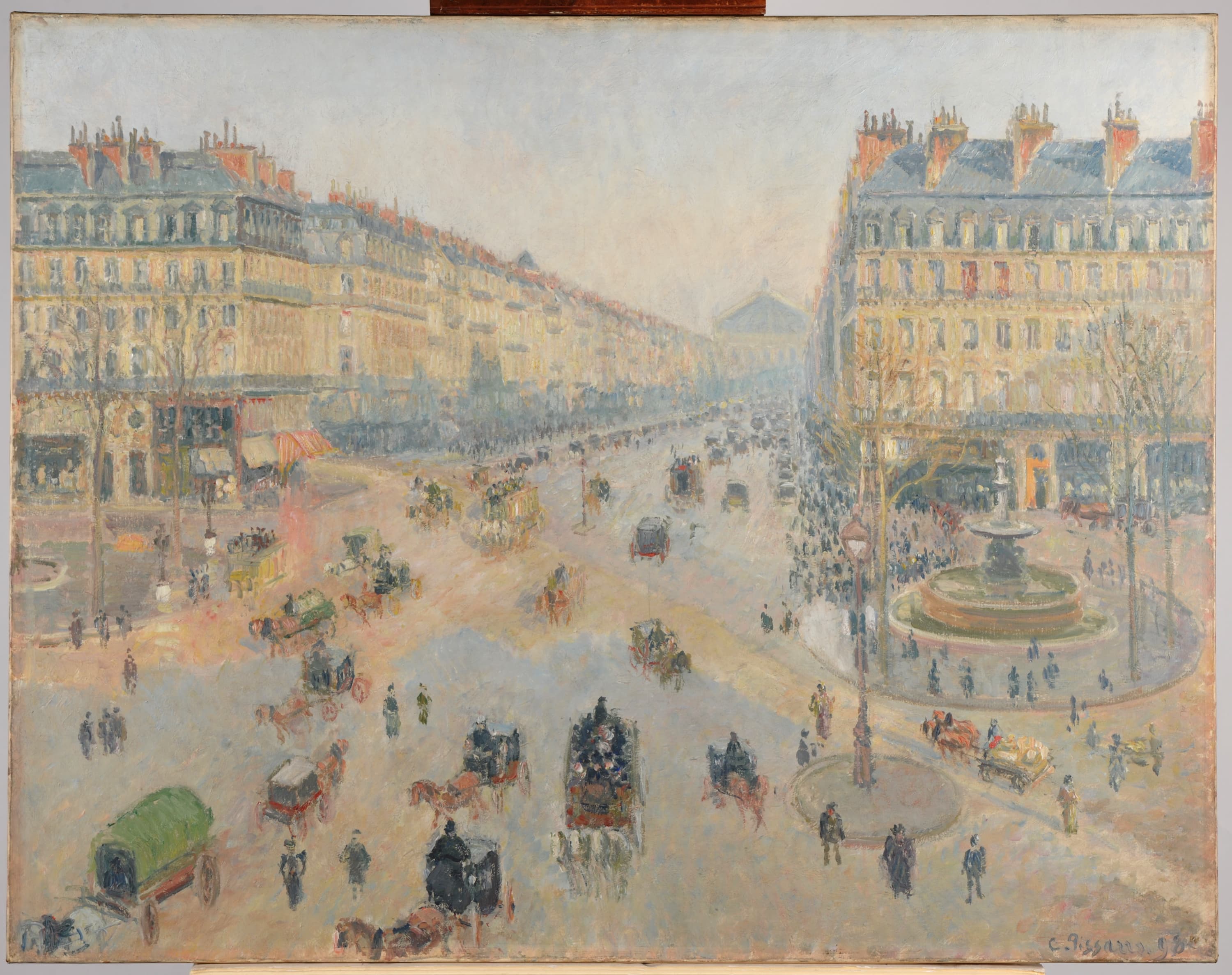
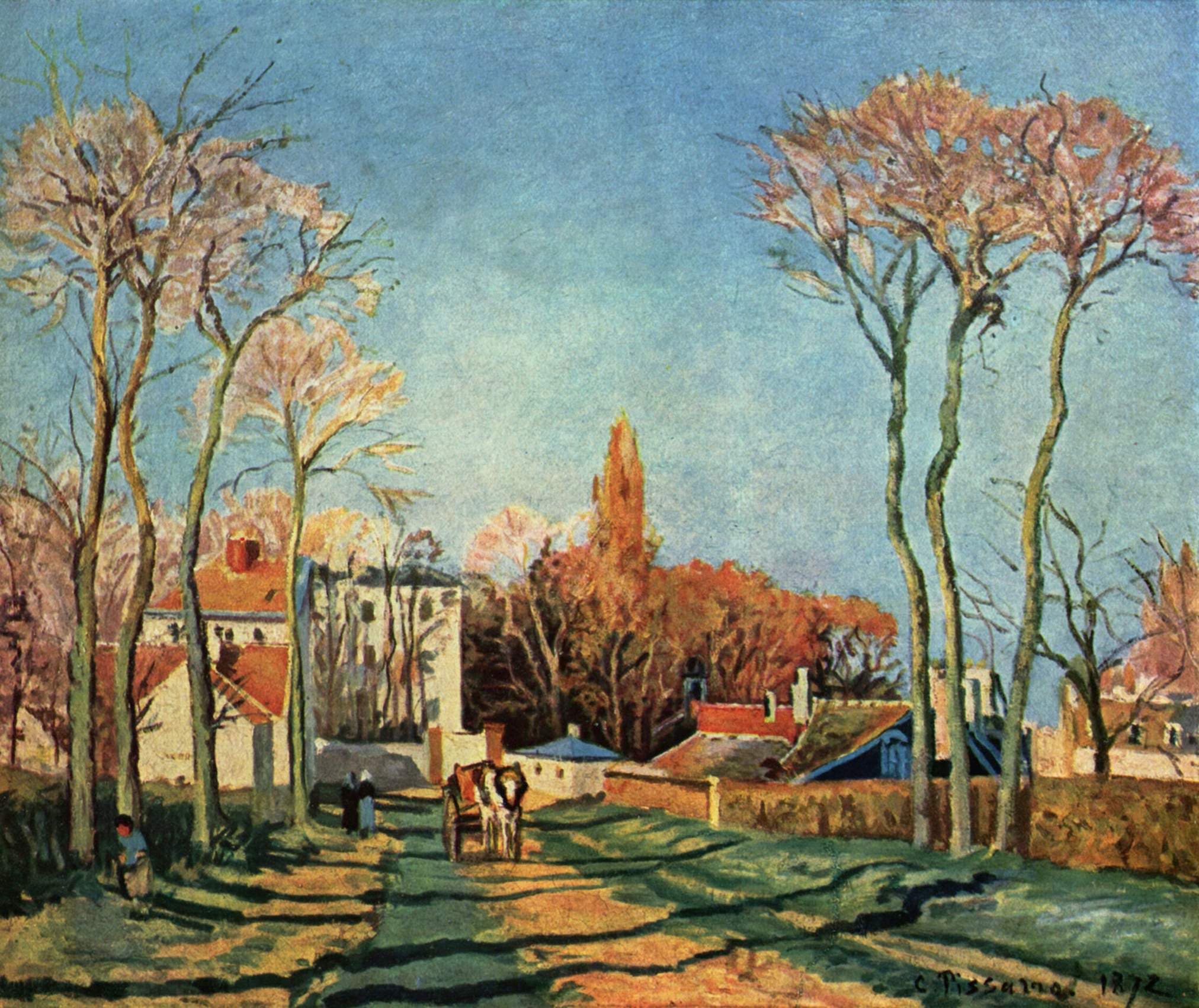
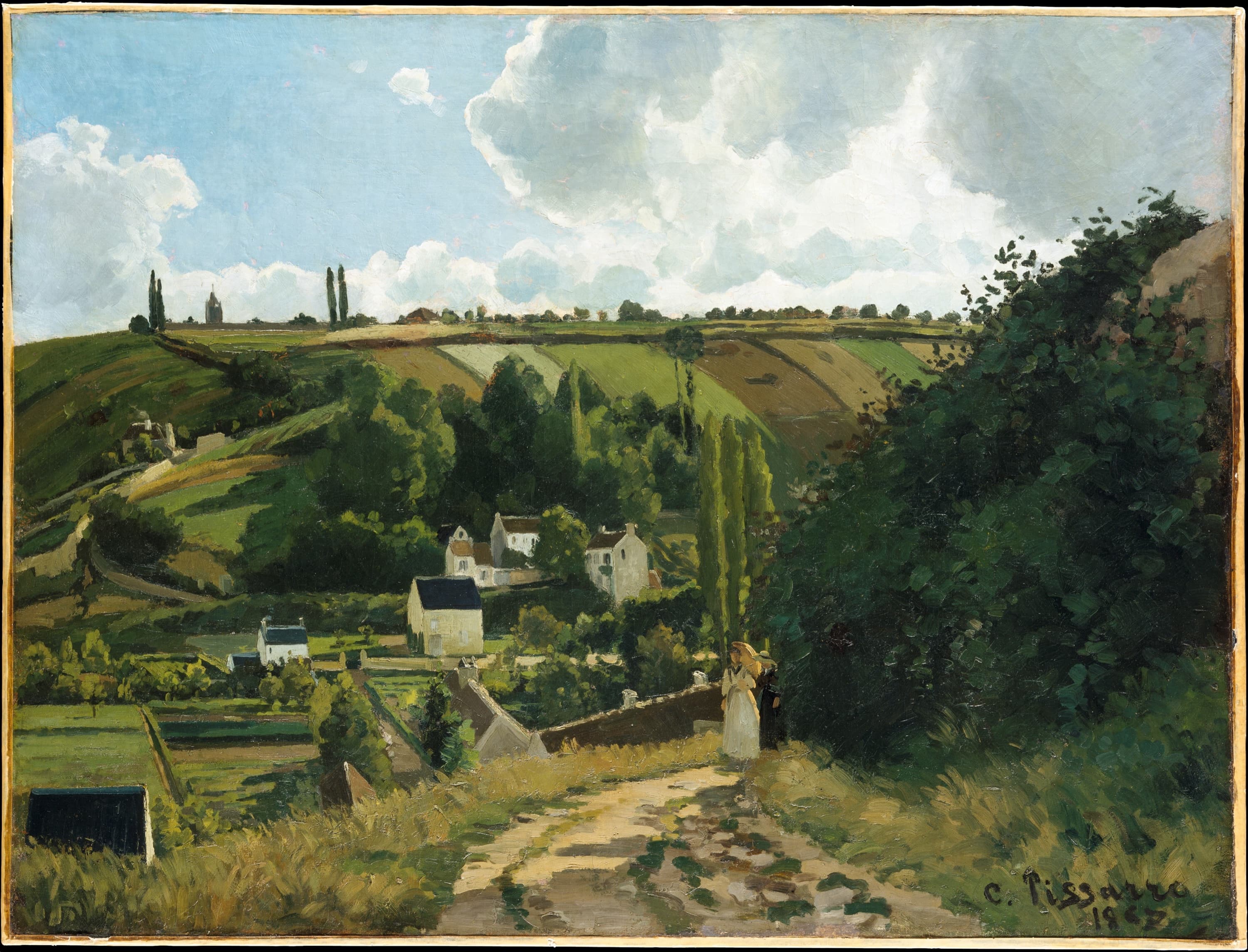
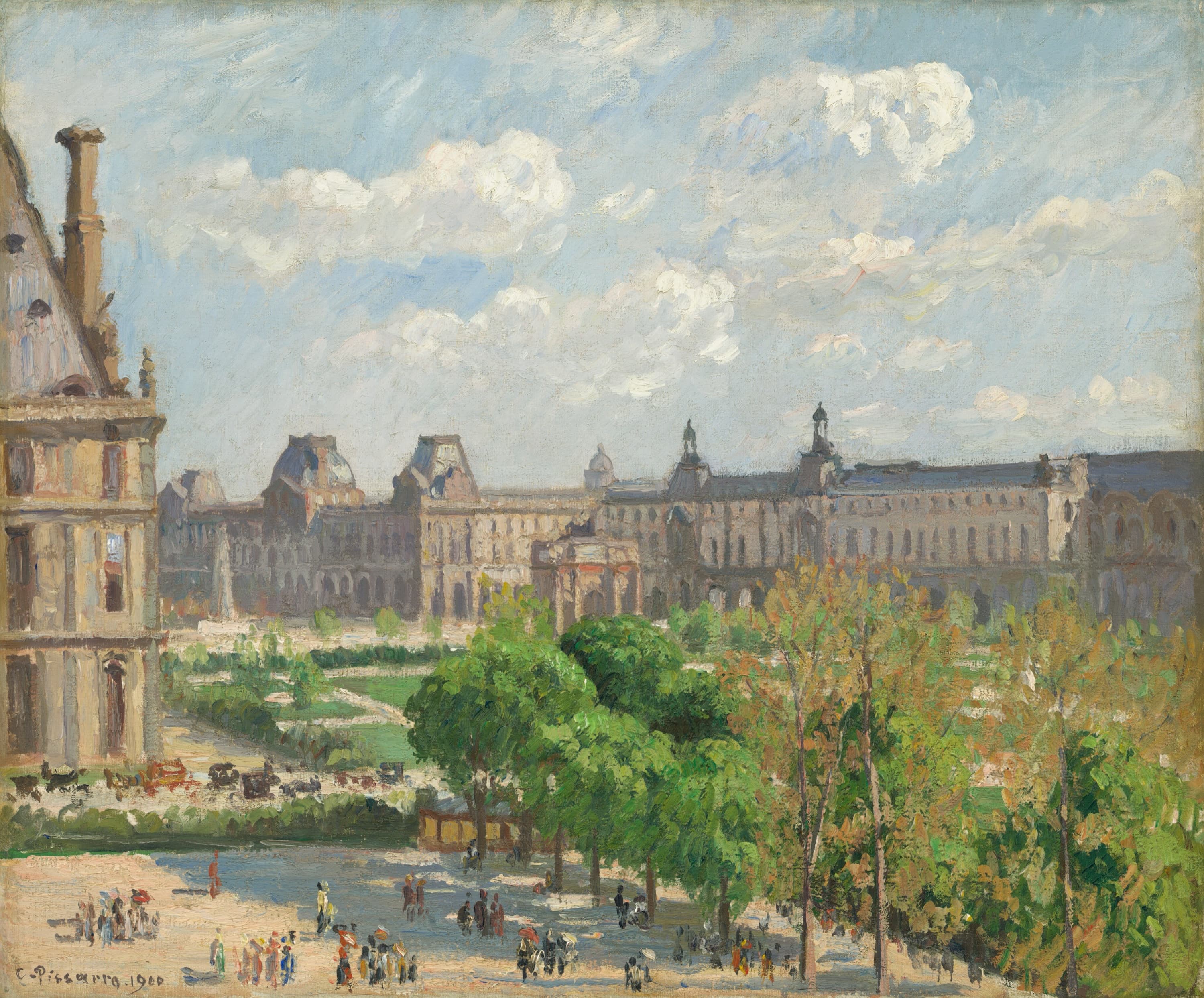
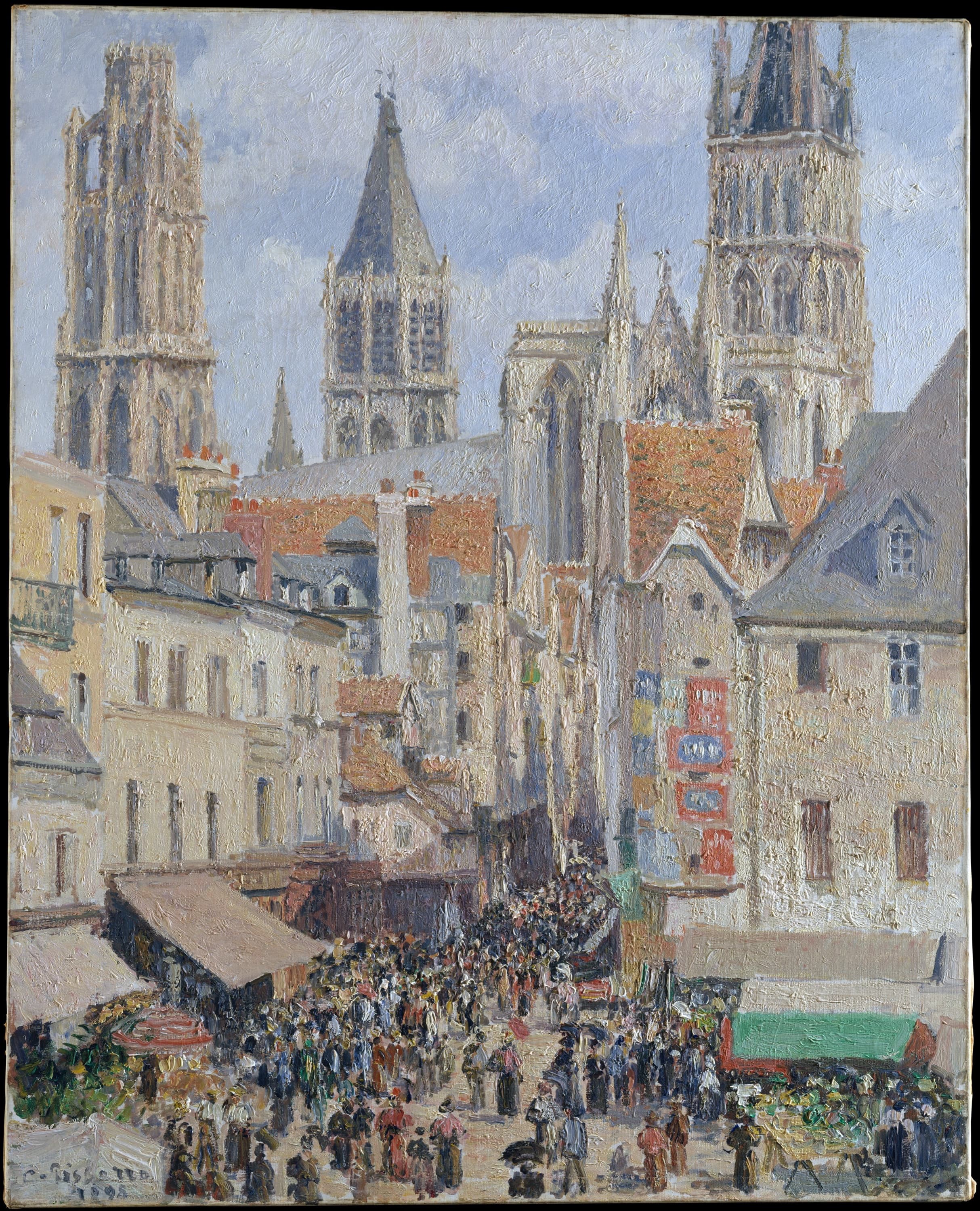
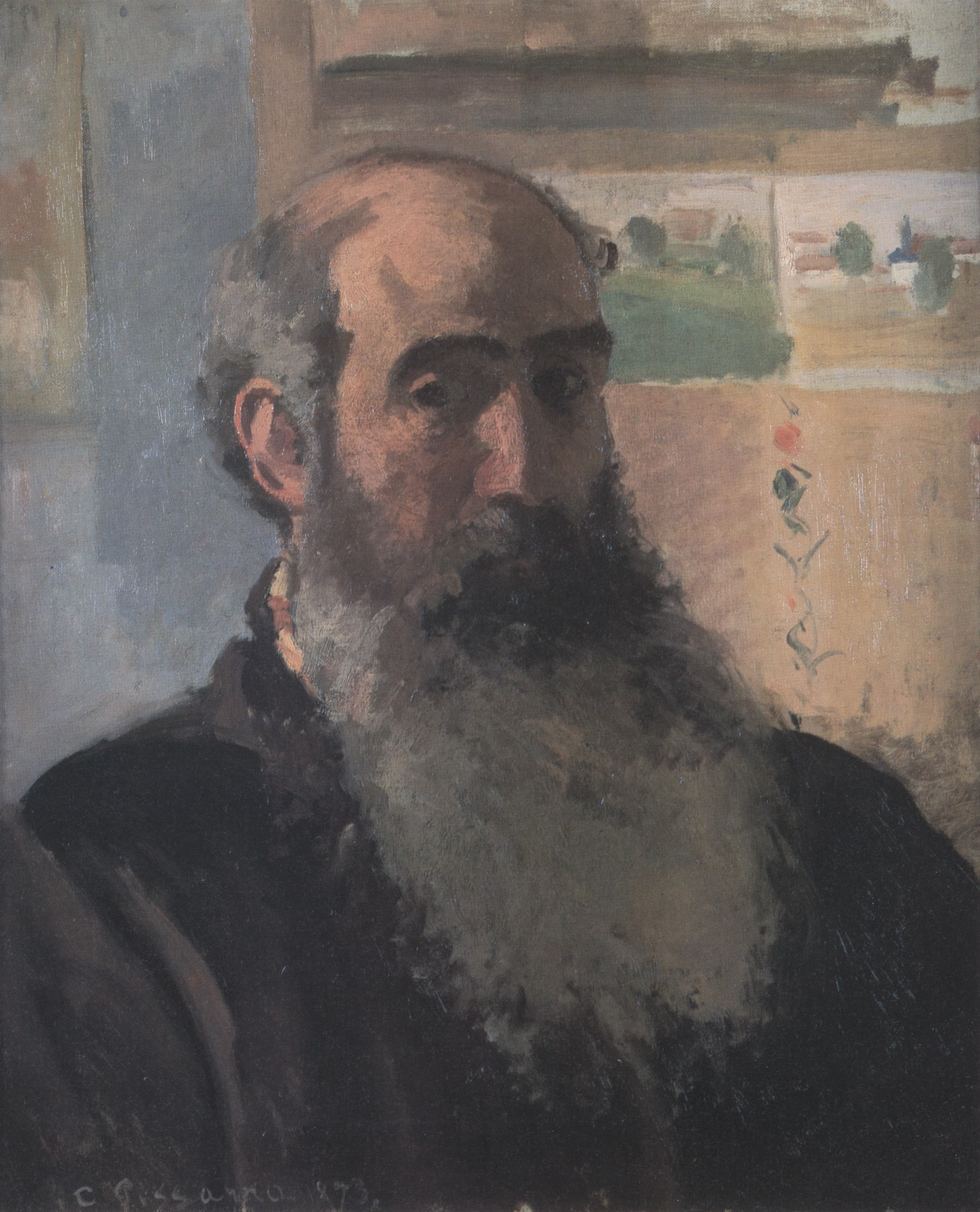
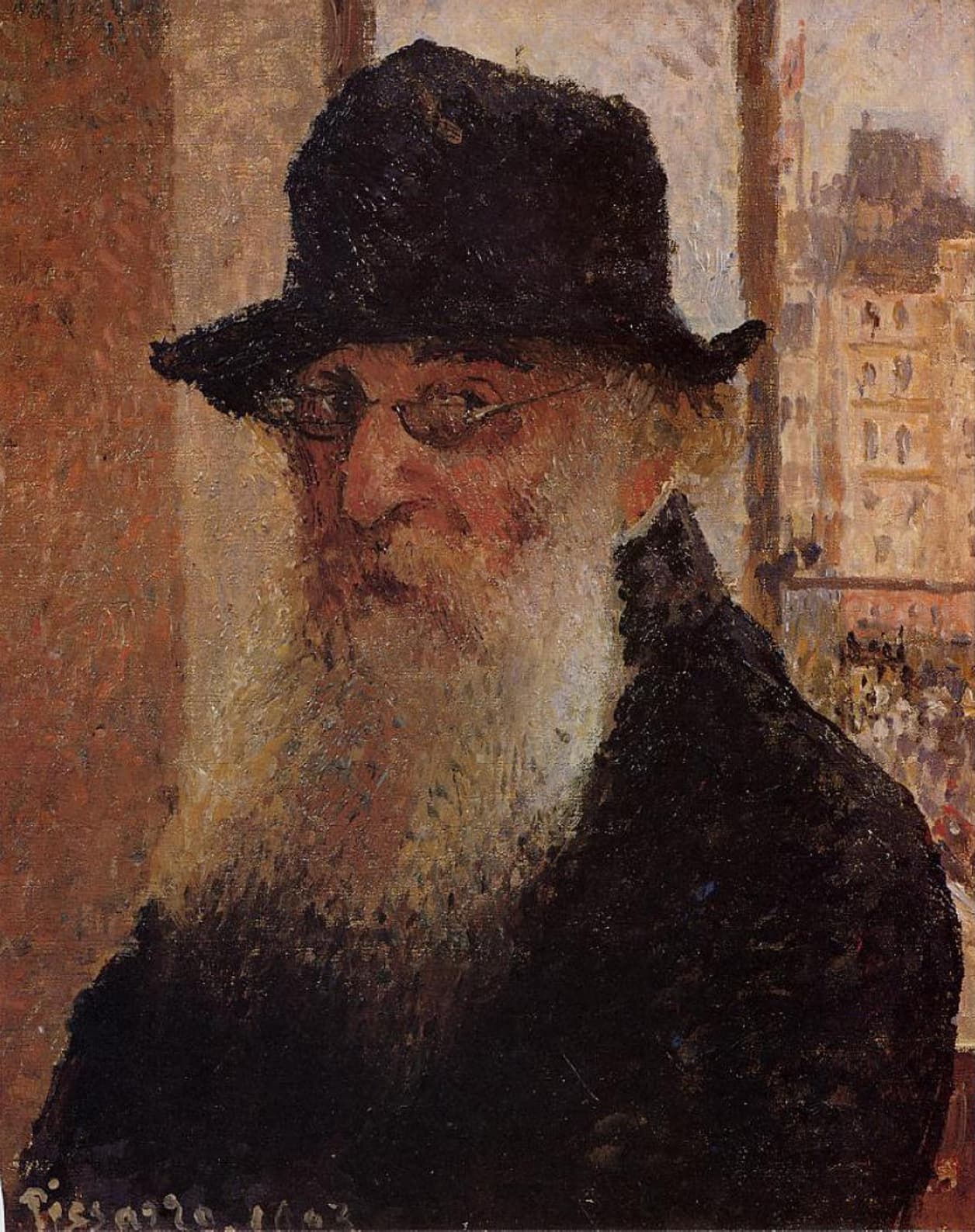
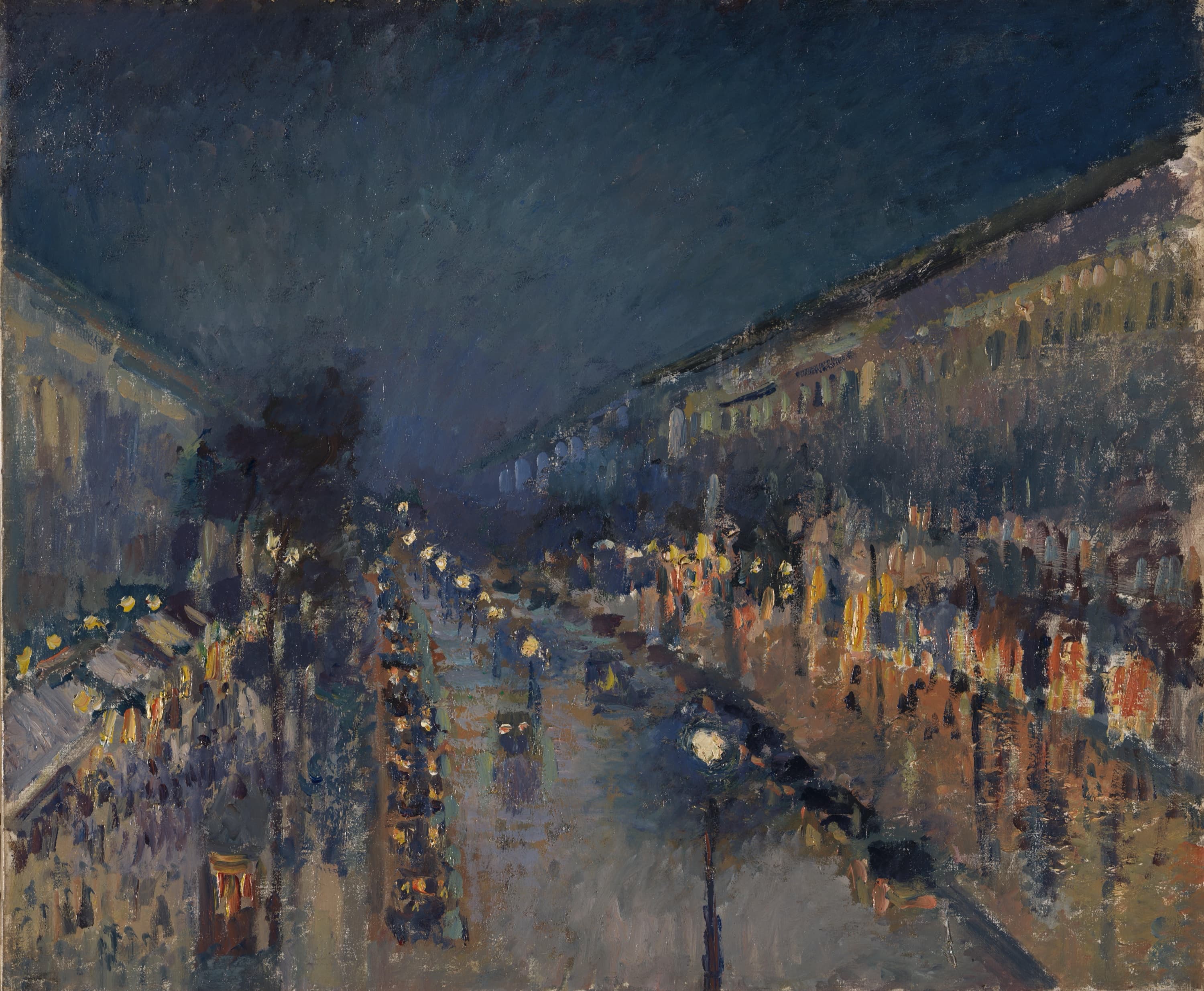
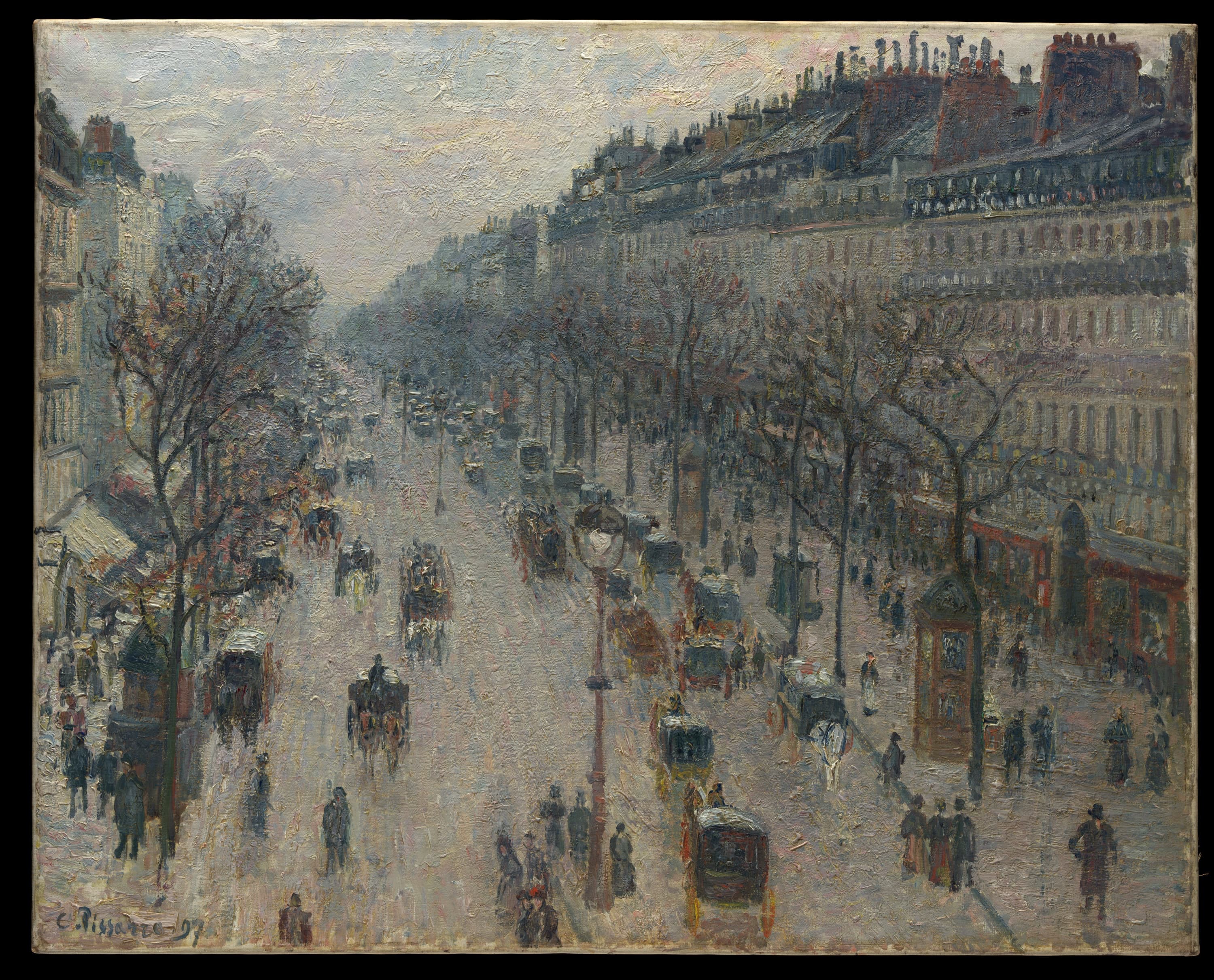
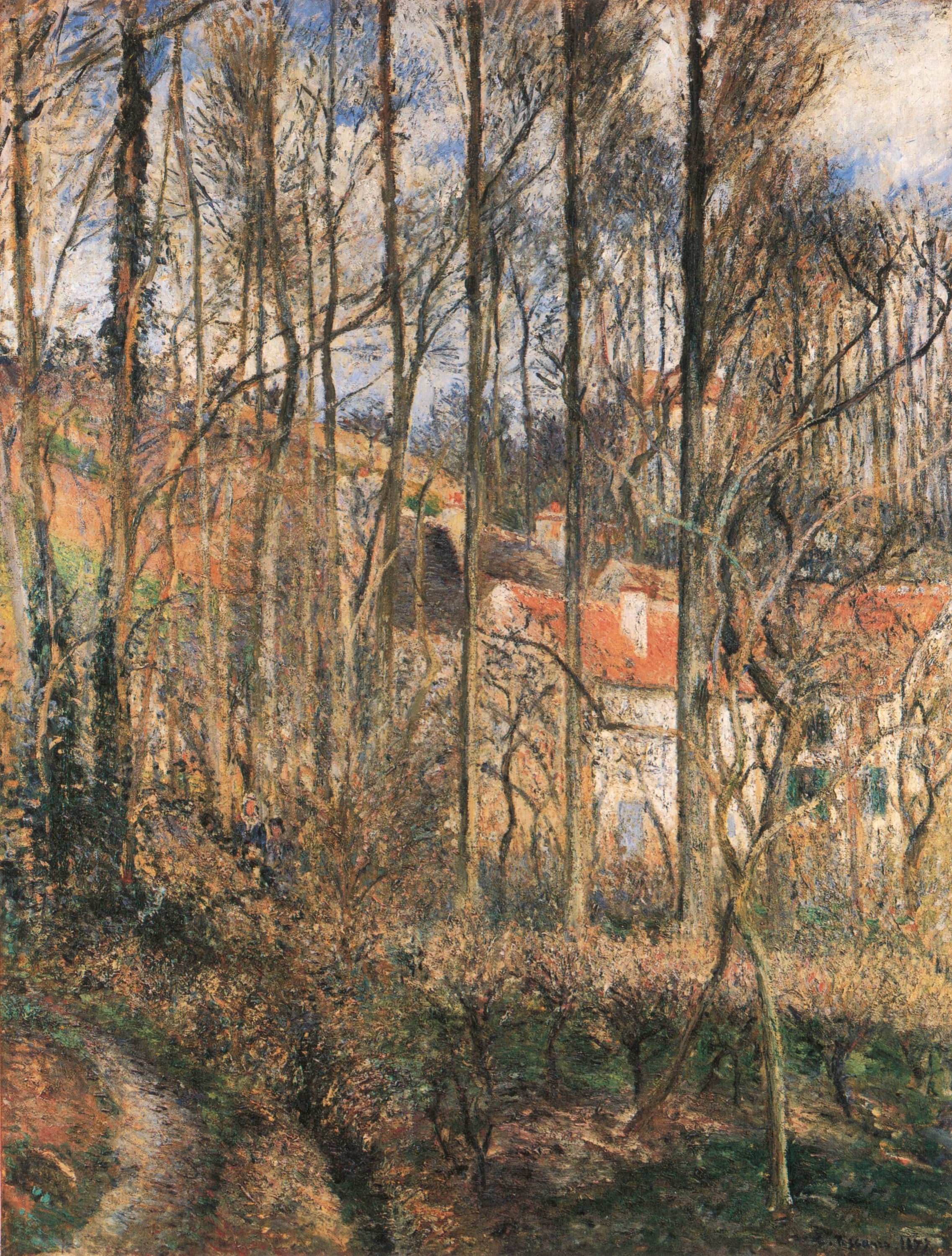
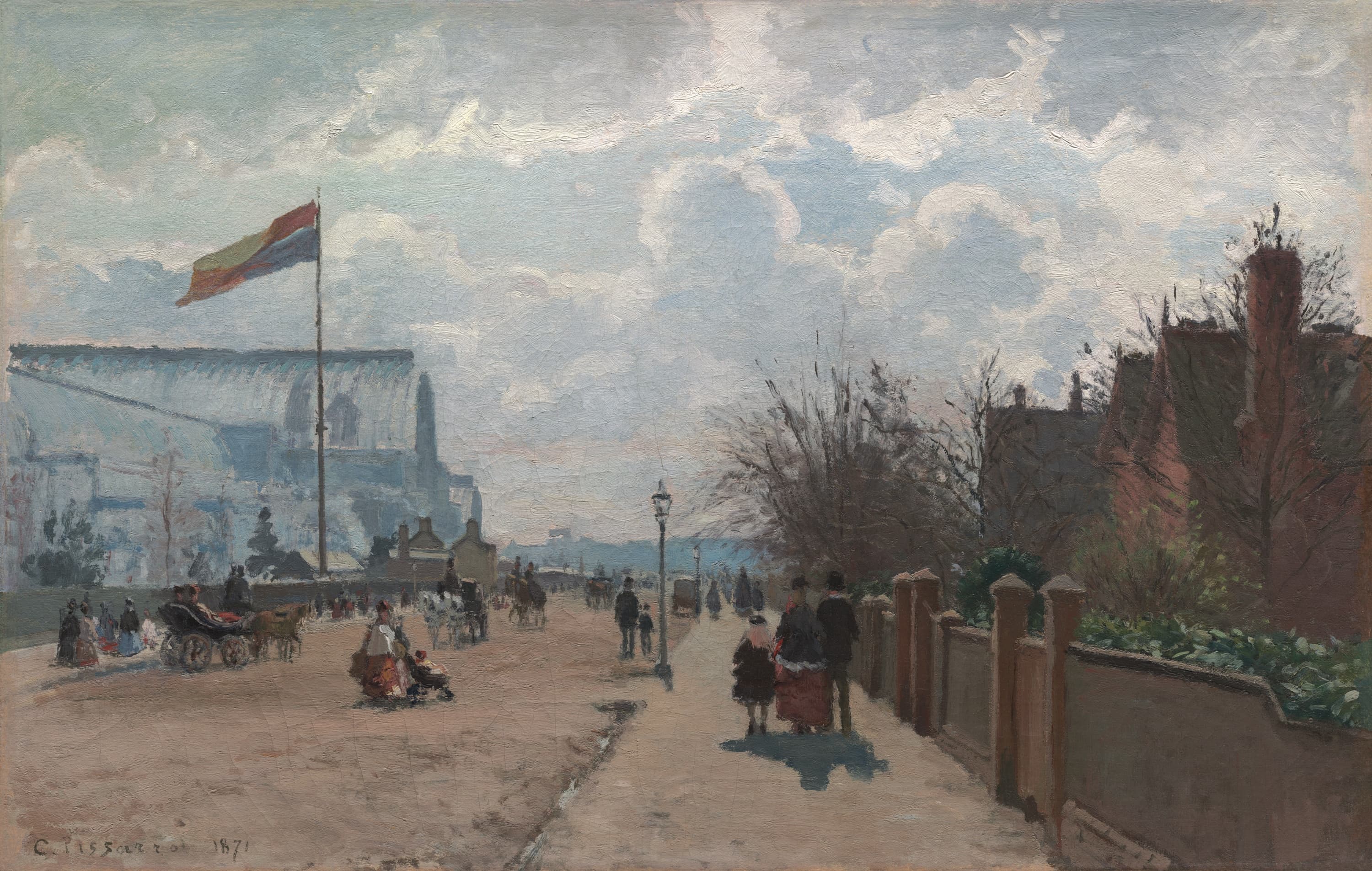
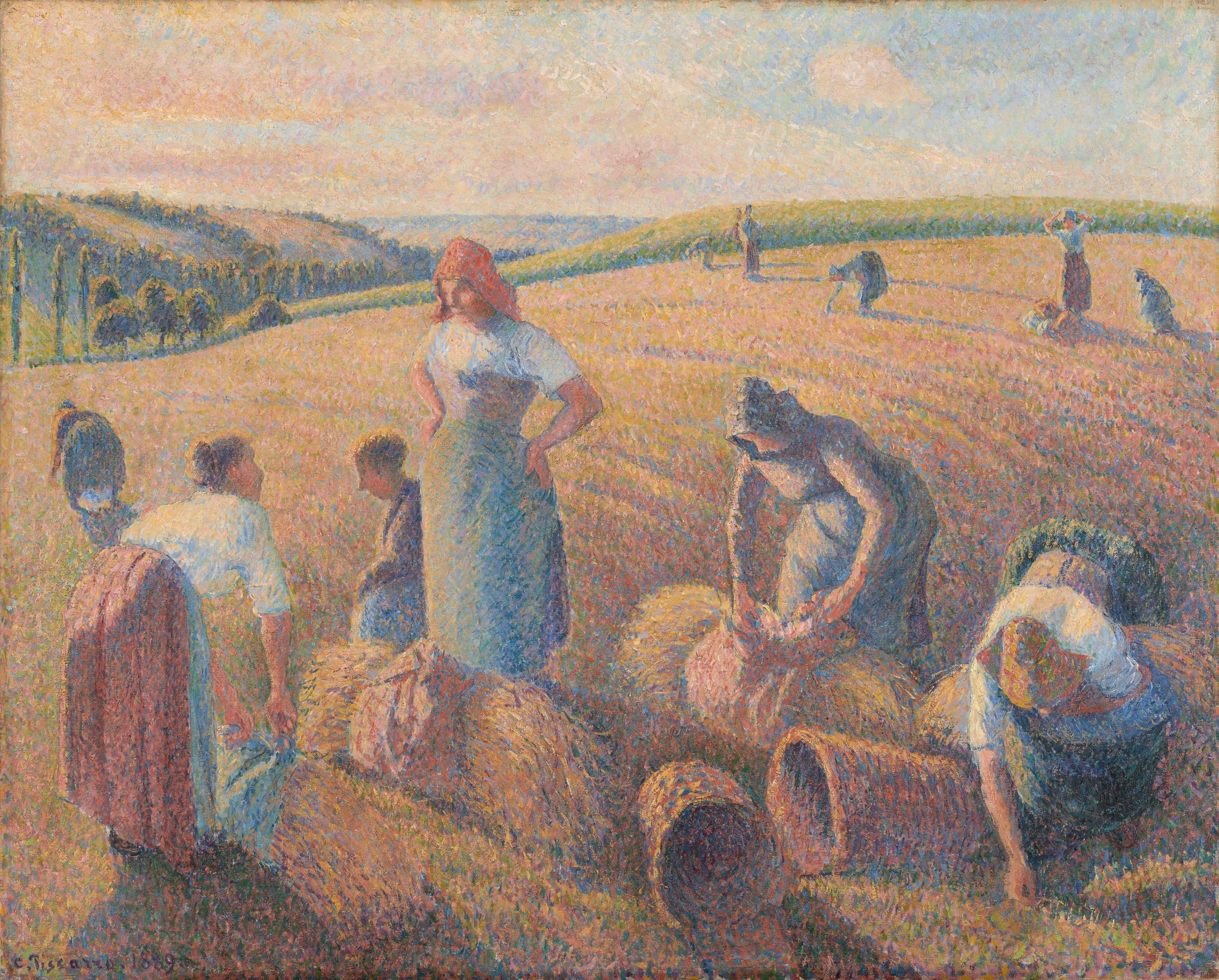
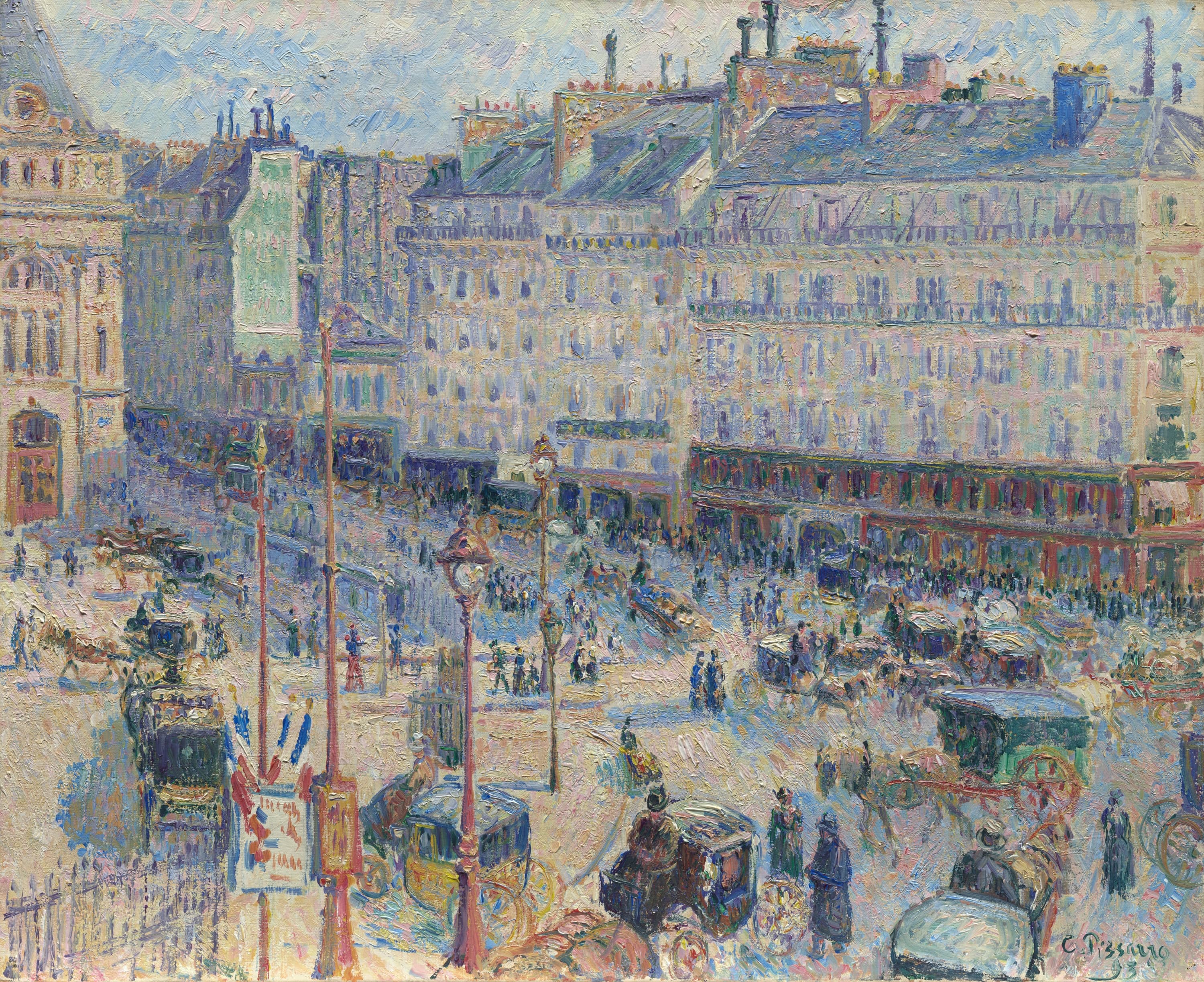
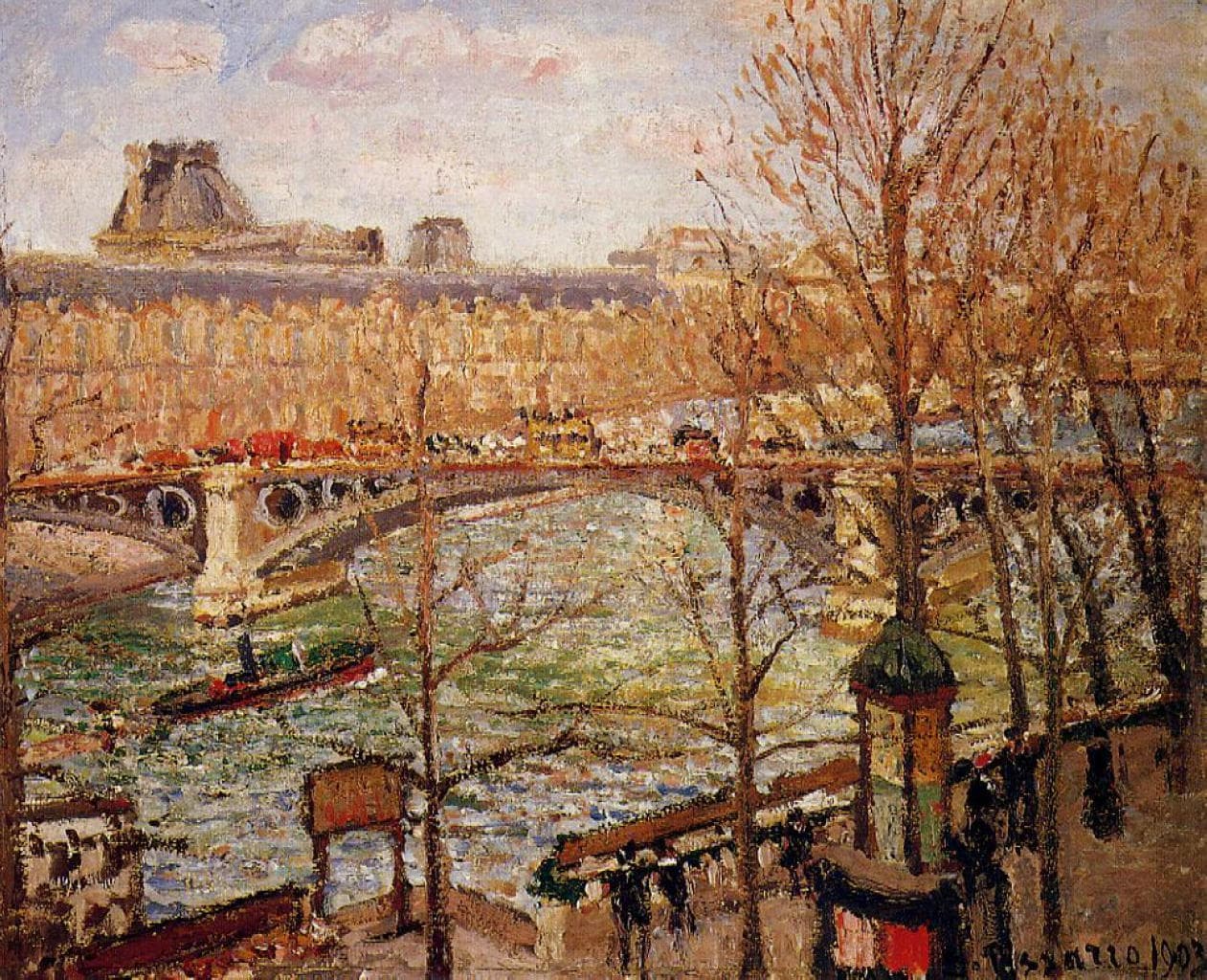
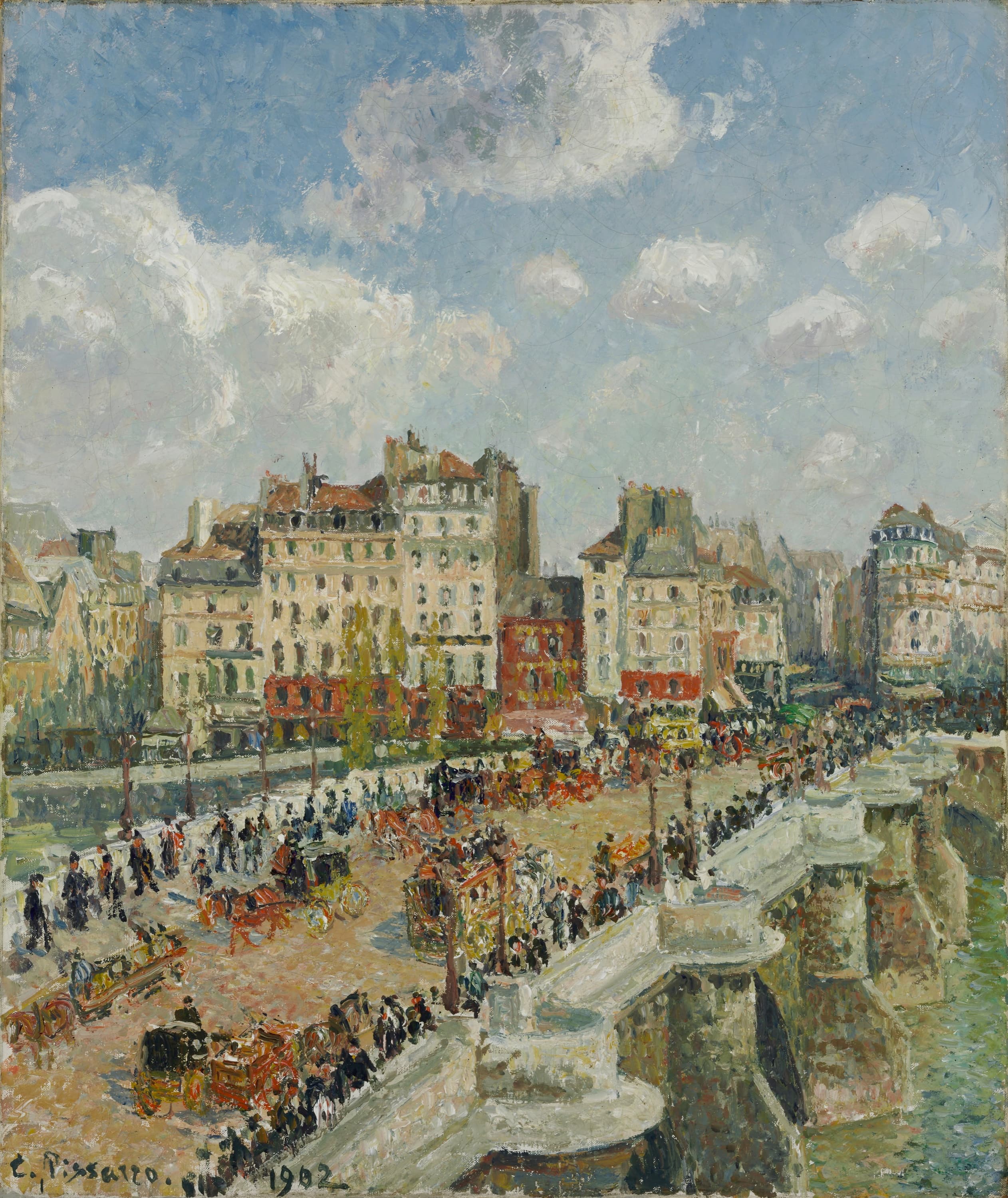
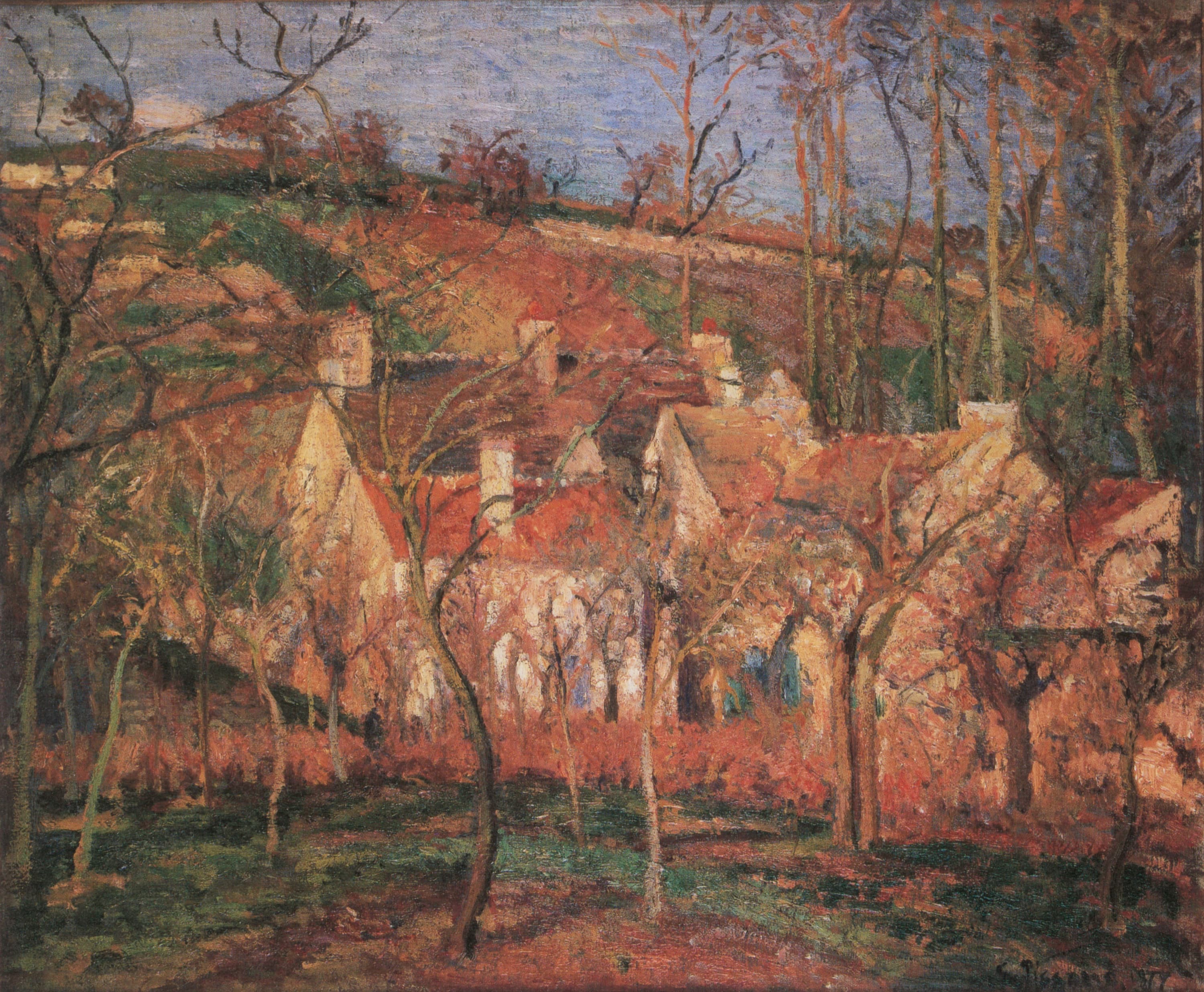
If you like Camille Pissarro
Explore painters from the same movements and circles.
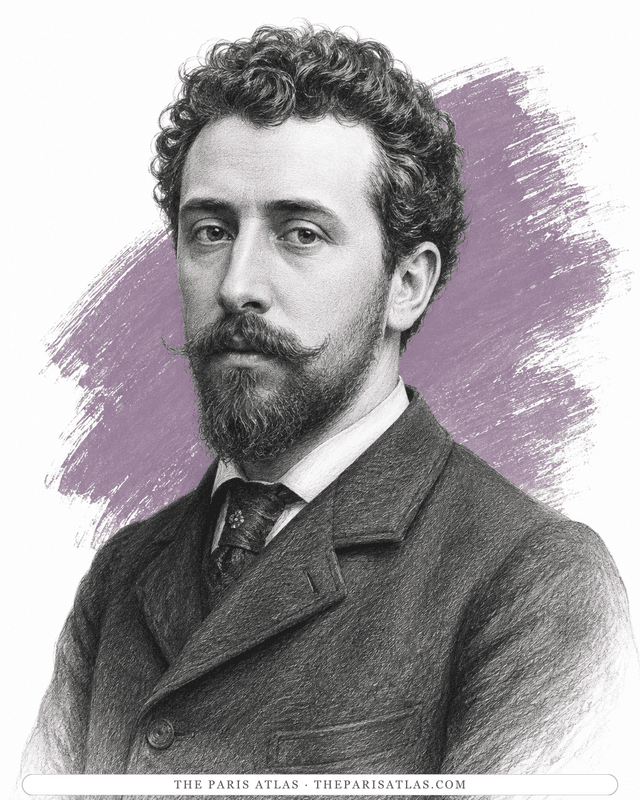
Georges Seurat
Parisian painter who built pictures from small dots of pure colour on optical principle, co-founded the Salon des Indépendants, and detonated the last Impressionist exhibition of 1886 with A Sunday on La Grande Jatte. He died at thirty-one.
View artist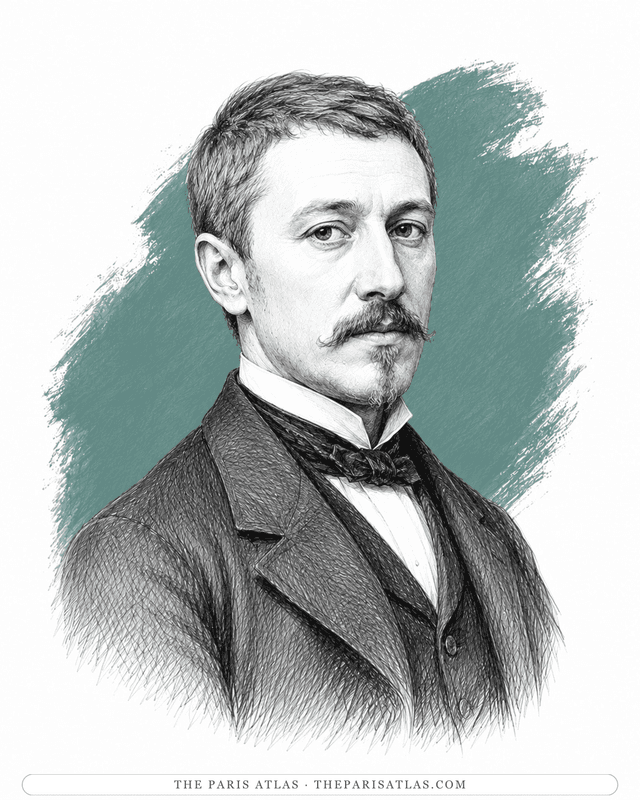
Gustave Caillebotte
Painter of Haussmann's geometry and the group's organizer-financier; his bequest of Impressionist paintings forced the French state to take the movement in.
View artist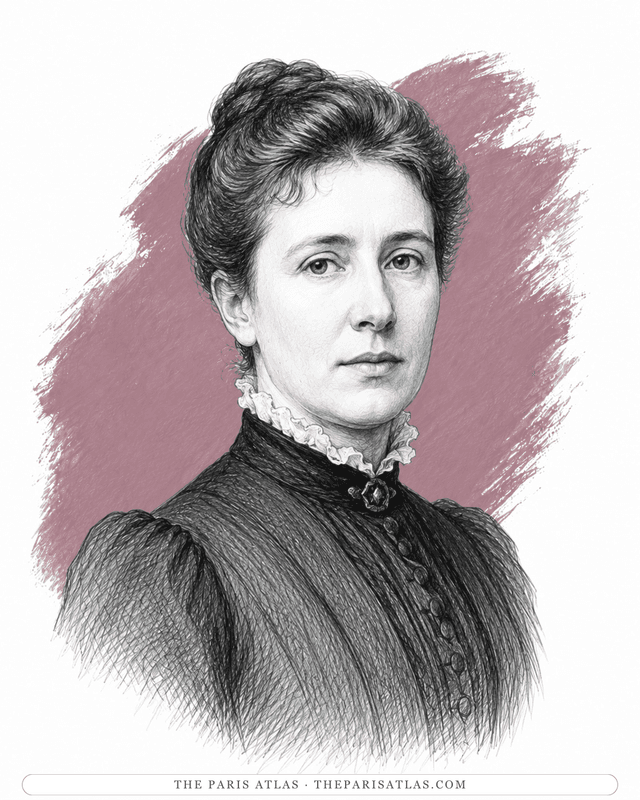
Mary Cassatt
Mary Cassatt was an American painter and printmaker known for her depictions of women and children. Based in France for the last fifty-two years of her life, she was the only American to exhibit with the original French Impressionist group, participating in four of its eight exhibitions. Edgar Degas invited her to exhibit with the group in 1877 after the Salon jury rejected her submissions.
View artist
References
The sources below include collection records, catalogues, scholarly research, and primary materials that informed this page. They document Hoar Frost, its making, and its place in cultural history.


2↑Paris 1874: Inventing Impressionism — Musée d'Orsay
WebsiteMusée d'OrsayUsed forWeb source consulted for documented facts and historical context presented on the Hoar Frost page.
3↑Impression, soleil levant (notice 4014) — Musée Marmottan Monet
WebsiteMusée Marmottan MonetUsed forWeb source consulted for documented facts and historical context presented on the Hoar Frost page.

4musee-orsay.fr
WebsiteUsed forWeb source consulted for documented facts and historical context presented on the Hoar Frost page.
5Camille Pissarro: Biography and Chronology
WebsiteKunstmuseum BaselUsed forWeb source consulted for documented facts and historical context presented on the Hoar Frost page.
These references provide the documented foundation for this work's history and interpretation. Claim-level citations remain attached to the specific claims they support.
 Explore more resources