Apple Harvest
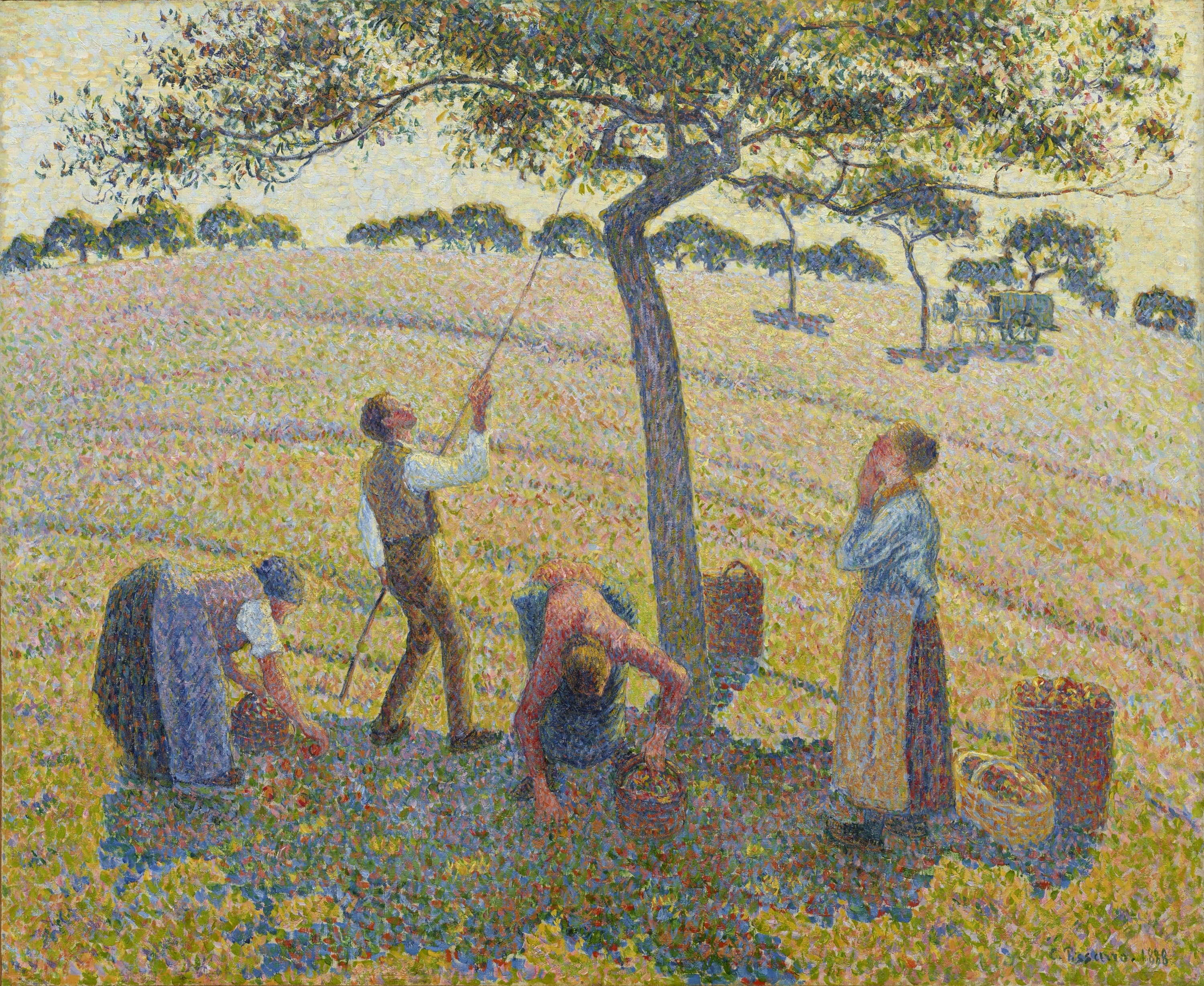
Camille Pissarro painted this orchard at Éragny in 1888, entirely in small separate dots of colour. He was finishing it when he began writing to his son that he wanted a way of painting without the dot. The Dallas Museum of Art has had it since 1955.
- 1888
- Oil on canvas
About Camille Pissarro
What the painting shows
An orchard in the middle of the harvest, in full light. A man in shirtsleeves and a dark waistcoat reaches up with a long pole and knocks the fruit out of the branches of the tree at the centre. Two women stoop over baskets in the grass beneath it, one of them with an arm down into the fruit. A fourth figure stands at the right in a long skirt, one hand at her face, with a tall basket of apples beside her and a flat one at her feet.[1]
Behind them the field runs back in bands to a line of trees on the horizon, and a cart and horse wait at the right in the middle distance. The ground under the tree is not brown or grey but blue and violet, shot through with red and green.
Every part of it is made of small separate touches of paint, none of them blended into its neighbour. The canvas is signed and dated at the lower right.
What painting in dots actually means
Camille Pissarro met Georges Seurat and Paul Signac in 1885, when he was in his mid-fifties and already the senior figure of Impressionism, and took up Seurat's method. The National Gallery in London describes it as "applying small dots of colour alongside each other on the canvas to create an optical mixture" — instead of mixing green on the palette, you put a blue dot next to a yellow one and let the eye do the mixing at normal viewing distance.[2]
The method came with rules taken from colour science, in particular the work of the chemist Michel Eugène Chevreul and the physicist Ogden Rood: put complementary colours next to each other, add yellows and oranges to sunlit areas, blues and purples to shadows. When the pictures of Seurat, Signac, Pissarro and his son Lucien Pissarro were hung together in their own section at the eighth and last Impressionist exhibition in 1886, the critic Félix Fénéon coined a name for it, Neo-Impressionism.
The Dallas Museum of Art argues that Pissarro worked hard here against the flatness the method could produce, and that "his dots are surprisingly active and diverse". The art historian Robert Herbert, quoted by the museum, took the shadow under the apple tree as the demonstration:
“The shadow has brilliant red, intense blue, intense green as well as pink, lavender, orange, some yellow, and subdued blues and greens… results in an abrasive vibration in our eye that cannot be resolved into one tone.”
He was already looking for a way out
In September 1888, while he was finishing this canvas, Pissarro wrote to his son Lucien Pissarro in London. The letter is the reason the picture matters beyond its subject.[3]
“I am thinking a lot here about a way of producing without the point… How to attain the qualities of purity, of the simplicity of the point, and the thickness, the suppleness, the liberty, the spontaneity, the freshness of sensation of our impressionist art? That's the question; it is much on my mind, for the point is thin, without consistency, diaphanous, more monotonous than simple.”
He was still looking five months later. In February 1889 he told Lucien he was searching for a way to replace the points, and that what he had tried was not quick enough and did not respond closely enough to sensation.[4]
The picture is the method at full strength, painted by a man who had already begun to list its faults in writing.
He gave the method up
Pissarro did not stay a Neo-Impressionist. The National Gallery in London puts the reason in his own terms: he gradually abandoned the technique, finding that the laborious application of paint took away any spontaneity in painting. The Kunstmuseum Basel, which owns one of the major canvases of the period, dates the break to around 1890 and calls the whole episode short and intense.[3]
The two museums differ on how quickly it happened, and the letters of 1888 and 1889 sit in the middle of the disagreement: he was arguing with the method years before he left it. What he kept, in Basel's reading, was the harmony between figures and landscape that the dots had taught him to build. He kept it with a freer touch.
Three paintings of the same orchard
Apple picking was a subject Pissarro returned to for most of a decade, and the Dallas Museum of Art sets out three canvases that show how far his handling travelled:[1]
- Apple Picking, 1881, 65 by 54 centimetres, private collection — painted in a classic Impressionist manner.
- Apple Picking, begun 1881 and not finished until 1886, 126 by 127 centimetres, Ohara Museum of Art, Kurashiki — shown at the eighth and final Impressionist exhibition in the year he completed it.
- Apple Harvest, 1888, the Dallas canvas — painted throughout in dots.
The subject stayed the same for seven years while the way of putting paint on canvas changed twice.
How much came before the canvas
The systematic method needed systematic preparation. The Dallas Museum of Art records a number of drawings, oil studies and a full compositional watercolour that Pissarro squared up for transfer, the traditional method of scaling a small design onto a larger surface by drawing a grid over both.[5]
That watercolour, made around 1888, is about 17 by 22 centimetres, and its whereabouts are not known. A graphite and coloured-pencil study of the same date, in the Eunice and Hal David Collection, carries his notes to himself on the colours of the things in front of him: yellowish red-orange, green, violet, pink.
What fifty years of varnish had done to it
In 2014 the museum's chief conservator, Mark Leonard, removed the picture's varnish. A test window cleaned along the right edge showed the difference: about fifty years of varnish had gone dark and yellow and was masking the colours underneath.[2]
This has a consequence for anything written about the painting before that year. Descriptions of a warm golden orchard throbbing with late-summer heat were describing a discoloured coating as much as the paint. The picture as it hangs now is cooler, sharper and more contradictory, which is what the dots were built to be.[2]
Close reading
Reading the work, detail by detail
Pissarro turns an ordinary harvest into a study of coordinated work and divided color. The details show how repeated gestures, baskets, and small touches of paint keep the orchard active from edge to edge.
1.The raised pole sets the work in motion
The central worker reaches into the branches with a long pole, creating the painting's strongest diagonal. His upward action begins a chain that continues in the bent figures collecting fruit below.
2.Bent bodies repeat the orchard's curves
The two women do not pose for a rural scene; their lowered heads and rounded backs register the repetitive labor of gathering. Baskets and scattered apples extend those circular forms across the grass.
3.Separate marks make the light shimmer
Small adjacent strokes remain visible instead of blending into a single green. From a distance they join as foliage and sunlight; enlarged, the demanding Neo-Impressionist method becomes part of what the viewer sees.
4.The standing woman pauses inside the shared work
Her upright body interrupts the repeated bending and reaching around the tree. The pause varies the rhythm of labor and lets the viewer compare different stages of the same harvest.
5.The cart connects gathering fruit to moving it away
The small cart in the middle distance explains what happens after the baskets are filled. It extends the scene from individual gestures into an organized process of collecting and transport.
6.Scattered apples make the harvest measurable
Small warm dots lie between baskets and figures, showing the product of each repeated movement. They also carry the tree's color down into the cool violet and green ground.
Timeline
1884
Pissarro settles his family at Éragny, a village north of Paris, where he lives for the rest of his life.
1885
Meets Georges Seurat and Paul Signac and adopts Seurat's method of painting in separate dots of colour.
1886
Shows with Seurat, Signac and his son Lucien in a separate section of the eighth and last Impressionist exhibition. Félix Fénéon names the tendency Neo-Impressionism.
1888
Paints Apple Harvest at Éragny, working from drawings, oil studies and a squared-up watercolour.
1888
Writes to Lucien in September that he is thinking a lot about a way of producing without the point.
1889
Still searching in February, and tells Lucien that what he has tried is not quick enough.
1889–90
Shown at exhibitions in Brussels and Paris. The Dallas Museum of Art records the showings but does not name the venues.
1890
Has broken with Neo-Impressionism, by the Kunstmuseum Basel's dating, though he keeps what it taught him about holding figures and landscape together.
1955
Acquired by the Dallas Museum of Art through the Munger Fund, as 1955.17.M.
2014
Chief conservator Mark Leonard removes about fifty years of darkened varnish, changing how the painting's colour is described.
Where to see it
Dallas Museum of Art
1717 North Harwood Street, Dallas, TX 75201, United States
Displays and loans can change. Check whether this work is on view before making a special trip.
Plan your visit on the museum’s official website (opens in a new tab)Frequently asked questions
Where is Pissarro's Apple Harvest?
The Dallas Museum of Art, which acquired it through the Munger Fund in 1955. Its accession number is 1955.17.M.
Is this painting called Apple Picking at Éragny-sur-Epte?
The museum that owns it calls it Apple Harvest, with the French title Cuillette des pommes. Apple Picking at Éragny-sur-Epte is a legacy title that survives in older records and in some of the museum's own image filenames, and Wikidata carries a third version, La récolte des pommes à Éragny. There are also two earlier Camille Pissarro paintings actually titled Apple Picking, from 1881 and 1881–86, which are different pictures.
What is pointillism, in plain terms?
Painting in small separate dots of unmixed colour placed side by side, so that the mixing happens in the viewer's eye rather than on the palette. Georges Seurat developed it from published colour science, and Camille Pissarro adopted it after meeting Seurat in 1885. Complementary colours go next to each other, sunlight gets yellows and oranges, and shadows get blues and violets. That is why the shadow under the apple tree here is blue and red rather than brown.
Did Pissarro stay a pointillist?
No. Camille Pissarro worked in the method for roughly five years and then left it. The National Gallery in London says he gradually abandoned it because the laborious application of paint took away any spontaneity, and the Kunstmuseum Basel dates his break with Neo-Impressionism to around 1890. His own letters show him looking for a replacement as early as September 1888, while this painting was still on the easel.
Why does the painting look different from older reproductions?
Because it was cleaned. In 2014 the Dallas Museum of Art's chief conservator, Mark Leonard, removed about fifty years of varnish that had darkened and yellowed. Older descriptions of a warm golden palette were partly describing that coating rather than the paint, and the museum says so directly.
Where was it painted?
In the orchard at Éragny, the village north of Paris where Camille Pissarro settled in 1884 and stayed until his death. The Dallas Museum of Art reproduces a photograph of him wheeling his rolling easel out to paint near the house there.
How big is Apple Harvest?
61 by 74 centimetres, oil on canvas. It is a portable size, small enough to carry out to the orchard and back.
More by Camille Pissarro
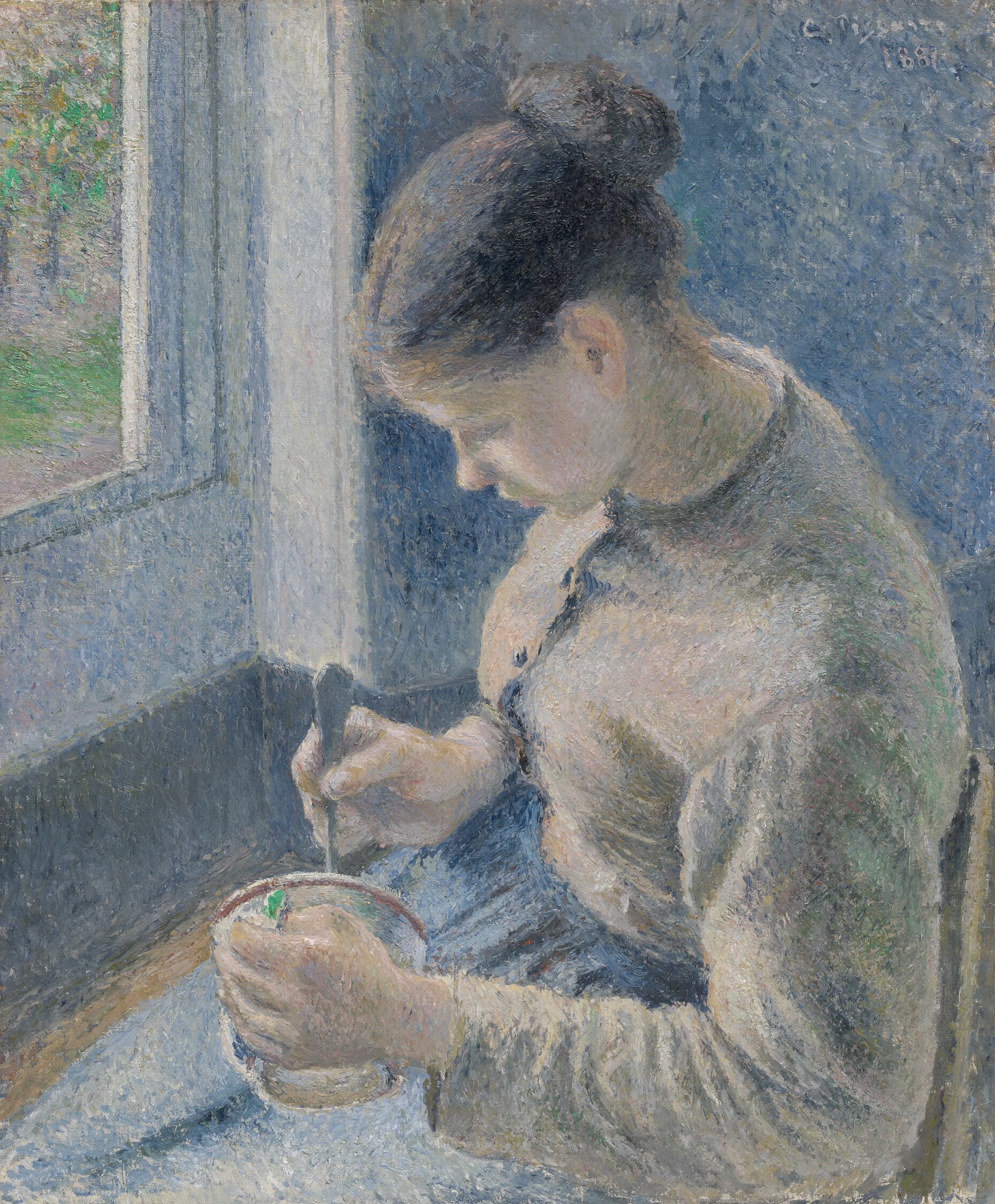
If you like Camille Pissarro
Explore painters from the same movements and circles.
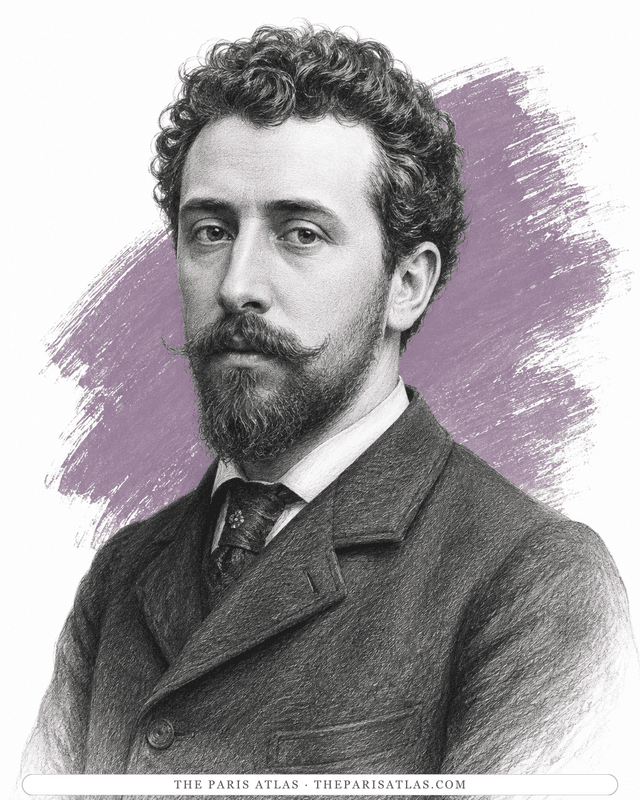
Georges Seurat
Parisian painter who built pictures from small dots of pure colour on optical principle, co-founded the Salon des Indépendants, and detonated the last Impressionist exhibition of 1886 with A Sunday on La Grande Jatte. He died at thirty-one.
View artist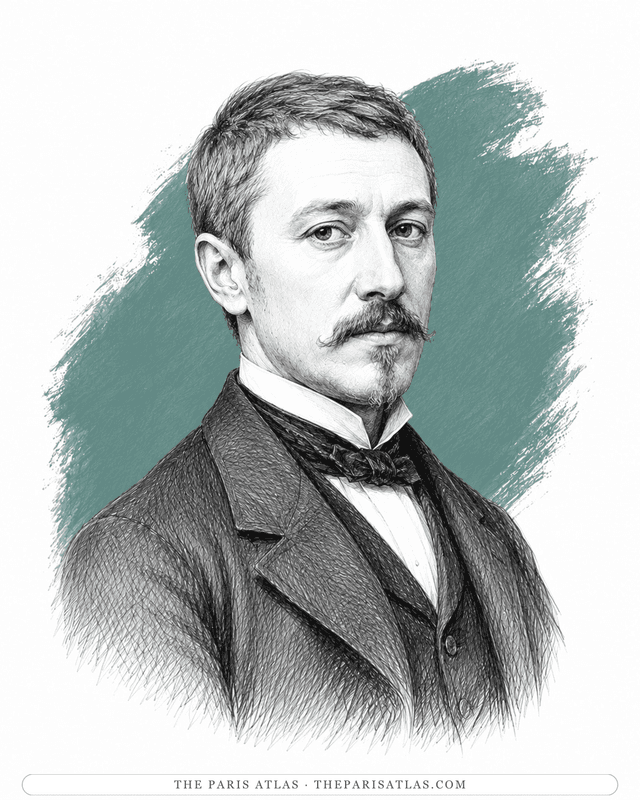
Gustave Caillebotte
Painter of Haussmann's geometry and the group's organizer-financier; his bequest of Impressionist paintings forced the French state to take the movement in.
View artist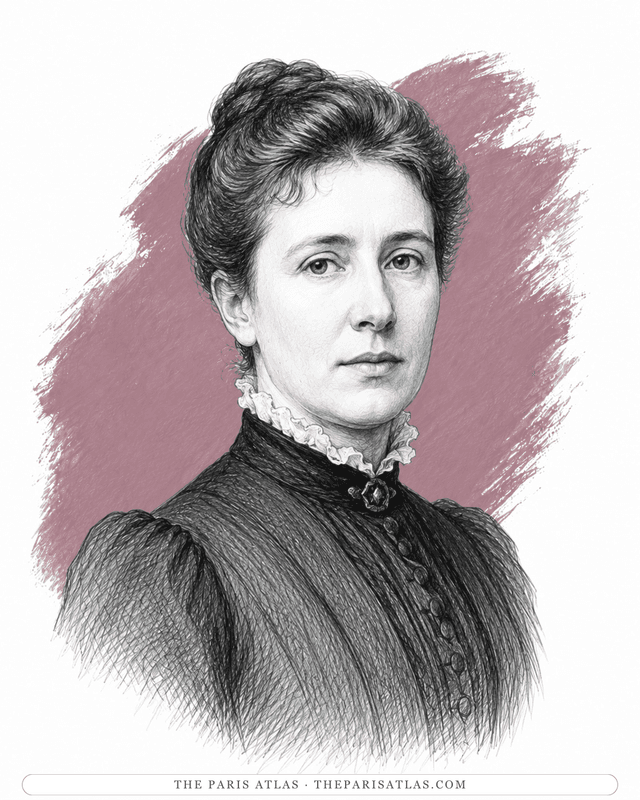
Mary Cassatt
Mary Cassatt was an American painter and printmaker known for her depictions of women and children. Based in France for the last fifty-two years of her life, she was the only American to exhibit with the original French Impressionist group, participating in four of its eight exhibitions. Edgar Degas invited her to exhibit with the group in 1877 after the Salon jury rejected her submissions.
View artist
References
The sources below include collection records, catalogues, scholarly research, and primary materials that informed this page. They document Apple Harvest, its making, and its place in cultural history.



4↑Camille Pissarro — artist biography
WebsiteMuseo Nacional Thyssen-BornemiszaUsed forThe Museo Thyssen-Bornemisza biography supplies an independent chronology of Pissarro's Impressionist development and Éragny period.
5↑La Maison de la Folie, Éragny
WebsiteMusée d'OrsayUsed forWeb source consulted for documented facts and historical context presented on the Apple Harvest page.
These references provide the documented foundation for this work's history and interpretation. Claim-level citations remain attached to the specific claims they support.
 Explore more resources