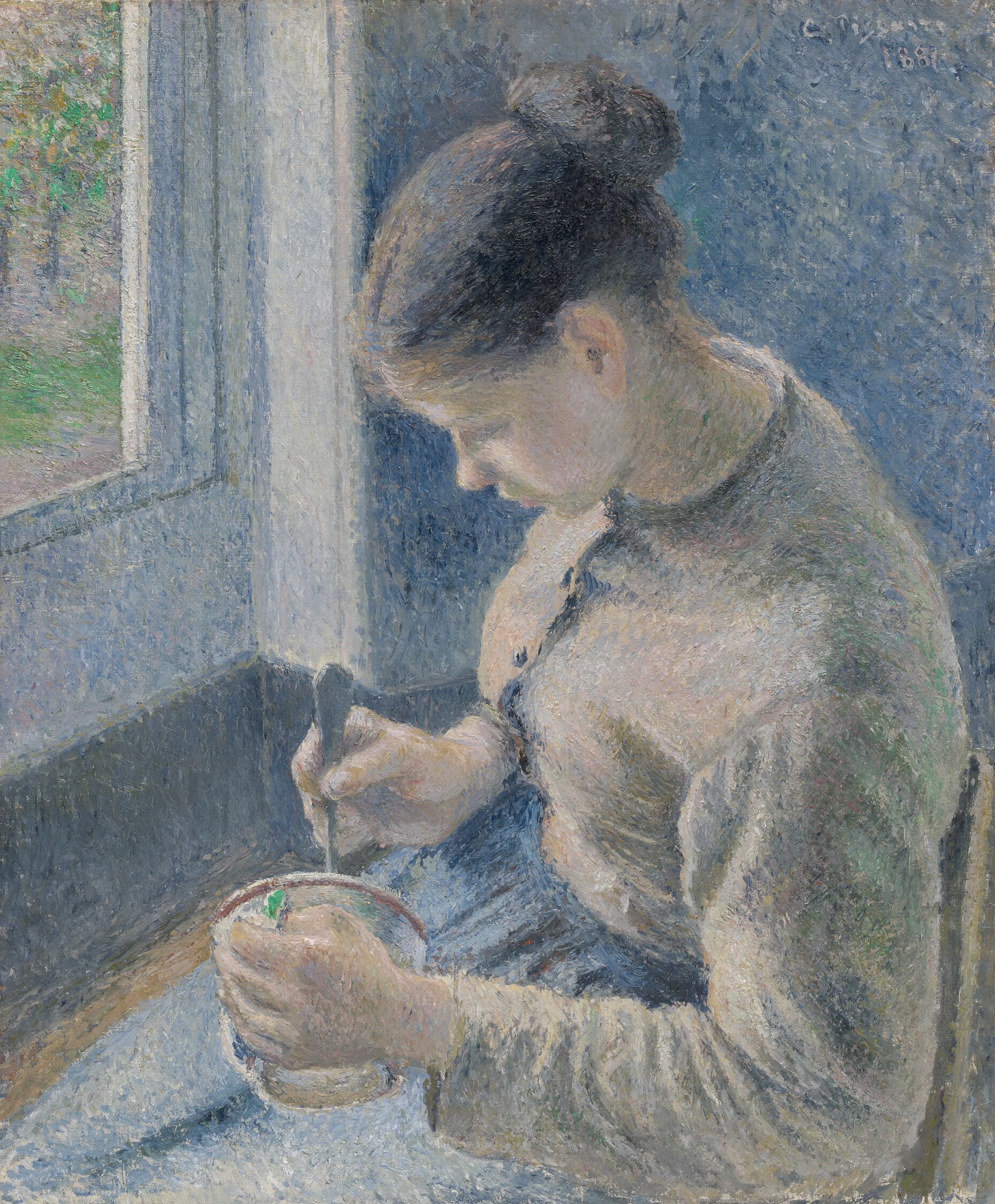
Young Peasant Having Her Coffee
Camille Pissarro painted a young woman drinking her morning coffee in 1881 and showed it at the seventh Impressionist exhibition the following spring. It has been in the Art Institute of Chicago since 1922.
- 1881
- Oil on canvas
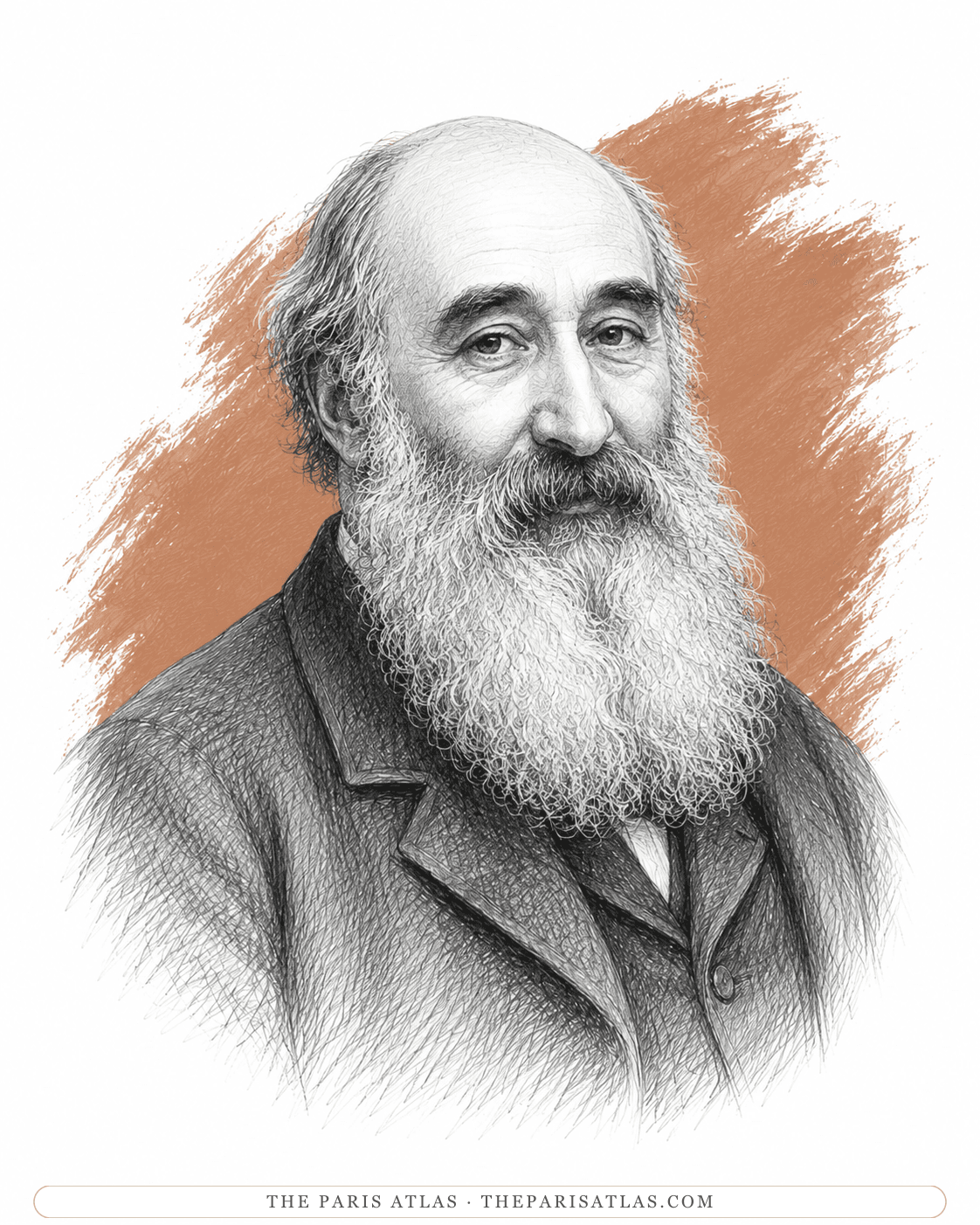
About Camille Pissarro
What the painting shows
A young woman sits at a table beside a window, seen from the side and close to. Her head is bent over a white bowl with a warm pink rim; her left hand holds it steady on the table and her right hand works a spoon in it. Her dark hair is pulled up into a knot. She wears a pale wool jacket buttoned to the throat over a blue-grey skirt, and the wool is painted so you can feel it is thick.[1]
Almost everything is blue-grey: the wall, the table, the shadowed side of her face and hands. The one opening is the window at the left, a few strokes of green and pink for a garden outside. She is not looking at it, or at the painter, or at anything except the bowl.
The canvas is inscribed at the upper right, C. Pissarro / 1881, in white paint with a little red in it. It is a standard commercially prepared portrait canvas of the size the trade called a number 15.
The two years he painted people
Camille Pissarro was a landscape painter by habit and by reputation. Around 1881 that changed for a while, and the Art Institute of Chicago puts the shift plainly.[1]
“During the ensuing two years, for the first and last time in his career, his canvases were dominated not by landscapes but by people.”
He was also the organiser of the group he belonged to. The Art Institute credits him with persuading Gustave Caillebotte and Claude Monet to take part in the seventh Impressionist exhibition, which opened in March 1882 in the Salons du Panorama de Reischoffen at 251 rue Saint-Honoré. This picture hung there as number 111.
How it is painted
The surface is worked in small strokes set side by side, with heavier dabs laid on top in places, so the figure and the room are made of the same material. The Art Institute describes the effect as one that serves "to integrate figure and setting and evoke the textures of the young woman's wool clothing".[1]
That method matters to how the picture reads. A single figure at this scale and this close would usually be a portrait, with the room behind her treated as a backdrop. Pissarro gives the wall, the table and the wool the same handling, and the woman belongs to the room rather than sitting in front of it.
The comparison he objected to
Critics who saw the peasant pictures reached for Jean-François Millet, the painter of solemn rural labour whose reputation was then at its height. Pissarro disliked the comparison and said so in a letter to the critic Théodore Duret, dated by the Art Institute to 12 March 1882:[2]
“they compare me with Millet, but Millet was biblical!”
He went on to note the irony that, for a Jew, one finds barely any biblical reference in his work. The Metropolitan Museum of Art dates an equivalent remark to a letter of March 1881, a year earlier; the two museums do not agree on the year, and the wording each prints differs. The critic Joris-Karl Huysmans took Pissarro's side at the time and wrote that he had completely freed himself of Millet's influence.
The Art Institute argues that the comparison missed the point in a more specific way:
“Above all, what critics failed to understand was the anarchist political nature of his rural imagery, which was, to him, as "modern" as the fashionable bourgeoisie painted by Caillebotte and Renoir.”
Who she is, and where the room was
The sitter has never been identified. The Art Institute states that she is not Madame Pissarro, and not the painter's niece known as Nini Astruc, and suggests she may be a housemaid, since Pissarro often used them as models.[1]
The room is uncertain too, and for a mundane reason: the family moved house in the summer of 1881, and the museum accepts that the painting could have been begun in one house and finished in another.
The Art Institute also holds a drawing of the same subject, made in 1879 or 1880, which entered the collection in 2010.
Its titles, and how it reached Chicago
The picture has been shown under three names in ten years, which is normal for a work moving between exhibitions and dealers:[3]
- Jeune paysanne prenant son café — seventh Impressionist exhibition, Paris, March 1882, number 111
- Paysanne prenant son Café — Dowdeswell and Dowdeswell, London, April to July 1883, number 5
- La Café au lait — Durand-Ruel retrospective, Paris, January to February 1892, number 16
A satirical magazine turned the last of those into a pun, café au laid, swapping lait for laid, ugly. At the 1892 show the critic Armand Sallanches called the picture simply stunning.
The ownership record is unusually complete, prices included. Pissarro sold it to Durand-Ruel on 19 December 1881, before it was ever exhibited. It went to the dealer Georges Petit in August 1883, returned to Durand-Ruel in April 1891 for 1,000 francs, and was sold on 29 April 1892 to the Chicago collector Potter Palmer for 3,000 francs. It passed down through the Palmer family and was given to the Art Institute of Chicago in 1922.[4]
Close reading
Reading the work, detail by detail
The scene is small and domestic: one woman, one bowl, one absorbed action. The close views show how Pissarro uses touch, wool, light, and posture to make an ordinary meal fully sufficient as a subject.
1.The lowered face keeps the moment private
She looks into the bowl rather than outward at the painter or viewer. That refusal of eye contact preserves the meal as an unperformed act and concentrates attention on her absorption.
2.Bowl, spoon, and hands contain the action
One hand steadies the bowl while the other works the spoon. The compact triangle of hands and dish makes the activity immediately legible without requiring a larger domestic story.
3.Broken paint makes the jacket feel heavy
Cream, gray, blue, and warmer touches describe the wool instead of smoothing it. Figure and room share the same active surface, but the jacket's density makes the body feel protected from the window's cooler light.
4.Warm cheeks keep the lowered face physically present
Muted reds emerge through cooler surrounding strokes. The color suggests outdoor life and bodily presence without turning the private meal into a sentimental anecdote.
5.The table edge creates a firm boundary around the meal
A strong horizontal supports bowl, hand, and spoon. It contains the action and separates the woman's concentrated gesture from the looser background.
6.The background remains a place without becoming a description
Broad touches suggest wall, furniture, or surrounding space without spelling out a room. The limited information keeps attention on the ordinary act at the table.
Timeline
1881
Painted and inscribed at the upper right, C. Pissarro / 1881. The family moves house that summer, so the room may not be a single room.
1881
Sold to the dealer Paul Durand-Ruel in Paris on 19 December, before its first exhibition.
1882
Shown at the seventh Impressionist exhibition, 251 rue Saint-Honoré, Paris, 1 to 31 March, as number 111.
1883
Shown in London at Dowdeswell and Dowdeswell, then sold to Georges Petit in Paris in August.
1891
Bought back by Durand-Ruel in April for 1,000 francs.
1892
Shown at the Durand-Ruel retrospective in Paris as number 16, and sold on 29 April to Potter Palmer of Chicago for 3,000 francs.
1922
Given to the Art Institute of Chicago by the Palmer family, as 1922.433.
Where to see it
Art Institute of Chicago
111 South Michigan Avenue, Chicago, IL 60603, United States
Displays and loans can change. Check whether this work is on view before making a special trip.
Plan your visit on the museum’s official website (opens in a new tab)Frequently asked questions
Where is Young Peasant Having Her Coffee?
The Art Institute of Chicago, accession number 1922.433, in the Potter Palmer Collection. The Chicago collector Potter Palmer bought it from Durand-Ruel in 1892, and his family gave it to the museum in 1922.
Who is the woman in the painting?
Nobody knows. The Art Institute says she has never been identified, rules out both Madame Pissarro and the painter's niece known as Nini Astruc, and suggests she may have been a housemaid, since Camille Pissarro often used household staff as models.
What is she drinking?
Coffee, from a wide bowl rather than a cup, with a spoon in it. When the painting was shown at the Durand-Ruel retrospective in 1892 it was catalogued as La Café au lait, coffee with milk.
Is this the painting called La Petite Bonne de campagne?
No. La Petite Bonne de campagne, or The Little Country Maid, is a different Camille Pissarro painting, made in 1882 and held by Tate in London. The Chicago picture went under three period titles: Jeune paysanne prenant son café in 1882, Paysanne prenant son Café in 1883, and La Café au lait in 1892.
Why did critics compare Pissarro to Millet?
Because both painted rural working people, and Jean-François Millet was the established name for that subject. Camille Pissarro rejected the comparison, writing to the critic Théodore Duret that Millet was biblical and that a Jew finds barely any biblical reference in his own work. Joris-Karl Huysmans agreed with him, writing that Pissarro had freed himself of Millet's influence entirely.
How big is the painting?
65.3 by 54.8 centimetres, according to the Art Institute's collection record. The museum's own scholarly catalogue of its Pissarros gives 65 by 54.5, a difference of a few millimetres that has never been reconciled.
Was it shown at an Impressionist exhibition?
Yes, at the seventh, which ran through March 1882 at 251 rue Saint-Honoré in Paris, where it hung as number 111. Camille Pissarro was the one who talked Gustave Caillebotte and Claude Monet into taking part in that exhibition at all.
More by Camille Pissarro
If you like Camille Pissarro
Explore painters from the same movements and circles.
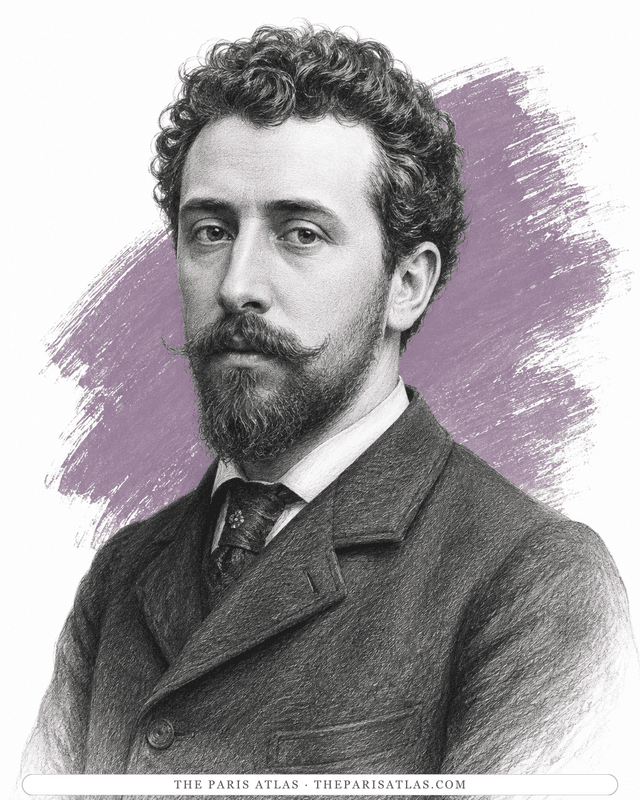
Georges Seurat
Parisian painter who built pictures from small dots of pure colour on optical principle, co-founded the Salon des Indépendants, and detonated the last Impressionist exhibition of 1886 with A Sunday on La Grande Jatte. He died at thirty-one.
View artist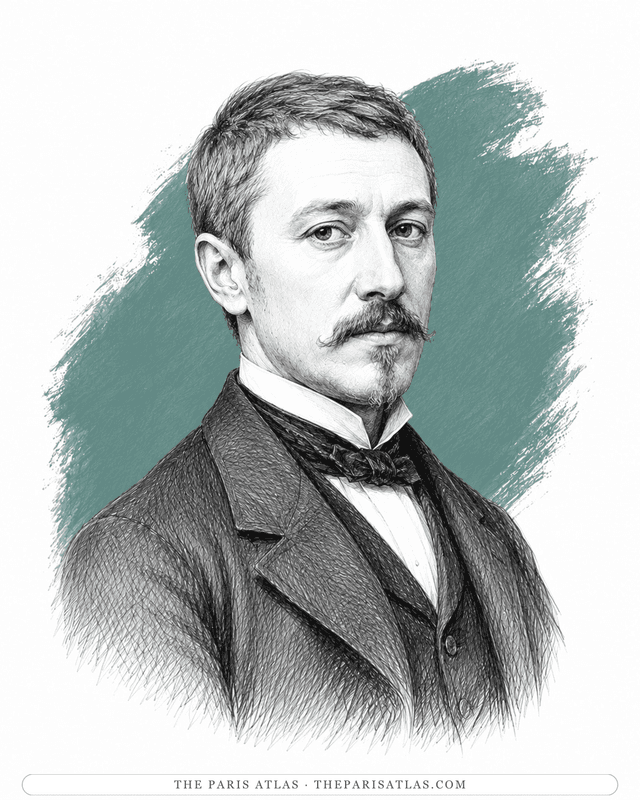
Gustave Caillebotte
Painter of Haussmann's geometry and the group's organizer-financier; his bequest of Impressionist paintings forced the French state to take the movement in.
View artist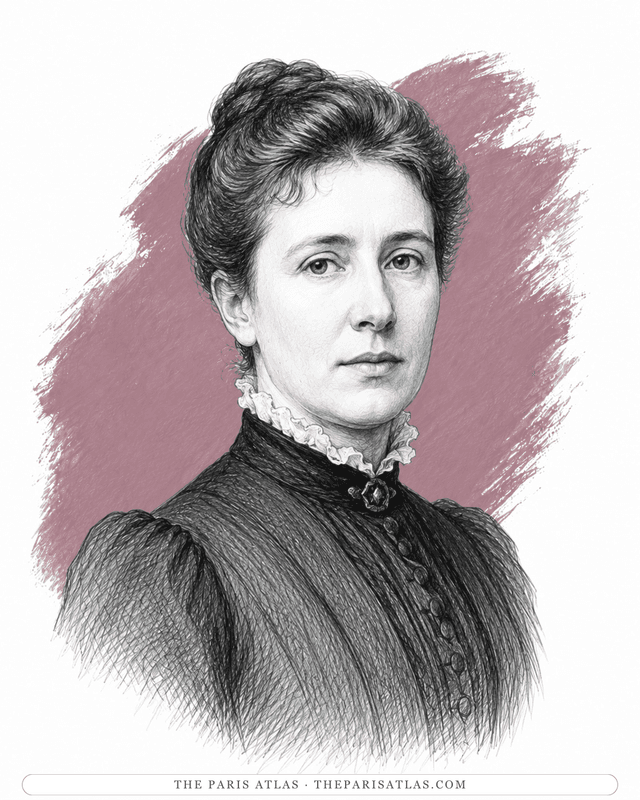
Mary Cassatt
Mary Cassatt was an American painter and printmaker known for her depictions of women and children. Based in France for the last fifty-two years of her life, she was the only American to exhibit with the original French Impressionist group, participating in four of its eight exhibitions. Edgar Degas invited her to exhibit with the group in 1877 after the Salon jury rejected her submissions.
View artist
References
The sources below include collection records, catalogues, scholarly research, and primary materials that informed this page. They document Young Peasant Having Her Coffee, its making, and its place in cultural history.


2↑Camille Pissarro — artist record
WebsiteMusée d'OrsayUsed forThe Musée d'Orsay artist record provides institutional context for Pissarro's rural figures and mature career.
3↑Art Institute of Chicago — collection records
WebsiteUsed forWeb source consulted for documented facts and historical context presented on the Young Peasant Having Her Coffee page.
4↑Camille Pissarro — artist biography
WebsiteMuseo Nacional Thyssen-BornemiszaUsed forThe Museo Thyssen-Bornemisza biography supplies an independent account of Pissarro's Éragny years and rural subjects.
These references provide the documented foundation for this work's history and interpretation. Claim-level citations remain attached to the specific claims they support.
 Explore more resources