The Pont-Neuf
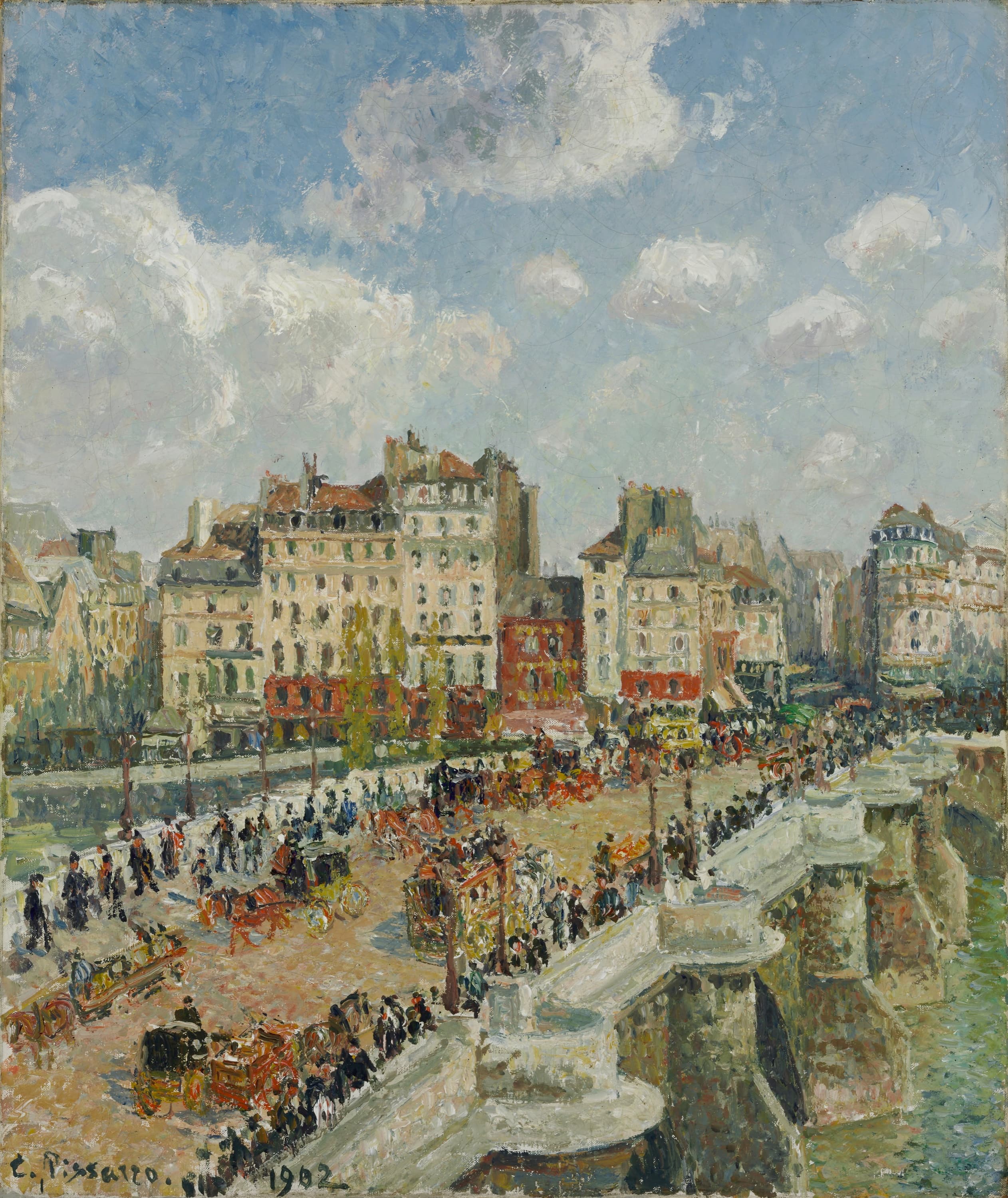
Camille Pissarro painted the Pont-Neuf in Paris from the window of a rented apartment on the Île de la Cité. This upright canvas of 1902, inventory number 205.B, belongs to the Museum of Fine Arts in Budapest. Three other 1902 paintings of the bridge, all separate pictures, are in Lyon, Cardiff and Hiroshima.
- 1902
- Oil on canvas
About Camille Pissarro
What the painting shows
The viewer is above the bridge and slightly to one side of it, looking along the roadway rather than across it. The Pont-Neuf runs from the bottom right of the canvas towards the far bank, its pale stone parapet stepping out into the rounded bays that the bridge is known for. Below and to the right the Seine is dark green, broken with cold light.
The roadway is full. Horse cabs, an omnibus, carts and a stream of people in dark winter coats move along it, and more people line the parapet. On the far bank a row of Paris houses stands in cream and grey with red-brown shopfronts at street level, mansard roofs and chimney pots above, and bare trees along the quay in front. The top half of the picture is sky, blue with heavy white cloud.
The Museum of Fine Arts in Budapest, which owns it, reads the composition as built on the diagonal of the bridge: the crowd along the pavement and the traffic down the middle follow the same line. It is signed and dated at lower left, C. Pissarro. 1902.[1]
The window at 28 place Dauphine
Camille Pissarro was in his seventies by 1902 and had an eye disease that made outdoor work difficult. Towards the end of 1900 he took a rented apartment at 28 place Dauphine, on the Île de la Cité, the island in the Seine that the Pont-Neuf crosses. He kept it for the rest of his life, staying there during three extended visits to Paris, and painted the bridge from the same window every time.[2][3]
How many pictures that produced depends on what is being counted, and the museums count different things.
- The Museum of Fine Arts, Budapest: about a dozen paintings of the Pont-Neuf.[1]
- The National Gallery, London: about thirty paintings made from the place Dauphine window between 1900 and 1903, twenty-six of them in the winter of 1902 alone, looking towards the right bank or west along the river.[2]
Sources also differ slightly on when he moved in. The National Gallery in London puts it at the end of 1900; Museum Wales in Cardiff says December 1900. His son Paul-Émile photographed him in the apartment around 1901.[2][3]
Four canvases, four museums
Four different paintings of 1902 go by the title The Pont-Neuf, and they are held in four countries. They are not versions of a single composition: the sizes differ, the weather differs, and the Budapest picture is the only upright one.
- Museum of Fine Arts, Budapest, inventory 205.B, 55.3 × 46.5 cm, upright. The canvas reproduced here.[1]
- Musée des Beaux-Arts de Lyon, 2000-3, 54.2 × 66 cm, given by the Sara Lee Corporation Foundation in 2000, and earlier in the collection of Max Emden.
- Amgueddfa Cymru – Museum Wales, Cardiff, NMW A 2493, titled Pont Neuf, Snow Effect, 2nd series, 54.5 × 65.3 cm.[3]
- Hiroshima Museum of Art, 66 × 81.2 cm; the museum publishes no inventory number.
The dots in the water
Camille Pissarro had spent several years painting in small separate dots of unmixed colour, the method Georges Seurat and Paul Signac worked out, in which the eye is meant to do the mixing at a distance. It was slow, and he gave it up.[4]
The Budapest curators point out that he kept the touch and put it to a different job. The small dots are clearest in the rippled surface of the water and in the crowds, and here they are not mixing colour optically so much as describing movement.[1]
Where it is now
The painting is in the Department of Art after 1800 at the Museum of Fine Arts in Budapest, inventory number 205.B, and the museum's record lists it as not on display. The earliest publication the museum cites for it is a 1914 catalogue of the museum's own new acquisitions, which indicates it had reached Budapest by then. Its most recent is the catalogue of the 2021 exhibition Cezanne-tól Malevicsig, from Cézanne to Malevich, where it is number 41.[1]
The Budapest collections are administered together with the Hungarian National Gallery, and the picture appears in the National Gallery's 2018 museum guide, which is why some databases file it under that name. The museum also notes that its record for the work is subject to revision as research continues.[1]
Close reading
Reading the work, detail by detail
Pissarro looks down on the Pont-Neuf as both historic structure and working route. The details separate the bridge's stone rhythm from the traffic above and the flowing water below.
1.Repeated arches make the bridge a measure
The arches divide the river into steady intervals and give the scene a durable horizontal spine. Their repetition is firm enough to organize the view without stopping the movement around them.
2.Daily traffic occupies the monument
Tiny vehicles and walkers keep the old bridge from becoming an architectural relic. Pissarro shows historical Paris functioning as present-day infrastructure.
3.Water loosens the stone geometry
Short horizontal strokes carry reflected color under the arches. The river interrupts the bridge's stable repetitions and keeps the lower half of the painting optically unsettled.
4.The small statue interrupts the bridge's long horizontal
A vertical monument rises within the repeated arches and moving traffic. Its compact silhouette anchors a specific site without dominating the everyday city around it.
5.The quay adds work and walking beneath the bridge
People occupy the lower river edge as well as the bridge above. The two levels make the historic crossing part of a larger network of ordinary routes.
6.Trees soften the meeting of bridge, island, and water
Irregular foliage interrupts the masonry's repeated curves. The contrast keeps the city view from becoming only an architectural diagram.
Timeline
Late 1900
Pissarro rents an apartment at 28 place Dauphine on the Île de la Cité. The National Gallery in London dates the move to the end of 1900; Museum Wales says December 1900.
c. 1901
His son Paul-Émile Pissarro photographs him in the place Dauphine apartment.
1902
Painted from the apartment window; signed and dated lower left. The National Gallery in London counts twenty-six pictures made from that window over the winter.
13 November 1903
Pissarro dies in Paris of sepsis, aged 73, and is buried at Père Lachaise.
1914
The earliest publication the Museum of Fine Arts lists for the painting: the museum's own catalogue of new acquisitions, Budapest.
2018
Included in the Hungarian National Gallery's museum guide.
2021
Catalogued as number 41 in the Budapest exhibition Cezanne-tól Malevicsig, from Cézanne to Malevich.
Where to see it
Museum of Fine Arts, Budapest (Szépművészeti Múzeum)
Dózsa György út 41, 1146 Budapest, Hungary
Displays and loans can change. Check whether this work is on view before making a special trip.
Plan your visit on the museum’s official website (opens in a new tab)Frequently asked questions
Which Pont-Neuf painting is this?
The one in Budapest. Camille Pissarro painted the Pont-Neuf many times, and four separate canvases of 1902 are in four museums: this upright one at the Museum of Fine Arts in Budapest, inventory 205.B; one at the Musée des Beaux-Arts de Lyon; one at Museum Wales in Cardiff, called Pont Neuf, Snow Effect, 2nd series; and one at the Hiroshima Museum of Art. They are different pictures, not copies of one another.
Where did Pissarro paint the Pont-Neuf from?
From the window of a rented apartment at 28 place Dauphine, on the Île de la Cité in the middle of the Seine. Camille Pissarro took it towards the end of 1900 and kept it until his death in 1903, painting the bridge and the buildings on the opposite bank from the same spot each time.
How many paintings of the Pont-Neuf did Pissarro make?
The counts differ because they measure different things. The Museum of Fine Arts in Budapest says about a dozen paintings of the Pont-Neuf. The National Gallery in London says Camille Pissarro made about thirty paintings from the place Dauphine window between 1900 and 1903, twenty-six of them in the winter of 1902.
Why did Pissarro paint the city from a window?
An eye disease made it hard for Camille Pissarro to work outdoors in his last years, so he rented rooms and apartments overlooking the streets he wanted to paint and worked through the glass. The fixed viewpoint suited the way he worked in series, returning to one motif in different light and weather.
What is the Pont-Neuf?
A bridge over the Seine in central Paris, crossing at the western tip of the Île de la Cité. The Museum of Fine Arts in Budapest describes it as the oldest stone bridge in the city. Its parapet steps out into rounded bays, which are visible along the right side of the painting.
What technique is the painting made with?
Oil on canvas, worked partly in the small separate dots of colour that Camille Pissarro had learned earlier in his career alongside Georges Seurat and Paul Signac. Budapest's curators note that by 1902 he was using those dots to convey movement rather than to mix colour in the viewer's eye, and that they are most visible in the water and the crowd.
Can I see the painting in Budapest?
Not at present. The Museum of Fine Arts lists the work as not on display, in its Department of Art after 1800.
More by Camille Pissarro
If you like Camille Pissarro
Explore painters from the same movements and circles.
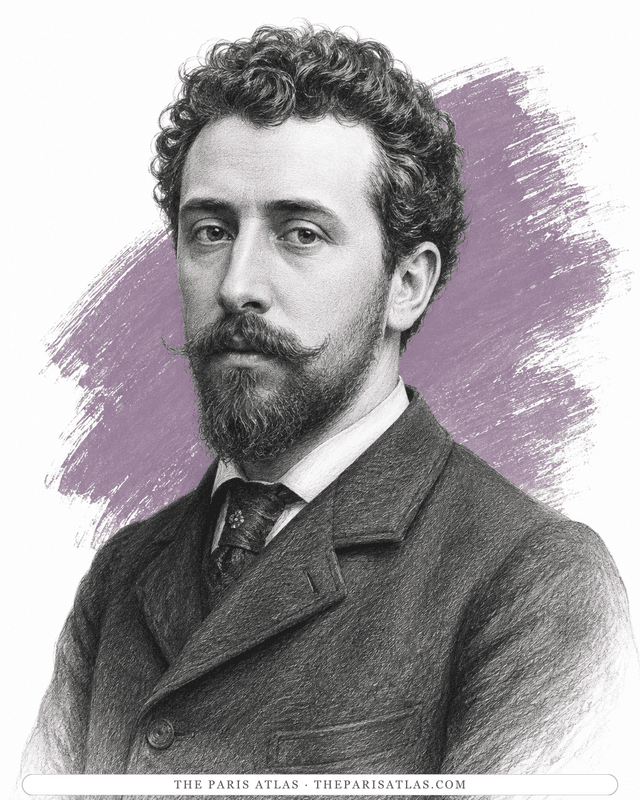
Georges Seurat
Parisian painter who built pictures from small dots of pure colour on optical principle, co-founded the Salon des Indépendants, and detonated the last Impressionist exhibition of 1886 with A Sunday on La Grande Jatte. He died at thirty-one.
View artist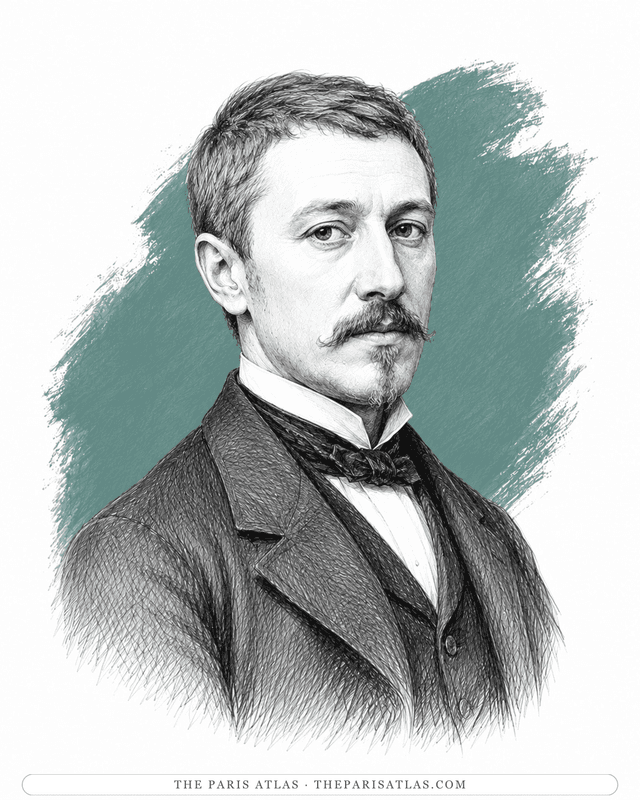
Gustave Caillebotte
Painter of Haussmann's geometry and the group's organizer-financier; his bequest of Impressionist paintings forced the French state to take the movement in.
View artist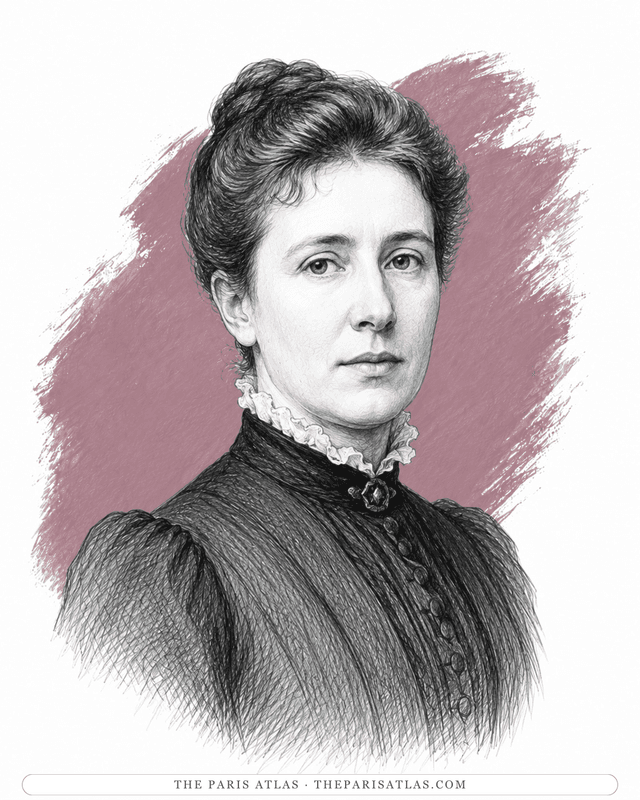
Mary Cassatt
Mary Cassatt was an American painter and printmaker known for her depictions of women and children. Based in France for the last fifty-two years of her life, she was the only American to exhibit with the original French Impressionist group, participating in four of its eight exhibitions. Edgar Degas invited her to exhibit with the group in 1877 after the Salon jury rejected her submissions.
View artist
References
The sources below include collection records, catalogues, scholarly research, and primary materials that informed this page. They document The Pont-Neuf, its making, and its place in cultural history.


4↑Pissarro Exhibition Guide: Sights of Paris
WebsiteDenver Art MuseumUsed forWeb source consulted for documented facts and historical context presented on the The Pont-Neuf page.
These references provide the documented foundation for this work's history and interpretation. Claim-level citations remain attached to the specific claims they support.
 Explore more resources