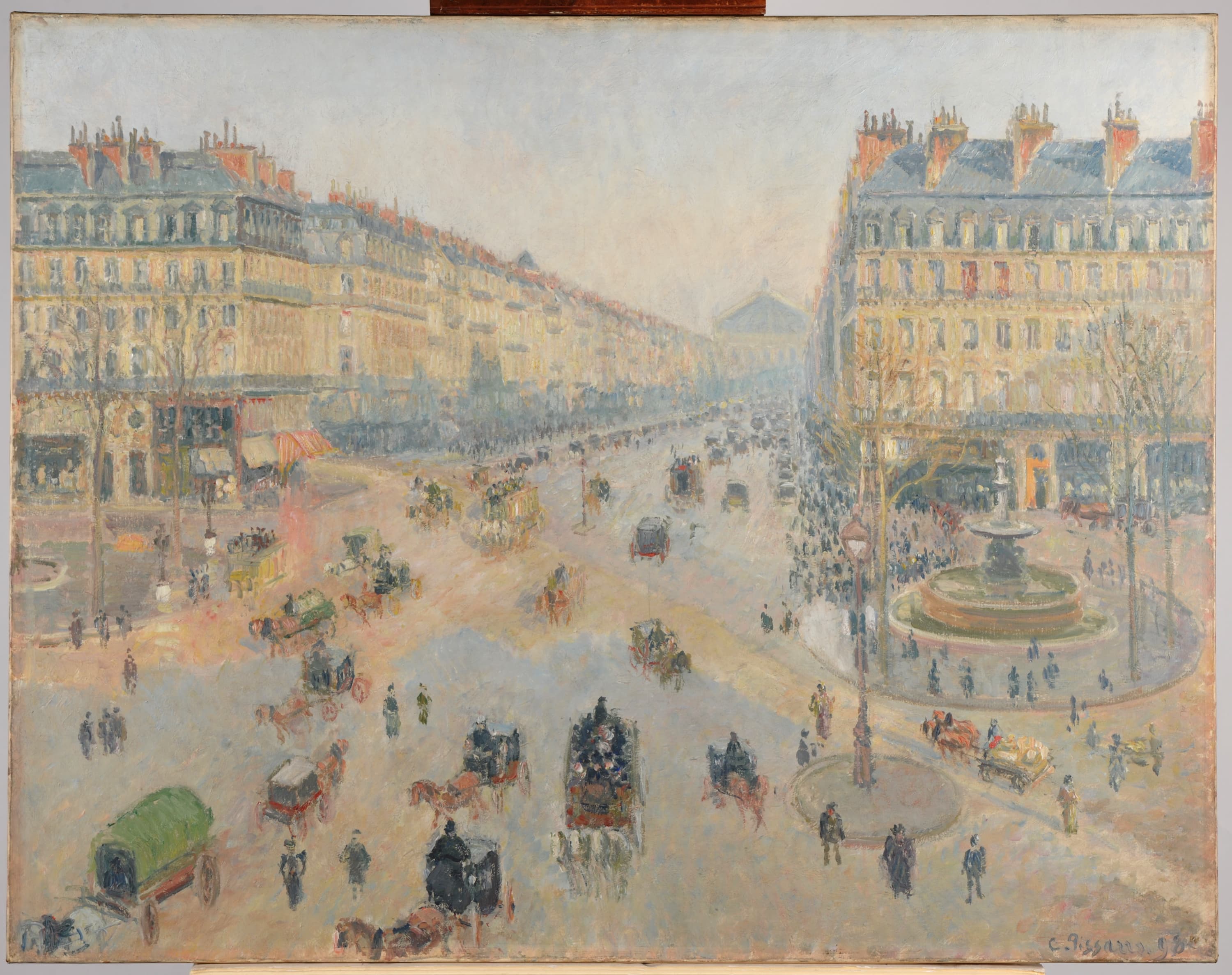
L'Avenue de l'Opéra
Camille Pissarro painted the avenue de l'Opéra in the winter of 1897 and 1898 from a room at the Grand Hôtel du Louvre. The Musée des Beaux-Arts de Reims says it is the only canvas of the series that stayed in France.
- 1898
- Oil on canvas
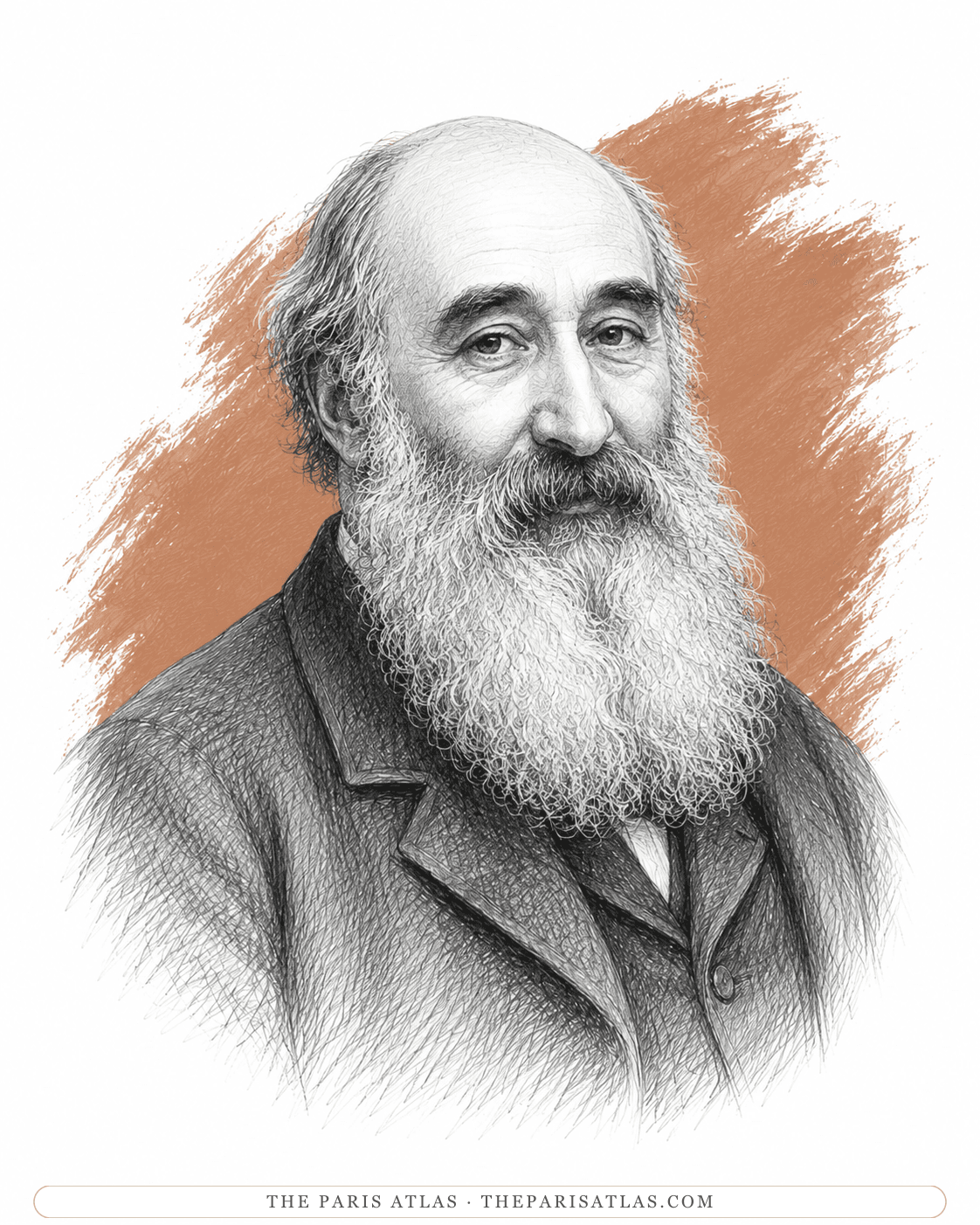
About Camille Pissarro
What the painting shows
The viewer is several floors up at the place du Théâtre-Français, the square at the lower end of the avenue de l'Opéra, looking straight along it. The avenue runs dead ahead through the middle of the canvas, and the Opéra closes it at the far end, its pediment showing pale through the winter air.
On both sides are long blocks of cream stone with blue-grey mansard roofs and red chimney pots, five and six storeys of identical windows above shops and awnings. The lower half of the picture is the square itself, a wide pinkish-grey expanse of paving. A round stone fountain basin stands to the right with people gathered round it, bare trees behind them.
The traffic is close enough to make out. A wagon with a green tarpaulin is drawn up at the bottom left, black cabs and an omnibus stand among the horses, and men and women in dark winter coats cross the open ground in ones and twos. Further off the crowd thickens along the pavements into a dark seam under the buildings.
The light is diffuse and low, the sky a plain cream, and the whole picture is painted in warm greys, pinks and blues laid on in short strokes. It is signed and dated at the lower right, C. Pissarro 98.
A room at the Grand Hôtel du Louvre
In December 1897 Camille Pissarro wrote to his eldest son, Lucien, about the room he had found.
“J'ai trouvé une chambre au grand Hôtel du Louvre avec une vue superbe sur l'avenue de l'Opéra”
He had found a room at the Grand Hôtel du Louvre with a superb view over the avenue de l'Opéra. This is a different hotel and a different quarter from the Grand Hôtel de Russie on the rue Drouot, where he had painted the boulevard Montmartre the previous year, and the two campaigns should not be run together. He worked from this window through the winter and into April 1898.
The reason for the window was medical. Pissarro's eyes had been troubling him since the early 1890s, and cold air, wind and street dust made a day's work in the open cost more than it returned. He kept the subject and changed the vantage point. The last decade of his life produced city paintings made through upper-floor glass in Paris, Rouen, Dieppe and Le Havre.
How many pictures are in the series
The two museums that hold canvases from this campaign do not agree. The Musée des Beaux-Arts de Reims, which owns this one, counts ten views of the avenue and of the place du Théâtre-Français, made between late 1897 and April 1898. The Philadelphia Museum of Art, which owns another, says fifteen.
The two counts probably measure different things, one the avenue itself and the other everything Pissarro painted from that hotel, but no source states the reconciliation.
The one that stayed in France
Paul Durand-Ruel showed the series at his gallery in June 1898 and acquired this canvas the same year. It went into the collection of Henry Vasnier in Paris, who had it by 1902.
Vasnier left his pictures to the Musée des Beaux-Arts in Reims, and the bequest was recorded on 5 April 1907. The museum states that this is the only canvas of the series that remained in France. The rest left the country.
Where it sits in the late work
Pissarro had been painting Paris from rented rooms since 1893, when he took a room at the Hôtel Garnier and painted the place du Havre outside the Gare Saint-Lazare. The boulevard Montmartre followed in 1897, fourteen canvases from one window between February and April.
The avenue de l'Opéra came next, and after it the place du Carrousel by the Tuileries, the Pont-Neuf, and finally the quai Voltaire in 1903. He died in November of that year, aged seventy-three, while planning another Paris series from a new apartment.
Close reading
Reading the work, detail by detail
The high hotel window gives Pissarro a ready-made system of recession: one avenue, two walls of buildings, and the Opéra at the vanishing point. The crops show how weather and traffic keep that strict geometry from becoming static.
1.The Opéra closes the avenue
The distant building is small but structurally decisive. Its pale pediment catches the eye at the avenue's vanishing point, giving the crowded foreground a destination without turning the city into a postcard.
2.Traffic loosens the central perspective
Carriages, dark coats, and wet street marks refuse to line up neatly with the architecture. Pissarro uses their broken movement to animate a boulevard whose stone edges otherwise point with mathematical clarity.
3.Winter air softens the stone
The farther buildings lose edges and contrast as they recede. Atmospheric color does as much work as drawn perspective: Paris becomes lighter, colder, and less solid toward the horizon.
4.The balcony edge reveals the elevated viewpoint
A narrow architectural edge reminds us that the boulevard is seen from a hotel window above street level. The height allows traffic, façades, and the distant opera house to fit into one ordered view.
5.Repeated windows carry the avenue toward the distance
The façades are not painted window by window with hard precision. Repeated light and dark marks are enough to establish the disciplined rhythm of the new Parisian street.
6.Carriages become dark notes inside pale weather
At street level, vehicles and people are compressed into quick dark touches. Their small scale makes the broad avenue feel active without allowing one anecdote to take over the city view.
Timeline
December 1897
Pissarro writes to his son Lucien that he has found a room at the Grand Hôtel du Louvre with a superb view over the avenue de l'Opéra.
1897–98
Paints the avenue and the place du Théâtre-Français from that window between late 1897 and April 1898. Reims counts ten canvases; the Philadelphia Museum of Art counts fifteen.
1898
This canvas signed and dated at the lower right, C. Pissarro 98.
June 1898
Paul Durand-Ruel exhibits the series at his gallery in Paris.
1898
Acquired by Durand-Ruel.
by 1902
In the collection of Henry Vasnier, Paris.
5 April 1907
Enters the Musée des Beaux-Arts de Reims by the Vasnier bequest, inventory 907.19.209.
Where to see it
Musée des Beaux-Arts de Reims
8 rue Chanzy, 51100 Reims, France
The museum is closed for renovation. This is its building address, not a place where the painting can currently be visited. Check the museum’s updates for reopening and off-site displays.
Plan your visit on the museum’s official website (opens in a new tab)Frequently asked questions
Where did Pissarro paint L'Avenue de l'Opéra from?
A room at the Grand Hôtel du Louvre in Paris, taken in December 1897. Camille Pissarro described it in a letter to his son Lucien as a room with a superb view over the avenue de l'Opéra, and he worked from it through the winter and into April 1898. It is a different hotel from the one on the rue Drouot that gave him the boulevard Montmartre series the year before.
How many paintings are in the avenue de l'Opéra series?
The museums disagree. The Musée des Beaux-Arts de Reims counts ten views of the avenue and the place du Théâtre-Français; the Philadelphia Museum of Art, which holds another canvas from the campaign, says fifteen. The counts probably scope differently, the smaller one to the avenue and the larger to everything Camille Pissarro painted from that hotel, but no source sets out the reconciliation.
Where is L'Avenue de l'Opéra now?
The Musée des Beaux-Arts de Reims, inventory number 907.19.209. It came to the museum through the bequest of the collector Henry Vasnier, recorded on 5 April 1907, and the museum states that it is the only canvas of the series that stayed in France.
What building is at the far end of the avenue?
The Opéra, which the avenue is named for and runs straight towards. Camille Pissarro painted it small, at the vanishing point of the whole composition, its pediment showing pale in winter light while the traffic and the crowd fill the foreground.
What season is it in the painting?
Winter. The trees on the square are bare, the crowd is in dark heavy coats and the light is low and diffuse without shadows. Camille Pissarro painted the canvas between late 1897 and April 1898 from a hotel window.
Why did Pissarro paint Paris from hotel windows?
The reason was his eyesight. From the early 1890s a recurring eye complaint made cold air, wind and street dust hard to work in, so Camille Pissarro took rooms overlooking the streets he wanted and painted through the glass. The arrangement also gave him a raised viewpoint and the same view every day, which is what a series needs. He worked this way in Paris, Rouen, Dieppe and Le Havre for the last decade of his life.
More by Camille Pissarro
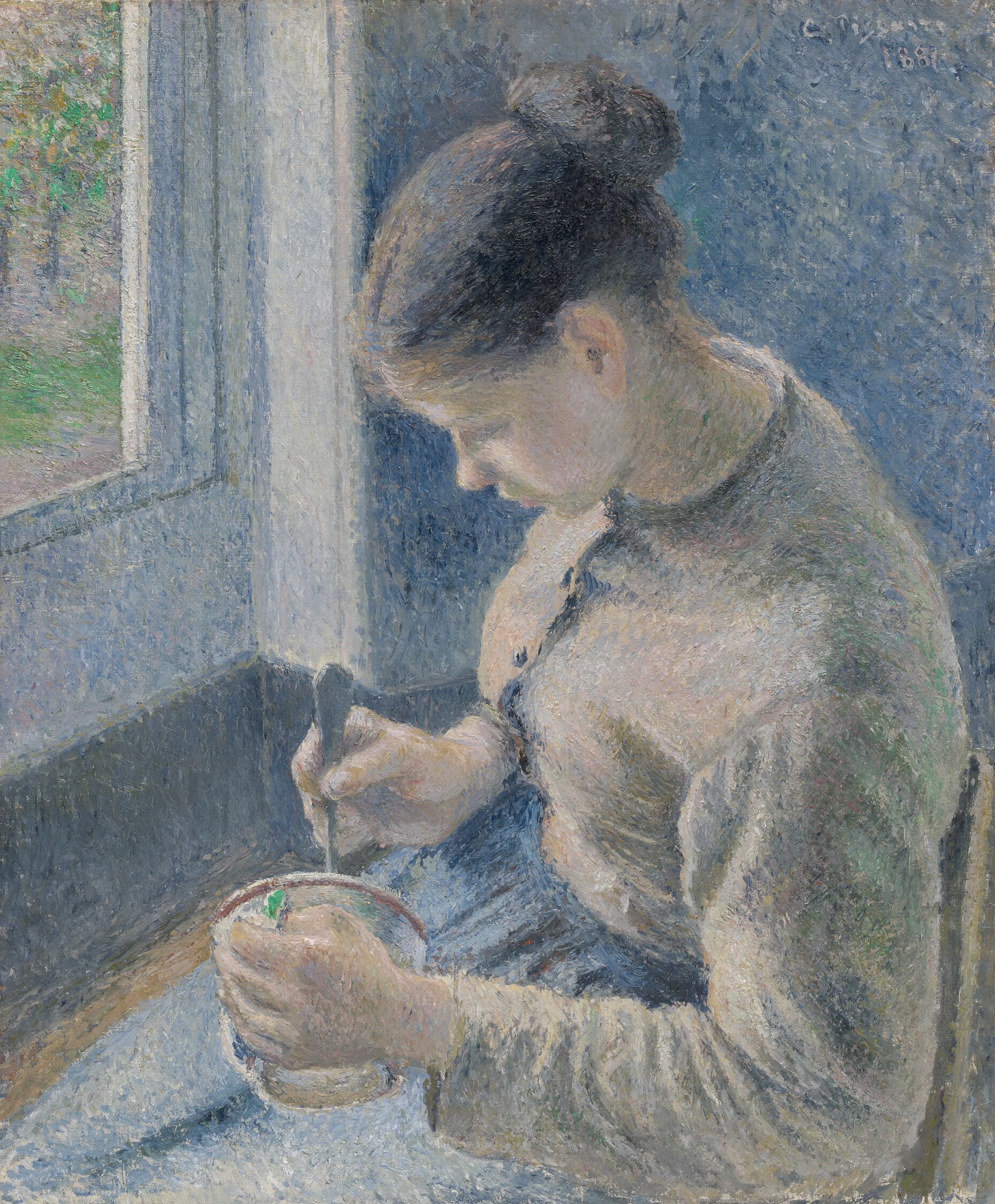
If you like Camille Pissarro
Explore painters from the same movements and circles.
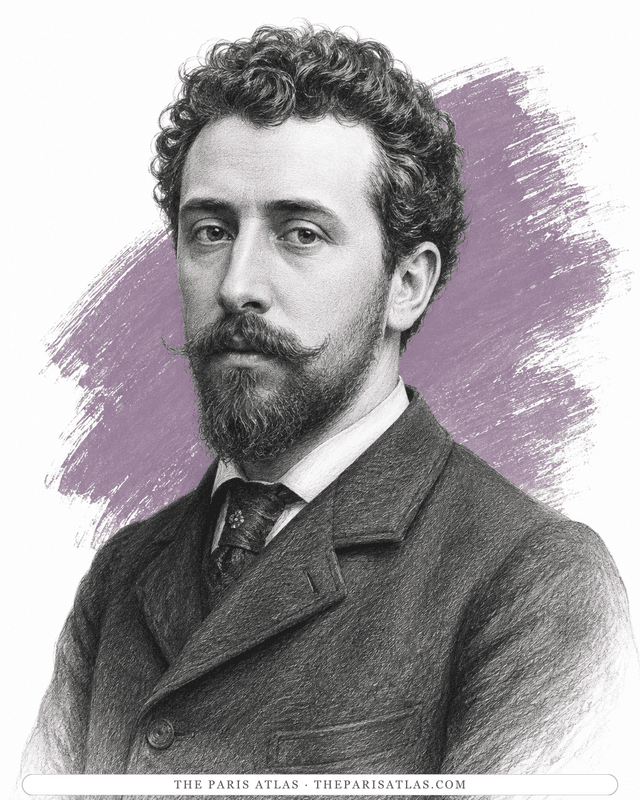
Georges Seurat
Parisian painter who built pictures from small dots of pure colour on optical principle, co-founded the Salon des Indépendants, and detonated the last Impressionist exhibition of 1886 with A Sunday on La Grande Jatte. He died at thirty-one.
View artist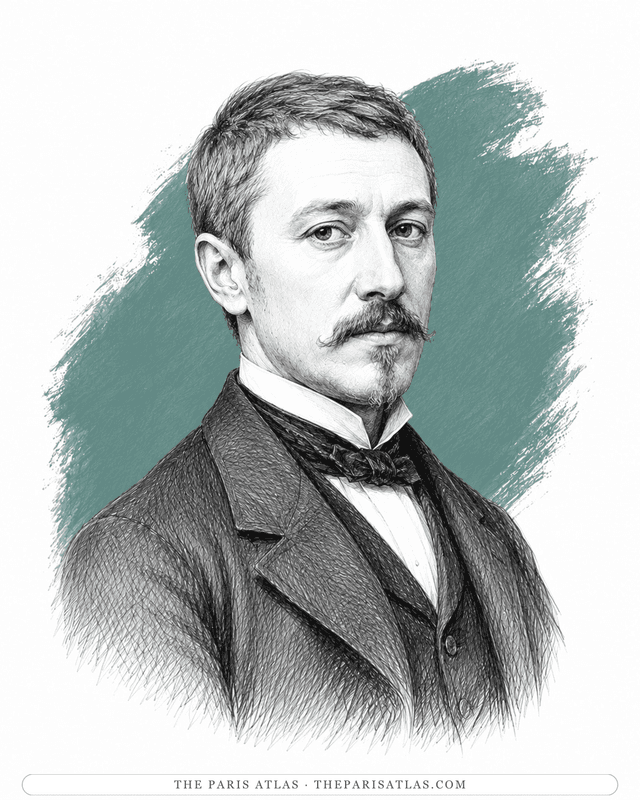
Gustave Caillebotte
Painter of Haussmann's geometry and the group's organizer-financier; his bequest of Impressionist paintings forced the French state to take the movement in.
View artist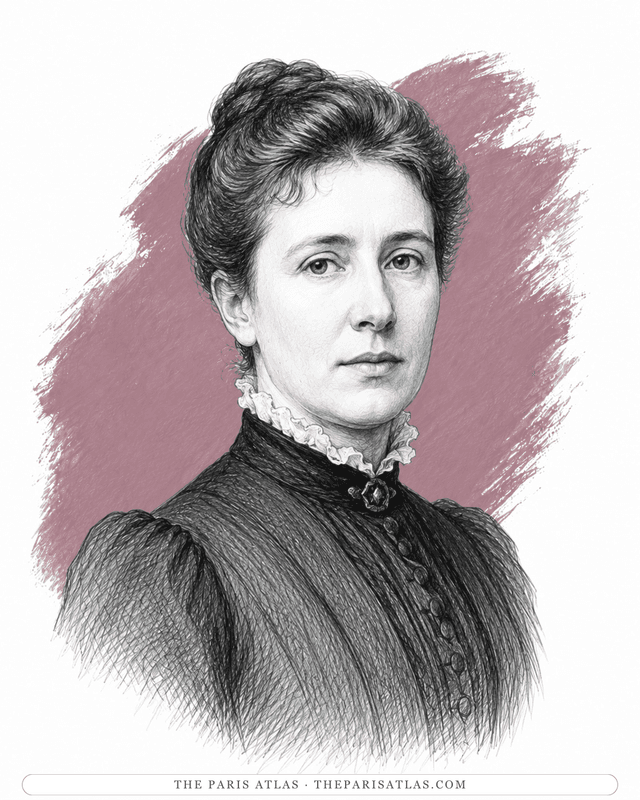
Mary Cassatt
Mary Cassatt was an American painter and printmaker known for her depictions of women and children. Based in France for the last fifty-two years of her life, she was the only American to exhibit with the original French Impressionist group, participating in four of its eight exhibitions. Edgar Degas invited her to exhibit with the group in 1877 after the Salon jury rejected her submissions.
View artist
References
The sources below include collection records, catalogues, scholarly research, and primary materials that informed this page. They document L'Avenue de l'Opéra, its making, and its place in cultural history.


1Musée des Beaux-Arts de Reims — L'Avenue de l'Opéra
WebsiteUsed forWeb source consulted for documented facts and historical context presented on the L'Avenue de l'Opéra page.
2Pissarro Exhibition Guide: Sights of Paris
WebsiteDenver Art MuseumUsed forWeb source consulted for documented facts and historical context presented on the L'Avenue de l'Opéra page.
3Philadelphia Museum of Art — collection
WebsiteUsed forWeb source consulted for documented facts and historical context presented on the L'Avenue de l'Opéra page.
4Art Institute of Chicago — collection records
WebsiteUsed forWeb source consulted for documented facts and historical context presented on the L'Avenue de l'Opéra page.
These references provide the documented foundation for this work's history and interpretation. Claim-level citations remain attached to the specific claims they support.
 Explore more resources