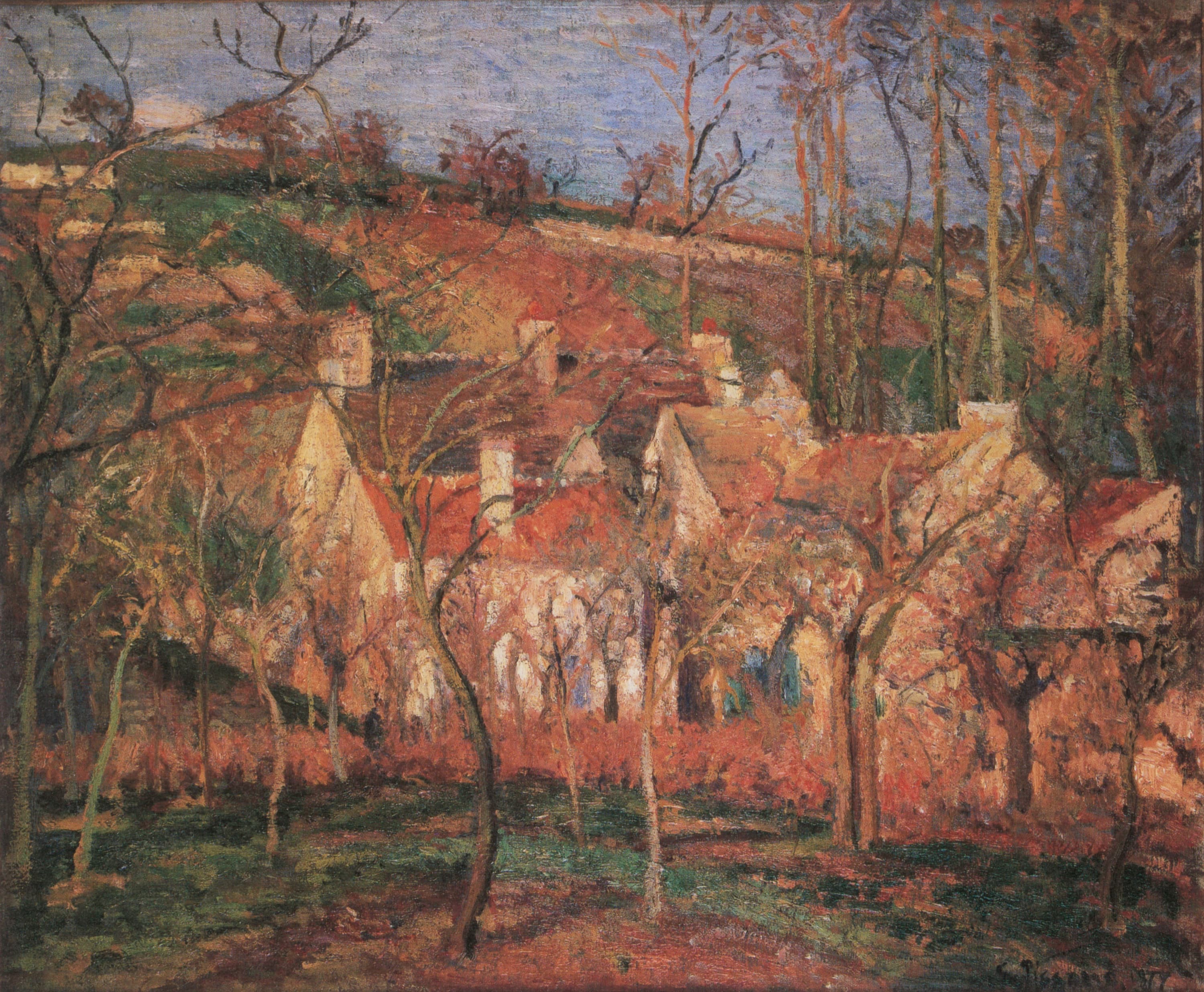
The Red Roofs, Corner of a Village, Winter
Camille Pissarro painted a corner of Pontoise in the winter of 1877, its red roofs seen through a screen of bare trees. Gustave Caillebotte owned it, and it reached the French national collections through his bequest in 1896. The Musée d'Orsay now catalogues it as Côte Saint-Denis à Pontoise.
- 1877
- Oil on canvas
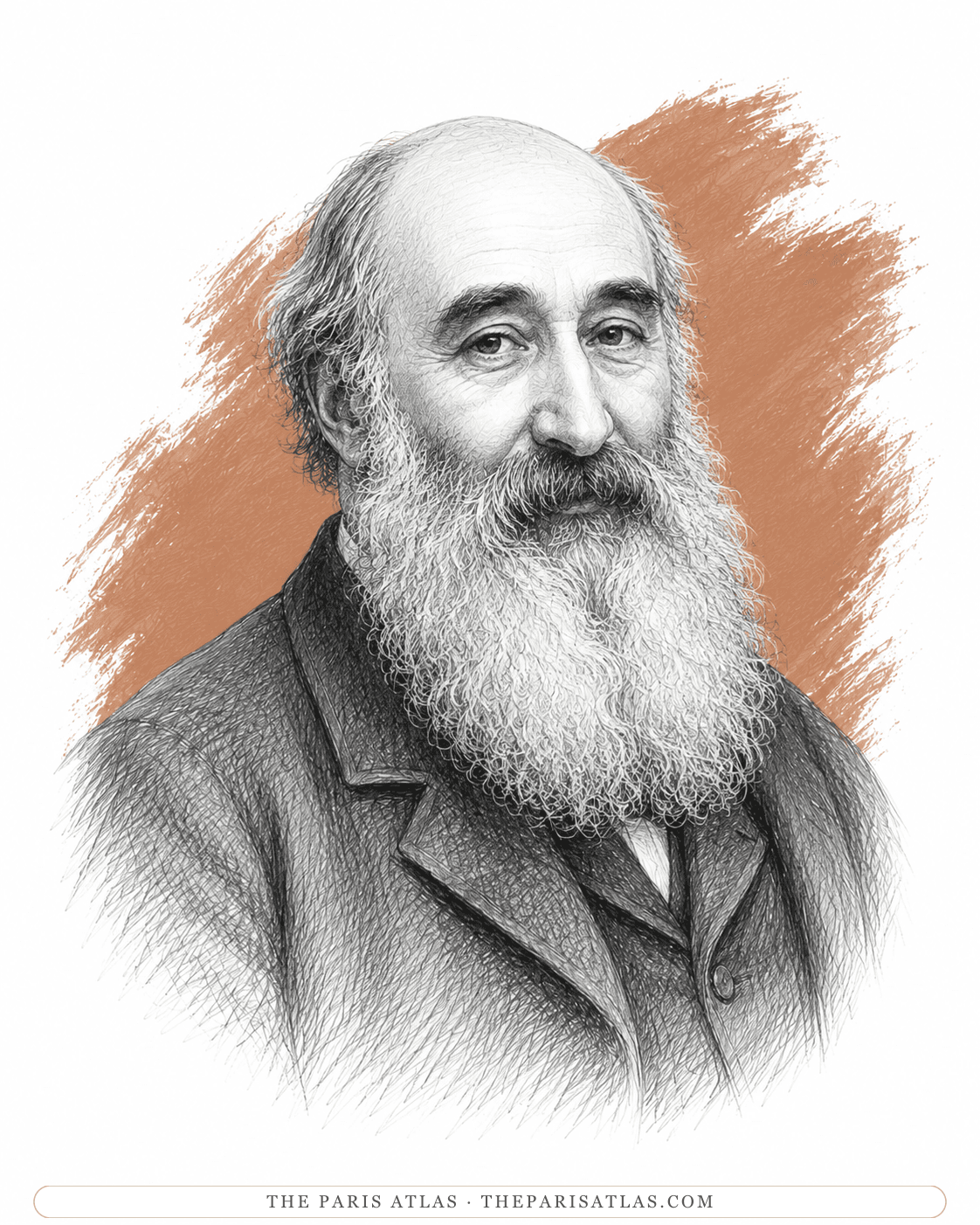
About Camille Pissarro
What the painting shows
The viewer stands at the foot of a slope, on grass still in shadow, looking up through a stand of thin bare trees. Behind them a group of houses is packed into the hillside: red tiled roofs, walls of cream and dull pink, a chimney or two, one gable catching the light. Above the roofs the hill keeps climbing in bare earth and patches of winter green, and a band of pale blue sky runs along the top of the canvas.
Nothing in the village is seen in the open. Every roof and wall is read through branches, and the branches carry the same short loaded strokes as the masonry behind them, so the screen of twigs and the houses sit on a single worked surface.
The canvas is signed and dated at the lower right, C. Pissarro 1877. It measures 54.5 by 65.6 centimetres.[1][2]
The hill above his house
Camille Pissarro lived at Pontoise, north-west of Paris, for most of the years between 1866 and 1883, in the hamlet of L'Hermitage on the edge of the town. The Côte Saint-Denis is one of the slopes above it. Among the alternative titles the Musée d'Orsay records for this canvas is L'Hermitage. Vue de ma fenêtre, the Hermitage seen from my window.[1][3]
Paul Cézanne worked beside him on the same motifs in these years, and painted this slope too. The Musée d'Orsay sets the two pictures side by side in its own note on the painting.[1][3]
“This painting dates from the time after 1865 when Pissarro and Cézanne used to work together on the same subject. But Cézanne's version, The Orchard, Côte St Denis, at Pontoise (on loan to the Museum of Fine Arts, Saint Petersburg, Florida) offers a view from higher up.”
Shown at two Impressionist exhibitions, not one
Most accounts of this picture mention the third Impressionist exhibition of 1877 and stop there. The museum's record lists two showings: the third exhibition, at the galerie Durand-Ruel in Paris in 1877, as number 163, and the fourth, at 28 avenue de l'Opéra in 1879, as number 181.[1]
A notice from the 1877 show survives. The critic A. Descubes wrote about it in the Gazette des lettres, des sciences et des arts on 20 April, in the museum's English rendering:[1]
“A pretty painting, a small house hidden in the forest, which impressed us with its strong and simple touch.”
Cézanne does not appear to have exhibited his version of the slope, so the praise went to Pissarro alone.
Caillebotte bought it, and left it to the State
Gustave Caillebotte, the painter who was also the group's most useful collector, acquired the canvas before April 1877 and kept it until he died in 1894. It appears in the inventory taken after his death on 8 March that year. In 1896 the State accepted it under his bequest, for the Musée du Luxembourg, the museum then reserved for living and recently dead artists; Léonce Bénédite collected it from the painter's brother Martial Caillebotte in November.[1][2]
It has moved four times since, always within the French national collections:[2]
- Musée du Luxembourg, 1896 to 1929
- Musée du Louvre, 1929 to 1947
- Musée du Jeu de Paume, 1947 to 1986
- Musée d'Orsay, since 1986
The title the museum changed
English-speaking readers know this canvas as The Red Roofs, Corner of a Village, Winter, which translates Les Toits rouges, coin de village, effet d'hiver. That is no longer the museum's main title. The Musée d'Orsay now catalogues it as Côte Saint-Denis à Pontoise and keeps three other titles on the record: Les Toits rouges, coin de village, effet d'hiver; L'Hermitage. Vue de ma fenêtre; and Les Toits rouges, côte Saint-Denis à Pontoise, effet d'hiver.[1][4]
The measurements have been corrected too. Reference sites, including Wikidata, widely give 53 by 64 centimetres. The museum's own record gives 54.5 by 65.6, and 74.5 by 85.5 with the frame.[4]
One caution goes with the new title. Almost the same French words are attached elsewhere to a different Pissarro of 1877, the National Gallery's Côte des Bœufs à L'Hermitage, which English Wikipedia lists in the 1877 Impressionist exhibition under a nearly identical catalogue name. The Musée d'Orsay independently documents this canvas as number 163 in that same exhibition. Both cannot describe one catalogue entry, and settling it means going to the catalogue raisonné rather than to either website.
The painting is number 489 in the Pissarro and Durand-Ruel Snollaerts catalogue raisonné of 2005, and number 384 in the older Pissarro and Venturi catalogue of 1939.[1]
Close reading
Reading the work, detail by detail
Red roofs appear through a winter screen of trunks and branches, turning a village view into a problem of layered seeing. The close crops show how Pissarro balances strong blocks of color against a dense, nearly continuous surface.
1.The roofs supply the painting's warm structure
Brick and orange roofs form compact wedges among cooler greens, browns, and blue-gray shadows. Their color identifies the houses before their walls or windows do.
2.Bare branches refuse an unobstructed view
Vertical trunks and fine branches sit between viewer and buildings. Like a woven screen, they make the village visible only in pieces and keep foreground and distance active at once.
3.Winter color is muted, not empty
The ground carries many subdued hues rather than a single seasonal brown. Broken marks let dormant vegetation, exposed soil, and cold light occupy the same passages.
4.A pale wall opens a quiet interval among the roofs
The light rectangle interrupts warm tiles and crossing branches. It gives the clustered village enough separation for individual buildings to remain readable.
5.Orchard trunks turn the foreground into measured intervals
Vertical trunks divide the view without forming a perfect screen. Their repeated spacing links cultivated foreground to the ordered cluster of houses beyond.
6.A cool sky makes the roof color feel more concentrated
The pale blue-gray upper field contains little drama. Its restraint lets the orange-red roofs carry warmth without making the whole winter landscape appear warm.
Timeline
1877
Painted at Pontoise and signed at the lower right, C. Pissarro 1877.
1877
Bought by Gustave Caillebotte, at some point before April, and shown at the third Impressionist exhibition at the galerie Durand-Ruel, Paris, as number 163.
1879
Shown again at the fourth Impressionist exhibition, 28 avenue de l'Opéra, Paris, as number 181.
1894
Caillebotte dies. The painting is listed in the inventory taken after his death on 8 March.
1896
Accepted by the State under the Caillebotte bequest, for the Musée du Luxembourg. Léonce Bénédite collects it from Martial Caillebotte in November.
1929
Transferred to the Musée du Louvre.
1947
Transferred to the Musée du Jeu de Paume.
1986
Enters the Musée d'Orsay, where it hangs as RF 2735, still carrying the Luxembourg number LUX 367.
Where to see it
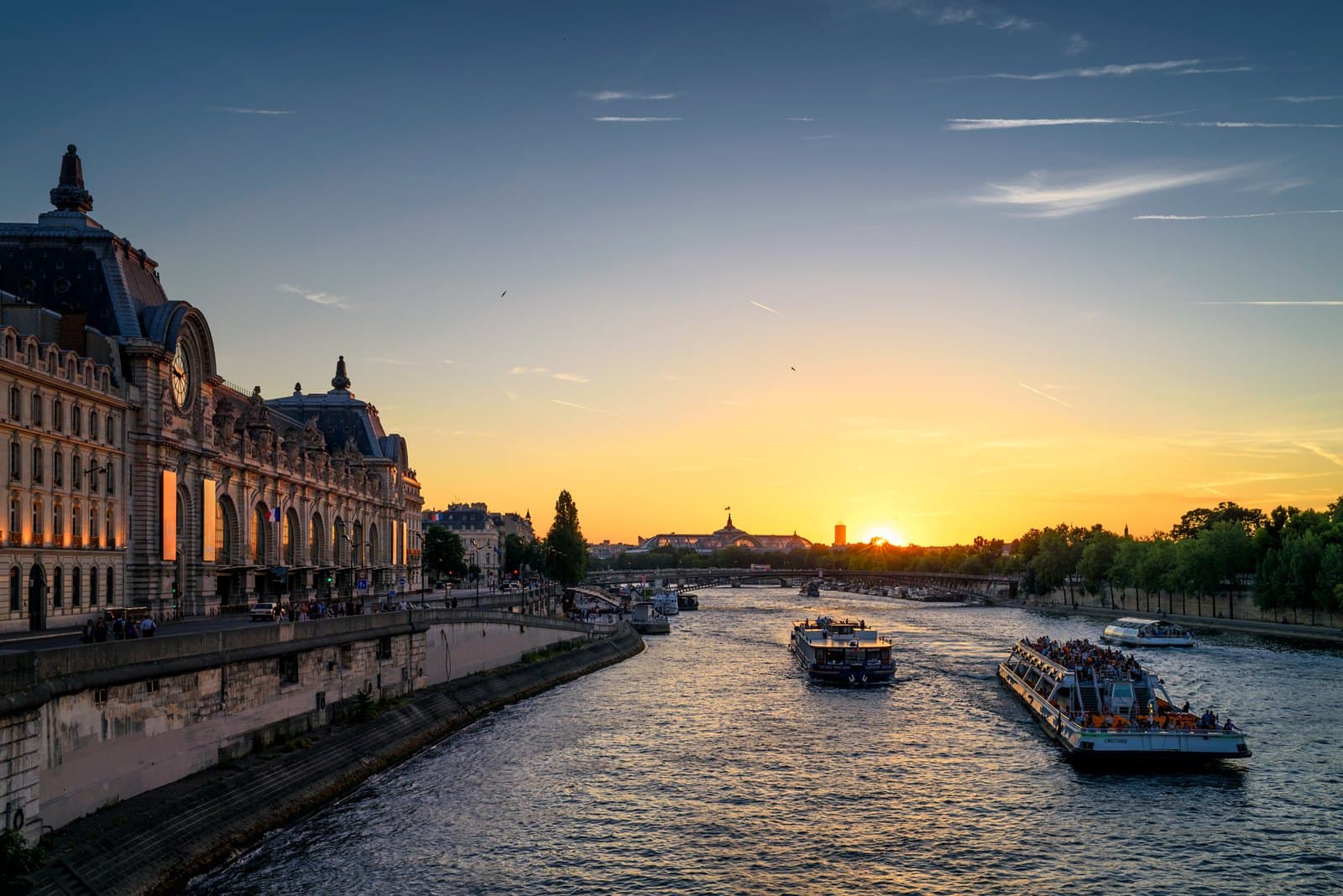
Musée d'Orsay, Paris
Esplanade Valéry Giscard d’Estaing, 75007 Paris, France
Displays and loans can change. Check whether this work is on view before making a special trip.
Plan your visitFrequently asked questions
Where is The Red Roofs, Corner of a Village, Winter?
The Musée d'Orsay in Paris, which has held it since the museum opened in 1986. Its inventory number is RF 2735, and it also carries LUX 367, the number it was given at the Musée du Luxembourg in 1896. The museum now lists it under the title Côte Saint-Denis à Pontoise.
Why does the Musée d'Orsay call it Côte Saint-Denis à Pontoise?
Because the museum has changed its main title. Les Toits rouges, coin de village, effet d'hiver, the title the English name translates, is now one of three alternatives on the record, alongside L'Hermitage. Vue de ma fenêtre and Les Toits rouges, côte Saint-Denis à Pontoise, effet d'hiver. The Côte Saint-Denis is the slope at Pontoise the painting shows.
What does the painting show?
A corner of a village on a hillside at Pontoise in winter, seen from below through a screen of bare trees: red tiled roofs, cream and pink walls, and the slope rising behind them under a narrow band of sky. Camille Pissarro was living at L'Hermitage, on the edge of Pontoise, when he painted it in 1877.
Was it shown at an Impressionist exhibition?
At two of them. It hung in the third Impressionist exhibition at the galerie Durand-Ruel in 1877 as number 163, and again in the fourth, at 28 avenue de l'Opéra, in 1879 as number 181. Popular accounts usually mention only the first.
How big is The Red Roofs?
54.5 by 65.6 centimetres, and 74.5 by 85.5 with its frame, according to the Musée d'Orsay's own record. The figure of 53 by 64 centimetres that circulates on reference sites is out of date.
How did the painting reach the museum?
Through Gustave Caillebotte. The painter and collector bought it before April 1877 and owned it until his death in 1894; in 1896 the State accepted it under his bequest for the Musée du Luxembourg. It passed to the Louvre in 1929, the Jeu de Paume in 1947, and the Musée d'Orsay in 1986.
Did Cézanne paint the same view?
Yes. Camille Pissarro and Paul Cézanne worked together on the same subjects around Pontoise, and Cézanne's version of this slope, The Orchard, Côte St Denis, at Pontoise, takes the view from higher up. The Musée d'Orsay records it as on loan to the Museum of Fine Arts in Saint Petersburg, Florida, and notes that Cézanne does not appear to have exhibited it.
More by Camille Pissarro
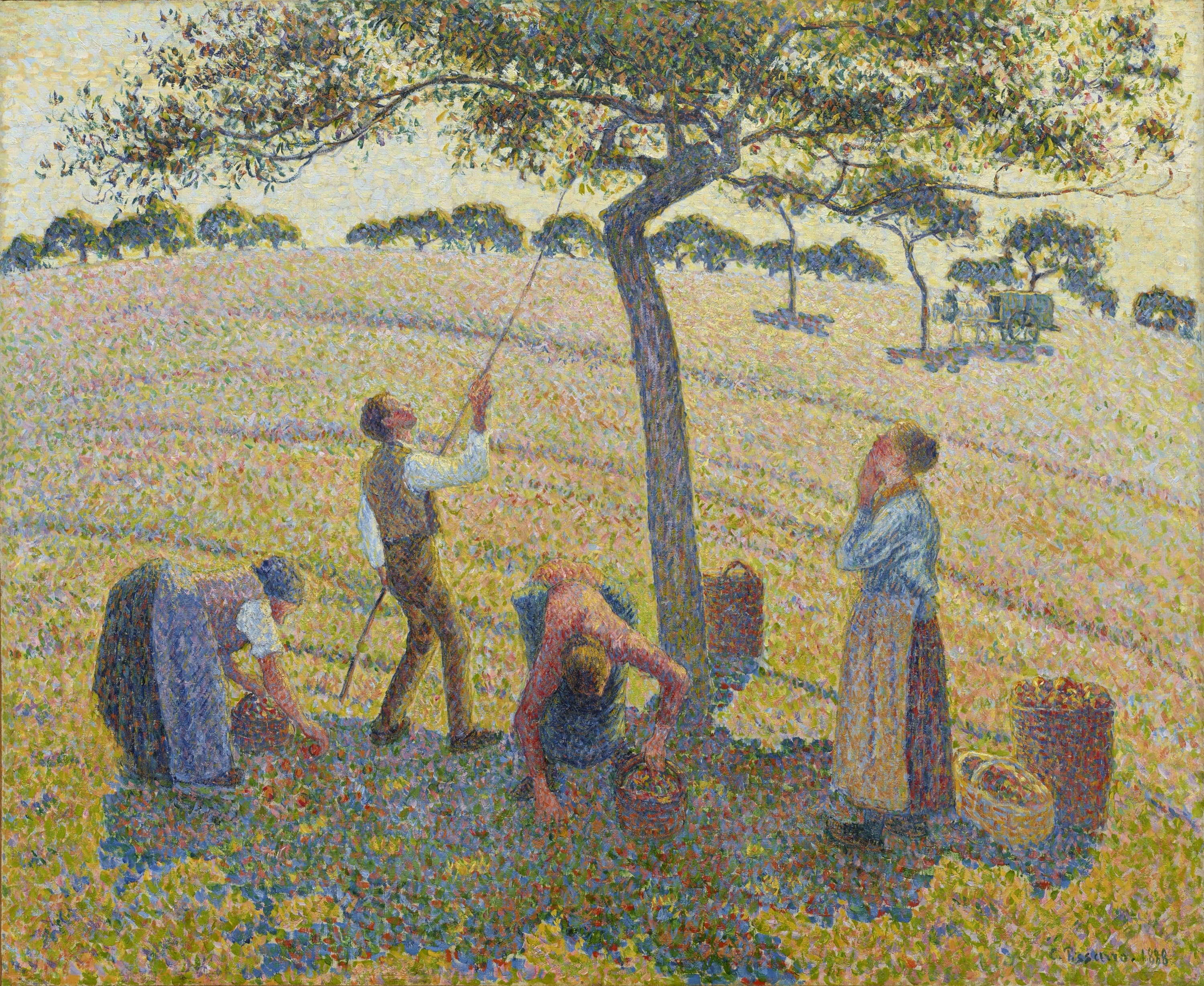
If you like Camille Pissarro
Explore painters from the same movements and circles.
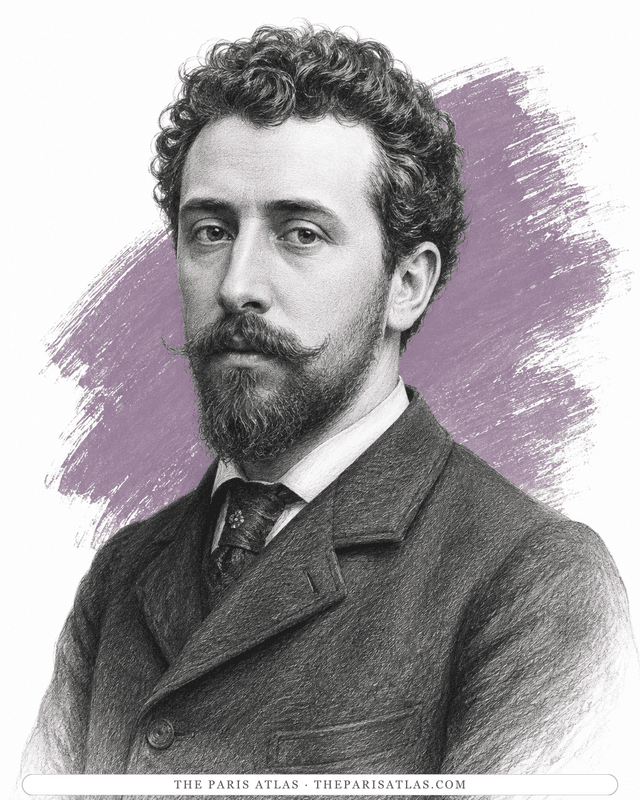
Georges Seurat
Parisian painter who built pictures from small dots of pure colour on optical principle, co-founded the Salon des Indépendants, and detonated the last Impressionist exhibition of 1886 with A Sunday on La Grande Jatte. He died at thirty-one.
View artist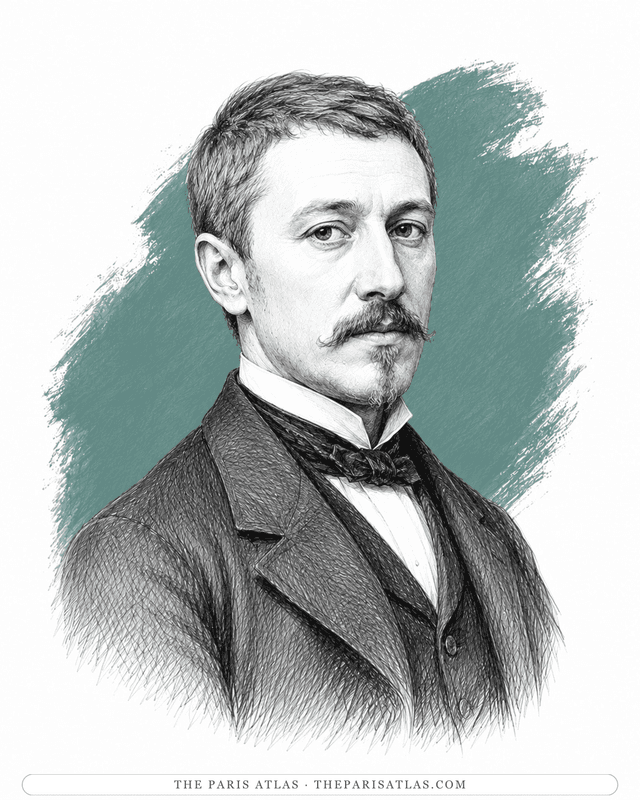
Gustave Caillebotte
Painter of Haussmann's geometry and the group's organizer-financier; his bequest of Impressionist paintings forced the French state to take the movement in.
View artist
Mary Cassatt
Mary Cassatt was an American painter and printmaker known for her depictions of women and children. Based in France for the last fifty-two years of her life, she was the only American to exhibit with the original French Impressionist group, participating in four of its eight exhibitions. Edgar Degas invited her to exhibit with the group in 1877 after the Salon jury rejected her submissions.
View artist
References
The sources below include collection records, catalogues, scholarly research, and primary materials that informed this page. They document The Red Roofs, Corner of a Village, Winter, its making, and its place in cultural history.



These references provide the documented foundation for this work's history and interpretation. Claim-level citations remain attached to the specific claims they support.
 Explore more resources