
The Paris AtlasCharting the artists, works, and places worth returning to.

In their own words

James Baldwin quotes

316 quotations, each verified against its source and credited to the work it comes from — the wording as James Baldwin wrote or said it, not as the internet passes it around. Page 1 of 13.

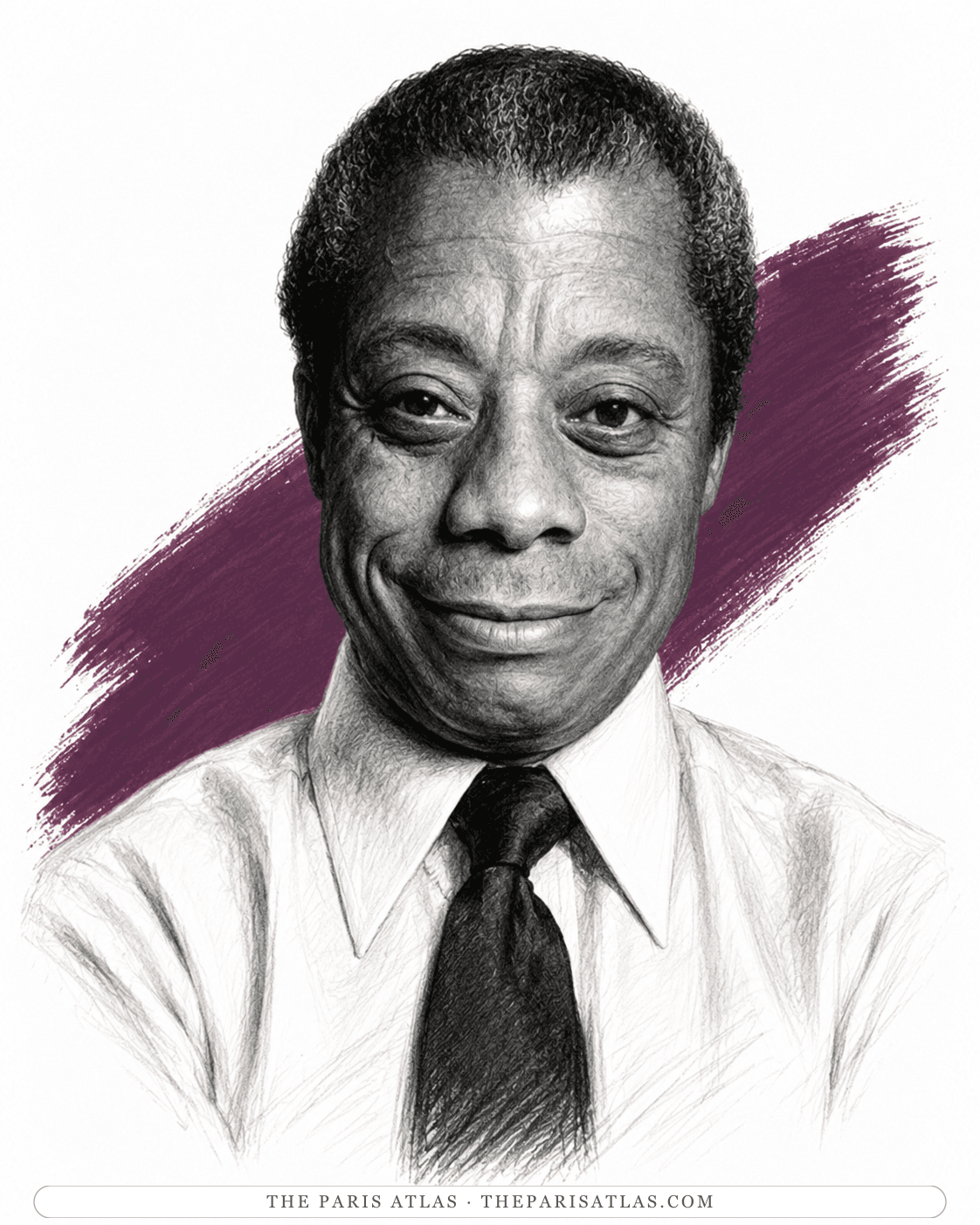
Illustrated portrait of James Baldwin

"As Much Truth As One Can Bear," The New York Times Book Review, 14 January 1962

Not everything that is faced can be changed; but nothing can be changed until it is faced.
James Baldwin, "As Much Truth As One Can Bear," The New York Times Book Review, 14 January 1962

The Art of Fiction No. 78, The Paris Review, issue 91, Spring 1984

I was broke. I got to Paris with forty dollars in my pocket, but I had to get out of New York.
James Baldwin, The Art of Fiction No. 78, The Paris Review, issue 91, Spring 1984
When I arrived in Paris in 1948 I didn’t know a word of French. I didn’t know anyone and I didn’t want to know anyone.
James Baldwin, The Art of Fiction No. 78, The Paris Review, issue 91, Spring 1984
My reflexes were tormented by the plight of other people.
James Baldwin, The Art of Fiction No. 78, The Paris Review, issue 91, Spring 1984
It wasn’t so much a matter of choosing France—it was a matter of getting out of America. I didn’t know what was going to happen to me in France but I knew what was going to happen to me in New York.
James Baldwin, The Art of Fiction No. 78, The Paris Review, issue 91, Spring 1984
If I had stayed there, I would have gone under, like my friend on the George Washington Bridge.
James Baldwin, The Art of Fiction No. 78, The Paris Review, issue 91, Spring 1984
I went through this period where I was very much alone, and wanted to be.
James Baldwin, The Art of Fiction No. 78, The Paris Review, issue 91, Spring 1984
Looking for a place to live. Looking for a job. You begin to doubt your judgment, you begin to doubt everything. You become imprecise. And that’s when you’re beginning to go under.
James Baldwin, The Art of Fiction No. 78, The Paris Review, issue 91, Spring 1984
The whole society has decided to make you nothing. And they don’t even know they’re doing it.
James Baldwin, The Art of Fiction No. 78, The Paris Review, issue 91, Spring 1984
I’ve been compelled in some ways by describing my circumstances to learn to live with them. It’s not the same thing as accepting them.
James Baldwin, The Art of Fiction No. 78, The Paris Review, issue 91, Spring 1984
Given the conditions in this country to be a black writer was impossible.
James Baldwin, The Art of Fiction No. 78, The Paris Review, issue 91, Spring 1984
I knew what it meant to be white and I knew what it meant to be a nigger, and I knew what was going to happen to me. My luck was running out. I was going to go to jail, I was going to kill somebody or be killed.
James Baldwin, The Art of Fiction No. 78, The Paris Review, issue 91, Spring 1984
I’d been a preacher for three years, from age fourteen to seventeen. Those were three years which probably turned me to writing.
James Baldwin, The Art of Fiction No. 78, The Paris Review, issue 91, Spring 1984
I would improvise from the texts, like a jazz musician improvises from a theme.
James Baldwin, The Art of Fiction No. 78, The Paris Review, issue 91, Spring 1984
You have to sense the people you’re talking to. You have to respond to what they hear.
James Baldwin, The Art of Fiction No. 78, The Paris Review, issue 91, Spring 1984
When you’re writing, you’re trying to find out something which you don’t know. The whole language of writing for me is finding out what you don’t want to know, what you don’t want to find out. But something forces you to anyway.
James Baldwin, The Art of Fiction No. 78, The Paris Review, issue 91, Spring 1984
It was that or nothing, since in my own mind I was the father of my family.
James Baldwin, The Art of Fiction No. 78, The Paris Review, issue 91, Spring 1984
On the roads I traveled and the streets I ran, anything could have happened to a boy like me—in New York. Sleeping on rooftops and in the subways.
James Baldwin, The Art of Fiction No. 78, The Paris Review, issue 91, Spring 1984

Giovanni's Room

Either, or: it takes strength to remember, it takes another kind of strength to forget, it takes a hero to do both.
David (narration) · James Baldwin, Giovanni's Room (1956), Part One, Chapter 2
Love him, love him and let him love you. Do you think anything else under heaven really matters?
Jacques (dialogue) · James Baldwin, Giovanni's Room (1956), Part One, Chapter 3
Somebody, your father or mine, should have told us that not many people have ever died of love. But multitudes have perished, and are perishing every hour—and in the oddest places!—for the lack of it.
Jacques (dialogue) · James Baldwin, Giovanni's Room (1956), Part One, Chapter 3
You don’t have a home until you leave it and then, when you have left it, you never can go back.
Giovanni (dialogue) · James Baldwin, Giovanni's Room (1956), Part Two, Chapter 3
He made me think of home—perhaps home is not a place but simply an irrevocable condition.
David (narration) · James Baldwin, Giovanni's Room (1956), Part Two, Chapter 2
You want to leave Giovanni because he makes you stink. You want to despise Giovanni because he is not afraid of the stink of love. You want to kill him in the name of all your lying little moralities.
Giovanni (dialogue) · James Baldwin, Giovanni's Room (1956), Part Two, Chapter 4
People who believe that they are strong-willed and the masters of their destiny can only continue to believe this by becoming specialists in self-deception.
David (narration) · James Baldwin, Giovanni's Room (1956), Part One, Chapter 1

From the books

Every book with a quote collection of its own, each line verified against the text.

The Friday Letter

One story from the atlas, every Friday.

No algorithms chasing attention. A work, a place, and the connection between them — with the history checked.

One email a week. No spam, no selling your address. Unsubscribe anytime.

