James Baldwin quotes about life
22 quotations, each verified against its source and credited to the work it comes from — the wording as James Baldwin wrote or said it, not as the internet passes it around. Drawn from the 316 in the full collection.
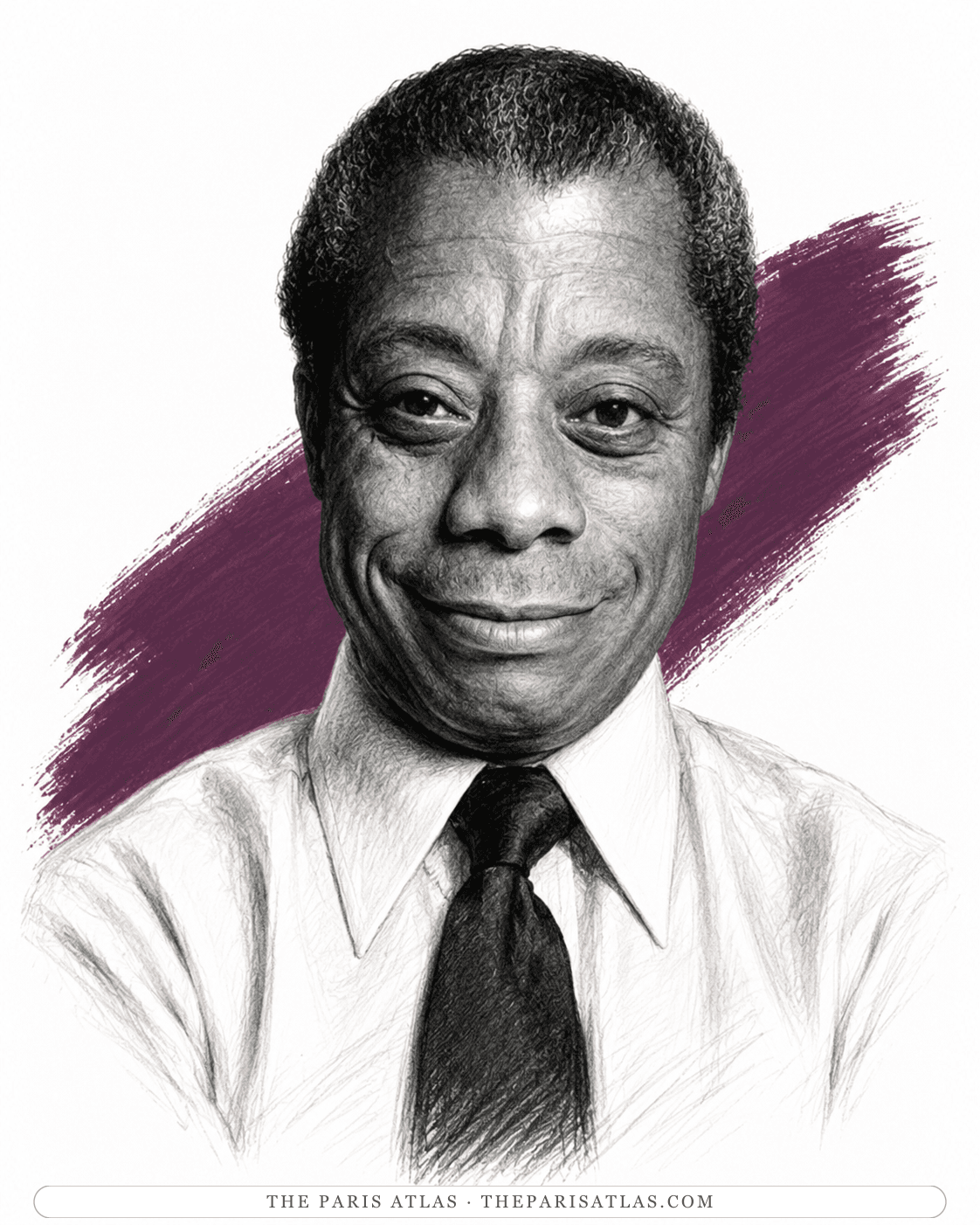
But people can’t, unhappily, invent their mooring posts, their lovers and their friends, anymore than they can invent their parents. Life gives these and also takes them away and the great difficulty is to say Yes to life.
The question is banal but one of the real troubles with living is that living is so banal.
Ah, yes, and you will certainly hear it again. It is one of those songs that somebody, somewhere, will always be singing.
I done made up my mind to live all I can while I can. If that’s a sin, well, I’ll go on down to Hell and pay for it. But don’t you fret, Reverend—it ain’t your soul.
Time could not be bought. The only coin time accepted was life.
One of the most terrible, most mysterious things about a life is that a warning can be heeded only in retrospect: too late.
Daughter. In this world, terrible things happen to you, and we can all do some terrible things.
I imagine that one of the reasons people cling to their hates so stubbornly is because they sense, once hate is gone, that they will be forced to deal with pain.
One writes out of one thing only—one’s own experience. Everything depends on how relentlessly one forces from this experience the last drop, sweet or bitter, it can possibly give. This is the only real concern of the artist, to recreate out of the disorder of life that order which is art.
I saw nothing very clearly but I did see this: that my life, my real life, was in danger, and not from anything other people might do but from the hatred I carried in my own heart.
The dead man mattered, the new life mattered; blackness and whiteness did not matter; to believe that they did was to acquiesce in one’s own destruction. Hatred, which could destroy so much, never failed to destroy the man who hated and this was an immutable law.
But our humanity is our burden, our life; we need not battle for it; we need only to do what is infinitely more difficult—that is, accept it.
Sentimentality, the ostentatious parading of excessive and spurious emotion, is the mark of dishonesty, the inability to feel; the wet eyes of the sentimentalist betray his aversion to experience, his fear of life, his arid heart; and it is always, therefore, the signal of secret and violent inhumanity, the mask of cruelty.
This laughter is the laughter of those who consider themselves to be at a safe remove from all the wretched, for whom the pain of the living is not real.
It began to seem that one would have to hold in the mind forever two ideas which seemed to be in opposition. The first idea was acceptance, the acceptance, totally without rancor, of life as it is, and men as they are: in the light of this idea, it goes without saying that injustice is a commonplace.
In overlooking, denying, evading his complexity—which is nothing more than the disquieting complexity of ourselves—we are diminished and we perish; only within this web of ambiguity, paradox, this hunger, danger, darkness, can we find at once ourselves and the power that will free us from ourselves.
The failure of the protest novel lies in its rejection of life, the human being, the denial of his beauty, dread, power, in its insistence that it is his categorization alone which is real and which cannot be transcended.
On the 29th of July, in 1943, my father died. On the same day, a few hours later, his last child was born.
Besides, life does not produce ciphers like these: when people have become this empty they are not ciphers any longer, but monsters.
Perhaps the whole root of our trouble, the human trouble, is that we will sacrifice all the beauty of our lives, will imprison ourselves in totems, taboos, crosses, blood sacrifices, steeples, mosques, races, armies, flags, nations, in order to deny the fact of death, which is the only fact we have.
It seems to me that one ought to rejoice in the fact of death—ought to decide, indeed, to earn one’s death by confronting with passion the conundrum of life.
I do not mean to be sentimental about suffering—enough is certainly as good as a feast—but people who cannot suffer can never grow up, can never discover who they are.
From the books
Every book with a quote collection of its own, each line verified against the text.
- Giovanni's Room quotes · 76 lines (1956)
- Go Tell It on the Mountain quotes · 59 lines (1953)
- If Beale Street Could Talk quotes · 41 lines (1974)
- Notes of a Native Son quotes · 76 lines (1955)
- The Fire Next Time quotes · 46 lines (1963)
Newsletter
Join our newsletter
New stories about art, literature and famous places around the world.