James Baldwin quotes about memory & the past
39 quotations, each verified against its source and credited to the work it comes from — the wording as James Baldwin wrote or said it, not as the internet passes it around. Drawn from the 316 in the full collection. Page 2 of 2.
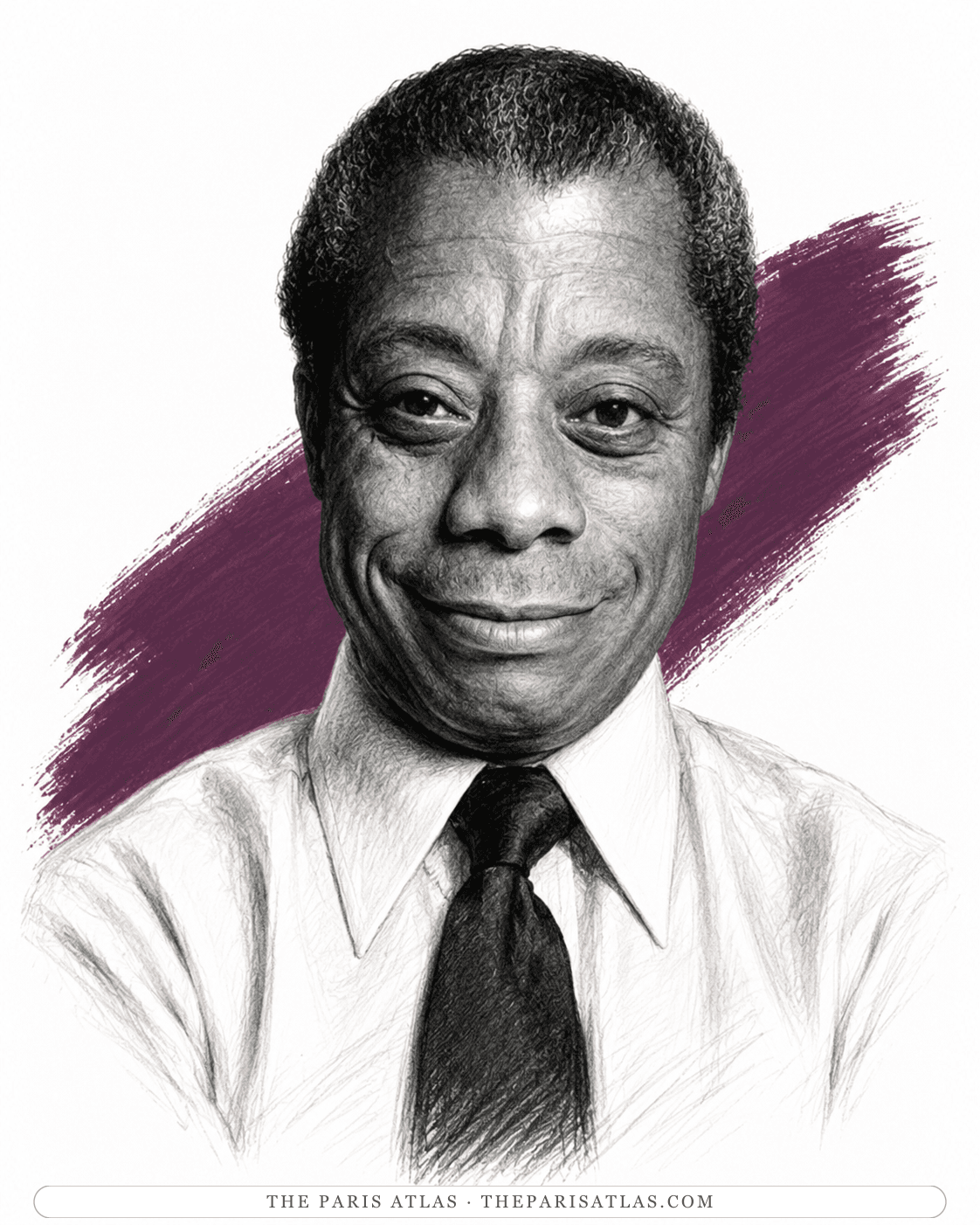
This was his legacy: nothing is ever escaped.
I think that the past is all that makes the present coherent, and further, that the past will remain horrible for exactly as long as we refuse to assess it honestly.
Perhaps it now occurs to him that in this need to establish himself in relation to his past he is most American, that this depthless alienation from oneself and one’s people is, in sum, the American experience.
I know, in any case, that the most crucial time in my own development came when I was forced to recognize that I was a kind of bastard of the West; when I followed the line of my past I did not find myself in Europe but in Africa.
The most illiterate among them is related, in a way that I am not, to Dante, Shakespeare, Michelangelo, Aeschylus, Da Vinci, Rembrandt, and Racine; the cathedral at Chartres says something to them which it cannot say to me, as indeed would New York’s Empire State Building, should anyone here ever see it.
The rage of the disesteemed is personally fruitless, but it is also absolutely inevitable; this rage, so generally discounted, so little understood even among the people whose daily bread it is, is one of the things that makes history.
One wonders what on earth the first slave found to say to the first dark child he bore.
Go back a few centuries and they are in their full glory—but I am in Africa, watching the conquerors arrive.
It is a sentimental error, therefore, to believe that the past is dead; it means nothing to say that it is all forgotten, that the Negro himself has forgotten it. It is not a question of memory.
The making of an American begins at that point where he himself rejects all other ties, any other history, and himself adopts the vesture of his adopted land.
For a tradition expresses, after all, nothing more than the long and painful experience of a people; it comes out of the battle waged to maintain their integrity or, to put it more simply, out of their struggle to survive.
They are, in effect, still trapped in a history which they do not understand; and until they understand it, they cannot be released from it.
To accept one’s past—one’s history—is not the same thing as drowning in it; it is learning how to use it. An invented past can never be used; it cracks and crumbles under the pressures of life like clay in a season of drought.
But in our time, as in every time, the impossible is the least that one can demand—and one is, after all, emboldened by the spectacle of human history in general, and American Negro history in particular, for it testifies to nothing less than the perpetual achievement of the impossible.
From the books
Every book with a quote collection of its own, each line verified against the text.
- Giovanni's Room quotes · 76 lines (1956)
- Go Tell It on the Mountain quotes · 59 lines (1953)
- If Beale Street Could Talk quotes · 41 lines (1974)
- Notes of a Native Son quotes · 76 lines (1955)
- The Fire Next Time quotes · 46 lines (1963)
Newsletter
Join our newsletter
New stories about art, literature and famous places around the world.