
Film
Ballet mécanique
by Fernand Léger, Dudley Murphy
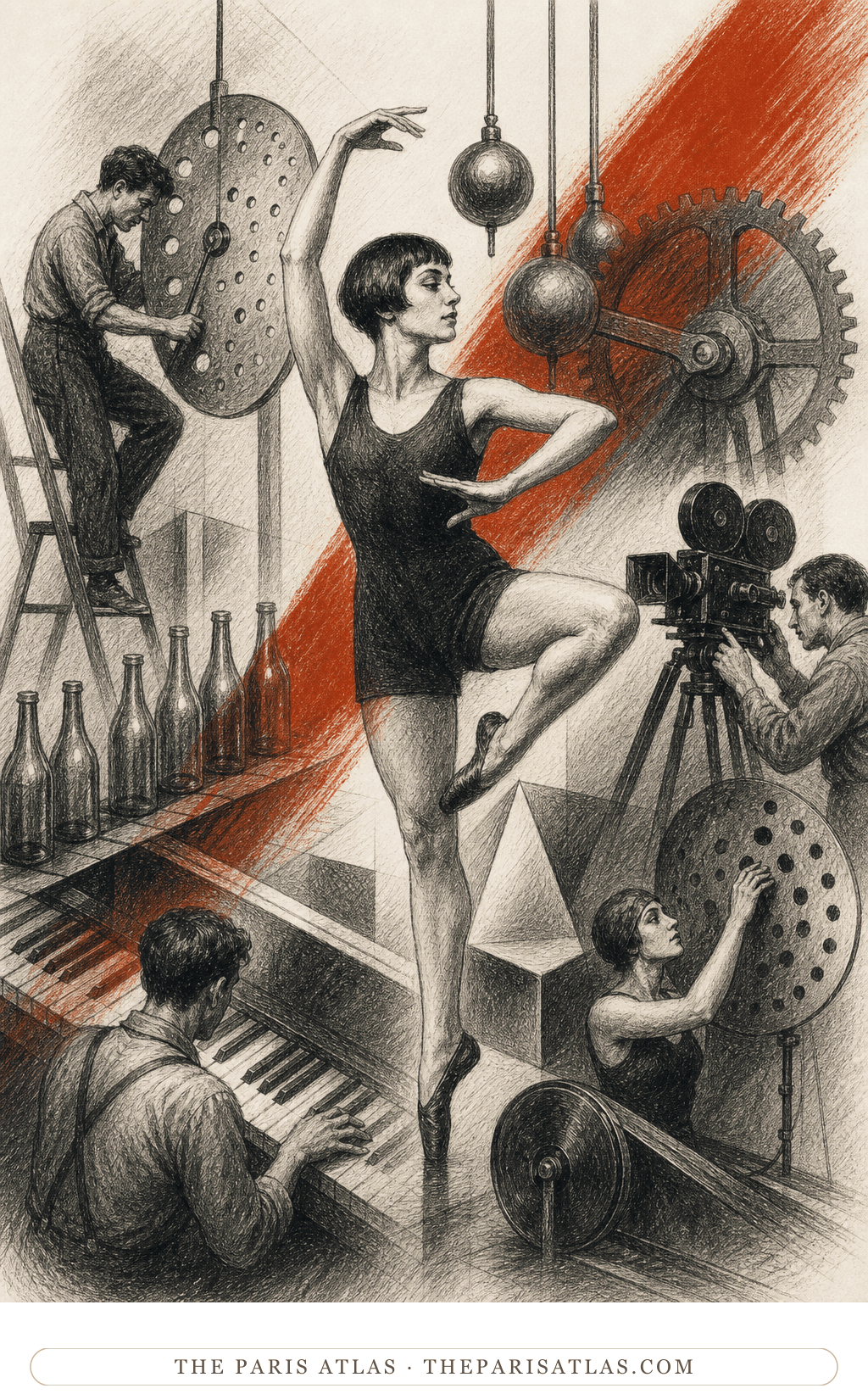
The machine-age film Léger made instead of a painting: pistons, egg-beaters, pot lids, and shop-window legs cut to a mechanical pulse, a washerwoman climbing her steps on an endless loop, and the smile of Kiki de Montparnasse fragmented like everything else on the bench. George Antheil's notorious score — player pianos, propellers, sirens — was written for it, ran twice as long, and met the images properly only decades later.
- 1924
- Experimental film
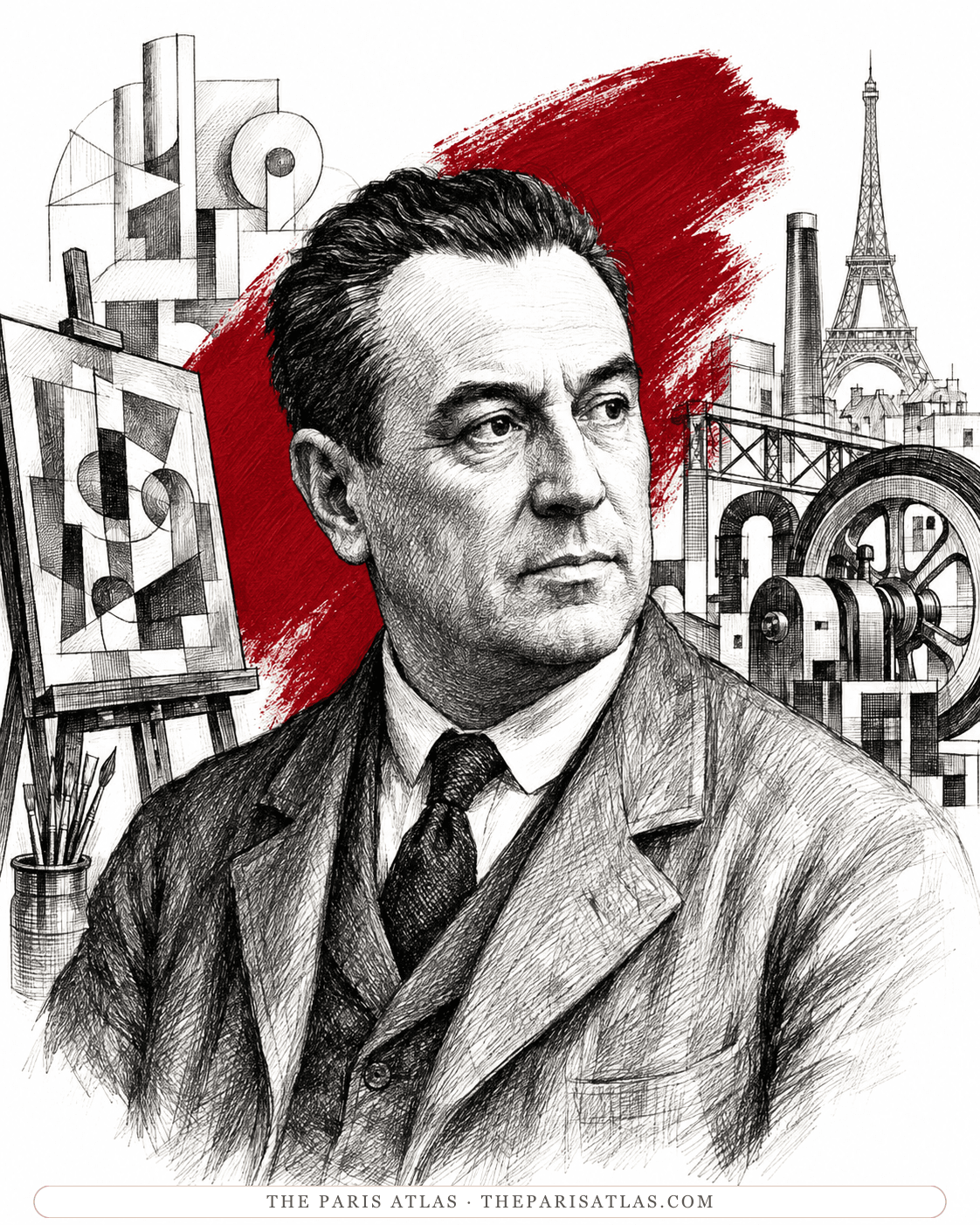
About Fernand Léger
A painter's film, a cameraman's film
Léger came out of the war convinced that the machine — gun breech, piston, polished shell casing — was the century's true subject, and his canvases had been building a mechanical classicism ever since. Ballet mécanique is that conviction let loose at projector speed: objects filmed straight, kaleidoscoped through prisms, looped until function dissolves into rhythm. The American cameraman Dudley Murphy supplied the technique — and, by most accounts, Man Ray supplied early collaboration and Ezra Pound the introductions, the poet then busy promoting everything mechanical and modern.
Kiki de Montparnasse lends the film its face — eyes and mouth isolated, repeated, and rearranged, a portrait conducted like percussion. The washerwoman climbing her stair, over and over, is the film's thesis stated as comedy: repetition is what the century does, to machines and to people alike.
The score that outgrew its film
George Antheil — the young American 'Bad Boy of Music' who lived in the flat above Shakespeare and Company — wrote a Ballet Mécanique calling for sixteen synchronized player pianos, xylophones, electric bells, propellers, and a siren. It proved impossible to synchronize with the film in 1924, and nearly impossible to perform at all; its 1926 Paris concert premiere caused a satisfying scandal, and a mismanaged 1927 Carnegie Hall performance nearly ended his career. Film and score were finally married by restorers at the century's end — a Dada collaboration completed on a seventy-year delay.
Timeline
1924
Fernand Léger made the film with the American cameraman Dudley Murphy, cutting machine parts, kitchen objects, shop-window legs and the fragmented face of Kiki de Montparnasse to a mechanical pulse.
September 1924
First shown, in Vienna.
1924
George Antheil composed his Ballet Mécanique score separately, for synchronized player pianos, xylophones, bells and propellers; it ran roughly twice the film's length and could not be synchronized with the images at the time.
2000
A reconstruction at last performed Antheil's original scoring in synchronization with Léger's film, the two meeting properly for the first time.
Frequently asked questions
Who made Ballet mécanique?
The painter Fernand Léger, with the American cameraman Dudley Murphy, in 1924.
What is it about?
It has no story. Pistons, kitchen objects, shop-window legs and the fragmented face of Kiki de Montparnasse are cut to a mechanical pulse, with a washerwoman climbing an endless loop of stairs as its refrain.
Why did a painter make a film?
Léger believed the machine was the century's true subject and had been building a “mechanical classicism” in his paintings; the film extends that program into moving images.
Who is the woman in it?
Kiki de Montparnasse, the Montparnasse model and performer, whose eyes and mouth are isolated, repeated and rearranged like the machine parts around them.
What is the story of the music?
George Antheil — the American “Bad Boy of Music” who lived above Shakespeare and Company — wrote a score for synchronized player pianos and percussion, but it ran about twice the film's length and could not be synchronized at the time. The two met properly only decades later.
Where and when was it first shown?
In Vienna, in September 1924.
In the atlas
More by Fernand Léger
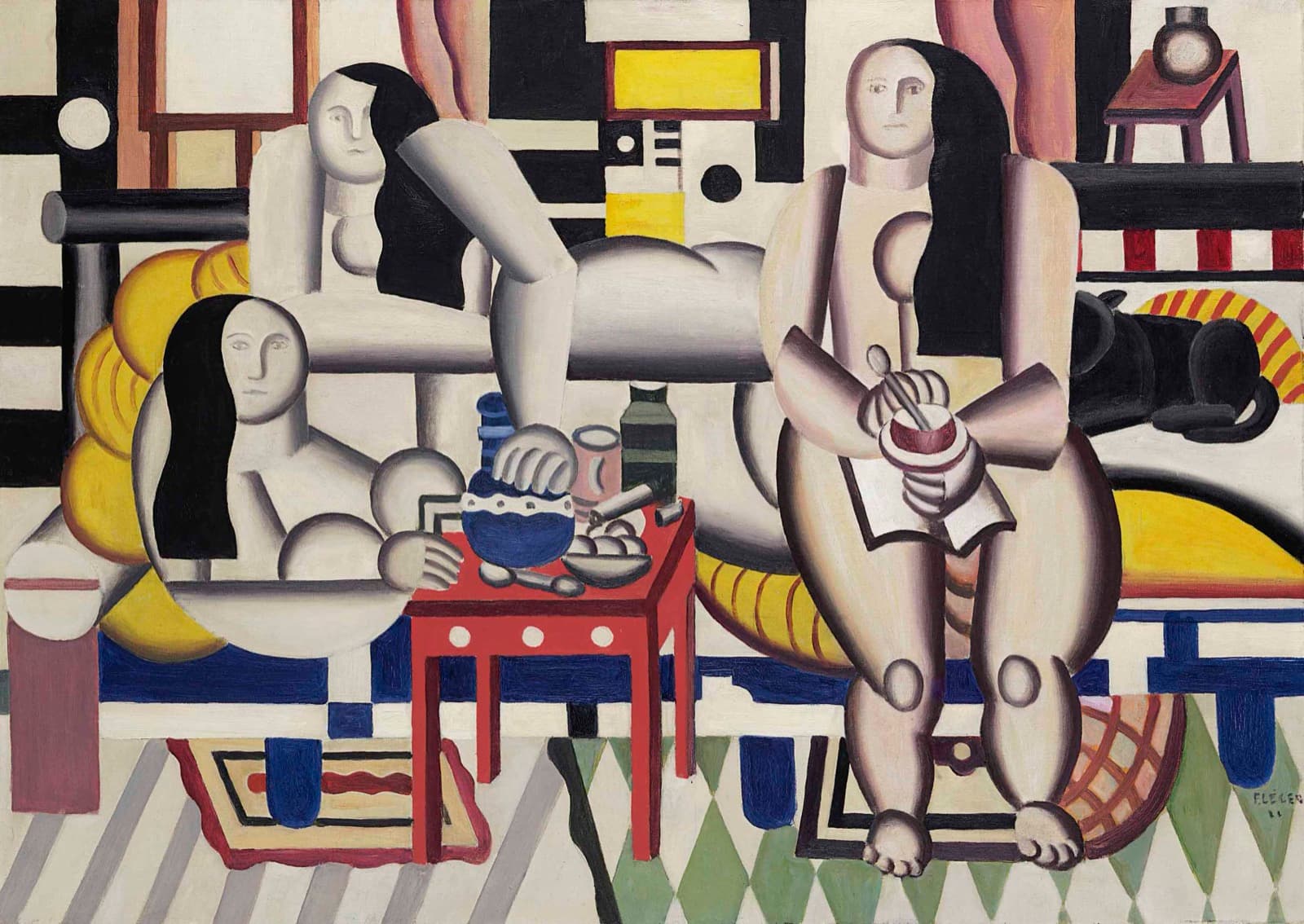
If you like Fernand Léger
Explore directors from the same movements and circles.
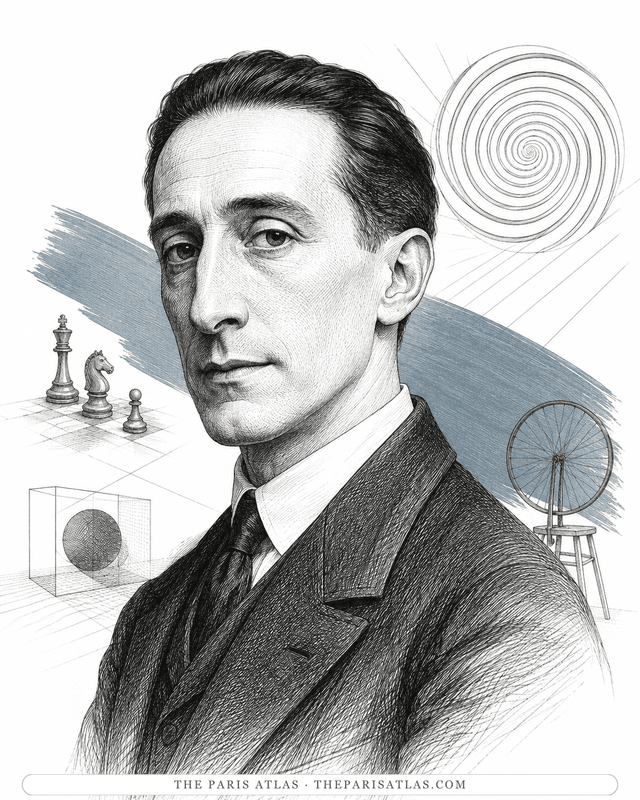
Marcel Duchamp
The century's quietest revolutionary — readymades, the abandonment of painting, chess on a Paris rooftop in Entr'acte, and one anemic film of spinning puns signed Rrose Sélavy.
View artist
Henri Cartier-Bresson
French photographer who turned a pocket-sized 35mm camera into an instrument of split-second composition — the idea the world knows as 'the decisive moment'. He trained as a painter, was taken prisoner in 1940 and escaped on his third try, photographed the Liberation of Paris in August 1944, co-founded the photographer-owned agency Magnum Photos in 1947, gave up reporting for drawing in the 1970s, and left Paris a foundation in the Marais that deliberately hangs no permanent display of his own pictures.
View artist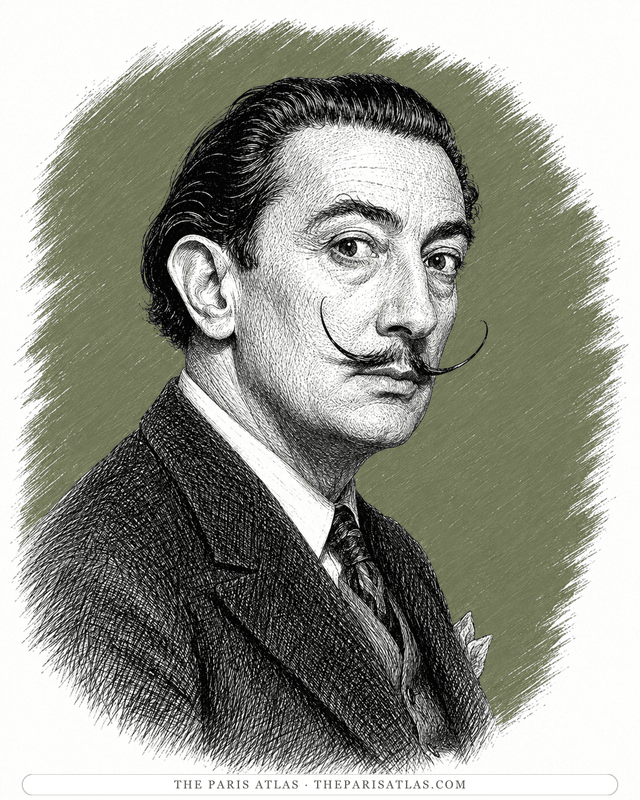
Salvador Dalí
The self-made icon of Surrealism — melting watches and manicured scandal — who arrived in Paris by way of two films written with Buñuel, dreamed together before the movement claimed them.
View artist
References
References
The sources below include collection records, catalogues, scholarly research, and primary materials that informed this page. They document Ballet mécanique, its making, and its place in cultural history.


1The Museum of Modern Art — Ballet mécanique (collection record)
WebsiteUsed forWeb source consulted for documented facts and historical context presented on the Ballet mécanique page.
2Encyclopaedia Britannica — George Antheil
WebsiteUsed forWeb source consulted for documented facts and historical context presented on the Ballet mécanique page.

3Film Vault Summer Camp, Week Three: Dada on Screen
PeriodicalMuseum of Modern Art, 2020Used forContemporary reporting or criticism used to document the historical reception and context of Ballet mécanique.
4Fernand Léger — Artist and Collection Record
WebsiteCentre PompidouUsed forWeb source consulted for documented facts and historical context presented on the Ballet mécanique page.
i
Why these sources are here
These references provide the documented foundation for this work's history and interpretation. Claim-level citations remain attached to the specific claims they support.
 Explore more resources