
Little Birds
The companion collection — thirteen more stories from the same commission, published in 1979.
Read our take
by Anaïs Nin
Written at a dollar a page for an anonymous collector in the forties — published the year she died, and instantly her bestseller.
In the lean New York forties, an anonymous patron paid a circle of hungry writers a dollar a page for erotica — 'leave out the poetry,' came the instruction. Nin took the commission and smuggled the poetry back in. Published in 1977, months after her death, the stories became her commercial triumph and a landmark: erotica written from a woman's sensibility, decades before the market knew it wanted it. (Adult subject matter, throughout.)
The origin story is half the legend: in the 1940s a mysterious 'collector' — his identity argued about ever since — commissioned erotica through an intermediary at a dollar a page, and half-starving literary New York obliged: Miller wrote for him, Nin wrote for him, friends took dictation. His repeated instruction — less poetry, more mechanics — became the running joke of the enterprise, and Nin's preface (drawn from the diary) records the circle's revenge: she kept writing like herself.
She set the manuscripts aside for thirty years as work-for-hire beneath her name; persuaded late in life to publish, she died in January 1977 with the book in press. It promptly outsold everything she had ever written, made the bestseller lists, and reframed her legacy: the diarist of the interior life became also the founding modern voice of literary erotica written by a woman — a shelf that barely existed before this book and has never been empty since.
Fifteen stories of varied length and register: the long opening 'The Hungarian Adventurer,' the Peruvian 'Basque' cycle's Mathilde, artists' models and aristocrats, Paris ateliers and ocean liners — the geography of the thirties bohemia redeployed as an erotic atlas. The range is deliberate: comedy, menace, tenderness, and transgression, with several pieces going to genuinely dark places the introduction flags in advance.
What made it a landmark is the sensibility: interiority, atmosphere, and the psychology of desire carried into a genre that had rarely wanted any — the collector's 'leave out the poetry' instruction, defied on every page. Read the preface first; the frame story is as good as the stories.
The client's instruction in Nin's retrospective account exposes a struggle over who determines a literary voice. She contrasts Miller's direct, comic manner with her own ambiguities, yet admits that the commission made her feel dependent on male models. The problem is more demanding than sneaking elegant description into a paid assignment: she cannot initially separate what belongs to her from what the genre and its buyer expect. That uncertainty makes the frame an account of compromised artistic labor, not simply a triumphant story of disobedience.
Publication begins with an act of rereading. Nin finds traces of her voice in writing she had once set aside as a betrayal of herself. Her defense changes the status of the manuscripts without claiming that every passage escaped the commission's constraints. The stories become evidence of an early attempt, judged from a later position. Her broad distinction between men's and women's experiences belongs to that self-interpretation; readers can examine its limits while attending to the particular question she raises about how an author recognizes herself in inherited forms.
Erotica with interiority and weather — the collector paid for mechanics and got literature.
The dollar-a-page commission, the hungry circle, the smuggled poetry — the preface alone earns the cover price.
The diary made her an icon; this made her read at the beach — both halves are true Nin.
1940s
An anonymous 'collector' pays a circle of hungry New York writers a dollar a page for erotica; Nin takes the commission, smuggles the poetry back in, then sets the manuscripts aside for thirty years.
1977
Persuaded late in life to publish, Nin dies that January with the book in press; it appears months later and outsells everything she wrote, a posthumous bestseller.
1978
Bantam Books publishes a paperback edition following the original Harcourt release.
The companion collection — thirteen more stories from the same commission, published in 1979.
Read our take
Desire in the first person versus desire for hire — the two unveilings, side by side.
Read our take
The preface's frame story comes straight from these years' entries.
Read our take
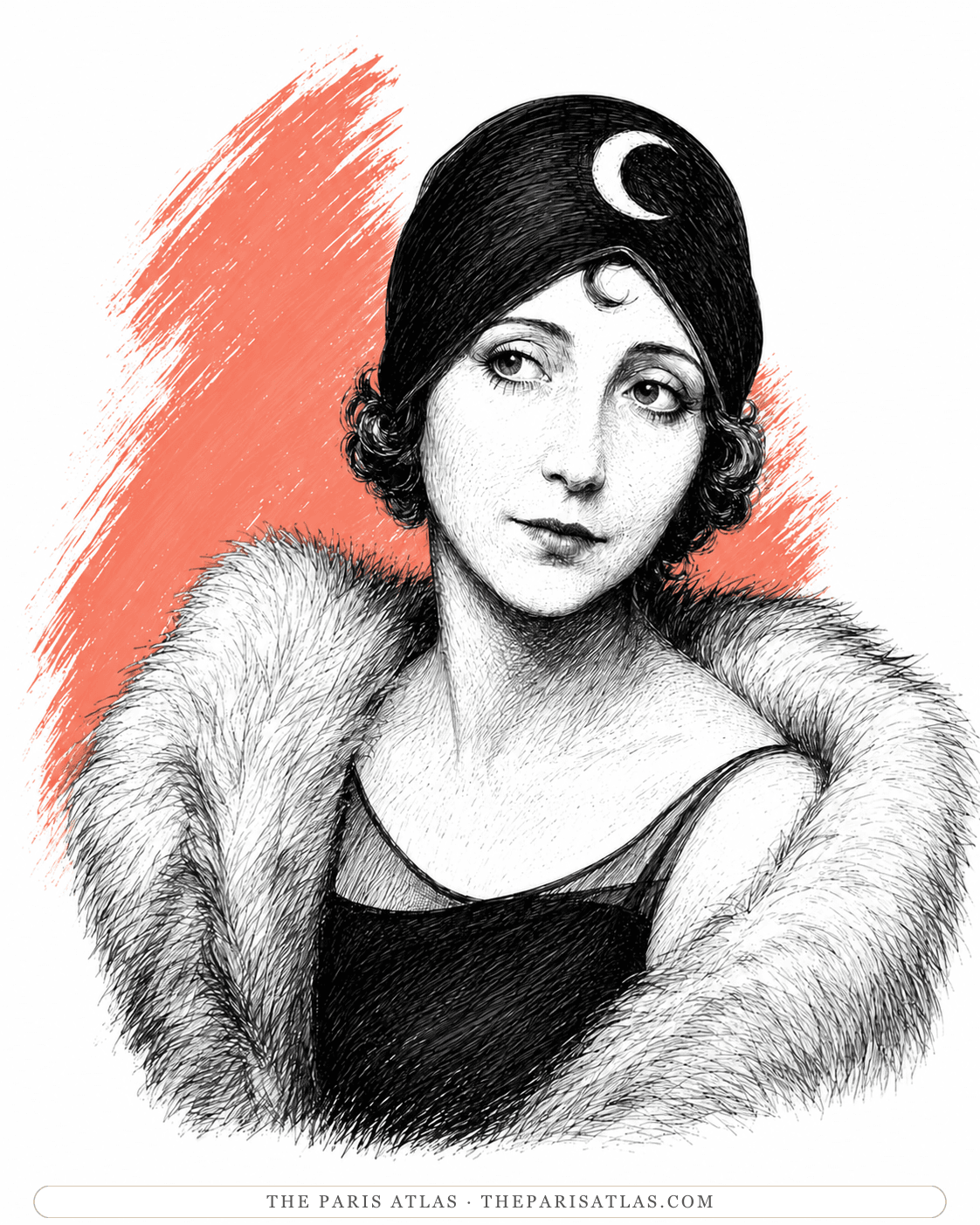
Anaïs Nin. The collection of erotic stories was published in 1977, months after her death.
A collection of erotic stories Nin wrote in the 1940s, when an anonymous patron paid a circle of hungry writers a dollar a page for erotica.
A mysterious "collector," whose identity has been argued over ever since, commissioned the stories through an intermediary with one instruction — "leave out the poetry." Nin smuggled the poetry back in.
It became her commercial triumph and a landmark of erotica written from a woman's sensibility, decades before the market knew it wanted it.
In 1977, the year Nin died — a posthumous bestseller that outsold everything else she wrote.
Explore authors with a similar voice, perspective, and influence.

The entangled careers of the Villa Seurat: she financed and prefaced his scandal, he detonated her prose — and each wrote the other into the century's record.
View author
The doctor of the Paris slums who wrote the century's blackest, funniest novel — and changed the sound of French prose.
View author
War correspondent who covered the Spanish Civil War, D-Day, and conflicts across five more decades; Hemingway's third wife, 1940–1945.
View authorThe sources below include the primary text, editions, scholarship, archival materials, and other records that informed this page. They document Delta of Venus, its publication, and its place in literary history.


The primary text represented by this page, used for descriptions of the work’s contents and for any quoted passages shown here.
Used to place Delta of Venus within Anaïs Nin's published work and verify its bibliographic context.

Used for independent biographical, archival, or historical context surrounding Anaïs Nin's career and the period in which Delta of Venus appeared.
Used to cross-check authorship, chronology, and the work's place in Anaïs Nin's wider catalogue.
Used to verify Anaïs Nin's bibliography and place Delta of Venus within the broader chronology of Anaïs Nin's career.
Web source consulted for documented facts and historical context presented on the Delta of Venus page.
Interprets the displayed retrospective preface excerpt on commissioned style, rereading and publication. Not a full-preface, complete-story, original-manuscript or sales-history verification.
The primary text is the baseline reference for every book page. Additional references document publication history, interpretation, and historical context where that evidence is available.
 Explore more resources