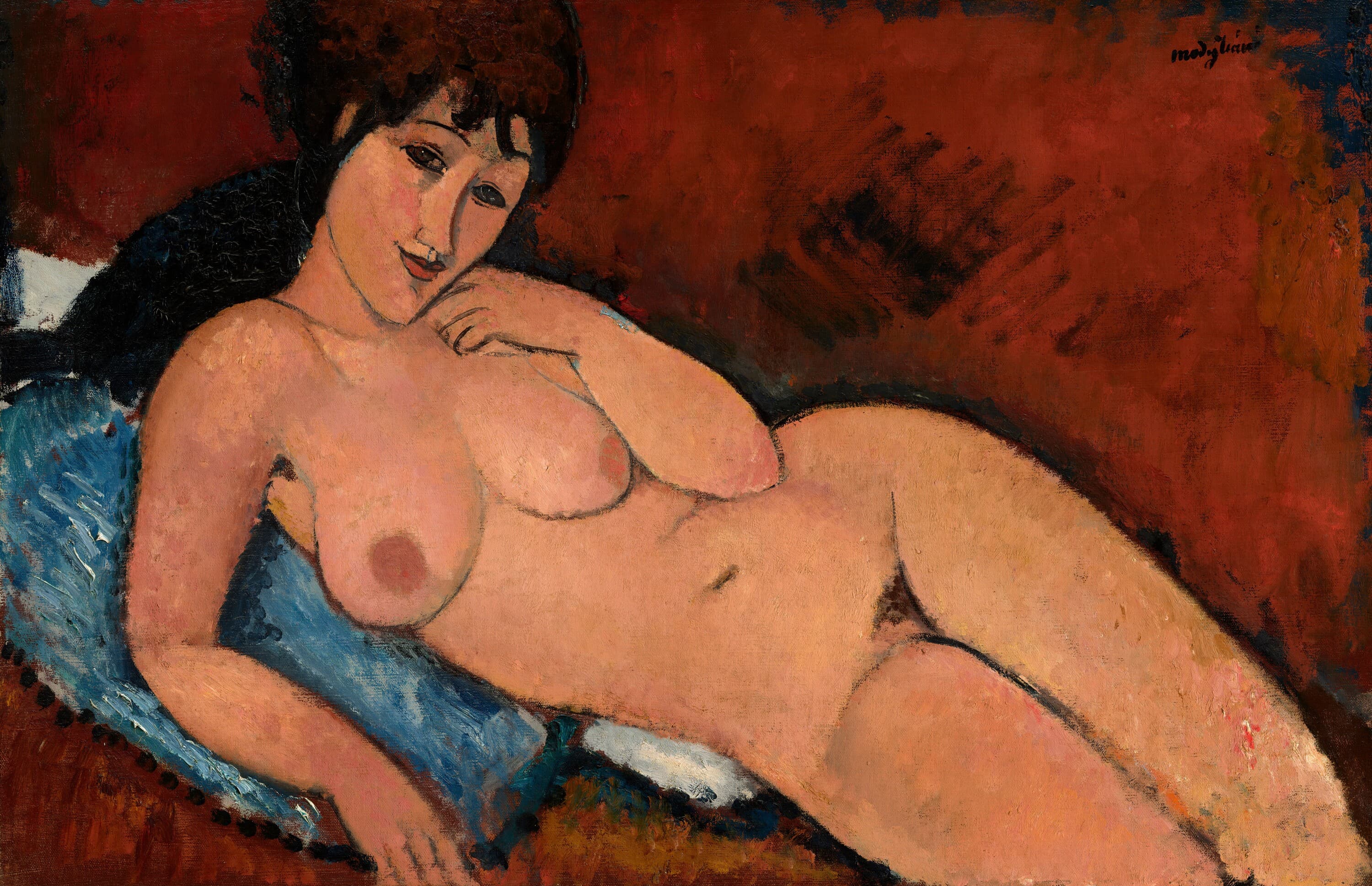
Nude on a Blue Cushion
A woman with dark hair and bangs lies back on a blue cushion against a red-brown background, her face resting on the back of one hand and her legs running off the canvas. Amedeo Modigliani painted it in 1917, the year police objected to his nudes at his only solo show. Paul Guillaume bought it from him that year. The painting belongs to the National Gallery of Art in Washington, 1963.10.46.
- 1917
- Oil on linen
- National Gallery of ArtWashington, United States
About Amedeo Modigliani
What the painting shows
A naked woman lies across the canvas from left to right, her hips turned so her body faces us. She props herself up on her right elbow on a blue cushion and rests her face on the back of her left hand. Her legs run off the right edge of the painting above the knee.
The woman has thick dark brown hair, with reddish curls on top and bangs across her forehead. Unlike many of Amedeo Modigliani's sitters, she has real pupils, and she looks straight out at us. Her lips are coral red and closed in a small smile.
Her skin is painted in smooth, warm pink, and Amedeo Modigliani drew its edges with dark outlines. The blue cushion under her is the opposite, laid on thickly in streaks of blue with raised white highlights. A strip of white cloth shows under the cushion and again under her hip. The National Gallery of Art reads it as a cloth or a second pillow.
Behind her there is no room, only a warm red-brown background with patches of dark smudged strokes. A row of round dark dots runs along the lower left, like the nails along the edge of a sofa. Amedeo Modigliani signed the painting in small black letters at the top right: modigliani.
The nudes of 1916 to 1919
A technical study of the nudes published in Tate Papers says the large reclining and seated nudes that Amedeo Modigliani painted between 1916 and 1919 have become his best-known works. About forty of the paintings in Ambrogio Ceroni's 1970 catalogue of his work are nudes.
Tate Modern says it was the support of a new dealer, Léopold Zborowski, that brought Amedeo Modigliani back to the female nude in 1916. The Tate Papers study says Léopold Zborowski paid for the models, found him safe places to paint in Paris and the south of France, and bought his materials.
This nude did not stay with Léopold Zborowski. The National Gallery of Art says Paul Guillaume, the other Paris dealer who handled Amedeo Modigliani's work, bought it in 1917. According to Chester Dale's papers, Paul Guillaume bought it directly from the painter.
Arthur Pfannstiel, in his 1956 catalogue, listed it as from Léopold Zborowski's collection. The National Gallery of Art points out that Arthur Pfannstiel's own earlier book, of 1929, had given Paul Guillaume.
The window at Berthe Weill's
In 1917 Léopold Zborowski asked the dealer Berthe Weill to hold a show of Amedeo Modigliani's work. The Musée de l'Orangerie says it opened on 3 December 1917 at her gallery in the rue Taitbout, with thirty-two works, mostly paintings. The show was the only solo exhibition Amedeo Modigliani had in his lifetime. Blaise Cendrars wrote a short poem for the catalogue, Sur un portrait de Modigliani.
Four nudes were in the show. The Musée de l'Orangerie says their visible pubic hair caused a scandal. The chief of the police station across the street ordered Berthe Weill to get rid of this filth, for affront to public decency. The Tate Papers study says the police made her take the nudes out of the exhibition.
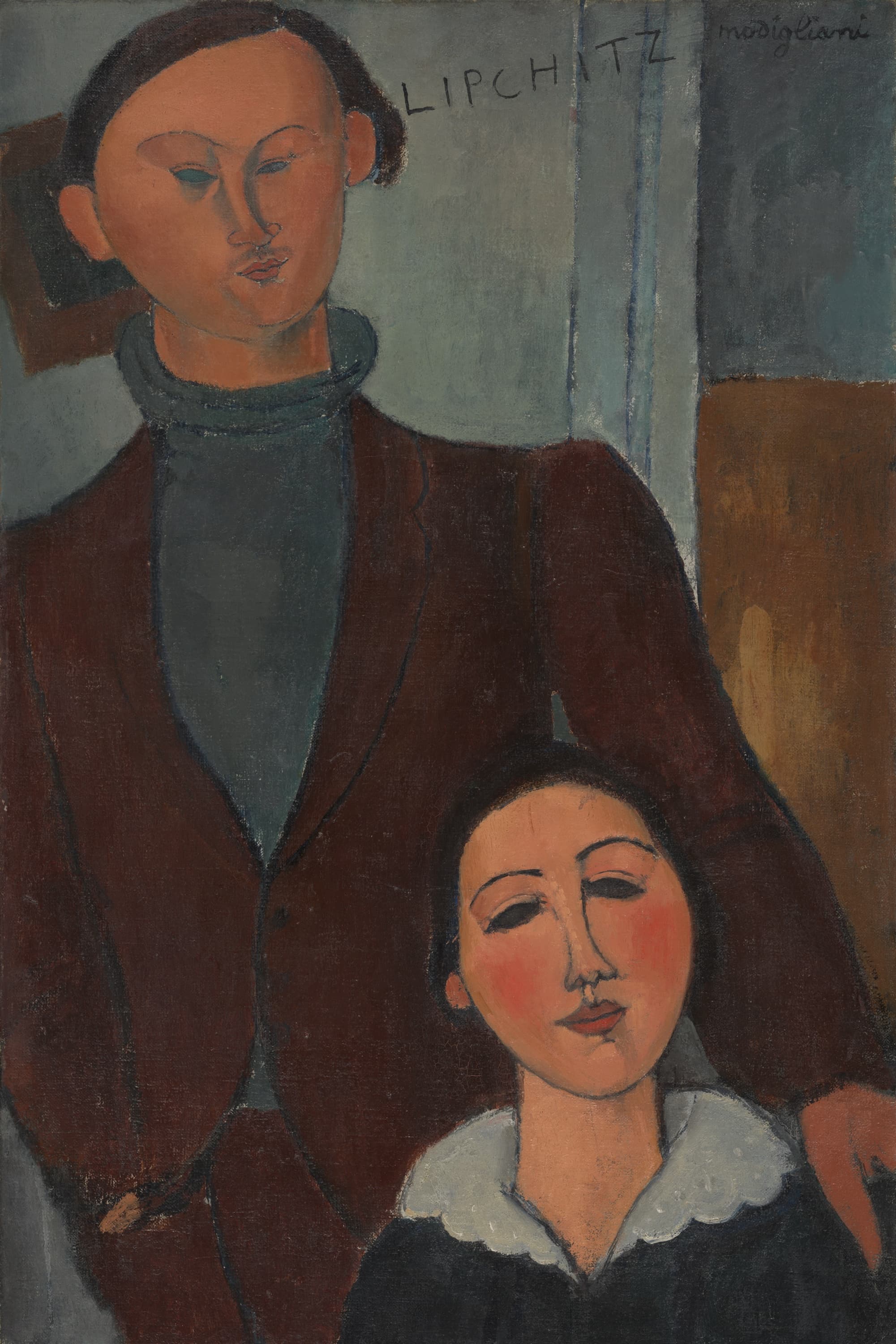
The sculptor Jacques Lipchitz remembered it differently in 1954. He said Léopold Zborowski had put four nudes in the window to catch the eye of passers-by, and that it was the police who saw them first. Léopold Zborowski came to him heartbroken and offered him all four for 500 francs. Jacques Lipchitz turned him down: what could he do with four nudes on his walls?
The show was a commercial failure, although Berthe Weill bought five works herself to help. No source says which four nudes were shown, or whether Nude on a Blue Cushion was one of them. The painting belongs to the same year and the same series, and that is as far as the record goes.
Names and dates
The painting has had several names. In New York in 1928 it was shown as Femme Nue, meaning naked woman, and in 1931 as Nu Etendu, meaning reclining nude. In Brussels in 1933 and Basel in 1934 it was simply Nu. Arthur Pfannstiel called it Nu appuyé sur le bras droit, a nude leaning on her right arm.
The National Gallery of Art dates it 1917. Christian Parisot's catalogue of Amedeo Modigliani's paintings, published in 1991, lists it under 1916.
No source names the woman who posed for it.
From Paul Guillaume to Washington
Paul Guillaume kept the painting until April 1928, when he sold it to the American collector Chester Dale. Chester Dale lent it to exhibitions almost at once. The painting was in his loan show at the Wildenstein Galleries in New York in 1928, and Maud Dale reproduced it in her 1929 book on the collection, Before Manet to Modigliani.
From 1943 to 1951 the Dale collection hung on loan at the Philadelphia Museum of Art. Chester Dale died in 1962 and left his collection to the National Gallery of Art in 1963.
The National Gallery of Art listed it on view in its East Building, in Gallery 103-A, in 2025.
Close reading
Reading the work, detail by detail
Nude on a Blue Cushion is one of the reclining nudes Amedeo Modigliani painted in 1916 and 1917. Up close the painting is less smooth than it looks from across the room. The cushion is thick, streaky paint, the background is patchy, and a few parts are hard to read.
1.Eyes that look back
Unlike many of Amedeo Modigliani's sitters, this woman has real pupils, and she looks straight out. The eye on our left is brown with a tiny white highlight, and the other is darker, almost black. Thin arched brows sit above them, and dark bangs cross her forehead.
2.Thick dark hair piled on top
The woman's hair is dark brown and thick, with reddish curls on top and bangs falling in two strands over her forehead. The National Gallery of Art says her hair seems to be pulled back. Behind her head the red-brown background is painted thinly enough that the weave of the linen shows.
3.The back of her hand against her face
The woman rests her face on the back of her left hand. The fingers are just a few curved dark lines on the same warm pink as her skin. On her upper arm, near the shoulder, there is a small pale blue stroke. The stroke may be a touch of the cushion's colour, but why it is there is not clear.
4.The blue cushion, painted thick
The blue cushion that gives the painting its title is the thickest paint in the picture. The cushion is laid on in streaks of blue, with raised white highlights that catch the light. A dark blue edge with a wavy, scalloped line runs under the woman's body. Her skin, by contrast, is painted flat and smooth.
5.A dark mass and a white cloth behind her shoulder
Behind the woman's shoulder there is a large dark mass, black and deep blue, with a scratchy texture, and below it a strip of white cloth. The dark mass could be her long hair falling behind her, or a dark cloth or cushion. The National Gallery of Art reads the white as a cloth or a second pillow.
6.A row of dark dots along the bottom
Along the lower left runs a row of round dark dots on a red-brown band. The dots look like the round-headed nails along the edge of an upholstered sofa, but the painting shows too little of the furniture to be sure. The woman's forearm lies across the blue cushion just above them.
7.Her other hand at the bottom edge
At the very bottom the woman's right hand comes down over the row of dark dots. Her fingers are a few dark lines, and the bottom edge of the painting cuts them off. Beside them a stroke of teal green marks the end of the cushion.
8.The body drawn with a few dark lines
The woman's body is one smooth area of warm pink paint, and Amedeo Modigliani drew its edges with dark outlines. The navel is a single short dark stroke, and there is a small patch of dark pubic hair. The Musée de l'Orangerie says it was the visible pubic hair on the four nudes in his 1917 show that caused the scandal there.
9.Legs that run out of the painting
The woman's legs run off the right edge of the canvas, cut off above the knee. A dark outline runs along the top of her thigh against the red-brown background. Near the edge, a few flecks of bright pink and red sit on the knee.
10.A red-brown background with dark smudges
The background is a warm red-brown, with no room or furniture in it. Above the woman's arm there is a patch of dark gray-black strokes, dragged on and partly rubbed. The strokes do not seem to show anything. They break up the flat colour.
11.modigliani, top right
Amedeo Modigliani signed the painting in small black lowercase letters near the top right corner: modigliani. The signature sits on the flat red-brown, well above the woman's legs.
12.Navy and orange in the corner
In the top right corner the red-brown background breaks up into dark navy patches and orange-brown strokes. Amedeo Modigliani may have left the corner rough on purpose, or these may be traces of an earlier layer. The painting does not settle which.
13.A white cloth under her hip
Under the woman's hip a strip of white peeps out, the cloth the National Gallery of Art mentions. Below it are patches of teal, orange-brown and dark blue. The patches may be the couch she lies on, but they are painted too loosely to say.
Timeline
1916
With Léopold Zborowski's support, Amedeo Modigliani starts painting large nudes again. Christian Parisot's catalogue dates this painting to 1916.
1917
The National Gallery of Art's date for the painting. Paul Guillaume buys it directly from Amedeo Modigliani.
1917
On 3 December his only solo show opens at Berthe Weill's gallery in the rue Taitbout. The police object to the nudes.
1928
Chester Dale buys it from Paul Guillaume in April and shows it at the Wildenstein Galleries in New York as Femme Nue.
1931
Shown at Demotte in New York as Nu Etendu.
1943–1951
On loan with the Chester Dale Collection at the Philadelphia Museum of Art.
1963
Chester Dale's bequest brings it to the National Gallery of Art.
Where to see it
National Gallery of Art
Washington, United States
A public viewing address has not yet been confirmed for this holding.
The National Gallery of Art listed the painting in the East Building, Gallery 103-A, in 2025. Gallery displays change, so check the museum's page before a visit.
Frequently asked questions
Who is the woman in Nude on a Blue Cushion?
No source names her. The National Gallery of Art describes her only as a nude woman with long dark brown hair reclining against a blue cushion.
Was this painting in the 1917 exhibition the police objected to?
Nobody knows. Four nudes were in Amedeo Modigliani's show at Berthe Weill's gallery in December 1917, but no source says which four. Nude on a Blue Cushion belongs to the same year and the same series.
Who owned it first?
The dealer Paul Guillaume, who bought it directly from Amedeo Modigliani in 1917, according to Chester Dale's papers. He sold it to Chester Dale in 1928.
How big is it?
65.4 by 100.9 centimeters, about three and a quarter feet wide. The National Gallery of Art gives the medium as oil on linen.
Why does she have pupils when so many Modigliani figures do not?
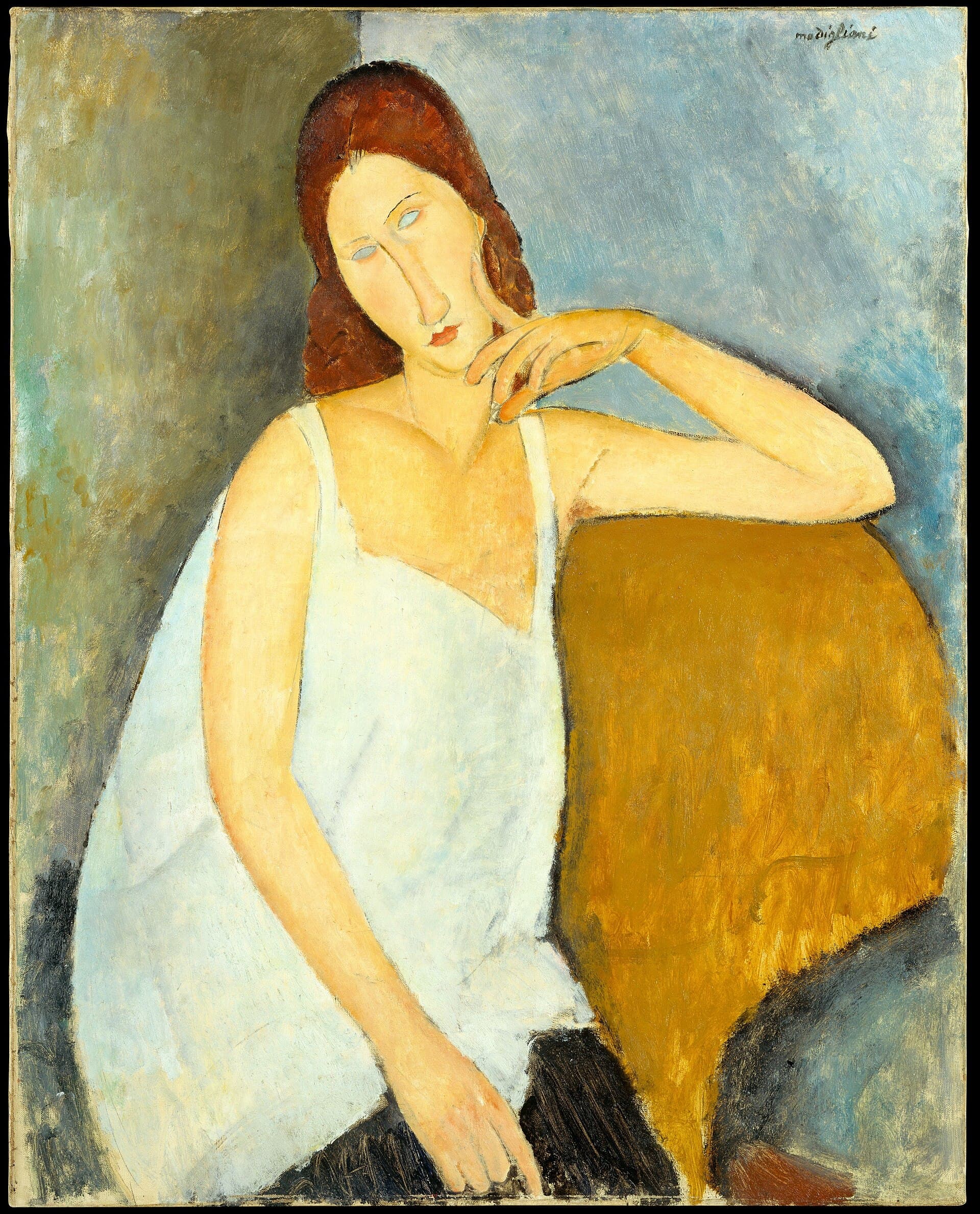
Amedeo Modigliani did both. Many of his portraits, like his Jeanne Hébuterne of 1919, have blank eyes. In this nude the eyes are drawn with pupils, and the woman looks straight out.
Where can I see it?
At the National Gallery of Art in Washington, accession number 1963.10.46, in the Chester Dale Collection. The Gallery listed it in the East Building, Gallery 103-A, in 2025. Check its page before a visit.
More by Amedeo Modigliani
If you like Amedeo Modigliani
Explore painters from the same movements and circles.
Arman
French-American artist, lifelong friend of Yves Klein, and a founder of New Realism.
View artist
Jean Arp
Strasbourg-born sculptor and poet — Hans in German, Jean in French, both all his life — who co-founded Dada at the Cabaret Voltaire in 1916, composed collages by dropping torn paper 'according to the laws of chance', and settled at Meudon outside Paris in a house his wife Sophie Taeuber-Arp designed.
View artist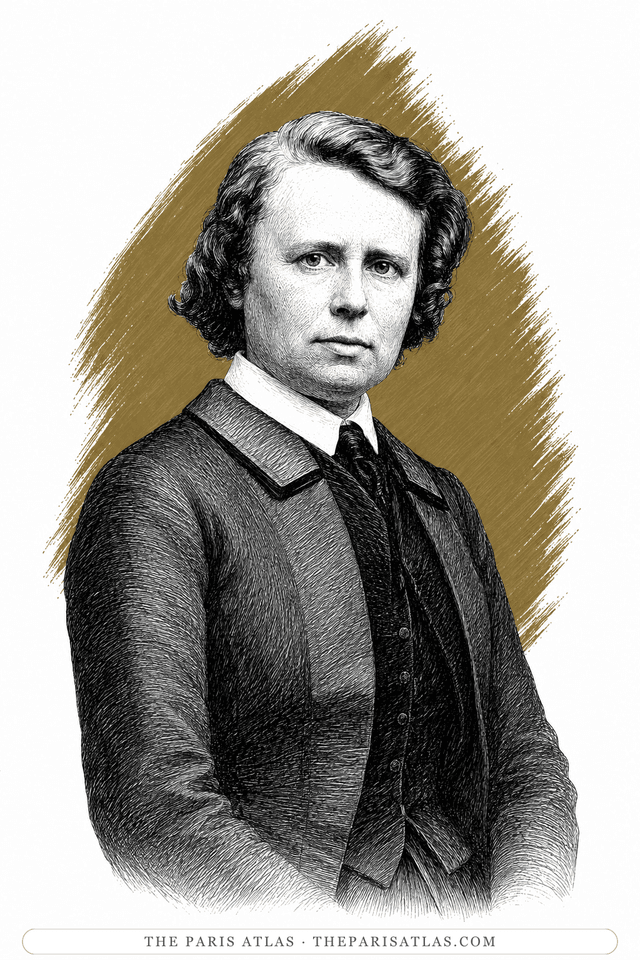
Rosa Bonheur
At the horse markets of Paris and in her studio beside the forest of Fontainebleau, Rosa Bonheur gave animals the presence of great portrait subjects. The success of The Horse Fair helped her build a life shaped by her work, financial independence, and the women she loved.
View artist
References
The sources below include collection records, catalogues, scholarly research, and primary materials that informed this page. They document Nude on a Blue Cushion, its making, and its place in cultural history.


1Amedeo Modigliani, Nude on a Blue Cushion, 1917 (1963.10.46)
WebsiteNational Gallery of Art, WashingtonUsed forThe holding museum's record, read from its open data and a Wayback capture of 24 October 2025, and the reproduction the close-reading views were cropped from.

2Modigliani's Painted Nudes: A Technical Study (Tate Papers, no. 35)
PeriodicalTateUsed forOn the nudes of 1916 to 1919, Léopold Zborowski's support, and the 1917 show (note 9 gives its dates as 3 to 30 December 1917).
3Exhibition Guide: Modigliani (Tate Modern, 2017–18)
WebsiteTateUsed forTate Modern on Léopold Zborowski bringing Amedeo Modigliani back to the nude in 1916.
4Berthe Weill. Gallery Owner of the Avant-garde
WebsiteMusée de l’OrangerieUsed forThe Musée de l'Orangerie on the Berthe Weill show of December 1917 and the police.
5Berthe Weill. Galeriste d'avant-garde: textes de salles (large-print room texts)
Exhibition catalogueMusée de l'Orangerie, 2025Used forThe exhibition's French room texts, which name Blaise Cendrars's catalogue poem.
6Amedeo Modigliani (1884–1920)
MemoirHarry N. Abrams, in association with Pocket Books, 1954Used forJacques Lipchitz's memory of the four nudes in the window and Léopold Zborowski's offer.
These references provide the documented foundation for this work's history and interpretation. Claim-level citations remain attached to the specific claims they support.
 Explore more resources