The Age of Maturity
Three figures share one base. An old woman leads a naked man away to the left, and a young woman on her knees reaches after him with both arms without reaching him. Camille Claudel worked at the group through the 1890s, the years after she left Auguste Rodin's studio. The French state commissioned it in 1895 and never ordered the bronze; the cast at the Musée d'Orsay was paid for by a private buyer, Captain Tissier, about 1902.
- modelled 1893–1899; this bronze cast about 1902
- Bronze group in three parts
- Musée d'OrsayParis, France
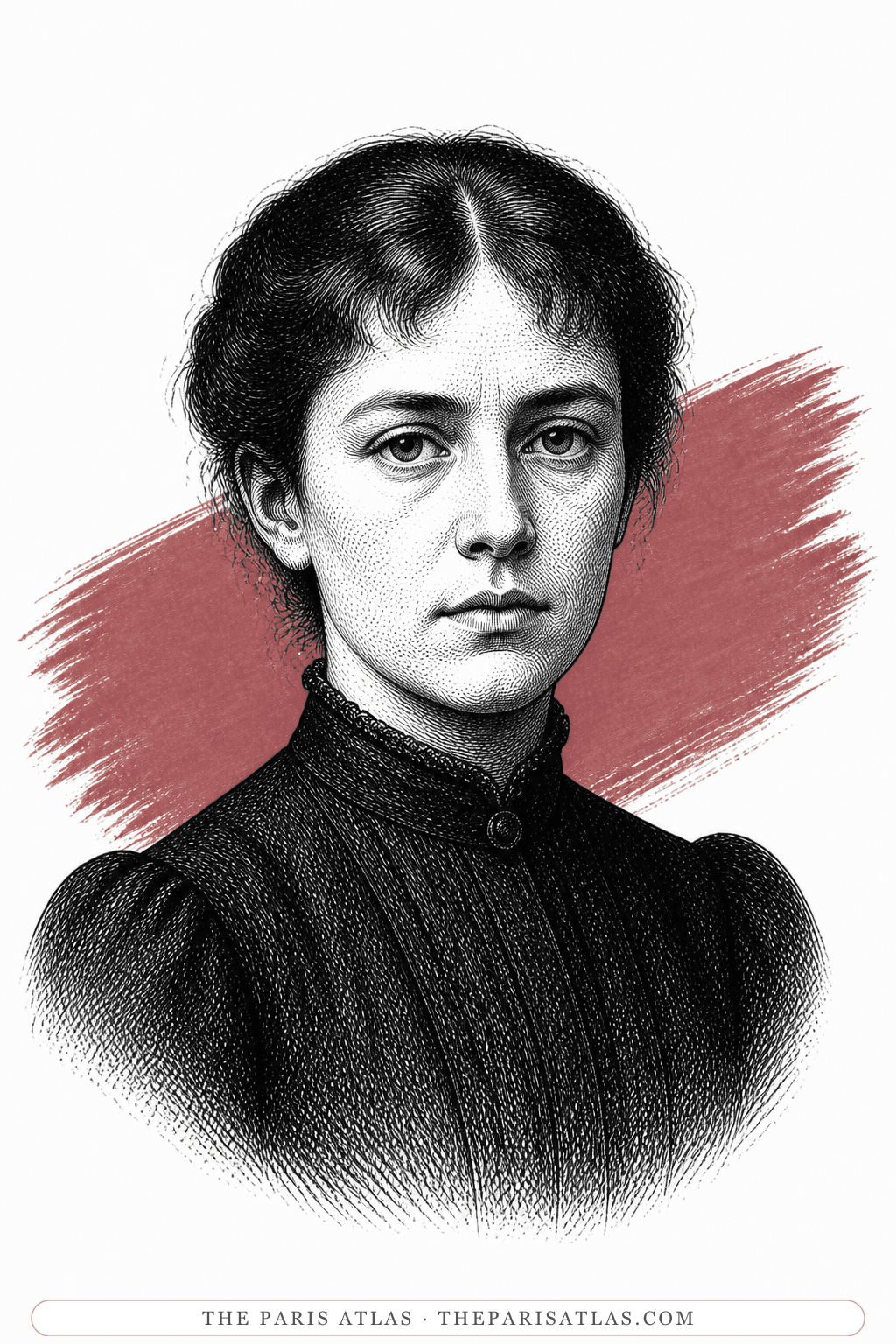
About Camille Claudel
What the sculpture shows
The man is naked and no longer young. He is carried forward on a rising, wave-like base, and an old woman moves with him, her arms across his chest and hip and a heavy drapery falling from her shoulders. His head is tipped down and turned away from the figure he is leaving.
That figure is a young woman on both knees, her arms stretched out and up. Her hands and his do not meet. The Musée d'Orsay describes him as stretching an impotent hand towards youth while old age pulls him forward, and the gap between the two sets of fingers is the part of the group every account returns to.
The bronze is 114 centimetres high and 163 wide, and it weighs 327 kilograms. It was cast in three parts: the Musée d'Orsay records the left part at 283 kilograms and the right at 44.
Camille Claudel gave the kneeling woman a name of her own, L'Implorante, the Imploring Woman. She had it cast separately, and it circulated as an independent sculpture.
Two versions, and a tree that went
There are two compositions. The Musée Rodin dates the first to 1894–95 and knows it only from plaster: in it the man is still held by the young woman, his hand on her shoulder. Camille Claudel called it her three-figure group in letters to her brother Paul Claudel.
In the second version the contact is broken. The man is drawn away to the left and the young woman is left kneeling behind him. The Musée Rodin notes the influence of Art Nouveau on the second version's tormented drapery and deep shadow.
Early sketches included a tilted tree leaning over the group. Isabelle Bonithon, writing for Panorama de l'art, records that the tree stood for destiny and that Camille Claudel dropped it. What carries the movement in the finished group instead is the diagonal of the three bodies, the drapery behind them, and the base, which rises in steps and breaks like a wave.
The commission the state cancelled
Auguste Rodin intervened for her after the break. The Musée d'Orsay records that he obtained a state commission for her from the Director of Fine Arts, and that Maturity was commissioned in 1895 and exhibited in 1899.
The bronze was never ordered. The Musée Rodin records that the second version was completed and paid for by 1898 and that Camille Claudel never delivered it. The Musée Camille Claudel describes prolonged negotiations with the French state over a public version in marble or bronze that produced nothing.
Captain Tissier, an army officer, commissioned the first bronze in 1902 at his own expense. It went to the Salon of 1903 as number 2658. The plaster model disappeared later, during the casting of a second bronze by Frédéric Carvilhani in 1913.
Where the casts are
Three casts are worth keeping apart. The one at the Musée d'Orsay is the first, made for Captain Tissier about 1902 and inscribed 1re Epreuve — first proof — by the foundry. The Musée Rodin holds the larger bronze cast by Frédéric Carvilhani after 1913, 121 by 181.2 by 73 centimetres, given by Paul Claudel in 1952 and numbered S.01380.
The third is a reduction. The Musée Camille Claudel at Nogent-sur-Seine records that the dealer Eugène Blot sold a smaller bronze of the group from 1907, and its own example is Blot's cast number 3, 61.5 by 85 by 37.5 centimetres, inventory 2010.1.16.
The foundry mark on the Musée d'Orsay bronze names Thiébaut Frères, Fumière et Gavignot, Paris. The Musée d'Orsay lists Fumière et Gavignot as the founders, working in Paris between 1898 and 1905.
The autobiographical reading
The group has been read since its own day as a portrait of Camille Claudel's situation: Auguste Rodin drawn away by Rose Beuret, his companion of thirty years, with Claudel left kneeling. The Musée d'Orsay states the reading plainly and says the group evokes Rodin's hesitation between his former mistress, who finally wins the day, and Camille Claudel, who is reaching forward to stop him leaving.
Her brother, the poet and playwright Paul Claudel, put it in print in the terms the museum still quotes.
“My sister Camille, Imploring, humiliated, on her knees, that superb, proud creature, and what is being wrenched from her, right there before your very eyes, is her soul.”
The museums do not leave it there. The Musée d'Orsay adds that beyond the details of her personal history she produced a symbolic work about human relationships. The Musée Rodin says the subject is destiny, and the Musée Camille Claudel calls it an allegory of the ages of life. The dates support both readings at once: the second version was modelled by a woman in her thirties, a few years after she was left.
Close reading
Reading the work, detail by detail
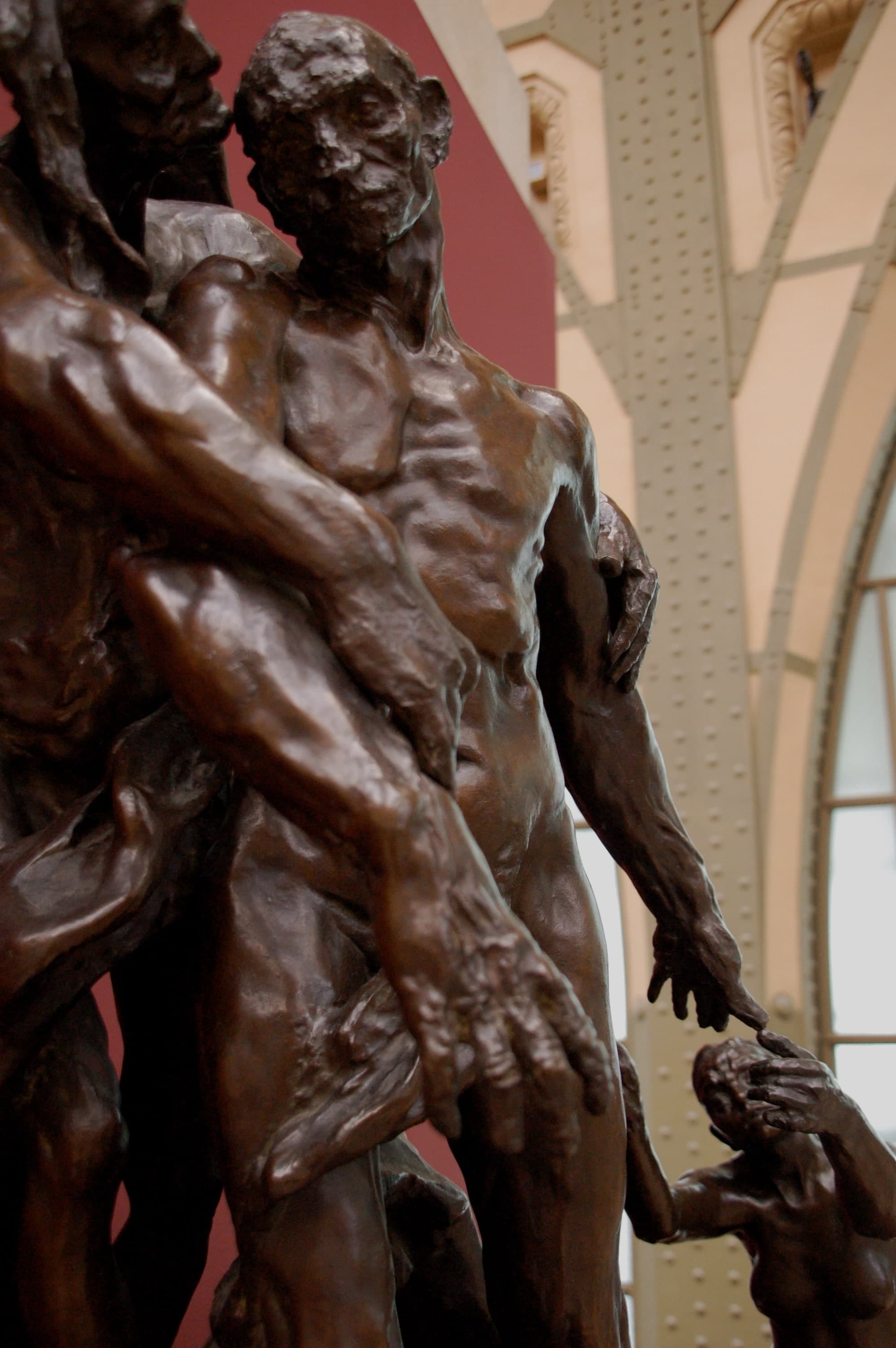
The photograph is taken from below and close in, so the group fills the frame from the man's waist upwards. It shows the part of the sculpture every account of it returns to: the hands that do not meet.
1.His head is turned away from the figure he is leaving
The head is bald and left rough, with the tool marks standing in the bronze. It is tipped down and turned to the left, in the direction he is being taken. From this angle his face is almost hidden, and he is not looking back.
2.Old Age comes over his shoulder
A second face appears at the top of the frame, gaunt and in profile, rising behind his shoulder under a fall of drapery. The Musée d'Orsay describes old age pulling the man vertiginously forward, and this is the head doing the pulling.
3.One arm crosses his chest
A thin arm comes in from the left and lies diagonally across his chest. It reads as a hold rather than an embrace: the forearm is pressed flat to his body and the elbow is lost in the drapery behind him.
4.A second hand opens across his hip
Lower down, a large hand opens across his hip with the fingers splayed and the knuckles raised. Camille Claudel modelled it bigger in proportion than the face above it, and at this angle it is the most detailed passage in the photograph.
5.His own hand goes down and back
His right arm hangs down at the right of the frame and the fingers extend, pointing down and back rather than forward. The Musée d'Orsay calls it an impotent hand stretched towards youth. The arm is straight and the wrist is slack.
6.The gap is a few centimetres of air
Two small hands come up from the bottom right corner, palms open and fingers reaching. They stop short of his. The distance is a matter of centimetres, and the whole composition is built to hold that distance open.
Timeline
1893–95
Camille Claudel models a first version of the three-figure group, known now only from plaster. She describes it to her brother Paul Claudel as her group of three figures.
1895
The French state commissions the group, after Auguste Rodin approaches the Director of Fine Arts on her behalf.
1898
The second version is finished and paid for. Camille Claudel does not deliver it, and the bronze is never ordered.
1899
The plaster of the second version is exhibited.
1902
Captain Tissier commissions the first bronze at his own expense. Thiébaut Frères, Fumière et Gavignot cast it and mark it first proof.
1903
Shown at the Salon of the Société des artistes français as number 2658.
1907
Eugène Blot begins selling a smaller bronze reduction of the group.
1913
Frédéric Carvilhani casts a second, larger bronze. The plaster model disappears in the process. Camille Claudel is committed to an asylum the same year.
1952
Paul Claudel gives the Carvilhani bronze to the Musée Rodin, where it is S.01380.
1982
The Musée d'Orsay buys the 1902 bronze from André Tissier, the son of the man who commissioned it. He gives the museum eight letters from Camille Claudel to his father at the same time. The accession number is RF 3606.
2023–24
Shown in the Camille Claudel exhibitions at the Art Institute of Chicago and the J. Paul Getty Museum.
Where to see it
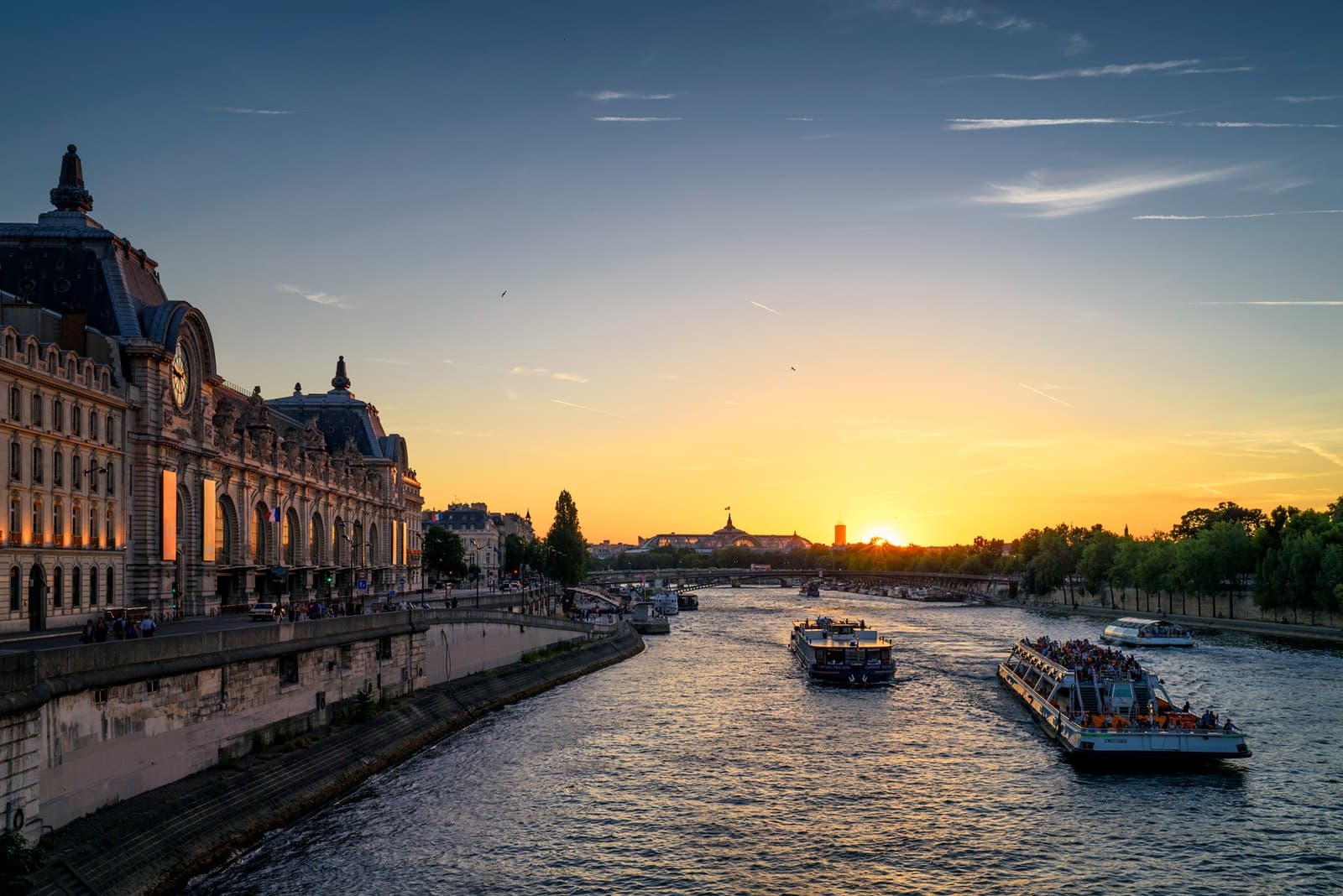
Musée d'Orsay
Esplanade Valéry Giscard d’Estaing, 75007 Paris, France
The Musée d'Orsay places it on the middle level, among the sculptures of 1880–1910. Displays change, so check the museum's own object record before travelling to see it.
Plan your visitFrequently asked questions
Where is Camille Claudel's The Age of Maturity?
The first bronze is at the Musée d'Orsay in Paris, accession number RF 3606, on the middle level among the sculptures of 1880–1910. A larger bronze cast by Frédéric Carvilhani is at the Musée Rodin as S.01380, and a smaller bronze reduction sold by Eugène Blot is at the Musée Camille Claudel at Nogent-sur-Seine.
What does The Age of Maturity show?
Three figures on one base. An old woman leads a naked middle-aged man away to the left, and a young woman kneels behind him with both arms stretched out, not touching him. Camille Claudel called the kneeling figure L'Implorante, the Imploring Woman, and had it cast on its own as well.
Is The Age of Maturity about Camille Claudel and Auguste Rodin?
It has been read that way since it was made, and the Musée d'Orsay states the reading: Auguste Rodin drawn away by his older companion Rose Beuret, with Camille Claudel reaching after him. Her brother Paul Claudel wrote that the kneeling woman was his sister. The museums also describe the subject as destiny and the passing of time, and both descriptions hold.
Why did the French state never cast The Age of Maturity?
No reason was published. The state commissioned the group in 1895, after Auguste Rodin approached the Director of Fine Arts for her, and the Musée Rodin records that the work was completed and paid for by 1898 but never delivered by the artist. The bronze was not ordered. Captain Tissier paid for the first cast privately in 1902.
How big is The Age of Maturity?
The Musée d'Orsay bronze is 114 centimetres high, 163 wide and 72 deep, and weighs 327 kilograms in three parts. The later Musée Rodin cast is larger, at 121 by 181.2 by 73 centimetres, and the Blot reduction is much smaller, 61.5 by 85 by 37.5 centimetres.
How many versions of The Age of Maturity are there?
Two compositions. In the first, of about 1894–95 and surviving only as plaster, the man is still in contact with the young woman. In the second he is pulled clear of her, and that is the version every bronze follows. Early sketches also had a leaning tree above the group, which Camille Claudel removed.
What is written on the Musée d'Orsay bronze?
It is signed C. Claudel on the front of the terrace. On the back of the wave-shaped base the foundry stamped THIEBAUT FRERES / FUMIERE et GAVIGNOT / PARIS / 1re Epreuve — first proof, which is how the museum knows this is the earliest cast.
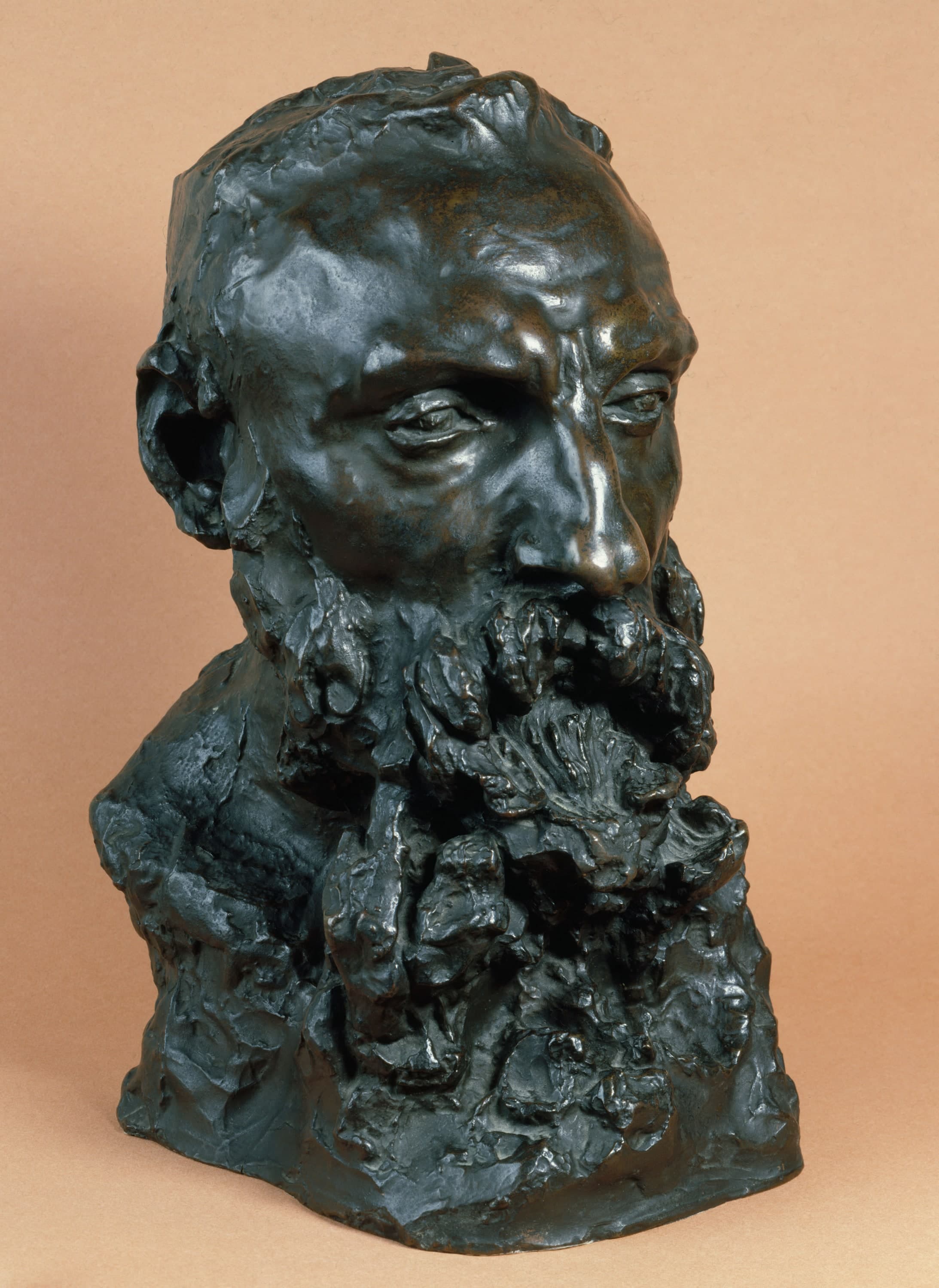
More by Camille Claudel
If you like Camille Claudel
Explore sculptors from the same movements and circles.
Arman
French-American artist, lifelong friend of Yves Klein, and a founder of New Realism.
View artist
Jean Arp
Strasbourg-born sculptor and poet — Hans in German, Jean in French, both all his life — who co-founded Dada at the Cabaret Voltaire in 1916, composed collages by dropping torn paper 'according to the laws of chance', and settled at Meudon outside Paris in a house his wife Sophie Taeuber-Arp designed.
View artist
Frédéric Auguste Bartholdi
Frédéric Auguste Bartholdi was a French sculptor best known for designing the Statue of Liberty, dedicated in New York Harbor in 1886. Born in Colmar and based in Paris, he created public monuments that gave visible form to ideas of freedom, resistance and national memory. His other major works include the Lion of Belfort and the fountain in Lyon's Place des Terreaux.
View artist
References
The sources below include collection records, catalogues, scholarly research, and primary materials that informed this page. They document The Age of Maturity, its making, and its place in cultural history.


1L'Age mûr — Camille Claudel, accession RF 3606
WebsiteMusée d'Orsay, 2026Used forThe holding museum's record: the 1895 commission, the Tissier bronze of about 1902, the foundry inscription, the dimensions and weights, the provenance, and the Paul Claudel quotation.
2The Age of Maturity or Destiny or The Path of Life or Fatality
WebsiteMusée Rodin, 2026Used forThe Musée Rodin on the first version of 1894–95, the undelivered state commission, the Carvilhani cast of 1913 and the lost plaster.
3L'Âge mûr
WebsitePanorama de l'art, Réunion des musées nationaux — Grand Palais, 2017Used forIsabelle Bonithon's analysis for the Ministry of Culture's Panorama de l'art: the two versions, the tree dropped from the sketches, and the diagonal composition.
4L'Âge mûr
WebsiteMusée Camille Claudel, Nogent-sur-Seine, 2026Used forThe Musée Camille Claudel's own Blot cast number 3, and the bronze reduction Eugène Blot sold from 1907.
5Camille Claudel — explore the exhibition
WebsiteJ. Paul Getty Museum, Los Angeles, 2024Used forThe J. Paul Getty Museum's 2024 exhibition entry, which dates the model to 1899 and the cast to 1902 and names the foundry.
6Camille Claudel
WebsiteMusée Rodin, 2026Used forWeb source consulted for documented facts and historical context presented on the The Age of Maturity page.
These references provide the documented foundation for this work's history and interpretation. Claim-level citations remain attached to the specific claims they support.
 Explore more resources