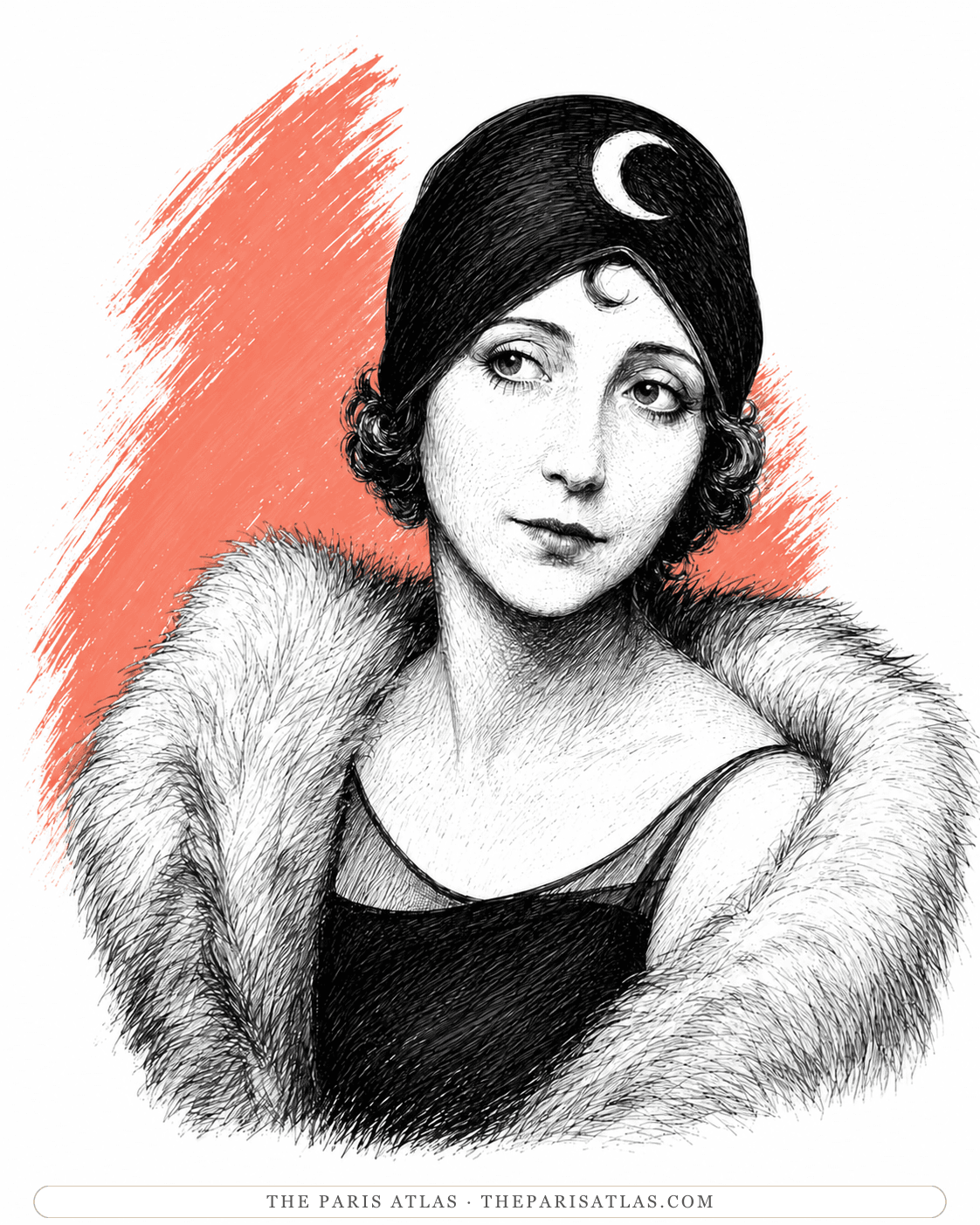


The Diary of Anaïs Nin, 1955–1966
by Anaïs Nin
The long approach: Alan Swallow rescues the novels, the diary is readied at last for print, and the volume ends on the edge of fame.
- 1976
About Anaïs Nin
The story, briefly
Spoiler-freeThe sixth volume is the making-ready: travels through Europe and back, the last continuous-novel books written and gathered, Alan Swallow taking on the whole neglected list, and — the decade's real drama — the diary itself being prepared for publication: the decades of pages reread, the living consulted, the great editing begun with Gunther Stuhlmann. It ends in 1966, at the exact threshold the reader knows is coming: the first volume in press, and sixty-three years of obscurity about to end. (A diary — the closing pages wait behind the reveal.)
The story, in more detail
Every long story about recognition needs the chapter where the machinery finally turns, and this is Nin's. Its quiet hero is Alan Swallow, the Denver publisher who believed in unfashionable books as a matter of principle: he gathered her scattered, out-of-print novels under one roof, issued Cities of the Interior as the single work she had always claimed it was, and gave the fiction a permanent address. Seduction of the Minotaur and Collages both arrive inside this volume's span.
The deeper current is the diary turning to face itself. After decades as the private continent, it becomes a manuscript: Nin rereading her lifetime, weighing what the living could bear, working with Stuhlmann on the cuts and the shape. The entries about editing the diary inside the diary are the volume's strangest, best material — the work examining its own body — and they build to one of the great cliffhangers in autobiography: the volume closes with publication imminent, on the last days of the unknown Anaïs Nin.
The full story
1955–1966: the travel years — Europe revisited, the world widening as the fiction winds down; Swallow's rescue of the novels and the assembly of Cities of the Interior; Collages written as a farewell to fiction (though the diary doesn't yet know it); and the long, careful conversion of the private diary into a publishable book, with all the negotiations — legal, familial, artistic — that the pages themselves record.
How it ends — spoilers ahead
The final entries stand at the door: the first volume of the Diary edited, accepted, and going to press for spring 1966. After eleven hundred pages of preparation across this volume, the diary closes on the eve of its own publication — the woman who had written in private for half a century about to become, at sixty-three, the most public private writer alive. The seventh volume opens on the other side of that door.
Themes and analysis
The world opens outward
The foghorn passage lets a change in listening stand for an altered relation to the world. Once, departing ships seemed to announce journeys Nin could not take; now the same sounds suggest voyages still possible. Nothing in the harbor needs to change for its meaning to shift. Yet the exchange with Bogner preserves a distinction between feeling freer and having solved practical problems. The diary presents hope as a new way of approaching obstacles, not evidence that they have disappeared. Travel begins here as an interpretation before it becomes movement.
The private diary becomes a book
Stuhlmann opens his preface with Nin's dream of a blinding light at her door. Public visibility appears first as a threat to the shelter in which writing has grown. His later account of pseudonyms, omissions and expanded portraits makes editing an attempt to manage that exposure, not simply shorten a manuscript. The diary's passage into print consequently involves a tension between disclosure and responsibility: how much of a shared life can one writer offer to strangers? The preface proposes craft as a response without making the ethical question disappear.
Why we recommend it
The Swallow chapters
A portrait of the rarest figure in publishing: the man who keeps unfashionable books alive on principle.
Autobiography's cliffhanger
A diary closing on the eve of its own publication — the form has few stranger or better endings.
The last of the fiction
Seduction of the Minotaur and Collages arrive inside these years — the novelist signing off inside the diarist's record.
What this book explores
Timeline
1959–1961
Swallow takes on the list; Cities of the Interior and then Seduction of the Minotaur appear.
1964
Collages, her last fiction, is published mid-volume.
1965–1966
The diary is edited for publication with Gunther Stuhlmann; the volume closes with the first Diary in press.
1976
Harcourt Brace Jovanovich publishes the sixth volume — the last in her lifetime.
Book editions
Hardcover
- Hardcover
- Harcourt Brace Jovanovich
- 1976
Paperback
- Paperback
- Harcourt / Harvest
Reader reviews
Readers may also like


The Diary of Anaïs Nin, 1955–1966: frequently asked questions
What years does this volume of the Diary cover?
1955 to 1966 — the travel years, Alan Swallow's rescue of her fiction, and the long preparation of the diary itself for publication, ending just before the first volume appeared.
When was it published?
1976, by Harcourt Brace Jovanovich, edited with Gunther Stuhlmann — the sixth volume of the published Diary, and the last to appear in her lifetime.
Who was Alan Swallow?
A Denver publisher devoted to keeping serious, unfashionable writers in print. He collected Nin's scattered novels, published Cities of the Interior as one work, and gave her fiction its permanent home.
Does the volume cover the Diary's publication?
It ends on the very eve of it — the first volume edited and in press for spring 1966. The publication and the fame that followed open Volume Seven.
What fiction did Nin write in these years?
Seduction of the Minotaur (1961) and Collages (1964), her last novel — both published by Alan Swallow inside this volume's span.
If you like Anaïs Nin
Explore authors with a similar voice, perspective, and influence.

Henry Miller
The entangled careers of the Villa Seurat: she financed and prefaced his scandal, he detonated her prose — and each wrote the other into the century's record.
View author
Louis-Ferdinand Céline
The doctor of the Paris slums who wrote the century's blackest, funniest novel — and changed the sound of French prose.
View author
Martha Gellhorn
War correspondent who covered the Spanish Civil War, D-Day, and conflicts across five more decades; Hemingway's third wife, 1940–1945.
View author
References
References
The sources below include the primary text, editions, scholarship, archival materials, and other records that informed this page. They document The Diary of Anaïs Nin, 1955–1966, its publication, and its place in literary history.


1The Diary of Anaïs Nin, 1955–1966
NovelAnaïs Nin, 1976Used forThe primary text represented by this page, used for descriptions of the work’s contents and for any quoted passages shown here.
2Anaïs Nin — biography
WebsiteThe Anaïs Nin FoundationUsed forUsed to verify The Diary of Anaïs Nin, 1955–1966's bibliographic context and its place within Anaïs Nin's published work.

3Anaïs Nin Papers — diary, March–September 1938
ArchiveUCLA Library Special CollectionsUsed forUsed for independent archival, institutional, or historical context surrounding Anaïs Nin and The Diary of Anaïs Nin, 1955–1966.
4Anaïs Nin: A Biography
BiographyG. P. Putnam's Sons, 1995Used forUsed to cross-check chronology, publication history, and the circumstances in which The Diary of Anaïs Nin, 1955–1966 appeared.
5Anaïs: The Erotic Life of Anaïs Nin
BiographyLittle, Brown, 1993Used forUsed for an additional scholarly or biographical perspective on The Diary of Anaïs Nin, 1955–1966 and Anaïs Nin's wider career.
6The Diary of Anaïs Nin, 1955–1966 — preface and opening diary preview
WebsiteEverand, 1976Used forUses the Winter 1955–1956 foghorn exchange and Stuhlmann's explicitly attributed preface on exposure and editing. No later Venice scene, closing entries or complete-volume collation is claimed.
i
Why these sources are here
The primary text is the baseline reference for every book page. Additional references document publication history, interpretation, and historical context where that evidence is available.
 Explore more resources