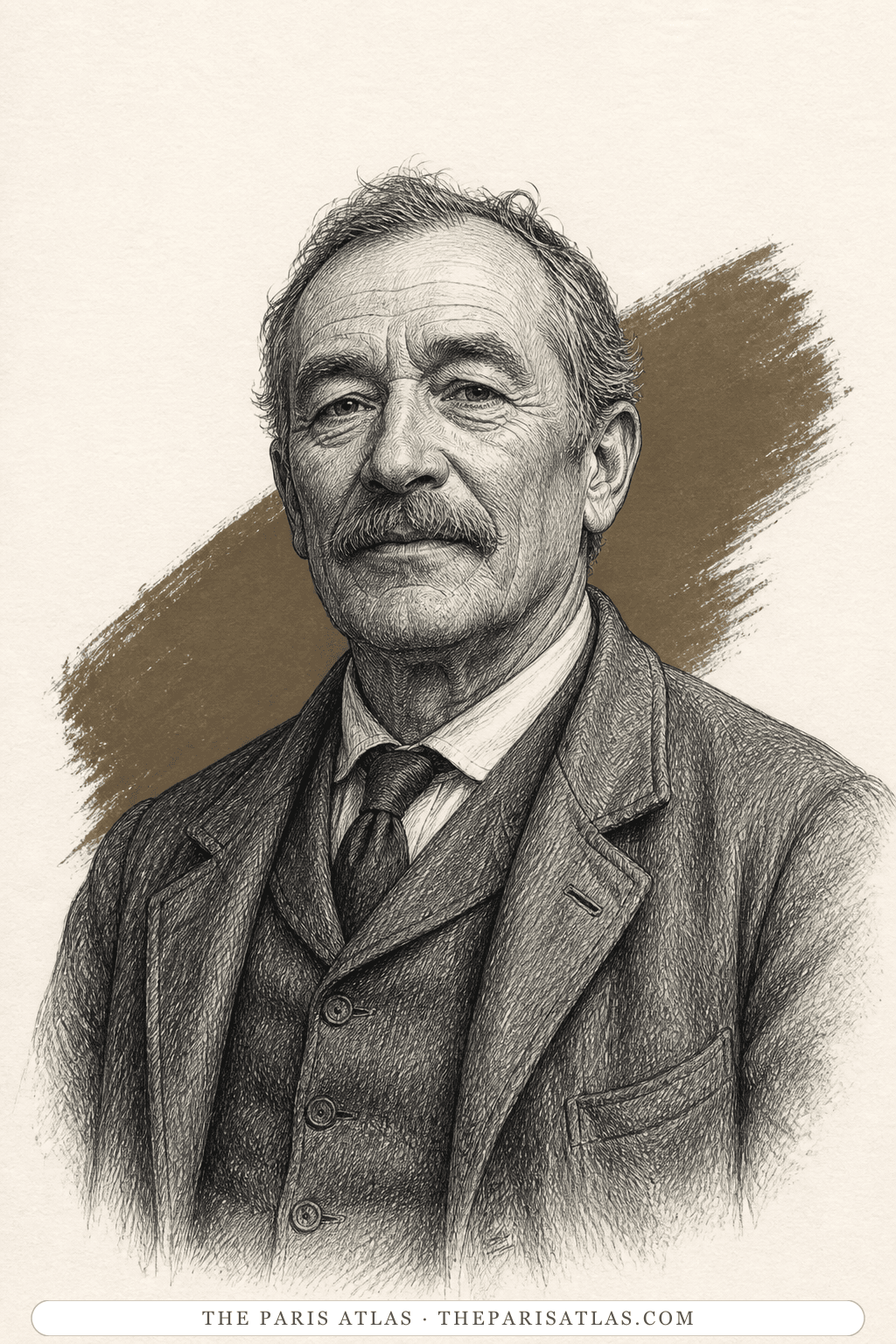
Bocage
The long-serving manager who keeps Michel’s estate running while Michel loses interest in its responsibilities.
To keep La Morinière orderly, financially sound, and respectable through methods he believes have served the family well.
The book

At a glance
- Bailiff and estate manager
- La Morinière
- Father of Charles and Alcide
- Served Michel’s family since Michel’s childhood
Who they are in the book
Spoiler-freeBocage is the elderly manager of La Morinière, Michel’s estate in Normandy. He has known Michel since childhood and keeps the estate functioning through the owner’s long absence. Before the newlyweds arrive, he airs and furnishes rooms, clears paths, fills vases with flowers, and prepares the large house for them.
Michel finds Bocage talkative and self-important, especially because he repeatedly insists that he is honest. Yet Marceline checks the estate’s accounts and finds no evidence of theft. Bocage’s real weakness is that he is old-fashioned, overworked, and slow to improve the farms—not that he is dishonest.
As Michel stops caring about his duties as an owner, Bocage continues doing the daily work. He reports on crops, manages workers, removes a dangerous drunk, protects the ducks during migration season, and confiscates poachers’ traps. Michel finds these tasks dull because Bocage is preserving the order Michel now wants to disrupt.
How Bocage Is Portrayed
- Old and constantly busyBocage bustles through the house and estate giving directions, arranging practical details, and reporting what needs attention.
- Talks past the pointOnce Bocage starts talking, he is hard to stop. His long speeches and repeated praise of his own honesty irritate Michel.
- Attached to the familyHaving known Michel from childhood, he absorbs sharp treatment without readily breaking loyalty or treating every quarrel as final.
- Practical to a faultHe understands motives through work, money, reputation, and property. Michel’s attraction to waste and self-sabotage is almost unintelligible to him.
Bocage dismisses workers he considers dangerous and rewards Alcide for discovering snares, unaware that Michel has secretly financed the poaching. Even when Bute claims Michel gave him money, Bocage cannot imagine a landlord deliberately paying to damage his own estate and treats the claim as a thief’s excuse.
Charles sees the truth and confronts Michel. Rather than accept the duties father and son defend, Michel announces that he will sell La Morinière. Bocage’s work may be ordinary, but it shows the real cost of Michel’s behavior: Michel feels free to damage an estate that other people have spent years maintaining.
If you like The Immoralist


If you like André Gide
Explore authors with a similar voice, perspective, and influence.

Henry Miller
The Brooklyn dropout who arrived in Paris broke at thirty-eight and wrote the exuberant, banned books that ended American censorship.
View author
Simone de Beauvoir
French writer and philosopher whose novels, memoirs, and social analysis examined freedom, gender, responsibility, aging, and the material conditions that shape a life.
View author
Albert Camus
French Algerian novelist, essayist, journalist and playwright who used the absurd and revolt to ask how people should live without false consolation.
View author