The Open Window
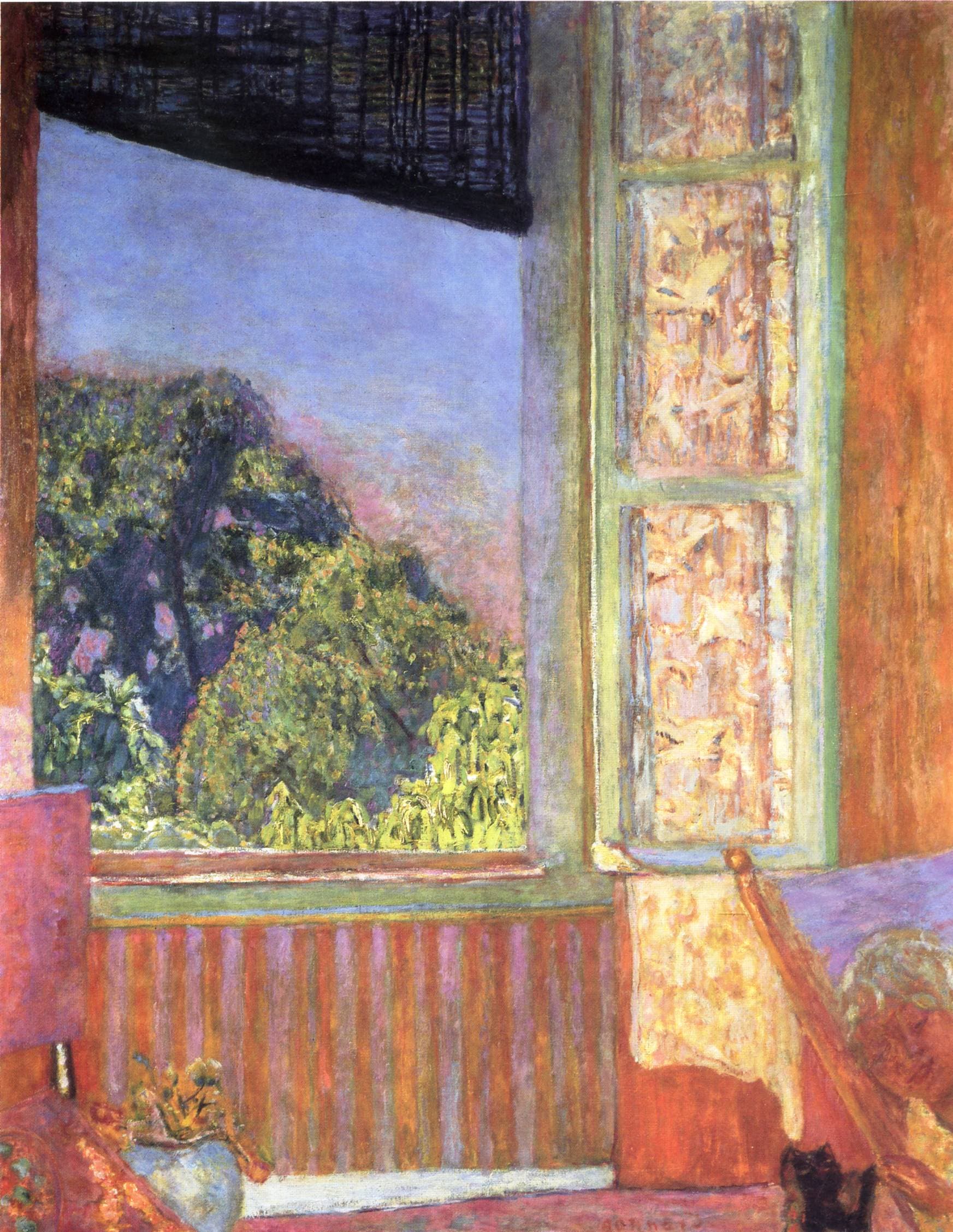
A window and what can be seen through it hold the centre of this canvas. Pierre Bonnard painted the view from a room in his house in Normandy: a dark blind across the top, lilac-blue sky, and a great mass of trees and flowering shrubs. The room itself is reduced to red-orange wall, a striped panel below the sill and a hinged shutter on the right. Duncan Phillips bought the painting in 1930, and it is one of the best-known works at The Phillips Collection in Washington.
- 1921
- Oil on canvas
- The Phillips Collection, Washington, D.C.Washington, D.C., United States
About Pierre Bonnard
What the painting shows
The window opening and the view through it take up about a quarter of the picture, and the window is pushed fully open. A near-black blind hangs across the top of it in a wedge, thin at the left and deep at the right, cutting off the sky. Below that the sky is a flat lilac blue. Below the sky a mass of trees fills the opening from edge to edge, painted in short green, yellow, purple and pink strokes, highest at the left and sloping away to the right.
Everything indoors is red or orange. The wall on the right is a single warm field. Under the sill a panel of vertical stripes drops to the floor across the left half of the canvas, and the sill itself is a bar of pale green. The hinged shutter that fills the right of the window is painted in broken cream and pink over a green frame, so it reads as light rather than as a solid object.
Two things sit in the bottom corners and are easy to lose. At the left a pale blue vase of yellow flowers stands on a patterned red cloth. At the right, The Phillips Collection says it takes a moment before a black cat and a woman become visible, and puts that down to the colour contrast rather than to shadow. The cat's two ears and pale eyes read clearly against the orange-red floor, and above it a head of fair hair tips back, its features barely drawn.
The painting is roughly 118 by 96 centimeters, so a viewer standing in front of it meets the window at something close to its own size.
The house at Vernonnet
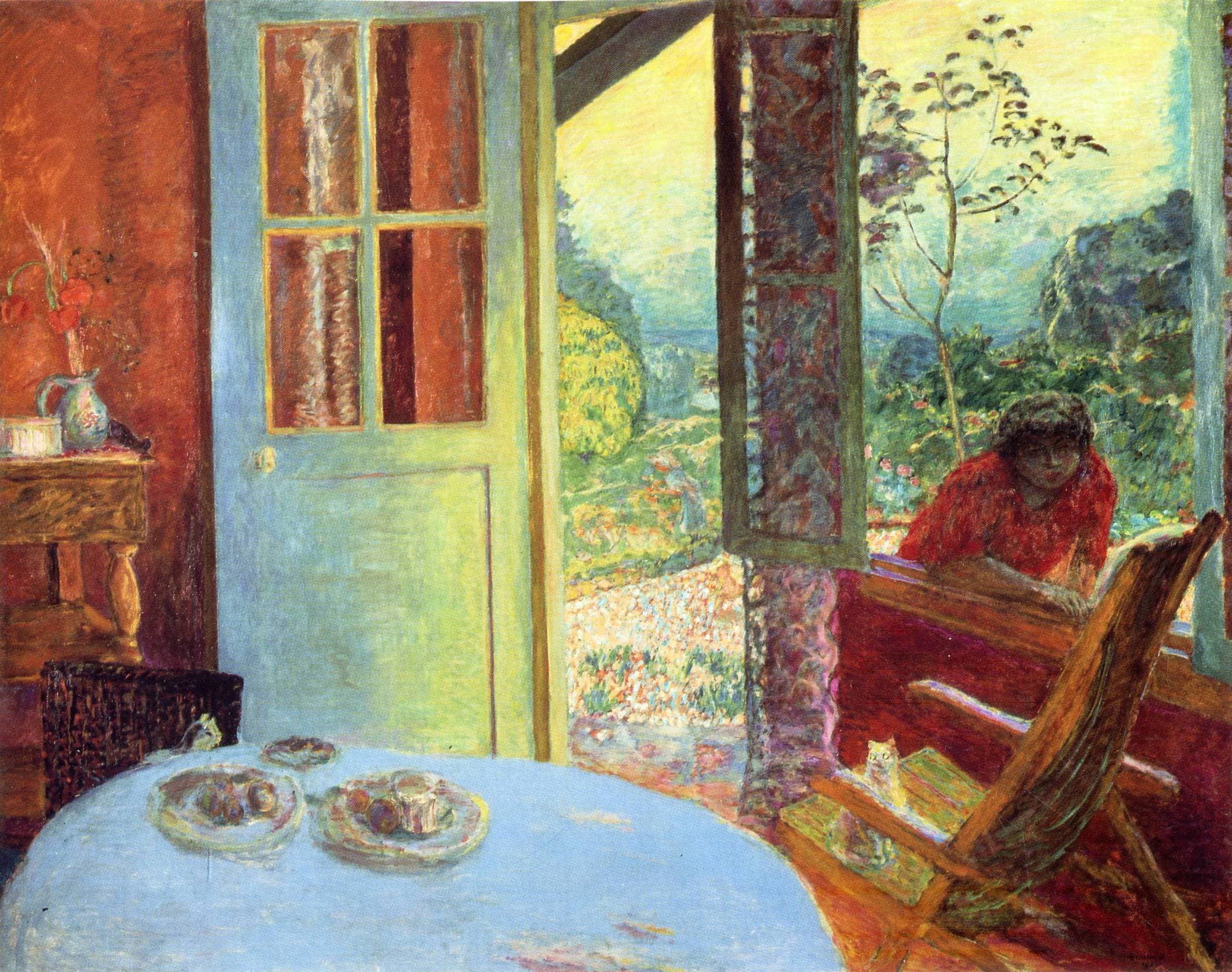
The Phillips Collection describes the setting only as a room in the artist's house in Normandy. The house Pierre Bonnard owned there was Ma Roulotte, above the Seine at Vernonnet, bought in 1912, and no museum ties this particular canvas to a named room in it. Dining Room in the Country, painted at Ma Roulotte eight years earlier, looks out of a glazed door onto the terrace and the valley; here the view stops at the trees.
Open windows and doors run through Bonnard's work from the 1900s onward. They let him put two kinds of light in one rectangle, and they give a painting two depths at once: a wall a meter away and a tree line a hundred meters off.
Painted from memory
Bonnard did not paint at the window. He drew what he saw in small diaries and then worked from those notes later, often far from the room, a method the Museum of Modern Art sets out in its account of his drawings. The Phillips Collection makes the same point in its own words: he painted from memory rather than from life, which it says accounts for the dreamlike quality of his pictures.
The consequence is visible in the color rather than in the drawing. Indoors and outdoors are pushed to opposite extremes, red-orange against blue-green, further apart than a single glance out of a real window would give.
How Washington got it
Duncan Phillips acquired the painting in 1930, nine years after it was made and seventeen years before Pierre Bonnard died. Phillips had found his work at the Carnegie International in Pittsburgh in 1925 and bought two paintings that year, Woman with Dog and Early Spring. Bonnard was still working, mostly in the south of France, and was not yet the standard fixture of American museum collections he later became.
The Phillips Collection gave it the object number 0172 and shows it in Gallery 202 of the Goh Annex. The museum put Pierre Bonnard at the center of Bonnard's Worlds, on from 2 March to 2 June 2024 and co-organised with the Kimbell Art Museum in Fort Worth. The Open Window hung in the section that exhibition called Window.
In 2023 conservators at The Phillips Collection removed a synthetic varnish that had gone dull and gray, restoring the matte surface Bonnard wanted. Examining the canvas with an infrared camera, they found that he used little if any black pigment. The darkest passages, the cat included, are mixtures of blue and red, which is why the museum now prints the word black in quotation marks.
Close reading
Reading the work, detail by detail
The opening and the view through it take about a quarter of this canvas, not half. The crops measure that, and go looking for the cat and the woman that The Phillips Collection says take a moment to appear.
1.The blind is a wedge, deepest at the right
The blind is the darkest thing in the painting, and its weave is still legible inside the black. Its lower edge slopes downward from left to right, so the wedge is thin at the left and deep at the right.
2.Trees and sky, and no hill at all
Beyond the window there is foliage and sky and nothing else. A dark trunk runs up through the tree mass, pink blossom shows in it, and a pinker haze of more distant planting takes over at the right. No hillside and no building appear.
3.The shutter reads as light
A pale green frame divides the shutter into panels, and each is filled with broken cream, yellow and pink. Nothing in it is painted as a flat solid, so it registers as sunlight on a surface rather than as an object.
4.Yellow flowers in a pale blue vase
The vase is a pale blue-white round body, and the flowers in it are yellow with a few green touches. It stands on a red surface carrying a patterned cloth, with a small dark upright form behind it at the left.
5.The cat, in a warm corner rather than a dark one
Two pointed ears and two pale eyes make the cat unmistakable once found. Everything around it is orange-red and fairly light, so it stands out by contrast rather than by sharing a shadow. Phillips conservators reported in 2023 that its dark is mixed from blue and red, not black.
6.A head of fair hair, tipped back
The head is clear enough: pale gold-green hair above, a face tipped back below it, against a lilac field. The features are barely drawn, and the face is painted in the same warm oranges as the wall, which is what makes her hard to separate.
7.The sill, and the stripes below it
The sill is a single bar of pale green. Below it a panel of vertical stripes in red, orange, pink and mauve drops to the floor, and it runs only across the left half of the canvas rather than the whole width.
Timeline
1912
Bonnard buys Ma Roulotte at Vernonnet, above the Seine in Normandy.
1921
Paints The Open Window there, looking out from the room onto the valley.
1930
Duncan Phillips acquires the painting for his Washington museum, object number 0172.
2024
Shown at The Phillips Collection in Bonnard's Worlds, 2 March to 2 June, in the section the exhibition called Window.
Where to see it
The Phillips Collection, Washington, D.C.
1600 21st Street NW, Washington, DC 20009, United States
The museum's record gives Gallery 202 in the Goh Annex. Displays change, so check the collection page before traveling to see it.
Plan your visit on the museum’s official website (opens in a new tab)Frequently asked questions
Where is The Open Window by Bonnard?
The Phillips Collection in Washington, D.C., object number 0172, in Gallery 202 of the Goh Annex. Duncan Phillips acquired it in 1930.
What is the view in The Open Window?
The Phillips Collection says only that it is a room in the artist's house in Normandy, which was Ma Roulotte at Vernonnet, above the Seine, bought in 1912. The canvas shows a dark blind, lilac-blue sky and a mass of trees and flowering shrubs, with no hill or building in sight.
Who is the woman in the lower right corner?
The Phillips Collection places a black cat and a woman at the lower right corner, and says the blond woman may be Renée Monchaty, a model with whom Pierre Bonnard was involved during these years. The museum states this as a possibility rather than a fact. She is hard to pick out because her face is painted in the same warm oranges as the wall behind her, not because she sits in shadow.
How big is The Open Window?
118.1 by 95.9 centimeters, or 46 1/2 by 37 3/4 inches as The Phillips Collection gives them. The window opening and the view through it fill about a quarter of that area.
Is The Open Window an Impressionist painting?
No. Bonnard began in the Nabis, the Paris group formed in 1888 around Paul Sérusier, and he painted from drawings and memory rather than in front of the subject. The Phillips Collection notes the resemblance to Impressionism and then draws exactly that distinction.
Is this the same house as Dining Room in the Country?
Both were painted at Ma Roulotte in Vernonnet, the 1913 canvas looking out through a glazed door and this one through a window. The Phillips Collection names only Normandy for The Open Window, without naming the house. The 1913 painting is at the Minneapolis Institute of Art.
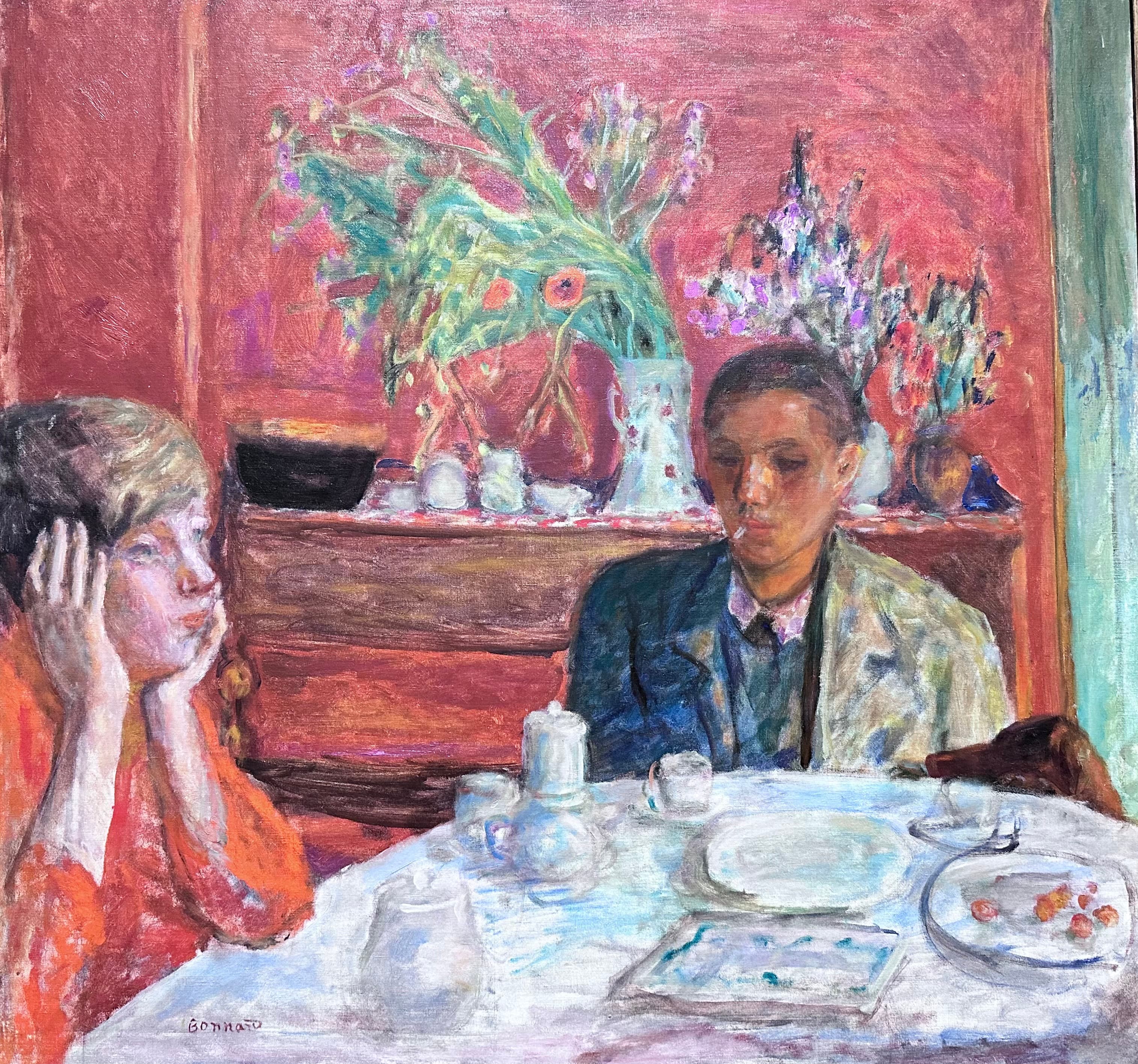
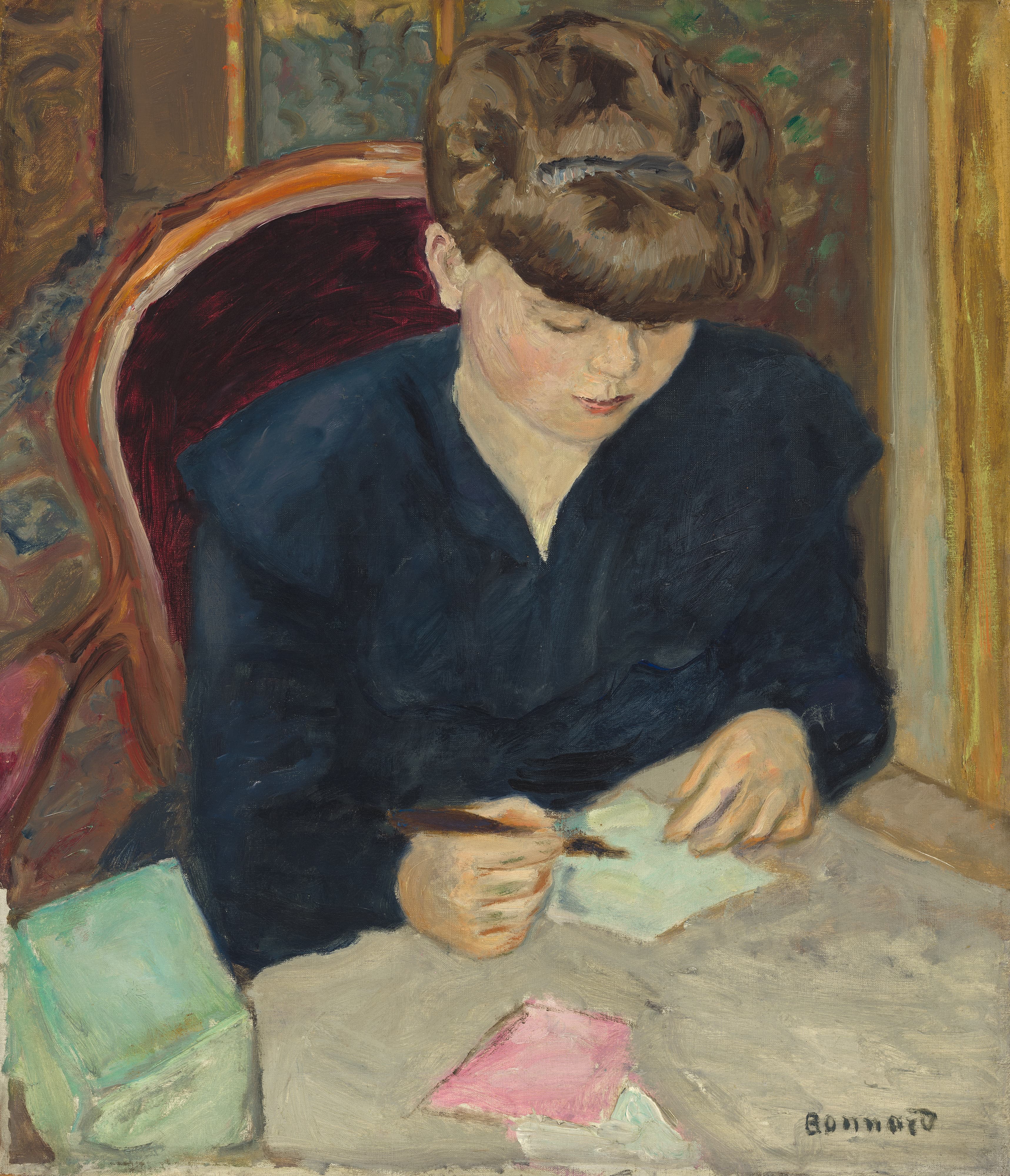
More by Pierre Bonnard
If you like Pierre Bonnard
Explore painters from the same movements and circles.
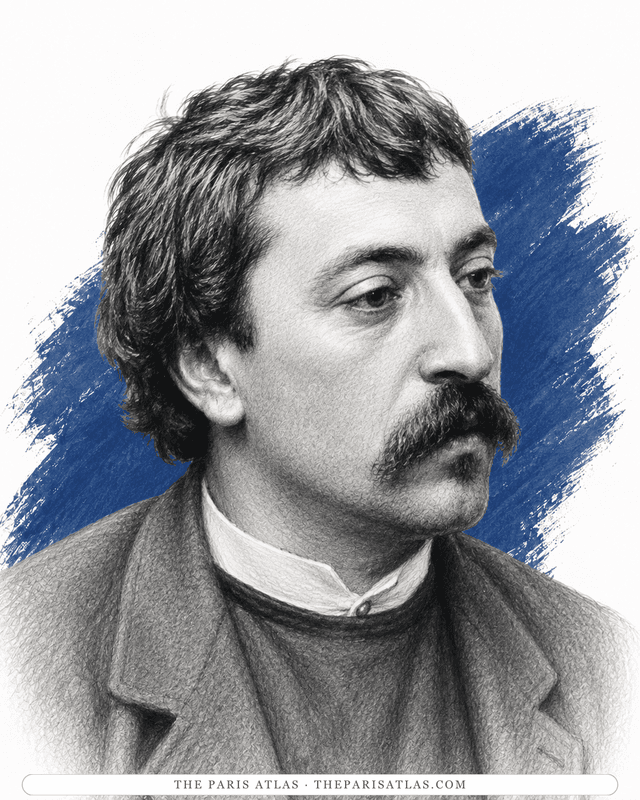
Paul Gauguin
Stockbroker turned painter who came into art through Camille Pissarro, showed with the Impressionists, and left Europe for Polynesia.
View artist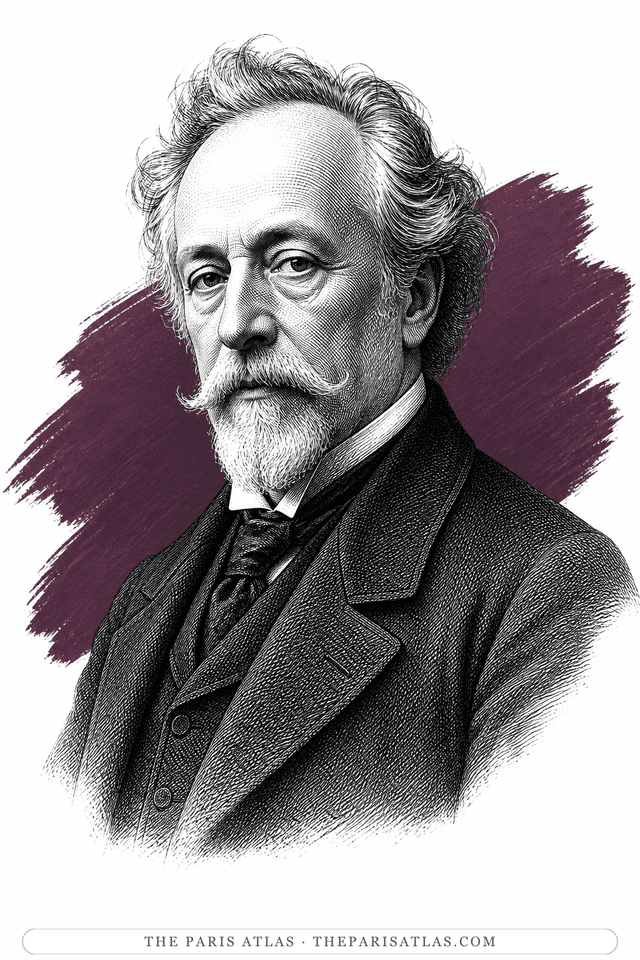
Gustave Moreau
Painter of jewelled myths — Salome, Oedipus, floating severed heads — who lived nearly his whole life in one Paris house, taught Henri Matisse and Georges Rouault at the Beaux-Arts, and turned the house into a museum before he died so the state would have to keep everything.
View artist
Edvard Munch
Norwegian painter of The Scream, who arrived in Paris in 1889 on a state scholarship to learn academic drawing from an anti-Impressionist professor, lost his father that November, and spent a bleak winter in the riverside suburb of Saint-Cloud writing down the vow that redirected his art — paint the moments when people are most alive, not the furniture around them.
View artist
References
The sources below include collection records, catalogues, scholarly research, and primary materials that informed this page. They document The Open Window, its making, and its place in cultural history.


1The Open Window
Official recordThe Phillips CollectionUsed forOfficial record used to verify names, dates, institutional details, or other factual information on this page.
2Bonnard's Worlds — digital press kit
Exhibition catalogueThe Phillips CollectionUsed forCatalogue scholarship used to verify attribution, provenance, chronology, and interpretive context for The Open Window.

3Bonnard's drawings and memory
WebsiteMuseum of Modern ArtUsed forWeb source consulted for documented facts and historical context presented on the The Open Window page.
4Pierre Bonnard — biography and chronology
WebsiteMusée BonnardUsed forWeb source consulted for documented facts and historical context presented on the The Open Window page.
5Nabis (art term)
WebsiteTateUsed forWeb source consulted for documented facts and historical context presented on the The Open Window page.
These references provide the documented foundation for this work's history and interpretation. Claim-level citations remain attached to the specific claims they support.
 Explore more resources