
Giovanni
An Italian barman from a village in the south, in Paris without secure papers, money or family after the death of his child. The room is his.
Not to be alone. He says it more than once and without decoration — "You know I cannot be alone. I have told you" — and the room is the argument he keeps making for it, torn apart and rebuilt for someone to live in it with him.
The book

At a glance
- Barman at Guillaume's bar in Paris; the room of the title is his
- A village on a hill in southern Italy, which he never names
- The vineyards at home, then the markets at Les Halles — "Nom de Dieu, quelle boulot!"
- In a former maid's room near Nation, windows painted white, at the far edge of Paris
- The day after burying his son, who was born dead
- A job and working papers, both of them Guillaume's to take back
Who they are in the book
Spoiler-freeGiovanni is a young Italian barman working in a Paris bar owned by a Frenchman called Guillaume. He is the man the narrator, David, falls in love with, and the room of the title is his: a former maid's room on the ground floor of a building near Nation, at the eastern edge of the city, with the window panes painted over with white cleaning polish so that nobody can see in.
He came to Paris from a village in southern Italy and arrived with nothing. He worked in the wholesale food markets at Les Halles, which he calls the worst job he has had, and he had no working papers at all until Guillaume gave him a job and the carte de travail that came with it. That arrangement is what the book turns on. Everything Giovanni has in France, he has because Guillaume allows him to keep it.
He is the most direct person in the novel. He argues without hedging, says what he wants, and is the only character who tells David plainly what David is doing.
How Giovanni Is Portrayed
- The first sight of himDavid watches him for some time before speaking to him. He is standing at the cash register with his elbow leaning on it and his fingers playing with his chin, "insolent and dark and leonine," looking out over a crowded room. David's image for it sets the terms between them for the rest of the book: "It was as though his station was a promontory and we were the sea."
- The argument about timeTheir first real conversation is a disagreement. David says Americans believe that, given enough time, things get settled. Giovanni says time is not something you use: "Time is just common, it's like water for a fish. Everybody's in this water, nobody gets out of it." What happens in it, he says, is that the big fish eat the little fish and the ocean does not care. David answers that a person can choose, and Giovanni laughs out loud at the word.
- How he got the jobHe met Guillaume in a cinema, at a western with Gary Cooper, and Guillaume came after him into the lobby with a long story about a scarf left on a seat. Giovanni's verdict on the performance is that "not even Garbo ever gave such a performance." He understood what the dinner invitation meant and went anyway, because by the day it came he had not eaten for a long time and was very hungry.
- How he describes the roomHe tries to warn David about it in the taxi, groping for a way to put it — "I must find some poetic figure" — then asks where the garbage of Paris goes and answers that it might very well be his room. What David finds there is wallpaper torn off in sheets and left on the floor, boxes of violin music, a cracked violin, a single rotting potato. He works out quickly that the disorder is not carelessness: "it was a matter of punishment and grief."
- The village, and the babyLate in the book he explains why he left Italy, at length and only once. He had a girl there and work in the vineyards, and they had a child who was born dead — a boy, grey and twisted, who never made a sound however hard they tried. Giovanni took the crucifix off the wall, spat on it and threw it on the floor while his mother and his girl screamed, and walked out of the village the next day. "That was the first time in my life that I wanted to die."
- What he finally says to DavidIn their last argument he stops defending himself and describes David instead, and it is the most accurate description in the novel: "You love your purity, you love your mirror." He tells David he has never loved anyone and never will, and names the reason he is being left — "You want to leave Giovanni because he makes you stink" — meaning that David cannot forgive him for being the thing David wants.
David's verdict on the newspaper coverage is that it printed how he did it in great detail, but never why: "Why was too black for the newsprint to carry and too deep for Giovanni to tell."
If you like Giovanni's Room


If you like James Baldwin
Explore authors with a similar voice, perspective, and influence.
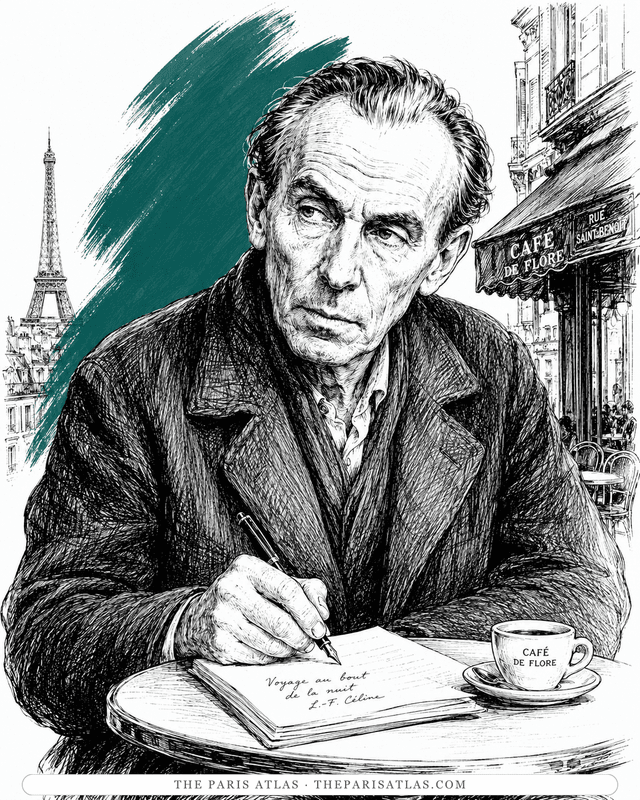
Louis-Ferdinand Céline
The doctor of the Paris slums who wrote the century's blackest, funniest novel — and changed the sound of French prose.
View author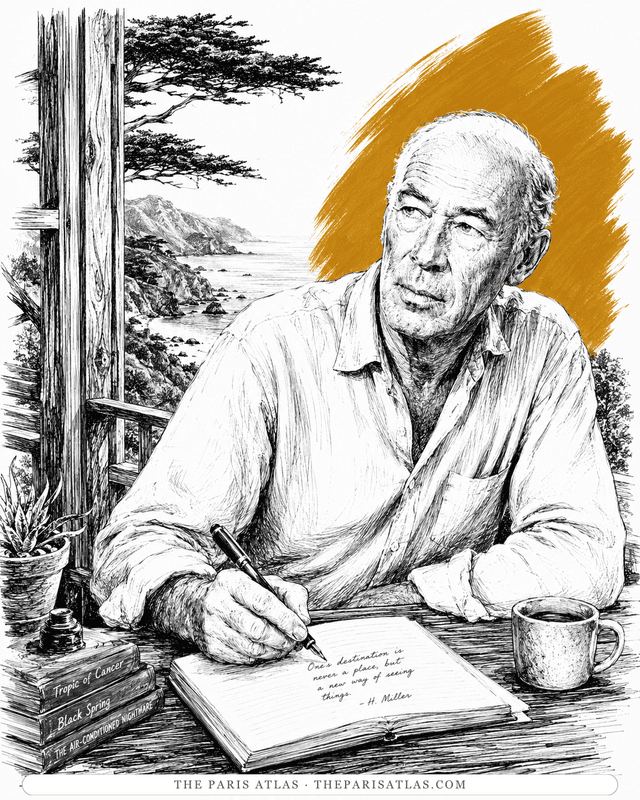
Henry Miller
The Brooklyn dropout who arrived in Paris broke at thirty-eight and wrote the exuberant, banned books that ended American censorship.
View author
Ernest Hemingway
Author of The Sun Also Rises and A Moveable Feast; his pared-down style, developed in 1920s Paris, became the most imitated in American prose.
View author