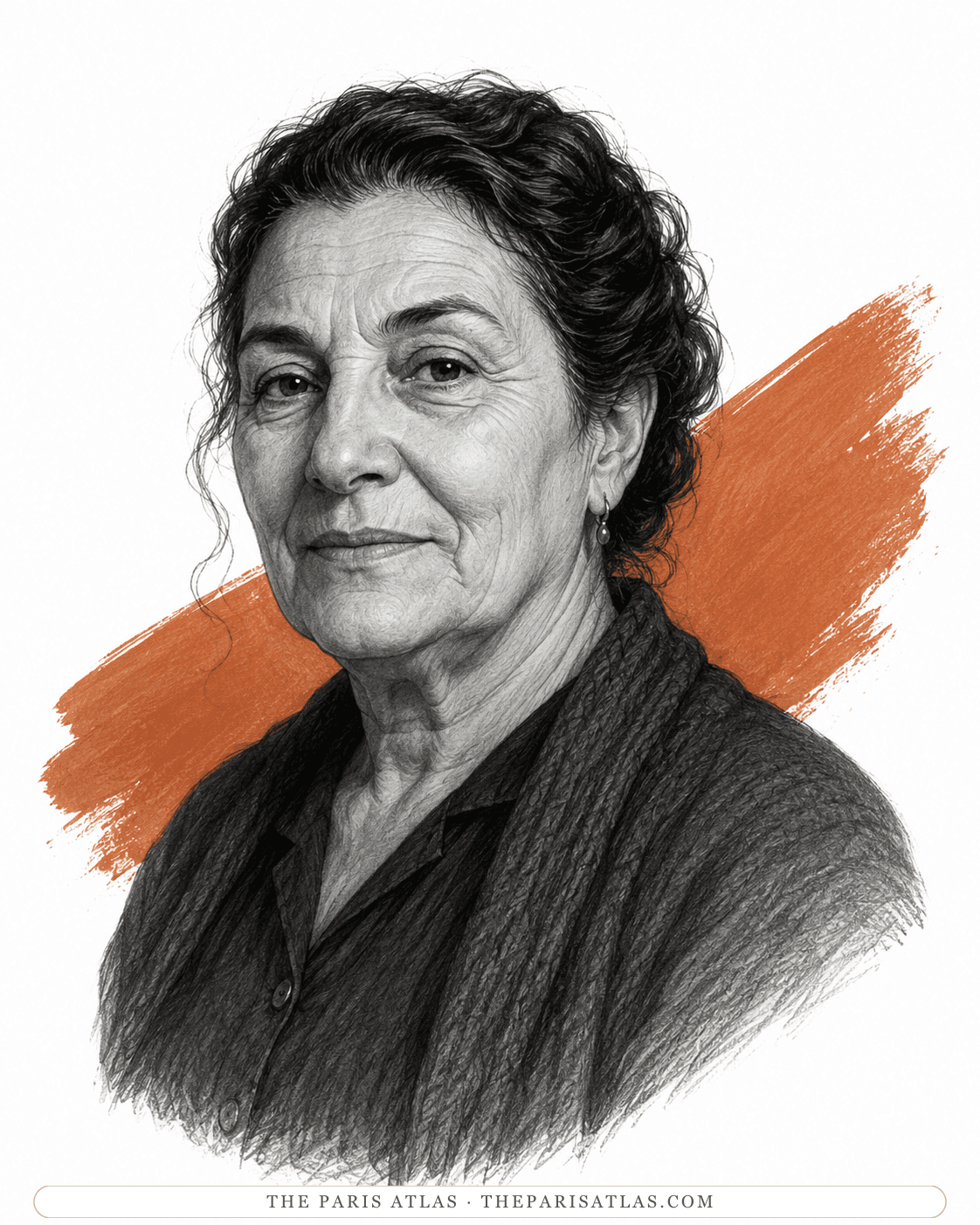
The caretaker
The Italian-born woman who looks after the rented house in the south of France. She advises David to marry, have children and pray, not knowing he has just destroyed exactly that.
For him to stop being alone in that house. She says it several ways in ten minutes — come and eat with us, find a good woman, get married, have children, say a prayer.
The book

At a glance
- Caretaker of the rented house in the south of France; one scene, on the final night
- Just across the border in Italy. She came to France as a very young girl
- A husband, and one surviving son of three. A grandson called Mario
- Mourning black, like most of the older women in the village, though her husband lives
- Anything about why he is alone in the house
Who they are in the book
Spoiler-freeThe caretaker is the woman who looks after the rented house in the south of France where the novel is narrated. She lives across the road with her husband. She is never named, and she has one scene, on the last night, when she comes over to take the inventory before David leaves in the morning.
She was born in Italy and came across the border as a very young girl. Like most of the older women in the village she wears mourning black, though her husband is alive. David expects a formality and gets an interrogation conducted entirely in kindness.
She is the last person he speaks to before the ending, and the only one in the book who treats him as somebody's son.
How The caretaker Is Portrayed
- The inventoryShe works through the household list with a short yellow pencil, room by room, not looking at him. She misses the two glasses he has broken. She does not miss anything else: the kitchen is suspiciously clean, and she has already checked with the tabac and with the bus driver, neither of whom has seen him for days. She lets him hear that she has checked.
- The advice"It is not good, it is not right for a young man like you to be sitting alone in a great big house with no woman." Then, more directly: "You must go and find yourself another woman, a good woman, and get married, and have babies." She apologises for speaking to him as though she were his mother, and he tells her, truthfully, that she is being very nice.
- What she has lostShe mentions it almost in passing and then moves off it. Three sons; two killed in the war; all their money gone in the same war. She says it nearly killed her husband and that he has never been the same. Her surviving son came from the north two years ago with a little boy called Mario, named for her husband, and they stayed about ten days. "We felt young again. Especially my husband."
- "Do you pray?"She asks it abruptly, near the end. He stammers that he does not, not often, and she tells him he must — even a little prayer from time to time, and to light a candle, because "if it were not for the prayers of the blessed saints one could not live in this world at all." She repeats it from the road as she leaves, which is the last thing anyone says to him in the novel.
Nothing happens to her; she goes home across the road.
If you like Giovanni's Room


If you like James Baldwin
Explore authors with a similar voice, perspective, and influence.

Louis-Ferdinand Céline
The doctor of the Paris slums who wrote the century's blackest, funniest novel — and changed the sound of French prose.
View author
Henry Miller
The Brooklyn dropout who arrived in Paris broke at thirty-eight and wrote the exuberant, banned books that ended American censorship.
View author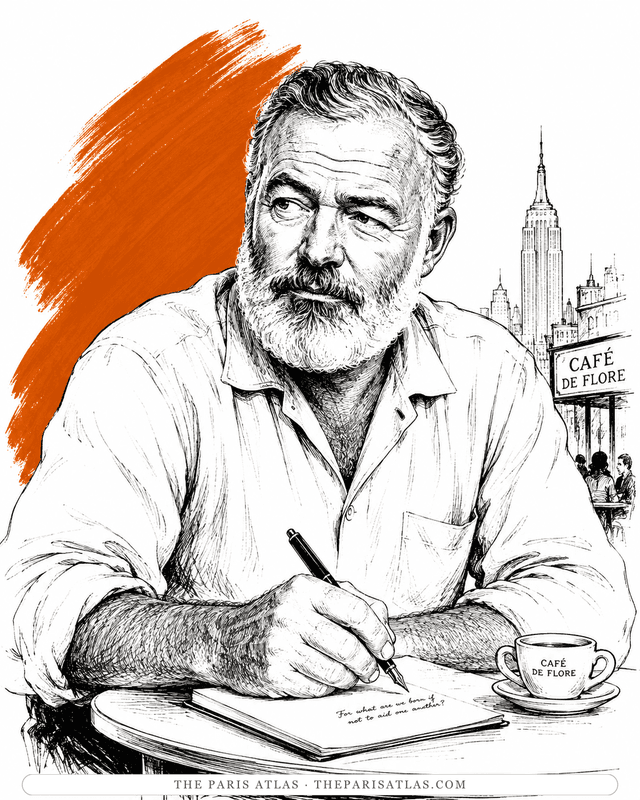
Ernest Hemingway
Author of The Sun Also Rises and A Moveable Feast; his pared-down style, developed in 1920s Paris, became the most imitated in American prose.
View author