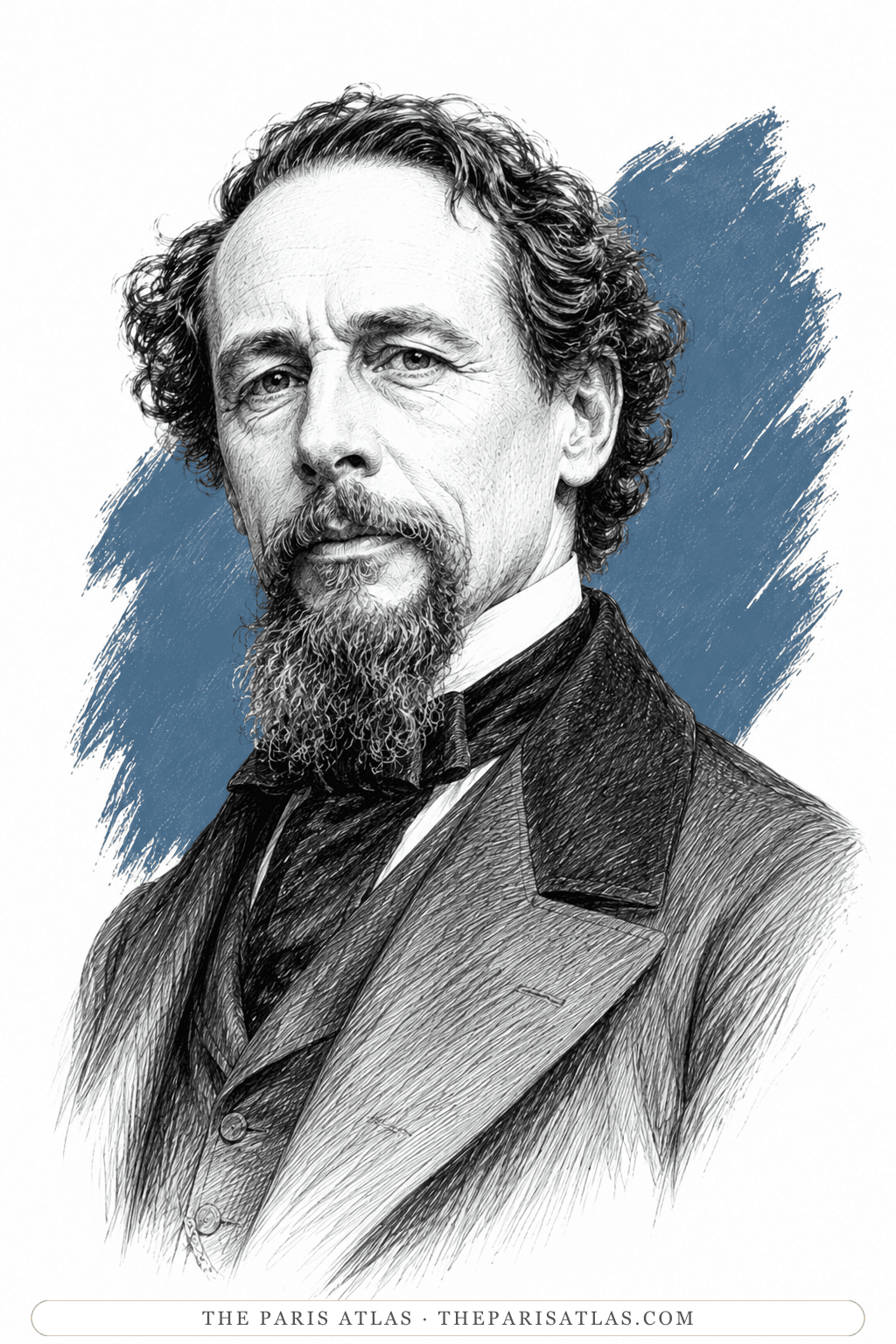
Charles Dickens
The subject of the first and longest essay. George Orwell sets out to work out what a novelist claimed by Marxists, Catholics and Conservatives alike actually believed, and finds a moralist who attacked everybody and antagonised nobody.
In George Orwell's reading, for people to behave decently, and after that to be left alone. The novels end in radiant idleness — a hundred thousand pounds, an ivied house, a horde of children and no work — and that ending is repeated often enough to look like an ideal.
The book

At a glance
- The subject of "Charles Dickens", the first and longest essay
- David Copperfield, Great Expectations, Hard Times, Bleak House, Little Dorrit, Our Mutual Friend, Barnaby Rudge, A Tale of Two Cities, Pickwick
- Father a clerk in government service; raised in London from the age of nine
- Warren's blacking factory, in the Strand
- Chesterton, George Gissing, T. A. Jackson, Ruskin, Krupskaya on Lenin
- Westminster Abbey, which Orwell calls a species of theft
Who they are in the book
Spoiler-freeCharles Dickens is the writer George Orwell calls well worth stealing, and the essay is an attempt to decide what there is in him to steal. Chesterton credited him with medievalism, the Marxist critic T. A. Jackson made him a revolutionary, and Lenin walked out of a dramatised Cricket on the Hearth halfway through because the middle-class sentimentality was intolerable. Orwell thinks Lenin's judgement the truer one, and then spends the essay complicating it.
The negative case comes first. Dickens is not a proletarian writer: the central action of the novels happens in middle-class surroundings, his subject is the London commercial bourgeoisie and its hangers-on, and if you ask a reader to name his working-class characters you get a burglar, a valet and a drunken midwife. He is not a revolutionary either. He attacks the law, Parliament and the schools without suggesting what should replace them, never questions private property, and treats mob violence in Barnaby Rudge and A Tale of Two Cities as a nightmare he had brooded on far more than the facts warranted. What he offers instead is the recurring figure of the good rich man handing out guineas: Pickwick, the Cheerybles, Scrooge, and at the very end Boffin.
Then Orwell turns the case around. Dickens's own childhood is in the books — at ten he worked in Warren's blacking factory in the Strand, an episode so painful that he hid it from his wife for years and would walk out of his way to avoid that stretch of the Strand — and it produced the best writing about childhood in English. Orwell first read David Copperfield at about nine and vaguely imagined the opening chapters had been written by a child. He also credits Dickens with something rarer in his century: no vulgar nationalism, no boasting about the island race, no comic Irishman, and none of the Jew joke that ran through English literature until the rise of Hitler.
The literary verdict is a working writer's. Dickens's mark is the unnecessary detail, the squiggle on the edge of the page — the baked shoulder of mutton with potatoes under it, the flowering annuals stuffed into a robbed man's mouth — and it cannot be imitated. His plots are melodrama and his characters have no mental life, so you cannot imagine a conversation with any of them. Orwell calls him all fragments and details, rotten architecture but wonderful gargoyles, and says the parts are greater than the wholes.
How Charles Dickens Is Portrayed
- Everyone claims himThe Marxist claims him as almost a Marxist, the Catholic as almost a Catholic, and both as a champion of the poor. Orwell's image for the English public's response to being attacked by him is an elephant that feels a blow with a walking-stick as a delightful tickling.
- The blacking factoryHe worked at ten pasting labels on bottles, and put it into David Copperfield as Murdstone and Grinby's warehouse. What hurt most, Orwell shows from the autobiographical fragment in Forster's Life, was the enforced contact with low associates and the relief that the men called him the young gentleman.
- ChildrenNo English writer has entered the child's mind so completely. Orwell picks the tombstone lettering that tells Pip what his dead parents looked like, and the placard reading "Take care of him. He bites." that David Copperfield has to wear on his back.
- The schoolsEvery kind of English education except the universities and the great public schools gets a mauling — Dotheboys Hall, Salem House, Doctor Blimber's, Mr Wopsle's great-aunt. Yet the good school he finally imagines is only Salem House with the vices removed, and he sent his own eldest son to Eton.
- Work happens off-stageOnly David Copperfield has a plausible profession. Pip goes into business in Egypt and his working life takes half a page; nobody is told what Gradgrind's factories make or how Merdle worked his swindles. Orwell counts this a real deficiency: Dickens has no idea of work.
- The unnecessary detailThe baked shoulder of mutton with potatoes under it, in a story that does not need it; the flowering annuals stuffed into Pumblechook's mouth. Orwell calls the phrase as individual as a fingerprint and says it is by just these squiggles that the atmosphere is made.
- Monsters that surviveMrs Squeers always ladling out brimstone and treacle, Mrs Gargery always banging her husband's head against the wall. Orwell says they are fixed for ever like miniatures on snuffbox lids, completely incredible and more memorable than the work of serious novelists.
- The face behind the pageNot quite the face in the photographs. A man of about forty with a small beard and a high colour, laughing with a touch of anger in the laughter, fighting in the open and not frightened.
If you like Inside the Whale and Other Essays


If you like George Orwell
Explore authors with a similar voice, perspective, and influence.

Henry Miller
The Brooklyn dropout who arrived in Paris broke at thirty-eight and wrote the exuberant, banned books that ended American censorship.
View author
Louis-Ferdinand Céline
The doctor of the Paris slums who wrote the century's blackest, funniest novel — and changed the sound of French prose.
View author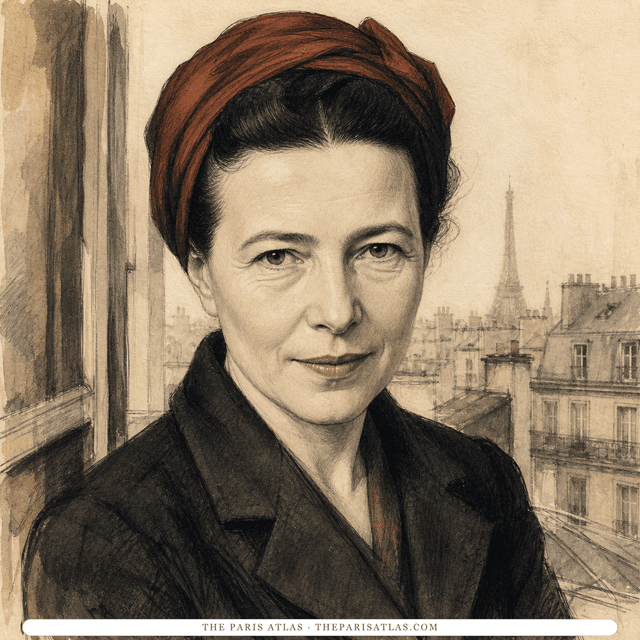
Simone de Beauvoir
French writer and philosopher whose novels, memoirs, and social analysis examined freedom, gender, responsibility, aging, and the material conditions that shape a life.
View author