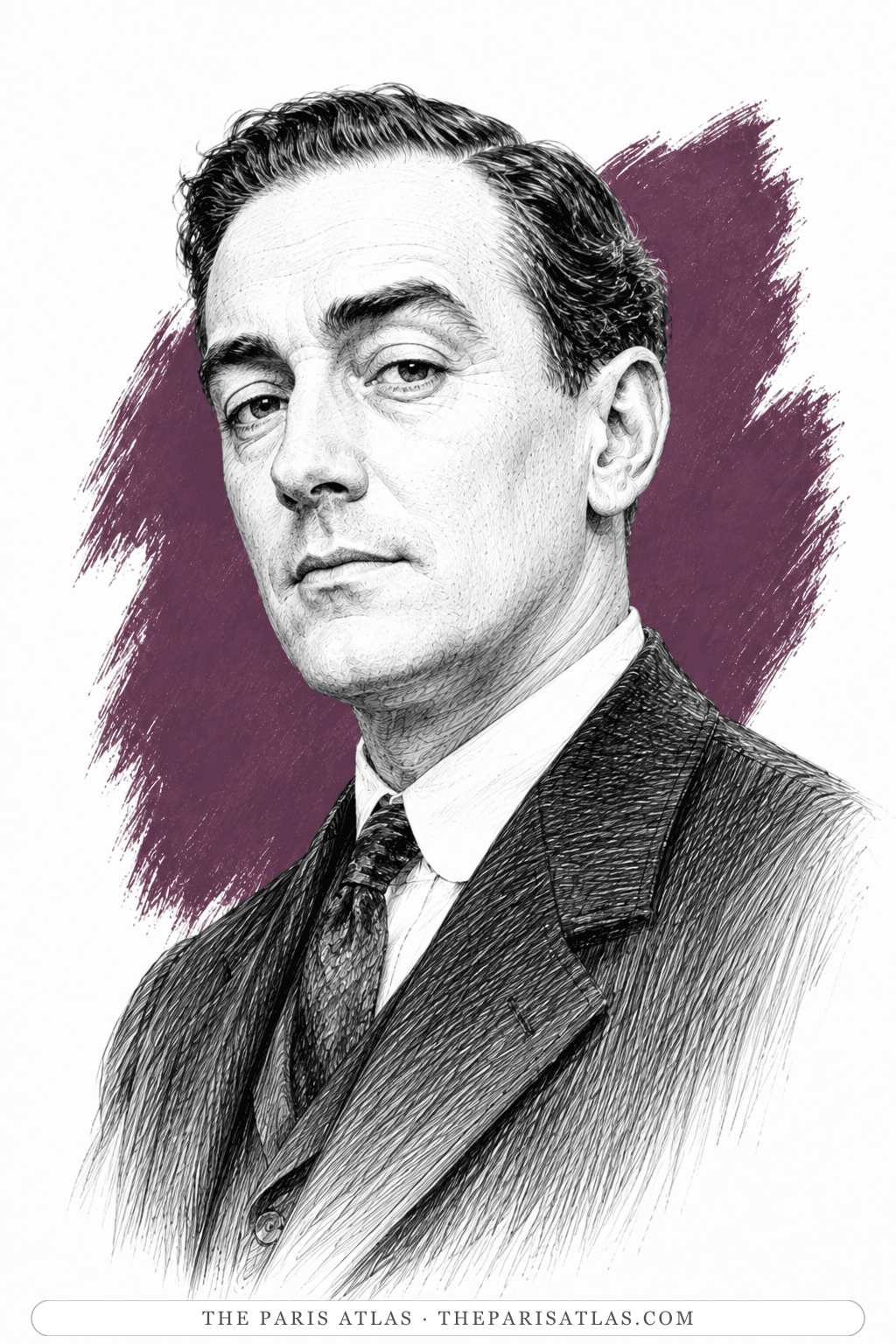
Cyril Connolly
Critic and editor of Horizon, quoted in "Inside the Whale" for the theory of permanent adolescence, the idea that a public-school education is so intense that it arrests the development of the men who go through it. George Orwell takes the sentence at face value and turns it into his case that the writers of the thirties had lived through almost nothing.
The book

At a glance
- Part II of "Inside the Whale", the title essay
- Enemies of Promise
- A preparatory school and Eton, 1910 to 1920
- "the theory of permanent adolescence"
- "five years in a lukewarm bath of snobbery"
Who they are in the book
Spoiler-freeCyril Connolly was an English critic and the editor of the magazine Horizon. He reaches "Inside the Whale" through a book of his own. Towards the end of the essay's middle section George Orwell turns to Enemies of Promise, which he calls recent, and quotes a passage from it that he describes as interesting and revealing.
Orwell splits the book in two. The first part is an assessment of the writing of the day, and Orwell notes that among prose writers Connolly chiefly admires the ones who specialise in violence, the would-be tough American school, Ernest Hemingway and others. The second part is autobiographical, an account of life at a preparatory school and at Eton between 1910 and 1920, which Orwell calls fascinatingly accurate.
It is the last page that Orwell fastens on. Connolly writes that what he might deduce from his feelings on leaving Eton could be called the theory of permanent adolescence: the theory that the experiences boys undergo at the great public schools are so intense that they dominate their lives and arrest their development. Orwell says the natural impulse on reading that sentence is to look for the misprint, to assume that a "not" has been left out somewhere. Nothing has been left out. Orwell's reply is: "He means it!"
Orwell's answer is that Connolly is telling the truth in an inverted way. Comfortable middle-class life had grown soft enough that five years of school snobbery could be looked back on as an eventful period. He then asks what more had ever happened to any of the writers who counted in the thirties: public school, university, a few trips abroad, then London. Hunger, hardship, solitude, exile, war, prison, persecution and manual labour were, he says, hardly even words to them, which is why he thinks they found the purges of the Russian regime and the horrors of the first Five-Year Plan so easy to condone.
How Cyril Connolly Is Portrayed
- The book Orwell is readingEnemies of Promise, which Orwell describes as a recent book. He summarises its two halves in a few lines and then quotes the passage it ends on, which he calls interesting and revealing.
- Where Orwell places himOrwell says Connolly belongs exactly to the generation of writers he calls "the movement", meaning W. H. Auden, Stephen Spender and the poets around them, and that with not many reservations their values are his values.
- The prose he admiresAmong prose writers, Orwell notes, Connolly chiefly admires those specialising in violence: the would-be tough American school, Ernest Hemingway and others of that kind.
- The account of schoolThe autobiographical half of the book covers a preparatory school and then Eton, in the years 1910 to 1920. Orwell calls the account fascinatingly accurate, which is the one plain compliment he pays the book.
- The theory of permanent adolescenceConnolly's closing claim, quoted in full by Orwell: that the experiences undergone by boys at the great public schools are so intense as to dominate their lives and to arrest their development.
- Looking for the misprintOrwell's first reaction is that the sentence must contain a misprint, with a "not" dropped out somewhere. Finding none, he writes: "He means it!"
- What Orwell builds on itOrwell calls a public-school education five years in a lukewarm bath of snobbery, and takes the autobiographical half of Connolly's book as the measure of how little the writers of the thirties had lived through: public school, university, a few trips abroad, then London.
If you like Inside the Whale and Other Essays


If you like George Orwell
Explore authors with a similar voice, perspective, and influence.

Henry Miller
The Brooklyn dropout who arrived in Paris broke at thirty-eight and wrote the exuberant, banned books that ended American censorship.
View author
Louis-Ferdinand Céline
The doctor of the Paris slums who wrote the century's blackest, funniest novel — and changed the sound of French prose.
View author
Simone de Beauvoir
French writer and philosopher whose novels, memoirs, and social analysis examined freedom, gender, responsibility, aging, and the material conditions that shape a life.
View author