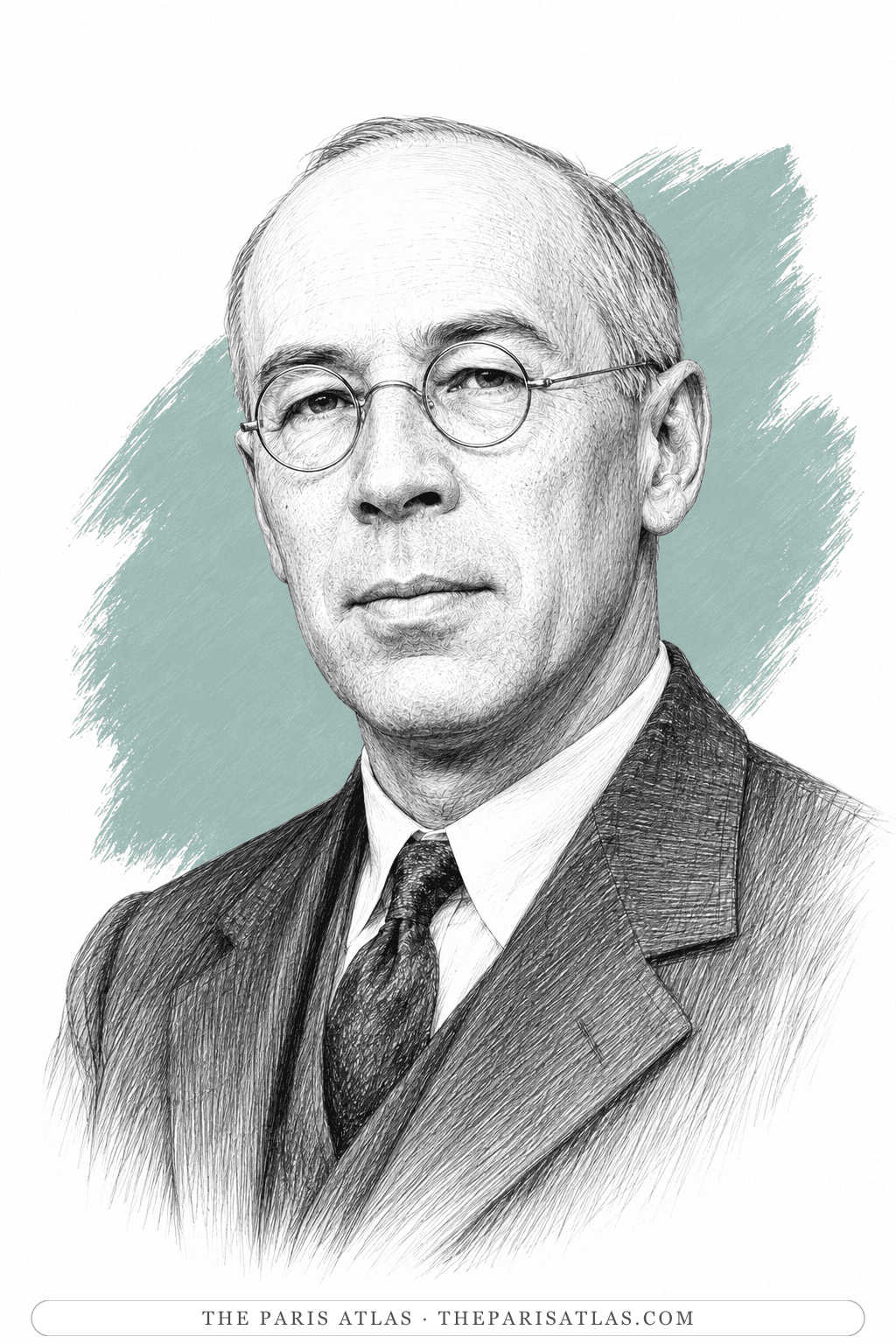
Henry Miller
The American novelist the title essay is about. George Orwell calls him the only imaginative prose writer of the slightest value to have appeared in English for some years, and treats his total lack of interest in politics as the most interesting thing about him.
In George Orwell's account, to be left alone to record what happens rather than to alter it. The one political declaration Miller had made in print was a statement of extreme pacifism with no apparent wish to convert anyone, and the magazine he part-edited advertised itself as non-political, non-educational, non-progressive and non-contemporary.
The book

At a glance
- The subject of "Inside the Whale", the third and title essay
- Tropic of Cancer (1935), Black Spring, Max and the White Phagocytes
- Tropic of Capricorn — Orwell could not obtain a copy
- The Obelisk Press, Paris
- Once, in Paris at the end of 1936, as Orwell travelled to Spain
- None Orwell can find, beyond a printed statement of extreme pacifism
Who they are in the book
Spoiler-freeHenry Miller was an American novelist living in Paris, and "Inside the Whale" is George Orwell's attempt to explain why his work mattered. Tropic of Cancer appeared in 1935 and was praised, cautiously, by T. S. Eliot, Herbert Read, Aldous Huxley, John Dos Passos and Ezra Pound. Orwell's own first reaction was a refusal to be impressed: the book was full of unprintable words, and he assumed that was the whole of it. What changed his mind was that the atmosphere and the details stayed in his memory for a year, and that Black Spring, which he thought weaker on first reading, did the same.
The subject is the American Paris of the twenties and what was left of it after the slump. Orwell describes the invasion of artists, students, sight-seers and idlers who filled the city while the dollar was strong, and reckons that in the late twenties there may have been as many as thirty thousand painters in Paris, most of them impostors. Miller writes about the underside of that world: bug-ridden rooms in working-men's hotels, cheap brothels, Russian refugees, cadging, swindling and temporary jobs. Orwell lists the adventures: a job with a melancholy Indian student, a job at a dreadful French school where the lavatories froze, drinking bouts in Le Havre with a sea captain named Collins, Van Norden the novelist with the great unwritten novel in his head, and Karl, who invents a wealthy widow in order to seem important. Then he asks why such trivialities are so engrossing. His answer is that the atmosphere is familiar, and that Miller has dropped the polite language of the ordinary novel.
Orwell compares him with James Joyce and with Louis-Ferdinand Céline and rejects both comparisons. As a novel, he says, Tropic of Cancer is far inferior to Ulysses, and Joyce is an artist in a sense Miller is not and would not want to be. Journey to the End of the Night is a cry of disgust; Miller's book is the opposite, the book of a man who is happy. Years of hunger, vagabondage, dirt and failure lie behind it, and he is enjoying himself. That acceptance is what makes Orwell reach for Walt Whitman, and then immediately notice the problem: to say "I accept" in the nineteen-thirties is to accept concentration camps, rubber truncheons, purges and political murders along with everything else.
The title comes from Miller's own writing. In Max and the White Phagocytes he compares the diarist Anaïs Nin to Jonah in the whale's belly, and treats the idea as attractive rather than horrible. Orwell takes it and runs: the whale's belly is a womb big enough for an adult, and being inside it is the final unsurpassable stage of irresponsibility. Miller, he decides, is a willing Jonah, and in his case the whale is transparent.
How Henry Miller Is Portrayed
- The one meetingOrwell met him at the end of 1936, passing through Paris on the way to Spain, and found that Miller had no interest in the Spanish war at all. Going there out of a sense of obligation was sheer stupidity, Miller said; out of curiosity he could understand. Orwell's ideas about combating Fascism and defending democracy were, in Miller's word, baloney.
- What he looks likeOrwell calls him a hard-boiled person talking about life, an ordinary American businessman with intellectual courage and a gift for words, and adds that it is perhaps significant that he looks exactly like everyone's idea of an American businessman.
- The voiceRead him for five or ten pages, Orwell says, and the relief comes not from understanding but from being understood. A friendly American voice with no humbug in it, no moral purpose, and an implicit assumption that we are all alike.
- The proseOrwell rates the writing very high and cannot quote a line of it, because unprintable words occur almost everywhere. English treated as a spoken language but spoken without fear of rhetoric or of the poetical word. The adjective, he says, has come back after its ten years' exile.
- Not a young man's bookMiller was in his forties when Tropic of Cancer was published. Orwell reads it as one of those books matured slowly in poverty and obscurity by someone who knows what he has to do and can therefore wait.
- Banned and hard to getThe books came from the Obelisk Press in Paris, whose publisher had just died as war broke out. Orwell had not read Tropic of Capricorn because the police and the Customs authorities kept stopping him getting a copy, and he advises readers to pay over the published price if that is what it takes.
- The Whitman problemMiller's acceptance is Whitman's, and Orwell thinks the two men are in incomparable positions. Whitman wrote in a time of expansion and liberty; Miller accepts an epoch of fear, tyranny and regimentation, and the ancient bone-heap of Europe rather than America.
- Fiddling with his face to the flamesOrwell's summary of the position: Miller believes in the ruin of Western civilization more firmly than most revolutionary writers and does not feel called upon to do anything about it. He is neither pushing the world-process forward nor dragging it back, and he is not ignoring it either.
- The verdictNot a great author and no new hope for English prose, Orwell says, and Miller would be the last to claim it. He expects him to descend into unintelligibility or charlatanism, and thinks him essentially a man of one book, who had it in him to do one thing perfectly and did it.
If you like Inside the Whale and Other Essays


If you like George Orwell
Explore authors with a similar voice, perspective, and influence.
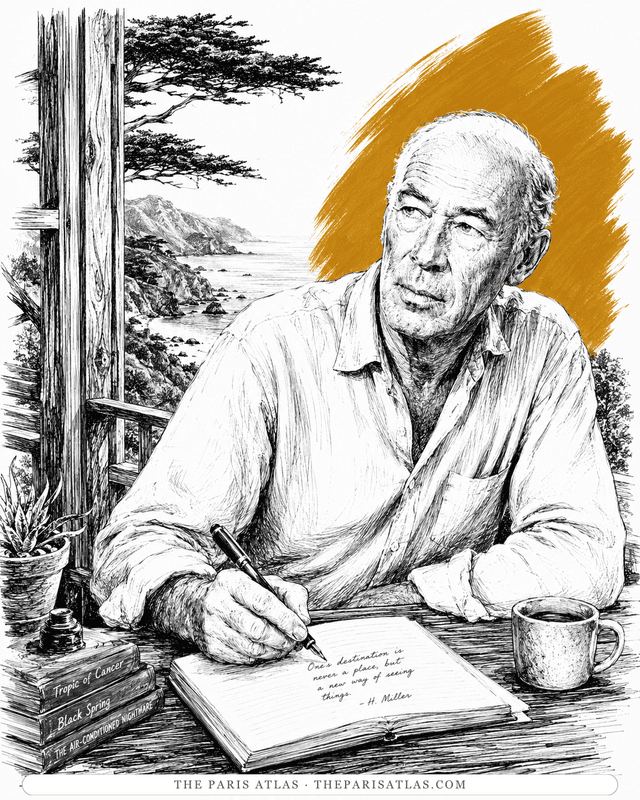
Henry Miller
The Brooklyn dropout who arrived in Paris broke at thirty-eight and wrote the exuberant, banned books that ended American censorship.
View author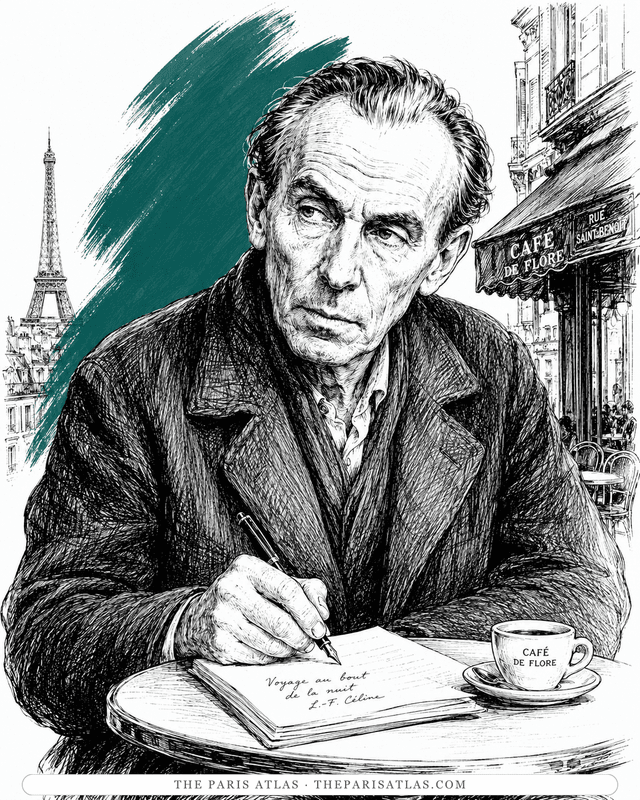
Louis-Ferdinand Céline
The doctor of the Paris slums who wrote the century's blackest, funniest novel — and changed the sound of French prose.
View author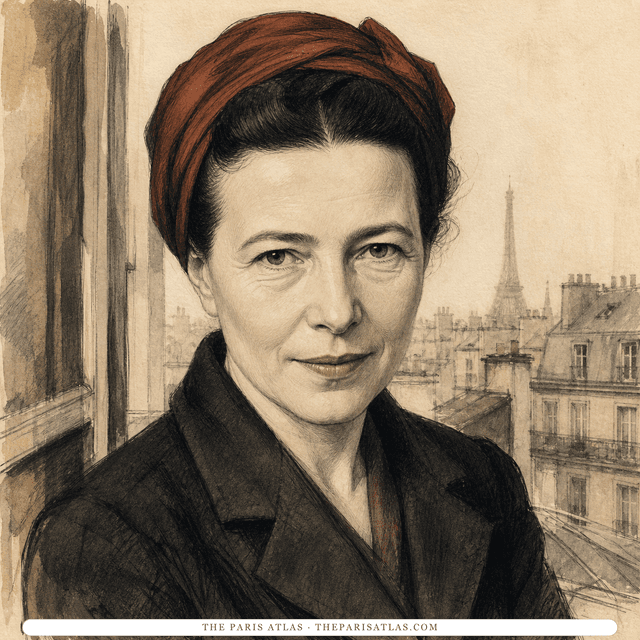
Simone de Beauvoir
French writer and philosopher whose novels, memoirs, and social analysis examined freedom, gender, responsibility, aging, and the material conditions that shape a life.
View author