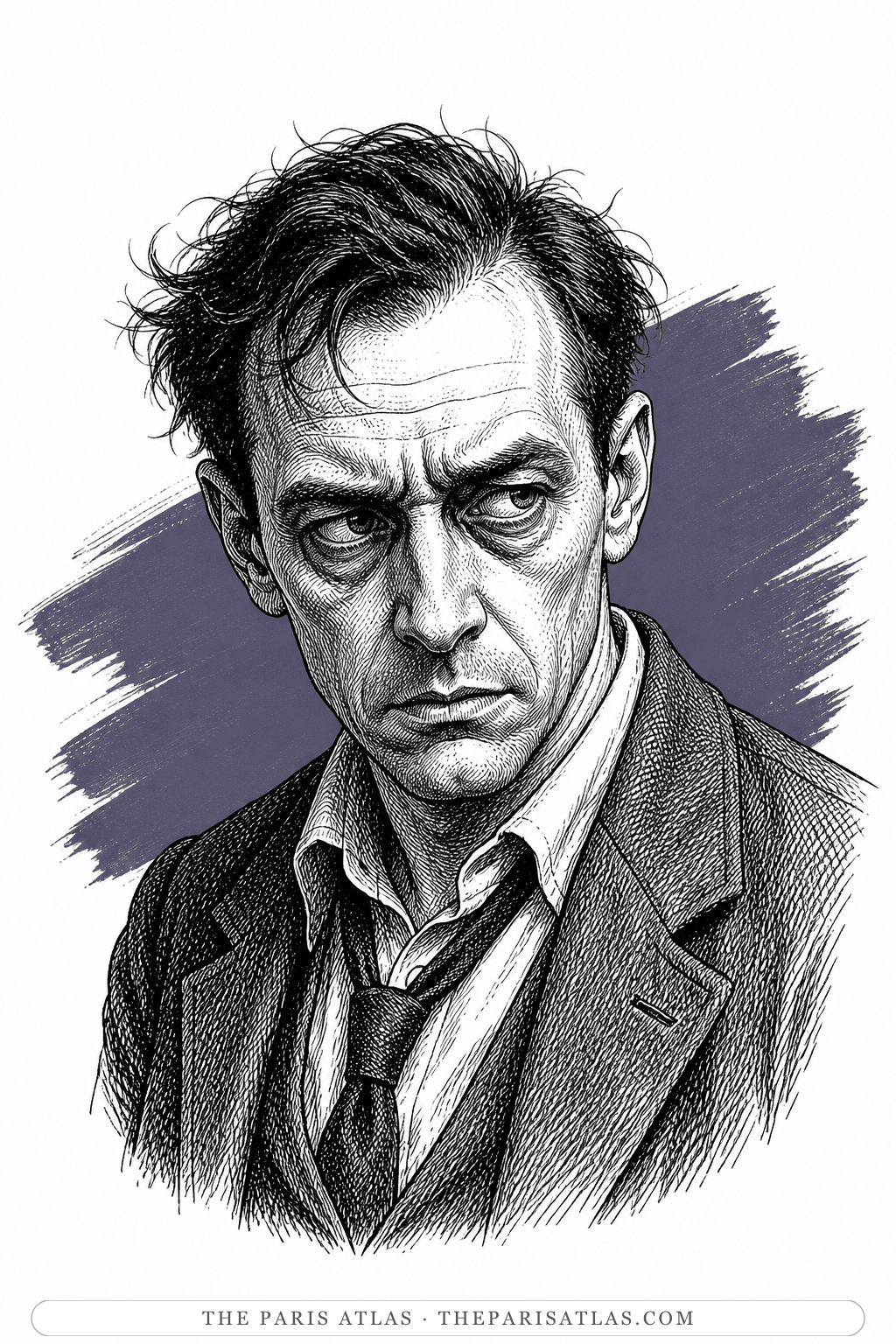
Osiecki
An architect losing his grip, kept awake by bedbugs and determined not to give his employer the satisfaction of a resignation.
He wants to keep his job without ever handing in a resignation, whatever it costs him.
The book

At a glance
- An architect, and one of the household's regular visitors
- At a neighbourhood bar, just as it was closing
- Louella, his fiancée, and two fellow architects, Andrews and O'Shaughnessy
Who they are in the book
Spoiler-freeOsiecki is a character in Plexus, the 1953 novel by the American writer Henry Miller. Plexus is the middle book of a three-part autobiographical novel called The Rosy Crucifixion, narrated by Miller under the name Val and set in New York in the middle 1920s. Osiecki is an architect who lives in the same Brooklyn neighbourhood, and Val and his friend Ted O'Mara meet him at a bar one evening just as it is closing.
He is one of the people the book takes in and worries about. His conversation starts out as ordinary office talk and then stops being ordinary; he is not sleeping; his employer wants him out. The book keeps him as a friend in trouble rather than a case to be explained, and he is still turning up years later, drunk and cheerful, at the couple's speakeasy.
Miller renamed the people in his books, and no model for this character is named in the text. This profile is taken from the Grove Weidenfeld printing, read in the Internet Archive's scan.
How Osiecki Is Portrayed
- Met at a bar at closing timeHe becomes a frequent visitor almost immediately. At first his talk is unremarkable — the ordinary business of life in a big architect's office — and he is fond of music. It does not stay unremarkable.
- The bedbugsHe rolls up his trousers to show them: his legs are a mass of scratches and blood clots. His own explanation for the state he is in is straightforward. "You'd get queer yourself," he says, "if you had those things sucking your blood all night—and all day too." He asks how a man is supposed to lie awake scratching himself all night and then act normal the next day.
- The employer who wants him goneHis boss is looking for a way to get rid of him and has nothing to use. Osiecki's response is flat and level: all right then, he will go cuckoo, but he will never give the man the satisfaction of a resignation.
- Drawing plans all day, the pianola all nightAsked how things are, he says that drawing plans all day and playing the pianola at night is no fun. When the conversation gets close to whatever is actually wrong he starts to tell it, stops with his head down, finishes his sandwich, smiles like a cherub, says he will tell them some other time, and leaves at a trot. He turns down company on the way home because, as he puts it, you never can tell.
- LouellaHe brings his fiancée round because he promised to. Her name is Louella; she arrives in a Nile-green gown and brocaded slippers of banana-yellow and orange, and she is quiet, self-contained and completely humourless. Val's judgement is that her manner is a nurse's rather than a fiancée's. Osiecki sits through an entire evening of her talking about him, grinning, without reacting at all.
- The grinIt is the thing everyone notices. The book calls it the fixed grin of a death's-head, and says that when Louella was describing him you would never have guessed he was the subject.
- The night he decided he was an acrobatYears later he turns up at the couple's Greenwich Village speakeasy around midnight with his two architect friends and three chorus girls from the Follies, all of them already drunk. The girls put the tables together to dance on them. Osiecki, having decided he is a Cossack, spins like a top; then he decides he is an acrobat. After some broken chairs and smashed crockery the whole party leaves for Harlem, and Val suspects Osiecki paid for all of it.
If you like Plexus


If you like Henry Miller
Explore authors with a similar voice, perspective, and influence.

Louis-Ferdinand Céline
Miller's acknowledged master at making literature out of the gutter. Journey gave him permission; Cancer is what he did with it.
View author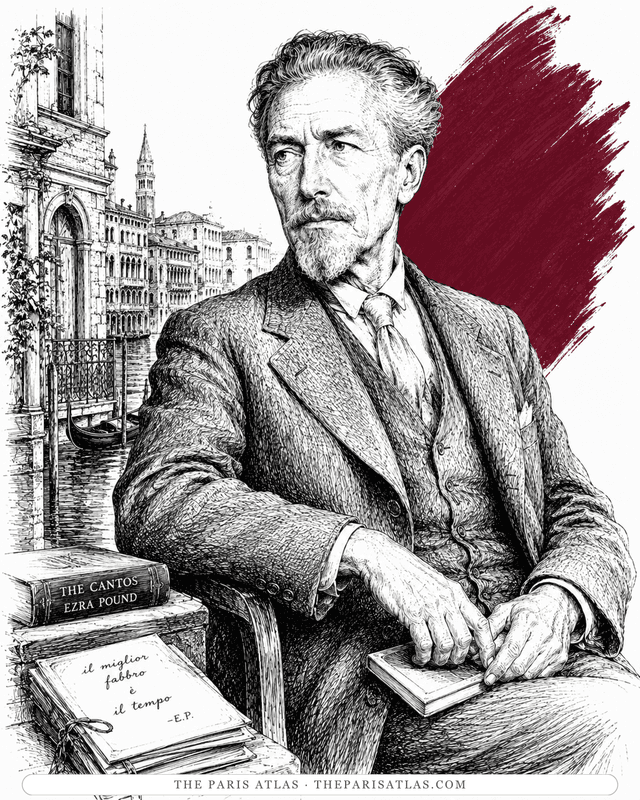
Ezra Pound
Pound read Cancer and sent Miller a famously backhanded postcard. Both believed literature's job was to wake the reader by any means necessary.
View author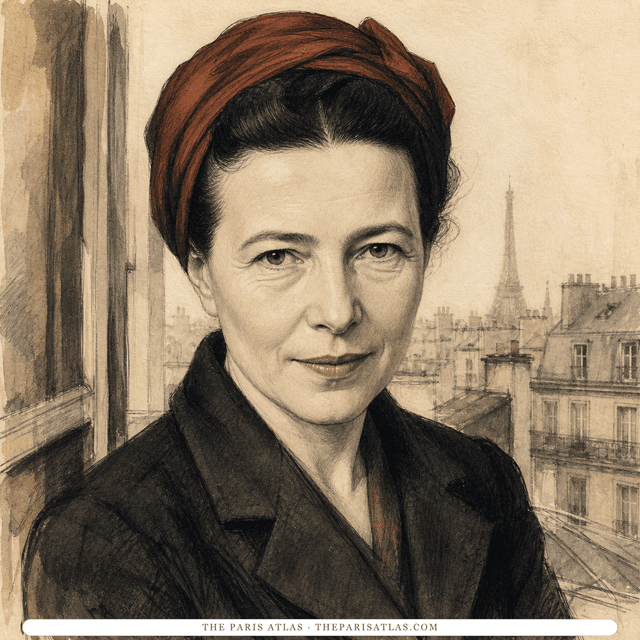
Simone de Beauvoir
French writer and philosopher whose novels, memoirs, and social analysis examined freedom, gender, responsibility, aging, and the material conditions that shape a life.
View author