
Val
The narrator: a telegraph-company manager who quits his job to become a writer and spends the book failing at it. Henry Miller, under the name his wife calls him.
He wants to be a writer, and he is willing to let his wife pay for the years it takes.
The book

At a glance
- The narrator, and Mona's husband
- Val by Mona, Henry by his old friends, Mister Miller by Sheldon
- Employment manager at the telegraph company he calls the Cosmodemonic
- A daughter by his first wife, Maude, and weekly alimony he struggles to pay
- Henry Miller · 1891–1980 · Yorkville, Manhattan; raised in Brooklyn
Who they are in the book
Spoiler-freeVal is the narrator of Plexus, a novel the American writer Henry Miller published in Paris in 1953. He is Miller himself. Plexus is the middle book of a three-part autobiographical novel called The Rosy Crucifixion, the events are Miller's own life in New York in the middle 1920s, and the narrator's name shifts with whoever is speaking to him: his wife Mona calls him Val, his old friends call him Henry, and a Polish-born acquaintance named Sheldon, who thinks he is a genius, calls him Mister Miller.
At the start of the book he is an employment manager at a telegraph company. Within fifty pages he has resigned, on his wife's insistence that money is her department and writing is his, and the rest of the volume is the record of what he did with the freedom: prose poems printed as single sheets and sold in the street, boxes of candy sold in cafés, a speakeasy in Greenwich Village, a hitchhike to Florida, and a great deal of reading. Almost none of the writing sells.
He is Henry Miller, and the book makes no attempt to flatter him. He borrows constantly, dodges the alimony he owes his first wife, lies to strangers for entertainment, and is candid about all of it. This profile is drawn from the Grove Weidenfeld printing of the text, read in the Internet Archive's scan.
How Val Is Portrayed
- He resigns, and never works againVal is an employment manager at the telegraph company. He takes days off whenever he feels like it, has Mona telephone the office with an invented cold, and eventually stays away three days running, which makes going back impossible. On the fourth morning he raises the idea of quitting; Mona is so pleased she asks him to do it at once and be home for lunch. He does.
- The prose poems he printed himselfTold by his friend Ted O'Mara that no editor would ever take his short prose pieces, Val has them printed as single sheets instead — five hundred a week, on stiff coloured paper, by a small printer who gave him a reasonable estimate. He called them Mezzotints, a name he says he owed to the influence of the American artist James McNeill Whistler, and signed them Henry V. Miller. He sold them by post while O'Mara worked the office buildings of Brooklyn, Manhattan, the Bronx and Staten Island on foot.
- Selling boxes of candy in cafésWhen the printed sheets stop paying he goes round the cafés selling boxes of candy. One evening a table of drinkers keeps him standing there as a joke, scattering the boxes and telling him they do not want any, and he stands over them silently with his fingers twitching. Then he remembers doing exactly this in the same café a few weeks earlier, to an elderly man selling matches and shoelaces, for the amusement of his own friends. The men at the table turn out to be Jewish businessmen with an interest in the arts; once he admits he is a writer they buy every box he has and fetch friends from other tables to buy more.
- A nuisance at the local libraryThe Montague Street library in Brooklyn Heights is a few minutes from the flat, and he reads there most evenings while Mona is out. The staff know him for demanding books they do not stock, paying large fines for volumes that are overdue or that he has quietly kept, and being reprimanded like a schoolboy for underlining passages in red ink and writing in the margins. Some evenings the place is so agreeable he closes the book and simply walks from room to room.
- Lying to strangers for the pleasure of itDoing research at government offices, he presents himself as the author of an important book on the subject, drops the names of authorities he has never met, and awards himself degrees he never studied for. When a conversation gets too deep he excuses himself to the lavatory and leaves. He once applied for a post in the genealogy division of the public library out of curiosity, was put straight to work because they were short-handed, and walked out the same morning by asking where the toilet was.
- The daughter he stops visitingVal has a child by his first wife, Maude, and owes her weekly alimony. He starts sending the money by post rather than delivering it, misses weeks at a time, and weeps in his sleep about it. Mona is the one who says he ought to go, and who buys the present for him to take. He does not buy anything himself, on the reasoning that he has not earned any of the money.
- Standing in front of Dostoevsky's photographA bookshop on the avenue has kept a photograph of the Russian novelist Fyodor Dostoevsky in its window for years, and Val stops in front of it repeatedly, studying the plain, heavy face and asking it, more or less in prayer, to give up the secret. Reading is the part of the apprenticeship that is going well.
If you like Plexus


If you like Henry Miller
Explore authors with a similar voice, perspective, and influence.
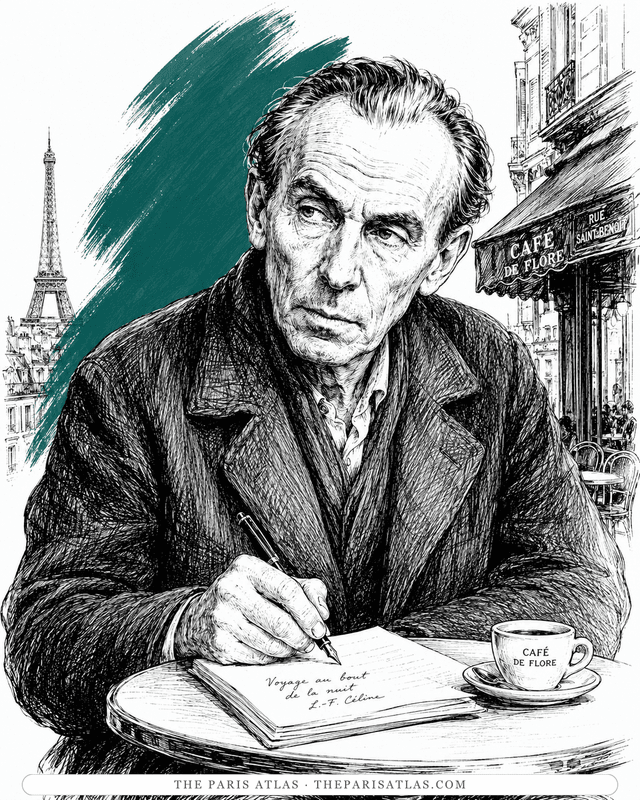
Louis-Ferdinand Céline
Miller's acknowledged master at making literature out of the gutter. Journey gave him permission; Cancer is what he did with it.
View author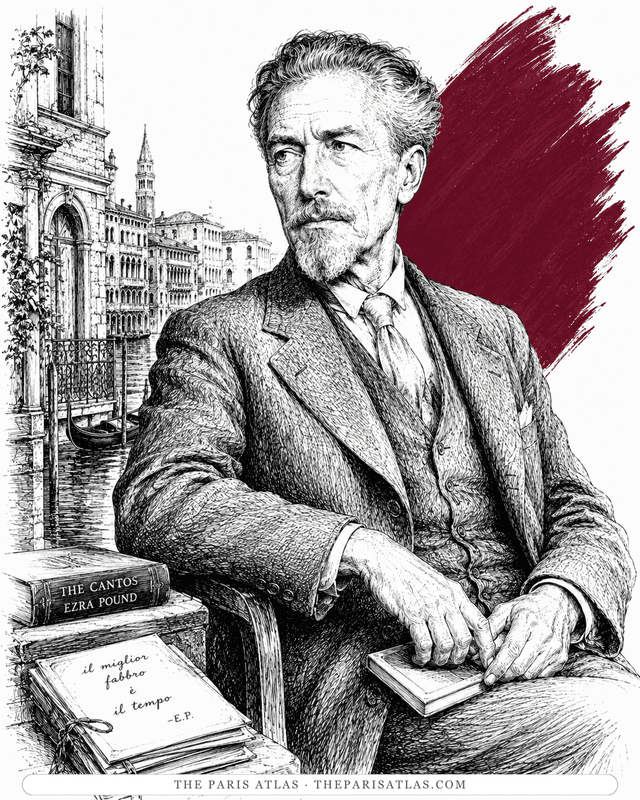
Ezra Pound
Pound read Cancer and sent Miller a famously backhanded postcard. Both believed literature's job was to wake the reader by any means necessary.
View author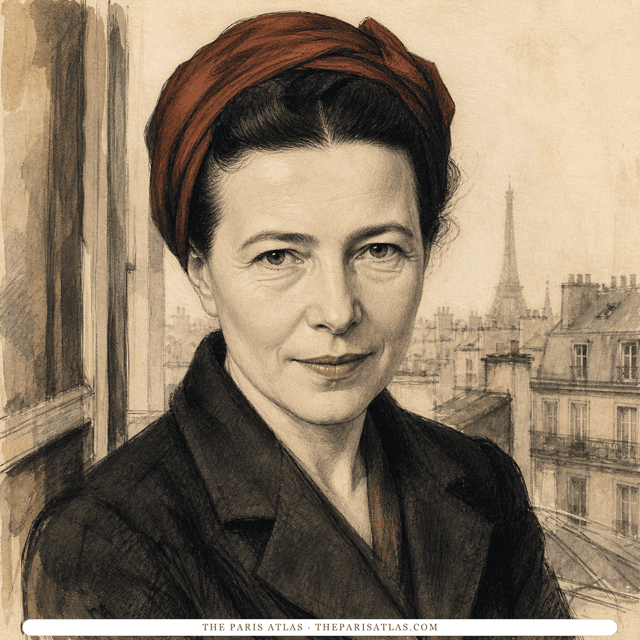
Simone de Beauvoir
French writer and philosopher whose novels, memoirs, and social analysis examined freedom, gender, responsibility, aging, and the material conditions that shape a life.
View author