
Carl
The narrator's flatmate and closest friend: a writer who works nights at a newspaper, pawns his typewriter whenever money runs short, and is incapable of refusing anyone. He is Alfred Perlès, the Austrian writer, under a changed name.
To be a serious writer without ever using up the experience he believes he is storing for later.
The book

At a glance
- 'Carl' — the narrator's flatmate and closest friend
- Nights at a Paris newspaper office; home about three in the morning
- An essay on Proust and the occult, and notes in longhand with a Parker pen
- His typewriter, pawned for as much as four hundred francs
- German, French and English — and he tells people he is French
- Alfred Perlès · 1897–1990 · Vienna
Who they are in the book
Spoiler-freeCarl is one of the two central figures in Quiet Days in Clichy, a short book by the American writer Henry Miller, written in 1940 and published in 1956. He is the friend the narrator shares a flat with in Clichy, a district on the northern edge of Paris just beyond the old city gates. Both men are writers and both are broke, and the book is largely an account of how the two of them filled a year.
He is Alfred Perlès, the Austrian writer who was Miller's closest friend in Paris and who shared the real Clichy flat with him. Miller had already used the same name for him in Tropic of Cancer, his first novel, published in 1934. The book keeps the disguise thin. Carl and the narrator sing German songs together, his mistress Eliane cannot stand the Austrian dialect he teases her in, and he is described as having been rescued from starvation in Budapest years earlier by the man whose wife he is now sleeping with.
He works nights at a Paris newspaper office and usually gets home around three in the morning. When money runs out he pawns his typewriter, and Miller says he was secretly relieved each time he did, because it let him take a holiday from writing without feeling guilty about it.
Everything here is the narrator's account of a friend, written years afterwards and affectionately unkind. The book is also sexually explicit throughout, and Carl is at the centre of most of it.
This profile is drawn from the text of the Flamingo 1995 printing, read in the Internet Archive's scan.
How Carl Is Portrayed
- A man who cannot say noMiller writes that Carl had a genius for getting himself into difficult situations, because he was incapable of refusing anyone. Where most people say no out of self-preservation, "Carl always said Yes, Sure, Certainly." He would commit himself for life on a moment's impulse, trusting that the instinct other people used up front would show up later, at the crucial moment. Miller also calls him the most elusive man he ever knew.
- The typewriter in the pawnshop"In a pinch Carl always hocked his typewriter." Early on he could raise as much as four hundred francs against it, which Miller notes was a real sum then. He looked after the machine carefully because he borrowed on it so often, dusting and oiling it whenever he sat down to write and covering it when he stopped.
- Money pressed between the pages of FaustHe keeps his hundred-franc notes flattened inside a German copy of Goethe's Faust in his room, and does not know the narrator has found them. The same book does him a favour later: when the police call, the volume in German on his table is one of the things that makes the visitors treat him as a scholar rather than a suspect.
- Notes written in secretWhen his money was gone and only time was left he grew irritable, and swore that those were the periods when his best ideas came. If an idea took hold he would buy a small notebook and go off somewhere to write it out in longhand with a Parker pen that Miller calls the handsomest he had ever seen. He would not admit to making these notes until long afterwards, and came home instead looking sour and claiming the day had been wasted.
- He tells people he is FrenchIntroducing the runaway girl he has brought home, he keeps up a claim that he is French, which she has believed. "Sure I'm French," said Carl blithely, and offers to show her his passport. He is Austrian, and elsewhere in the book he speaks German well enough to fool a Luxembourg policeman.
- The essay on ProustHe is at work on a piece meant to show the connection between Proust's ideas and the occult tradition, particularly the writings attributed to Hermes Trismegistus. When a girl's family turns up at the flat, her guardian picks up the last volume of Proust from the work table and visibly changes his opinion of the household.
- The café in LuxembourgCarl and the narrator take a short drunken holiday to Luxembourg, choosing it over Brussels because the fare was the same. On the way out of a café there the proprietor hands them his card, which announces in German that the place is free of Jews. Both men insult him to his face and walk out laughing. Round the corner Carl goes up to a policeman, takes off his hat, and reports in polished German that a brawl has broken out at that café and the owner is having a fit and may kill someone. The officer thanks him and sets off towards it.
- The emergency change in his pocketWhen the narrator comes home starving with nothing, Carl fishes out three francs sixty — everything he has — and hands it over. "That'll get you a breakfast," he said. "Tomorrow's another day."
The runaway girl living in the flat walks out one afternoon and comes back the next day with her mother, her legal guardian and a police officer. Carl answers the door and is told the girl is fifteen and that bringing him to court would mean a ten-year sentence. He makes no attempt to defend himself. The books on his table — Proust, Faust in German, Lawrence, Blake, Shakespeare — do the work instead, and the guardian settles into a grudging respect for two men who turn out to be writers.
The mother sets one condition, that he never try to see the girl again, and the family leaves. Carl's reaction is to fall in love with the mother on the spot. He writes the whole episode up as a story some months later, which Miller rates as one of the best things he ever did, and appears to forget the girl entirely.
If you like Quiet Days in Clichy


If you like Henry Miller
Explore authors with a similar voice, perspective, and influence.

Louis-Ferdinand Céline
Miller's acknowledged master at making literature out of the gutter. Journey gave him permission; Cancer is what he did with it.
View author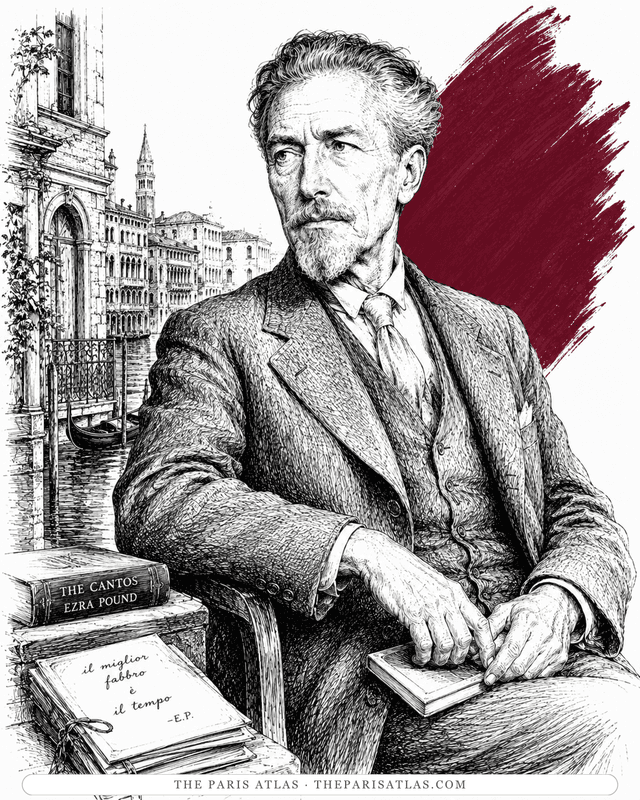
Ezra Pound
Pound read Cancer and sent Miller a famously backhanded postcard. Both believed literature's job was to wake the reader by any means necessary.
View author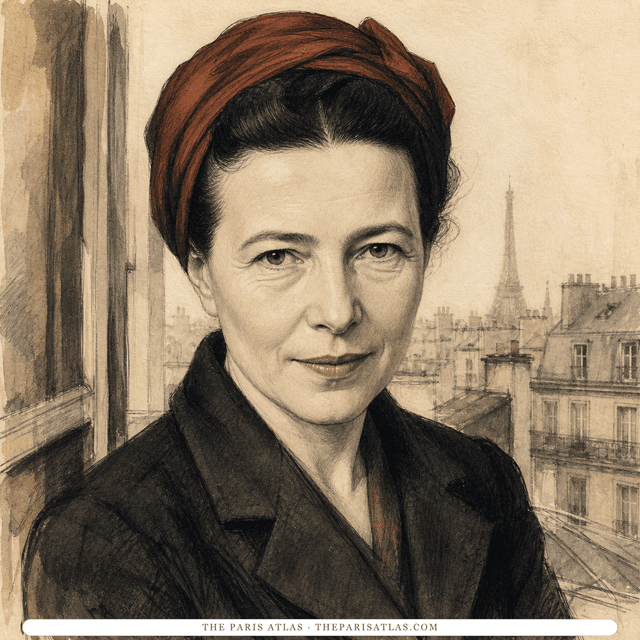
Simone de Beauvoir
French writer and philosopher whose novels, memoirs, and social analysis examined freedom, gender, responsibility, aging, and the material conditions that shape a life.
View author