Self-Portrait as a Tahitian
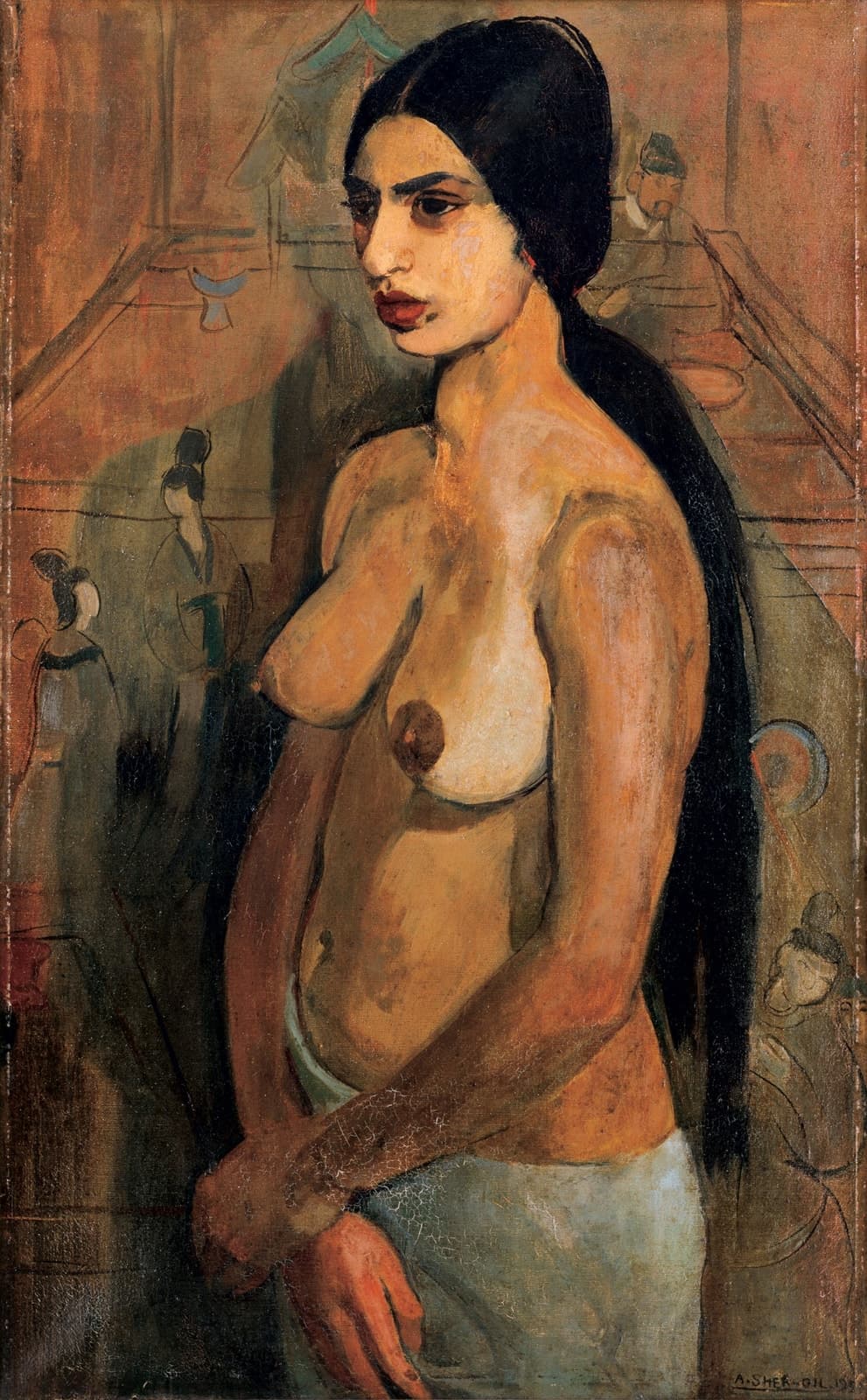
Amrita Sher-Gil stands bare to the waist, turned to her left, a pale blue-grey cloth wrapped round her hips and her arms crossed low in front of her. Behind her is a wall painted with East Asian figures, women in kimono, a seated man in a black cap and a pagoda roof, and over it falls the grey shadow of a standing figure. She painted it in Paris in 1934, her last year there, and named it after the Tahitian women of Paul Gauguin. It belongs to the Kiran Nadar Museum of Art in New Delhi.
- 1934
- Oil on canvas
- Kiran Nadar Museum of Art, New DelhiNew Delhi, India
About Amrita Sher-Gil
What the painting shows
She is shown from the hips up, standing, her body turned to the viewer's left and her head in three-quarter profile. Her black hair is parted in the middle, drawn back, and falls in one long mass down her back to the waist. The brows are heavy, the eyes dark and lowered, the lips painted a deep red. The skin is built up in ochre, orange and brown, with the breasts and the swell of the belly modelled in paler strokes.
Her arms are crossed at the waist, the left hand resting over the right wrist and the right hand hanging open. The cloth at her hips is pale blue-grey rather than white. The canvas is signed A. Sher-Gil at the lower right, followed by a date that the reproduction cuts off after its first two digits.
The background is a wall of warm brown and orange, drawn over in thin dark lines. At the upper left is a curved pagoda roof with ornaments hanging from it. Two women in dark robes, their hair in buns, stand at the left, one holding a pale fan. At the upper right a man in a black cap sits at a low table with a bowl, and at the lower right a third robed figure is sketched beside the signature. Between the roof and her shoulder a large grey silhouette of a head and shoulders lies on the wall, facing front.
Gauguin, London and the title
The National Gallery of Modern Art's chronology has her visiting the National Gallery in London in June 1933, where she saw paintings by Paul Gauguin. His "stylishly simplified yet symbolically charged Tahitian Nudes", the museum writes, became a source of inspiration to her, "which she later portrayed through Self Portrait as a Tahitian". The title says as much. A painter born in Budapest and raised in Simla, trained at the École des Beaux-Arts, casts herself as the Polynesian model of a Frenchman.
Orin Zahra, in the Smarthistory essay on the picture, describes the figures behind her as a man and kimono-clad women in a pagoda-like setting, drawn in flat perspective. The grey shape she calls "a large grey shadow cast in a frontal pose", standing between the artist and them. Whose shadow it is the painting does not say. Saloni Mathur's 2011 article in Critical Inquiry, A Retake of Sher-Gil's Self-Portrait as Tahitian, is the fullest study of what the borrowing from Gauguin meant.
“I'm an individualist, evolving a new technique, which, though not necessarily Indian in the traditional sense of the word, will yet be fundamentally Indian in spirit.”
The last year in Paris
The National Gallery of Modern Art lists the picture among three paintings of 1934, with Study of Model (2) and Study of Model (3). In February she had been in Budapest, meeting the writers Dezső Szabó and Frigyes Karinthy. In December she sailed for India with her parents and stayed first in Amritsar with the family of her uncle Sunder Singh Majithia.
That spring a nude by her hung at the Grand Palais in the Salon of the Société nationale des Beaux-Arts, which had elected her an associate the year before for Young Girls. Le Matin's critic, in his review of 2 May 1934, noted in Salle AP "a poor nude, of sincere and intense expression" by "Amrita Sher Gil, artiste hindoue", without naming it. Whether it was this canvas is not recorded.
Where it is
The painting belongs to the Kiran Nadar Museum of Art in New Delhi, which lists it on Google Arts & Culture as Self-Portrait as a Tahitian, in oil paint, without an accession number. Wikidata records it at 90 by 56 centimetres, about three feet by twenty-two inches, and gives Paris as the place of creation. The Government of India has declared Sher-Gil's works national art treasures.
Close reading
Reading the work, detail by detail
The figure is built in warm flat colour and the wall behind her in thin dark line. Close view shows the drawn figures on the wall, women in robes and a man at a table, the grey shadow between them and her shoulder, the crossed hands over the blue-grey wrap, and the signature at the lower right.
1.Head turned to the left, eyes lowered
The head is in three-quarter profile, turned to the viewer's left. The brows are heavy and dark, the eyes lowered, the lips a deep red. The hair is parted down the middle and drawn back over the ears. The skin is laid in ochre and orange, with paler strokes on the cheek and neck.
2.A grey shadow under a pagoda roof
At the top left a curved roof with hanging ornaments is drawn on the wall in dark line. Under it, between the roof and her shoulder, lies a grey silhouette of a head and shoulders, facing front. The painting does not say whose it is. Orin Zahra's Smarthistory essay calls it a large grey shadow cast in a frontal pose.
3.Two women in dark robes
Two women stand at the left of the wall, drawn in thin dark lines over the brown. Their hair is in buns and their robes are dark with pale collars; one holds a pale round fan. They are the kimono-clad figures of Orin Zahra's description, set flat against the wall with no ground under them.
4.A man in a black cap at a low table
At the upper right a man in a black cap sits at a low table with a bowl, drawn in the same thin line as the women. Diagonal lines below him mark the edge of the table or a step. He is the only male figure on the wall, apart from whatever casts the shadow.
5.Hair falling to the waist
The hair falls in one unbroken black mass from the parting to the waist, down the right side of the canvas. It is the darkest shape in the picture, and it separates her from the drawn figures at the right.
6.Ochre, orange and brown
The torso is modelled in ochre and orange, with paler strokes on the breast and belly and darker brown along the arm. Smarthistory describes the skin as dappled in shades of ochre, nutmeg and cinnamon. The belly swells slightly above the wrap.
7.Hands crossed at the waist
The arms cross low at the waist. The left hand rests over the right wrist and the right hand hangs open, its fingers drawn in thin dark lines. The cloth at the hips is a pale blue-grey with white highlights, not the plain white that descriptions of the picture usually give it.
8.A third figure by the signature
A third robed figure is sketched at the lower right, with a bun and a pale face, in the same thin line as the others. It stands beside the fall of black hair and above the signature, half hidden by the edge of the canvas.
9.Signed at the lower right
The corner carries A. Sher-Gil in dark red capitals, followed by a date of which only the first two digits show in the reproduction. The museum's listing gives no inscription; the signature is read here from the reproduction.
Timeline
1929
Arrives in Paris at sixteen; studies at the Académie de la Grande Chaumière under Pierre Vaillant, then from October in Lucien Simon's studio at the École nationale des Beaux-Arts.
June 1933
Visits the National Gallery in London, where the National Gallery of Modern Art dates her encounter with Paul Gauguin's Tahitian nudes.
1934
Paints Self-Portrait as a Tahitian in Paris, alongside Study of Model (2) and Study of Model (3).
May 1934
A nude by her hangs in the Nationale's Salon at the Grand Palais; Le Matin's critic notes it in Salle AP without naming it.
December 1934
Returns to India with her parents and stays in Amritsar with her uncle's family.
Where to see it
Kiran Nadar Museum of Art, New Delhi
New Delhi, India
A public viewing address has not yet been confirmed for this holding.
A private museum. As of September 2026 its Google Arts & Culture listing gives no accession number and no display status, so check with the museum before travelling.
Frequently asked questions
Where is Self-Portrait as a Tahitian?
In the collection of the Kiran Nadar Museum of Art in New Delhi, a private museum, which lists it on Google Arts & Culture. Wikidata gives its size as 90 by 56 centimetres. As of September 2026 no display status is published for it.
Why is it called Self-Portrait as a Tahitian?
Because it answers Paul Gauguin's paintings of Tahitian women, which the National Gallery of Modern Art says she saw in London in June 1933 and which became a source of inspiration to her. She paints herself half-nude, in a hip wrap, as his models were painted.
What is the grey shadow behind her?
A silhouette of a standing figure's head and shoulders, cast on the painted wall at the upper left, facing front. The painting does not identify it, and Orin Zahra's Smarthistory essay calls it a large grey shadow cast in a frontal pose that separates the artist from the figures behind her.
What are the figures in the background?
East Asian figures drawn in thin dark lines on a brown wall. Two women in dark robes with their hair in buns stand at the left, one with a fan. A man in a black cap sits at a low table at the upper right, and a third robed figure is sketched at the lower right. A curved pagoda roof with hanging ornaments fills the top left.
Was it painted in Paris?
Yes, in 1934, her last year there. The National Gallery of Modern Art's chronology lists it with two model studies painted that year, before her return to India with her parents in December.
How big is Self-Portrait as a Tahitian?
90 by 56 centimetres, about three feet by twenty-two inches, according to Wikidata; the museum's own listing gives no dimensions. It is oil on canvas, signed A. Sher-Gil at the lower right.
More by Amrita Sher-Gil
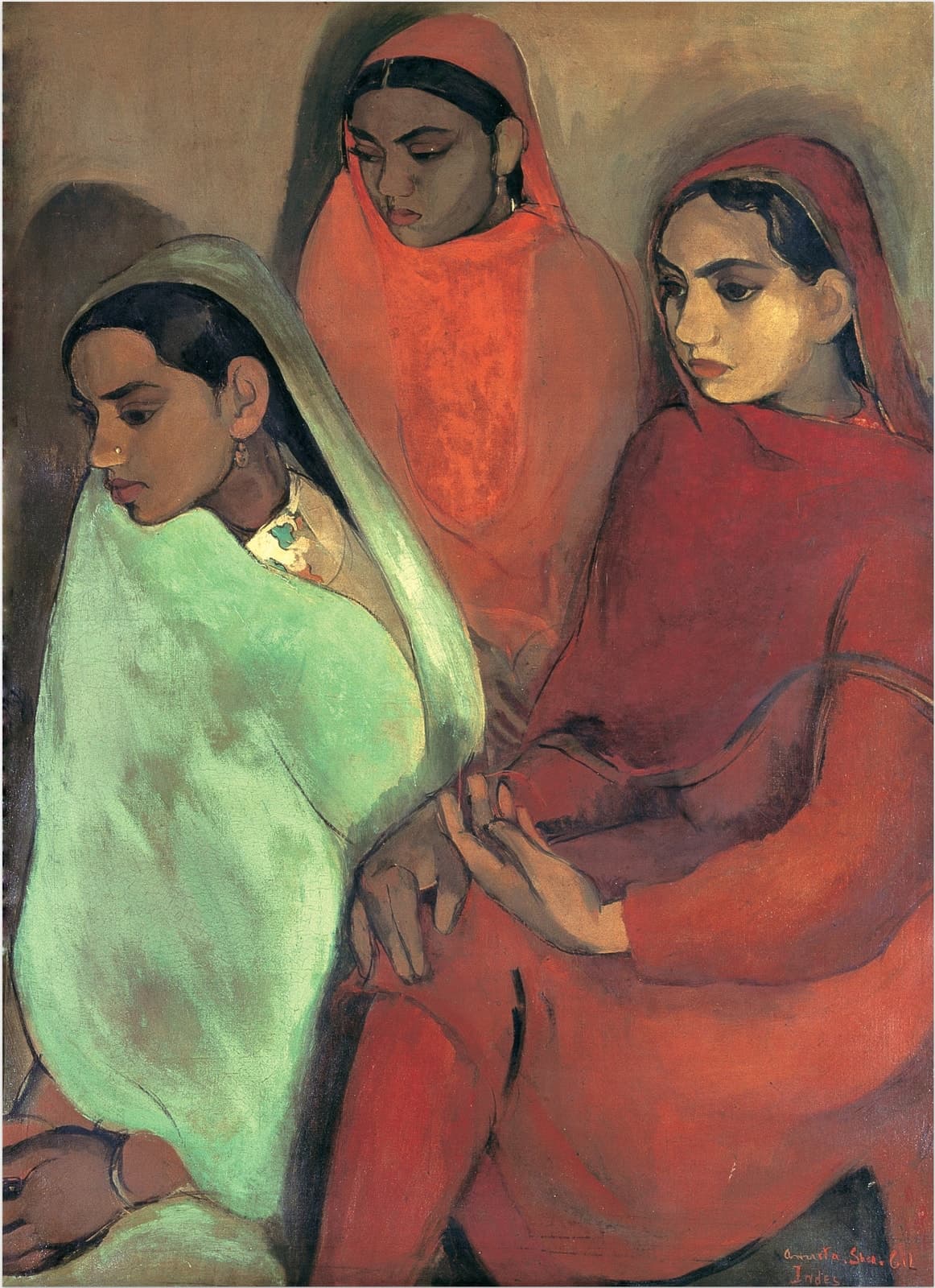
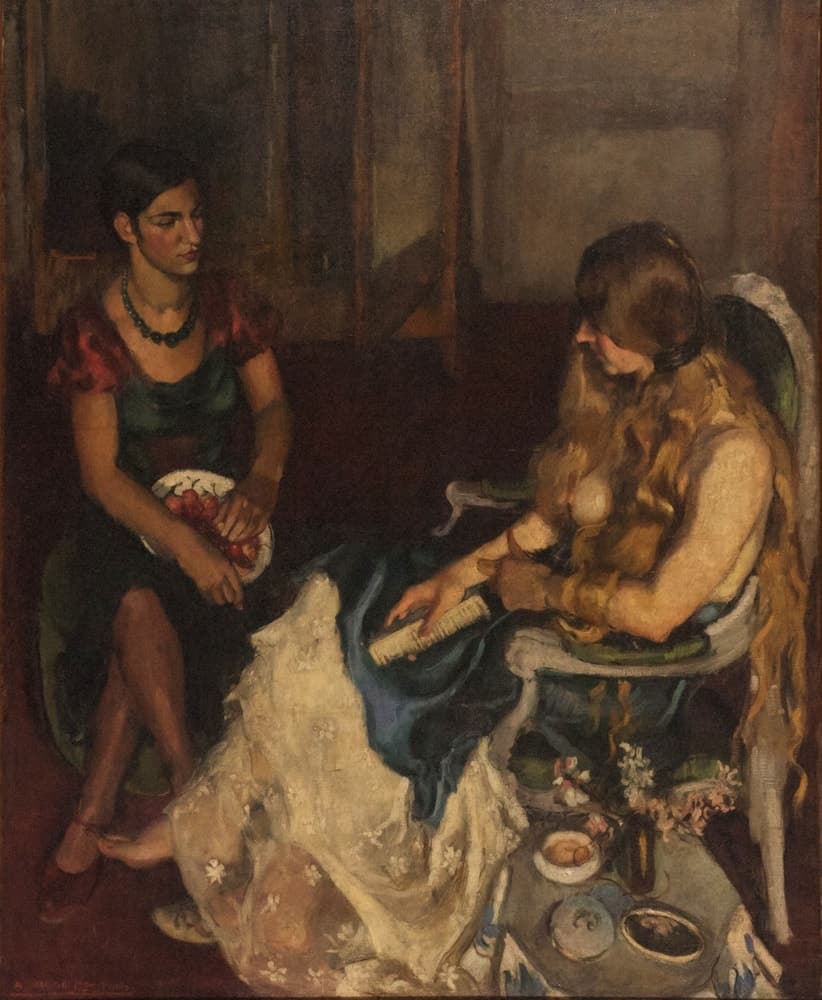
If you like Amrita Sher-Gil
Explore painters from the same movements and circles.
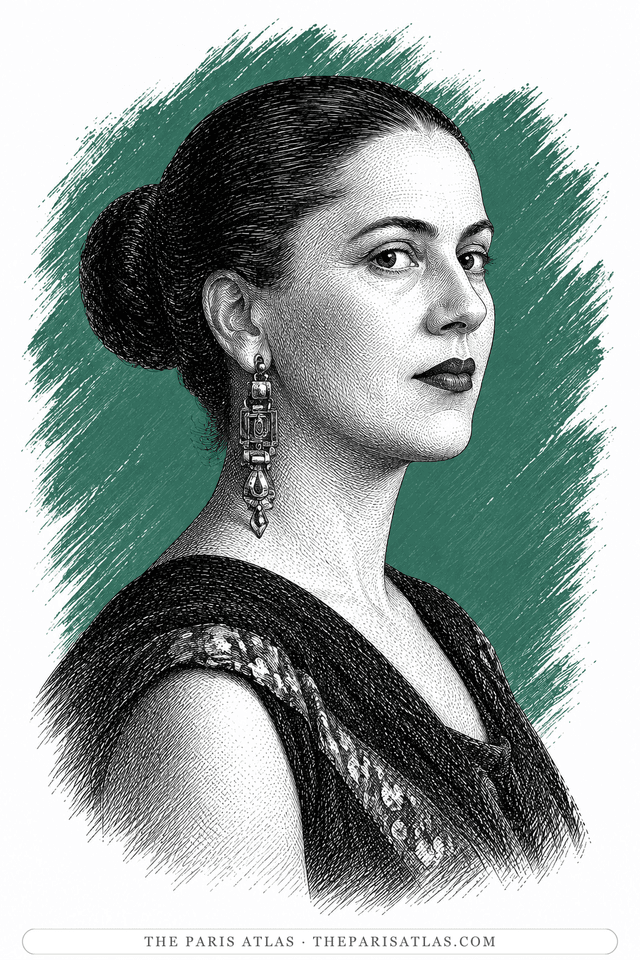
Tarsila do Amaral
Brazilian painter who spent the 1920s moving between São Paulo and Paris, studied Cubism under André Lhote, Albert Gleizes and Fernand Léger, and used what she learned to paint Brazilian towns, railways, plants and bodies. Her 1928 painting Abaporu prompted the manifesto that gave the Anthropophagic movement its name.
View artist
Marcel Duchamp
The century's quietest revolutionary — readymades, the abandonment of painting, chess on a Paris rooftop in Entr'acte, and one anemic film of spinning puns signed Rrose Sélavy.
View artist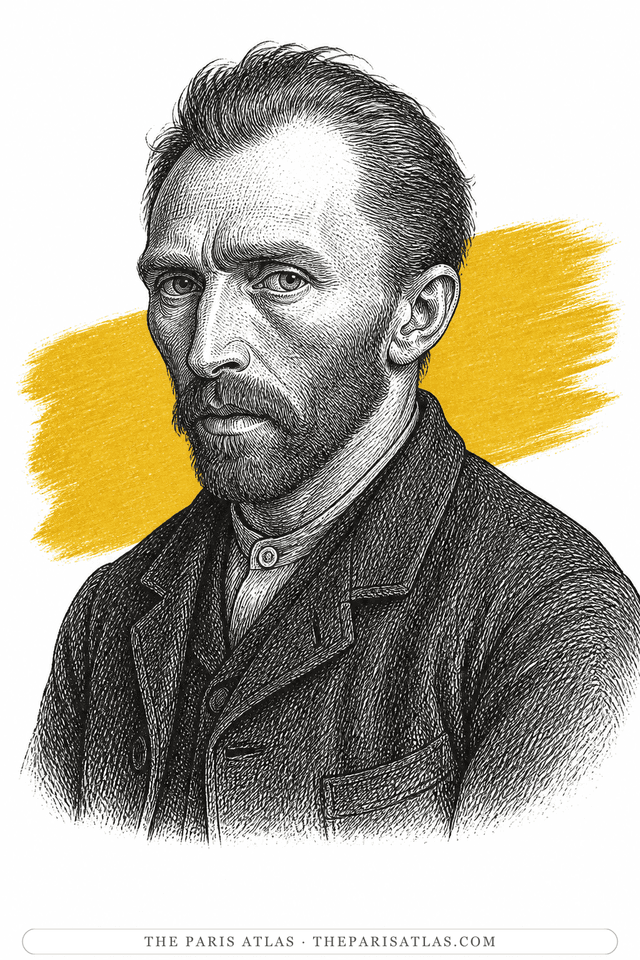
Vincent van Gogh
Dutch painter who lived in Montmartre with his brother Theo from March 1886 to February 1888 — the two years in which his dark Dutch palette turned into colour. He painted more than 200 pictures in Paris and died at Auvers-sur-Oise, north of the city, in 1890.
View artist
References
The sources below include collection records, catalogues, scholarly research, and primary materials that informed this page. They document Self-Portrait as a Tahitian, its making, and its place in cultural history.


1Self-Portrait as a Tahitian — Amrita Sher-Gil
WebsiteGoogle Arts & Culture / Kiran Nadar Museum of Art, New DelhiUsed forThe Kiran Nadar Museum of Art's listing of the work on Google Arts & Culture: title, artist, medium and holding museum.
2Self-Portrait as Tahitian (Q30224640)
WebsiteWikidataUsed forHeight 90 cm, width 56 cm, Paris as the place of creation, and the Kiran Nadar Museum of Art as collection.
3An Unfinished Journey: Amrita Sher-Gil
WebsiteNational Gallery of Modern Art, New DelhiUsed forThe chronology: the June 1933 visit to the National Gallery in London, Gauguin's Tahitian nudes as inspiration for the picture, the 1934 paintings, Budapest in February, the December return to India, and the quotation on technique.
4Amrita Sher-Gil, Self-Portrait as a Tahitian
WebsiteSmarthistory, 2022Used forOrin Zahra's essay: the description of the pose, the background figures and the grey shadow, and the museum and dimensions.

5A Retake of Sher-Gil's Self-Portrait as Tahitian
PeriodicalCritical Inquiry 37, no. 3 (Spring 2011), pp. 515–544, University of Chicago Press, 2011Used forThe principal scholarly study of the painting and its relation to Gauguin.
6Le Salon: La Société nationale
PeriodicalLe Matin, 2 May 1934, p. 5, via Gallica (Bibliothèque nationale de France), 1934Used forThe unnamed nude by Amrita Sher Gil, artiste hindoue, in Salle AP of the Nationale's 1934 Salon.
7Amrita Sher-Gil — Feature and Chronology
PeriodicalEmbassy of India in HungaryUsed forThe declaration of her works as national art treasures.
These references provide the documented foundation for this work's history and interpretation. Claim-level citations remain attached to the specific claims they support.
 Explore more resources