
John Stenham
A middle-aged American writer who opposes French rule, speaks Moroccan Arabic, and still mistakes long residence for full understanding.
To keep the Fez he loves while also believing himself opposed to the system that helped preserve it, an impossible combination the crisis exposes.
The book

At a glance
- American expatriate writer
- Middle-aged; contemporary reviews describe him as about forty
- Former Communist; anti-colonial and distrustful of nationalism
- Speaks Moroccan Arabic
- A tower room at the Mérinides Palace hotel
- Becomes Lee Veyron’s lover
Who they are in the book
Spoiler-freeJohn Stenham is a middle-aged American writer who has spent years in Morocco and five seasons at the same hotel in Fez. He speaks Moroccan Arabic, visits local families, and knows the old city well enough to navigate many of its passages at night. Compared with casual tourists, he truly is experienced.
That experience also feeds his vanity. Stenham likes being the foreigner who can explain why Moroccan behavior cannot be judged by ordinary Western rules. Privately, he is less certain that the differences are as deep as he claims. His posture of special understanding gives him status among other expatriates and protects him from admitting how often he is guessing.
He is a former Communist who now distrusts political programs. He hates French rule but does not welcome the modern state many nationalists want to build. He loves old Fez and eventually recognizes that part of his politics is personal taste: he wants Moroccans to be free, but he also wants the Morocco that pleases him not to change.
How John Stenham Is Portrayed
- The practiced residentHe knows families in the medina, speaks Arabic, hears differences in street sounds, and can identify water running behind walls. Bowles gives real substance to his knowledge before showing its limits.
- The expert performanceHe tells newer foreigners that Moroccan motives are beyond them. The claim lets him hint that he understands what they cannot, even when he is privately uncertain.
- Against the French, afraid of the futureHe regards colonial rule as unjust. At the same time, he fears that independence and modernization will erase the old city’s way of life.
- Former CommunistHe once believed in a political system and turned away from it. That makes him skeptical of programs promising to remake society, but also gives him an excuse to stand apart from urgent choices.
- What Amar becomes to himHe is drawn to Amar as proof that the religious Fez he admires still exists. His affection is genuine, but he often treats the boy as an example before treating him as a person.
- The foreigner’s exitHowever committed he feels to Fez, he has money, transport, a protected hotel, and the option to leave. Amar’s final request makes that difference impossible to ignore.
If you like The Spider’s House


If you like Paul Bowles
Explore authors with a similar voice, perspective, and influence.
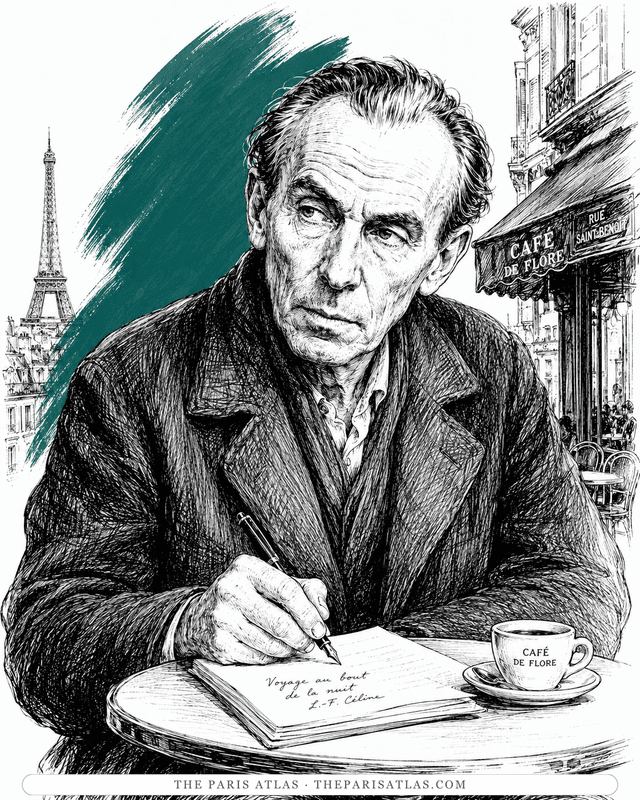
Louis-Ferdinand Céline
The doctor of the Paris slums who wrote the century's blackest, funniest novel — and changed the sound of French prose.
View author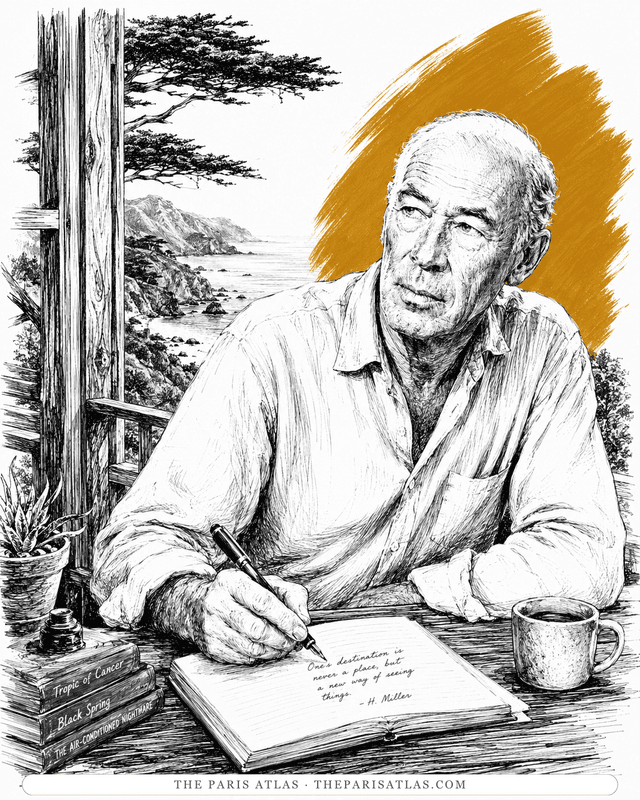
Henry Miller
The Brooklyn dropout who arrived in Paris broke at thirty-eight and wrote the exuberant, banned books that ended American censorship.
View author
Martha Gellhorn
War correspondent who covered the Spanish Civil War, D-Day, and conflicts across five more decades; Hemingway's third wife, 1940–1945.
View author