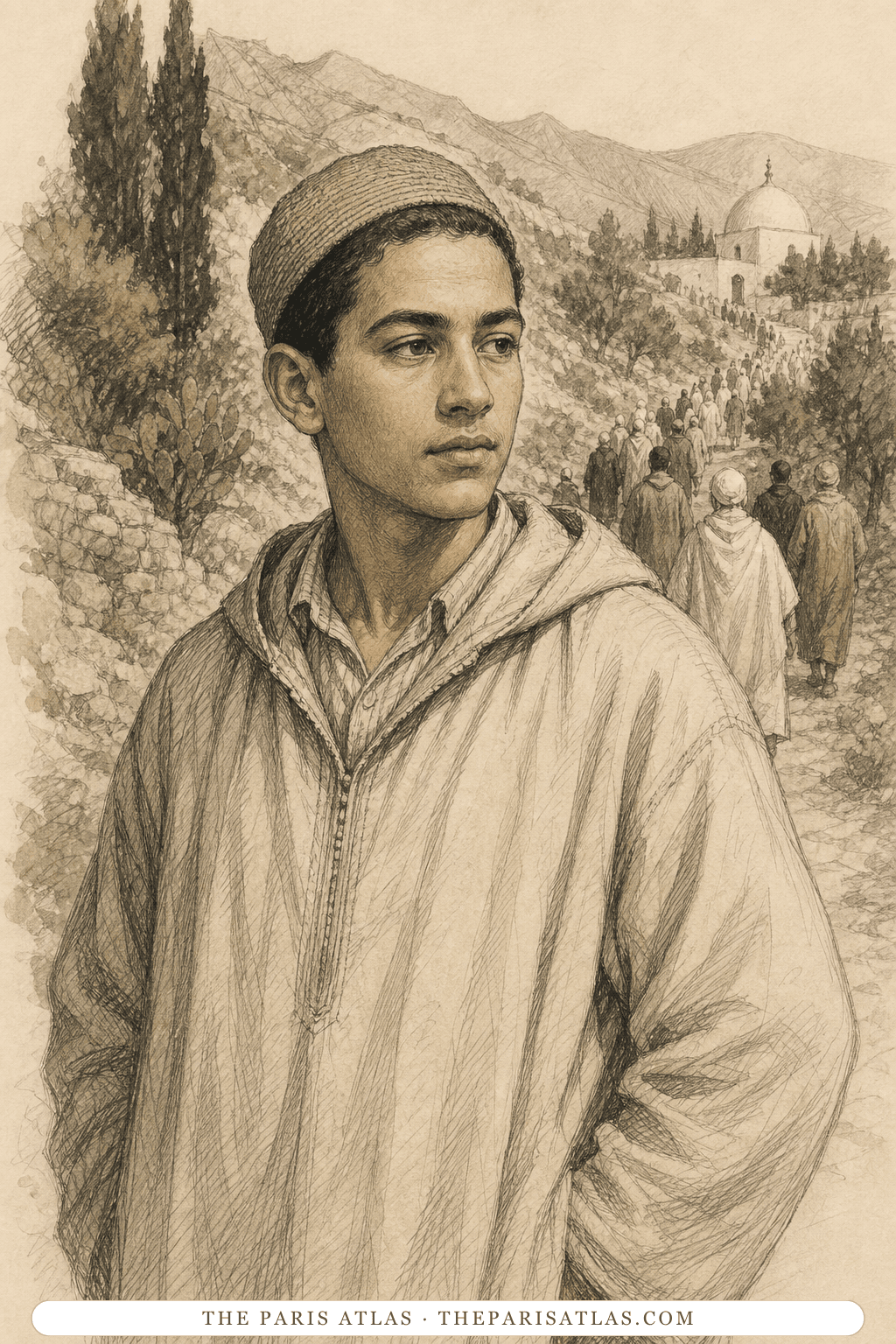
Mohammed
Amar’s friend and fellow traveler, one of the few people beside the boy who experiences the mountain journey as part of Moroccan life rather than a foreign adventure.
To stay close to Amar and move safely through a city and countryside where rumors, closures, and political suspicion can suddenly separate people.
The book

At a glance
- Amar’s friend
- Moroccan Fez, outside the expatriate hotel circle
- Fez to Sidi Bou Chta and back toward the city
Who they are in the book
Spoiler-freeMohammed is Amar’s young friend. He belongs to Amar’s world rather than the expatriate circle, and his presence keeps the Moroccan half of the story from narrowing to one isolated boy.
He travels with Amar, Stenham, and Lee to the Eid celebration at Sidi Bou Chta. For the Americans, the trip offers rare access to a religious gathering in the mountains. For Mohammed and Amar, it is connected to faith, danger, family, and the pressure already changing Fez.
Mohammed receives less interior narration than Amar, so the book gives fewer firm details about his private motives. His practical companionship matters: he moves with Amar through uncertainty and helps make the journey something shared rather than a tour staged for foreigners.
How Mohammed Is Portrayed
- Amar’s companionHe appears beside Amar in movement rather than at a foreign dinner table. The friendship gives Amar someone near his own age and social world.
- The mountain journeyHe joins the party traveling from Fez to Sidi Bou Chta for Eid, crossing the same distance as Stenham and Lee for different reasons.
- Returning toward dangerHe and Amar travel back toward Fez after the celebration, when reliable information is scarce and the political situation has worsened.
- A quieter presenceBowles does not give him Amar’s extended thoughts. His character is established through loyalty, movement, and the practical act of staying beside a friend.
If you like The Spider’s House


If you like Paul Bowles
Explore authors with a similar voice, perspective, and influence.
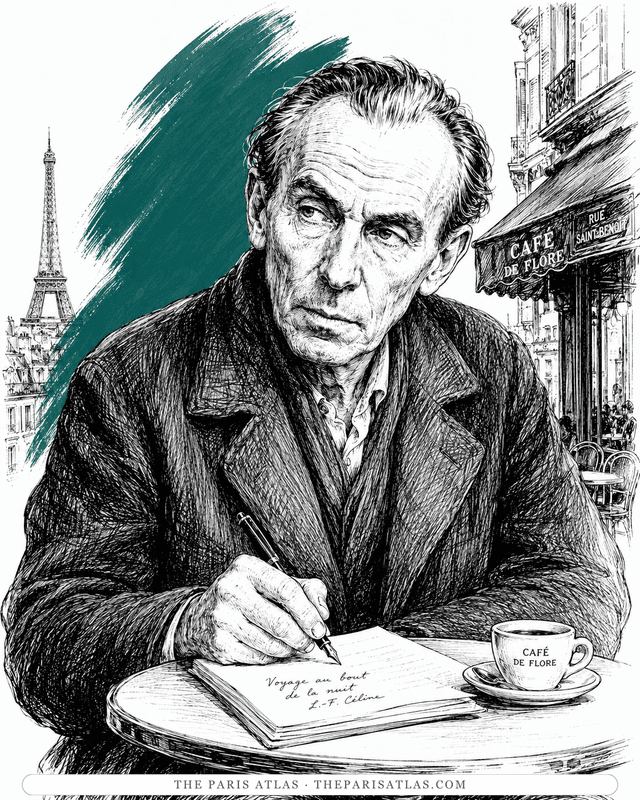
Louis-Ferdinand Céline
The doctor of the Paris slums who wrote the century's blackest, funniest novel — and changed the sound of French prose.
View author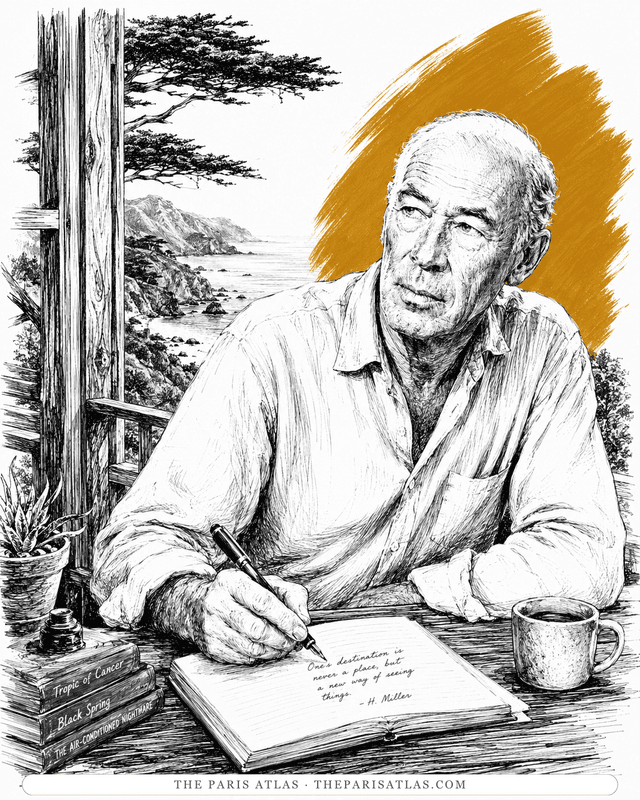
Henry Miller
The Brooklyn dropout who arrived in Paris broke at thirty-eight and wrote the exuberant, banned books that ended American censorship.
View author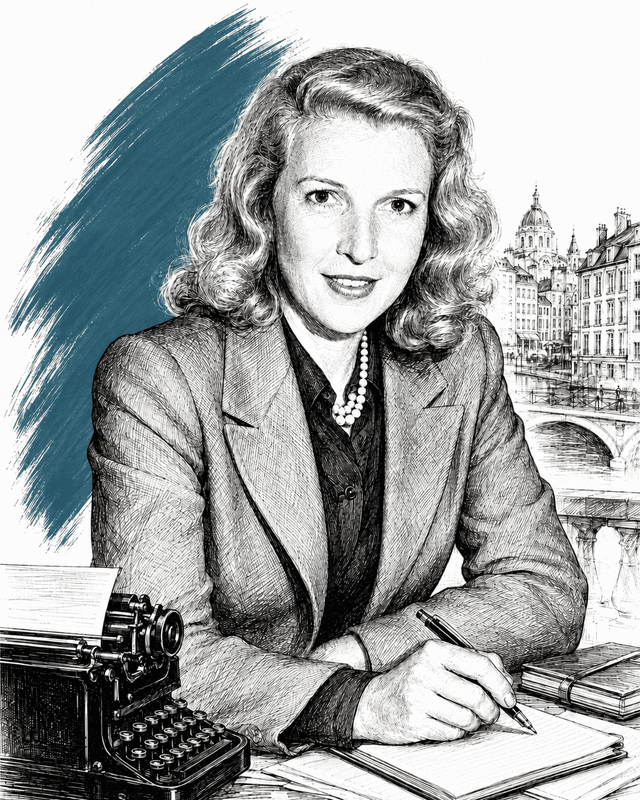
Martha Gellhorn
War correspondent who covered the Spanish Civil War, D-Day, and conflicts across five more decades; Hemingway's third wife, 1940–1945.
View author