
Mandy
The other waitress at the beanery — younger, stocked with anecdotes about famous writers, and talking almost every time she appears.
An audience. She talks whenever anyone is at the counter, and when Scripps O'Neil finally declares himself she accepts and offers him another story in the same breath.
The book

At a glance
- Relief waitress at Brown's Beanery, Petoskey, Michigan
- Chapter eight, the night Scripps O'Neil marries the elderly waitress
- Henry James, Edmund Gosse, the Marquis of Buque, and Knut Hamsun
- Her friend Ford — the English novelist Ford Madox Ford
- Suggests Ariel, after Shakespeare, and identifies Polly as a character in The Beggar's Opera
- A freshly starched white apron
Who they are in the book
Spoiler-freeMandy is a character in The Torrents of Spring, the 1926 comic novel by the American writer Ernest Hemingway. She is the relief waitress at Brown's Beanery in Petoskey, Michigan, and she arrives in chapter eight, on the night Scripps O'Neil comes back to the counter married to the other waitress. The book describes her as a buxom, jolly-looking girl in a freshly starched white apron, and then lets her talk.
Everything she says is a story about a writer. Henry James on his deathbed. Edmund Gosse in front of a stuffed flamingo. Knut Hamsun working as a streetcar conductor in Chicago. She credits one of them to a great friend of hers called Ford, and the book's narrator separately thanks the English novelist Ford Madox Ford for supplying the best of its anecdotes, so the joke runs in both directions. What Scripps hears in her is a fund of material, and it is enough.
How Mandy Is Portrayed
- How she is introduced"She was a buxom, jolly-looking girl, and she wore a white apron." The apron is mentioned as freshly starched almost every time she appears, and it is close to the whole of her physical description.
- The way she calls an orderA rare steak goes through the kitchen wicket as "Tea for one. Let it go raw!" Scripps concludes that she has a gift for the picturesque in speech.
- The Henry James storyShe tells it across the counter: James made a British subject on his deathbed, the Order of Merit laid on the sheet over his chest by two professors, and then, with the room emptied, his last words to the nurse — "'Nurse,' Henry James said, 'put out the candle, nurse, and spare my blushes.'" She cries telling it.
- The doubt about her sourcesMrs. Scripps points out that she does not tell the James story the same way twice, and that she tells it rather often. Mandy answers that she feels very strongly about Henry James. The book leaves it there.
- The flamingo storyHer longest story: Edmund Gosse, shown a stuffed flamingo in a glass case in the Marquis of Buque's library, says it is not his idea of a flamingo, and a professor whose name Mandy cannot recall answers that it is God's idea of one. She attributes the whole thing to her friend Ford.
- What Scripps watchesHer hands. The book has him studying them across the counter — healthy, calm and capable, doing the duties of her waitresshood — and when she sets down his steak her hand touches his.
She gets Scripps at the end of chapter fifteen, mid-anecdote. He has just heard the flamingo story out when he leans forward and tells her he loves her and that she is his woman. She says that is all right, that she has known he was her man for a long time, and asks whether he would like to hear another story. She begins one about Knut Hamsun in Chicago.
The book undercuts her almost immediately. Scripps sits repeating the phrase to himself while she talks, decides the words have gone hollow, and thinks instead about the woman who walked into the beanery earlier that night. Mandy is still talking when the chapter ends, and the last thing said of her is that she talks on.
If you like The Torrents of Spring


If you like Ernest Hemingway
Explore authors with a similar voice, perspective, and influence.
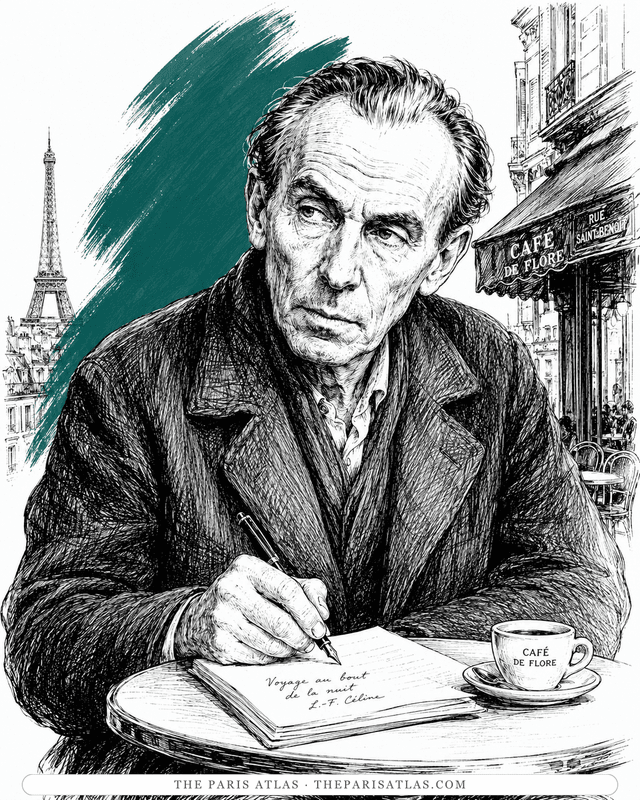
Louis-Ferdinand Céline
The other great stylist the Great War produced — where Hemingway cut the language down, Céline set it on fire. The same wound, opposite treatments.
View author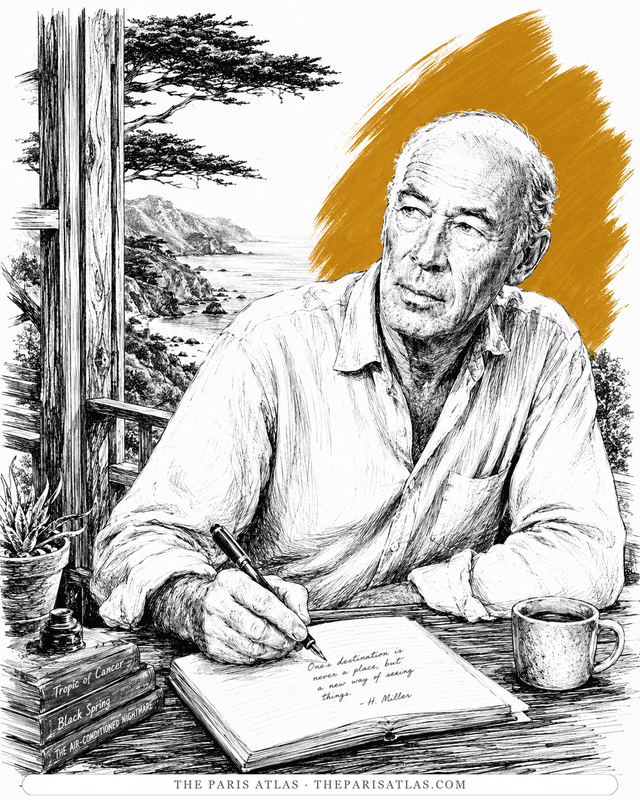
Henry Miller
Paris on no money a decade later, with the restraint removed. Miller called Hemingway's Paris a tourist's Paris; readers get to referee.
View author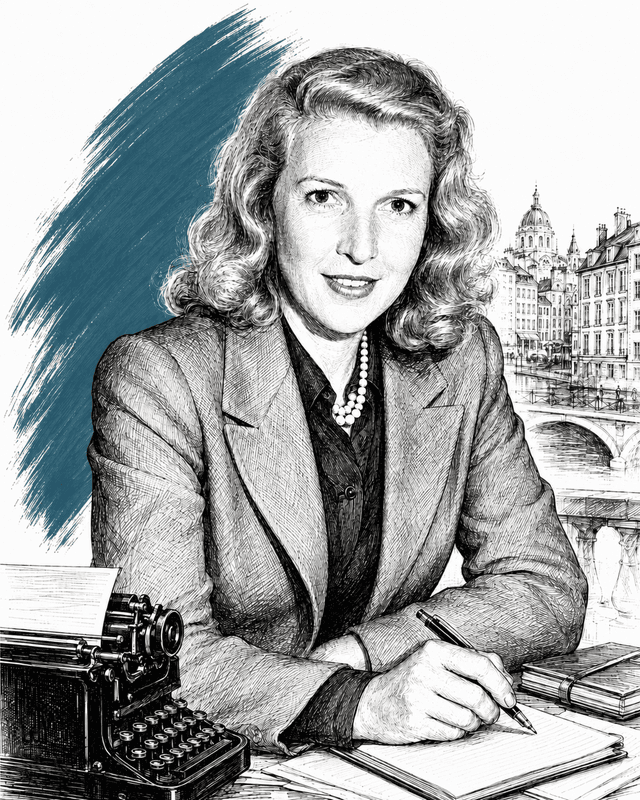
Martha Gellhorn
War correspondent who covered the Spanish Civil War, D-Day, and conflicts across five more decades; Hemingway's third wife, 1940–1945.
View author