Scripps O'Neil
A writer who loses a wife on a railroad line, walks to Petoskey with a live bird inside his shirt, and marries the waitress who serves him beans.
To be near a woman with a supply of talk. He tells every stranger he meets that his wife has left him, and what he admires in the second woman he attaches himself to is her conversation: "What a background she must have, that girl! What a fund of anecdote!"
The book

At a glance
- One of two main characters — a writer working at the pump factory in Petoskey, Michigan
- Mancelona, Michigan, which he leaves on foot down the railroad tracks
- One story in The Saturday Evening Post and two in The Dial, by his own account
- Four hundred and fifty dollars, paid for a story sold to the editor George Horace Lorimer
- A daughter, Lucy, whom he calls Lousy; the wife who leaves him is also called Lucy
- Collaring pistons in the piston-collaring room
Who they are in the book
Spoiler-freeScripps O'Neil is one of the two main characters in The Torrents of Spring, the 1926 comic novel by the American writer Ernest Hemingway. He is a writer who takes a job at a pump factory in Petoskey, Michigan, and the book introduces him with a flat announcement: "Scripps O'Neil had two wives." One lives in Mancelona and one in Petoskey. The second is never shown again, which is the first sign that this novel is not going to keep its promises.
What actually happens to him is simpler. He and his wife go out drinking along the railroad line for three or four days, he comes to alone in the dark, and he walks into town to find the house empty. He starts for Chicago on foot down the tracks, picks a frozen bird off the rails and warms it inside his shirt, and arrives instead at Petoskey, where he eats beans at Brown's Beanery and takes work in the pump factory.
Hemingway is copying Sherwood Anderson's manner throughout, so Scripps thinks in long solemn runs of names and questions. Walking beside a passing train he wonders whether the sleepers inside are Americans piling up money or Europeans worn out by the war. What is being mocked is that sound. Scripps himself has no more inner life than the joke requires.
How Scripps O'Neil Is Portrayed
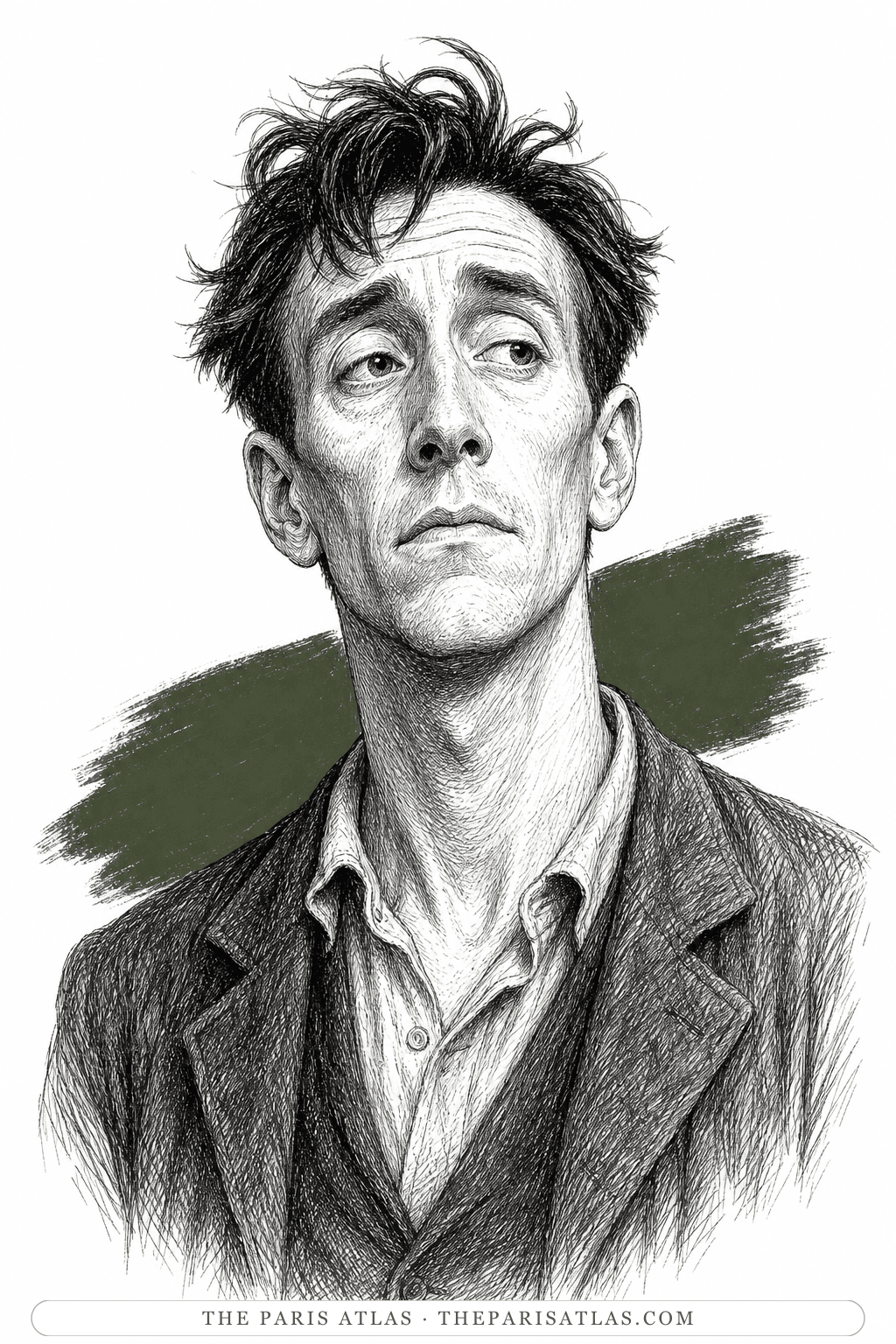
- The one description the book gives himA tall, lean man with a tall, lean face. The novel uses that phrase at the start and keeps coming back to his tallness and leanness every time it needs to describe him, without ever adding anything.
- The bird he carriesHe finds a bird frozen on the railroad tracks, warms it against his chest and carries it into town inside his shirt. A telegrapher at the station asks him why he is walking around with a bird sticking out of his clothes. At the beanery he orders beans for himself and beans for the bird, and he never gets around to naming it.
- The line he repeats to strangersWithin a day in Petoskey he tells the telegrapher, the waitress, two elderly pump-makers and a travelling salesman that his wife has left him in Mancelona. His new wife eventually asks him to stop telling it.
- A past that contradicts itselfChapter three gives him a father who was a great composer and an Italian mother from Florence who begged in the streets of Chicago. Chapter five gives him a father who fought for the Confederacy and a mother who stood in the yard arguing with General Sherman while the family house burned. Neither version is withdrawn.
- The names that do not stay putHis daughter is called Lucy O'Neil, nicknamed Lousy. The wife who disappears is also called Lucy. Four chapters later he asks himself why Lucy left and what became of Lousy, as though they were two separate losses.
- The jobHe is hired on piece-work and put to collaring pistons in the piston-collaring room, where he stays for almost a year. The book reports that it was the happiest year of his life, that it was a hideous nightmare, that he grew to like it and that he hated it, in four consecutive sentences.
- How he proposesBy announcement. "You are my woman," said across a lunch counter, is the entire ceremony, and he uses the same four words on the next woman later in the book.
Scripps leaves his wife at the beanery counter in chapter fifteen. She asks him to come home and offers him a new issue of The American Mercury with a Mencken editorial about chiropractors in it, and he tells her he does not give a damn about Mencken any more. She asks for one thing, the bird, and takes it away in its cage. He tells Mandy he loves her a few lines later, while she is in the middle of an anecdote about a stuffed flamingo.
The book then takes the win back. Alone with Mandy, Scripps repeats "my woman" to himself, decides the words sound hollow, and finds his mind going back to the Native woman who had walked into the beanery earlier that evening. The last the reader sees of him, he is sitting at the counter while Mandy talks and his attention wanders out into the night. Nothing is resolved.
If you like The Torrents of Spring


If you like Ernest Hemingway
Explore authors with a similar voice, perspective, and influence.

Louis-Ferdinand Céline
The other great stylist the Great War produced — where Hemingway cut the language down, Céline set it on fire. The same wound, opposite treatments.
View author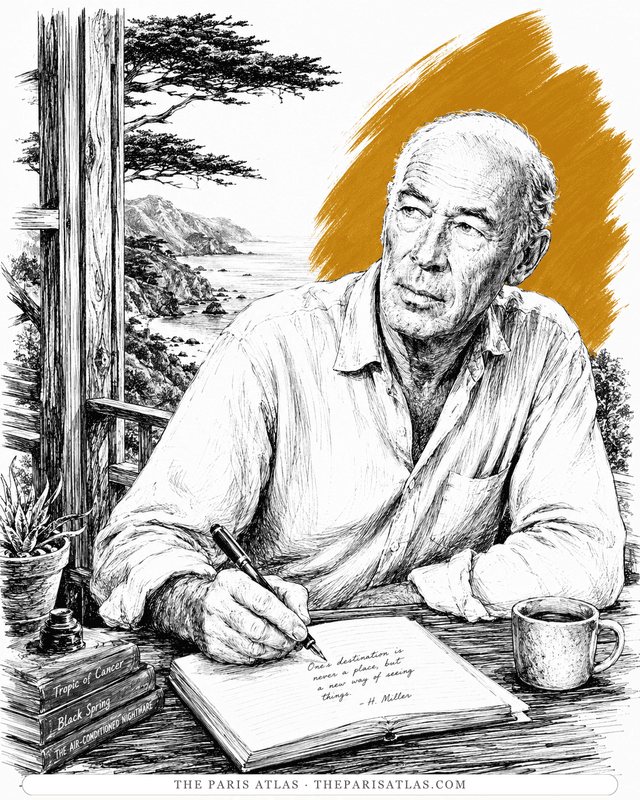
Henry Miller
Paris on no money a decade later, with the restraint removed. Miller called Hemingway's Paris a tourist's Paris; readers get to referee.
View author
Martha Gellhorn
War correspondent who covered the Spanish Civil War, D-Day, and conflicts across five more decades; Hemingway's third wife, 1940–1945.
View author