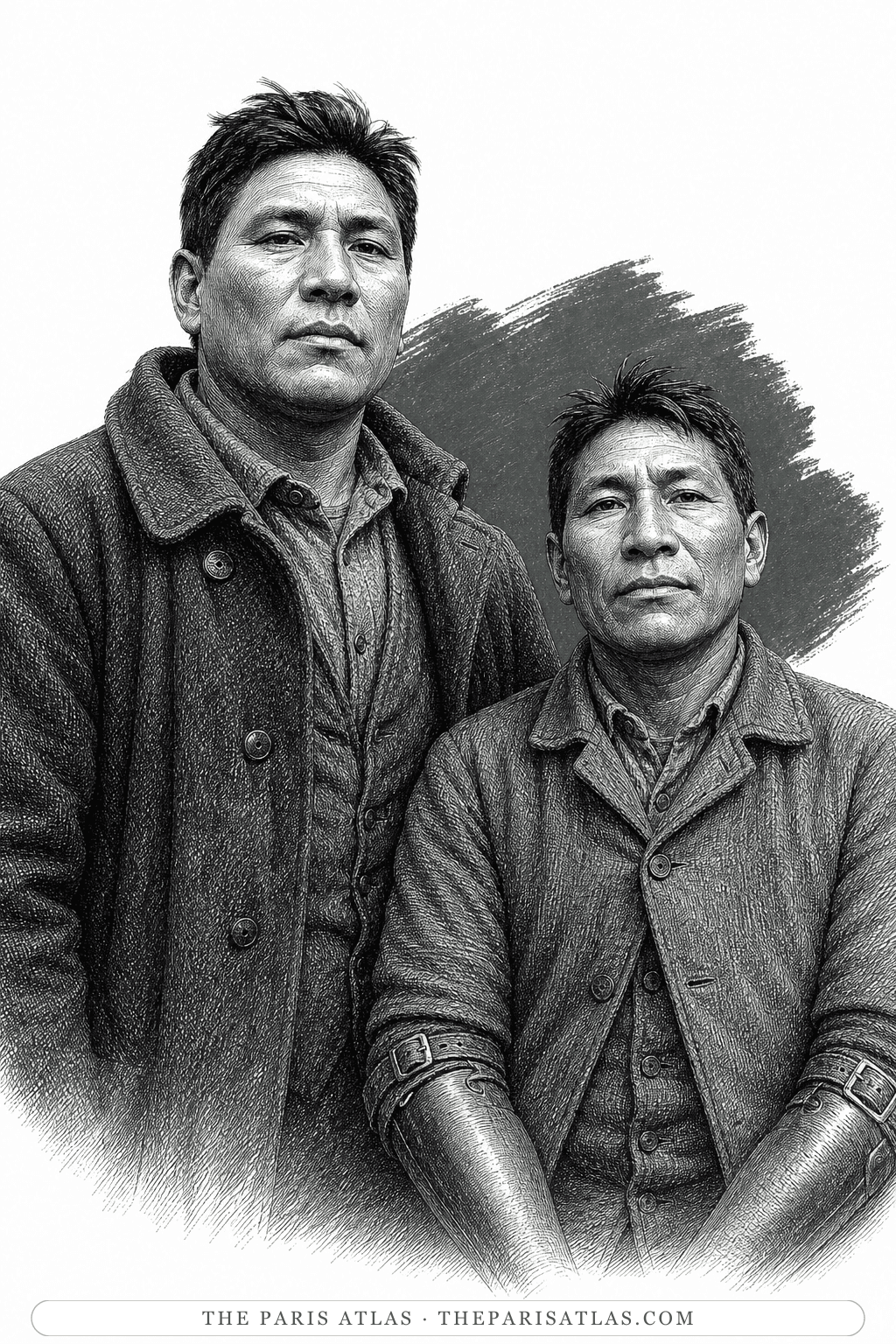
The two woods Indians
Two decorated veterans, one big and one small, who attach themselves to Yogi Johnson on a country road and stay with him to the last page. Neither is ever named.
To get somewhere better than a frozen street. They tell Yogi Johnson twice that they are going into Petoskey to join the Salvation Army, and when the three of them have walked half the night the big one stops under a street light and asks Yogi to say where they are going.
The book

At a glance
- Two unnamed veterans who attach themselves to Yogi Johnson — "the big Indian" and "the little Indian"
- The big one claims a D.S.O. and an M.C. with bar; the little one is credited with a Victoria Cross
- Two artificial arms of brown leather, buckled at the elbow
- Red Dog's club, which takes town Indians and not woods Indians
- To join the Salvation Army in Petoskey
- The little one's wife is the woman who walks into the beanery in chapter fourteen
Who they are in the book
Spoiler-freeThe two woods Indians are characters in The Torrents of Spring, the 1926 comic novel by the American writer Ernest Hemingway. Yogi Johnson meets them on the Charlevoix road outside Petoskey, Michigan, when they stop to ask him for tobacco and a drink. They are with him for the rest of the book. It calls them only the big Indian and the little Indian, and tells them apart by size.
They carry the book's central joke. Every line they speak is the clipped mock-Indian dialect of popular fiction, and every fact about them contradicts it: both are decorated veterans of the Western Front, the big one claiming a D.S.O. and an M.C. with bar and a major's rank, the little one credited with a Victoria Cross and wearing two artificial arms of brown leather buckled on at the elbow. The target is the way white writers of the period wrote Native characters, which was one of the habits Hemingway was mocking in Sherwood Anderson.
How The two woods Indians Is Portrayed
- The dialect they are written inThey address Yogi as "white chief" and never drop it. Asked what they made of his long speech about the war, the big one delivers a verdict in two sentences: "White chief have heap much sound ideas. White chief educated like hell."
- Their war recordsThe big one says the little one holds a Victoria Cross, and adds, as an aside, that he had both arms and both legs shot off at Ypres and is very sensitive about it. He gives his own decorations as a D.S.O. and an M.C. with bar. The little one's artificial arms squeak at the hinges when he climbs a ladder.
- The pool gameThe little one runs the table eleven consecutive times on two artificial arms and takes four dollars and thirty cents off Yogi in an hour and a half. Told he shoots a nice stick, he says he has not shot so well since the war.
- How the club treats themAt Red Dog's club the president points them out to Yogi apologetically as woods Indians among town Indians and steers him away to the bar. When Yogi is expelled, the two are beaten and thrown down the ladder after him. The little one loses one of his artificial arms in the fall.
- What they say afterwardsThe big one's verdict, delivered twice in the snowy road: "Club no damn good," he says. The little one sits down in the road crying, shakes his one arm at the lighted window and says he will not play pool any more.
- The plan they keep returning toJoining the Salvation Army. They mention it the first evening, before anything has gone wrong, and repeat it after the beating, when Yogi offers to get them work at the pump factory instead.
The two of them get the last scene in the novel. They follow Yogi Johnson north along the railroad tracks in the moonlight, gathering up each garment as he drops it, and when the last one is collected they roll the lot into a bundle and argue about what to do with it. The tall one decides to sell it to the Salvation Army, first on the grounds that the white chief may never come back, then on the grounds that he will need new clothes when spring comes anyway.
Walking back toward town they feel the air soften. The tall one wets a finger and holds it up, exactly as the factory foreman does on the first page of the book, and confirms the chinook. They hurry, wanting to be well up the line before the rush. Theirs are the last words in the novel.
If you like The Torrents of Spring


If you like Ernest Hemingway
Explore authors with a similar voice, perspective, and influence.

Louis-Ferdinand Céline
The other great stylist the Great War produced — where Hemingway cut the language down, Céline set it on fire. The same wound, opposite treatments.
View author
Henry Miller
Paris on no money a decade later, with the restraint removed. Miller called Hemingway's Paris a tourist's Paris; readers get to referee.
View author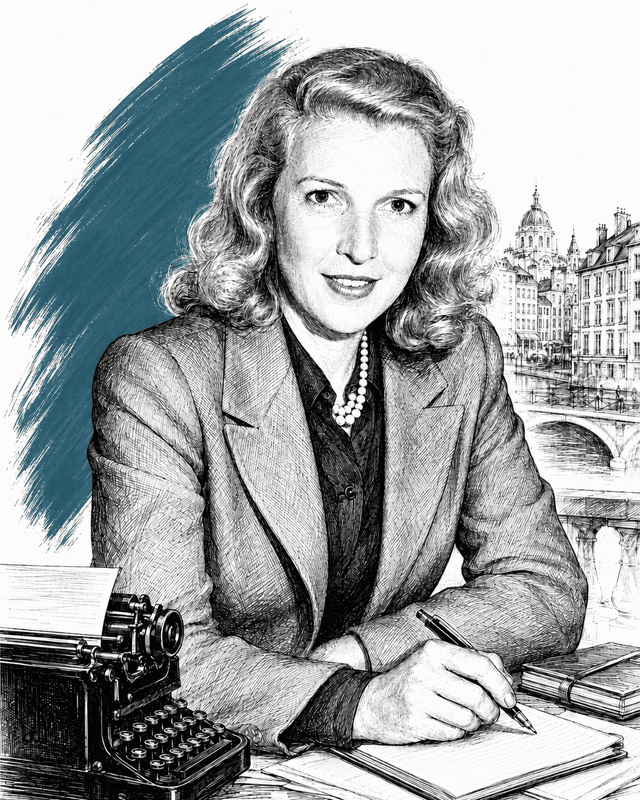
Martha Gellhorn
War correspondent who covered the Spanish Civil War, D-Day, and conflicts across five more decades; Hemingway's third wife, 1940–1945.
View author