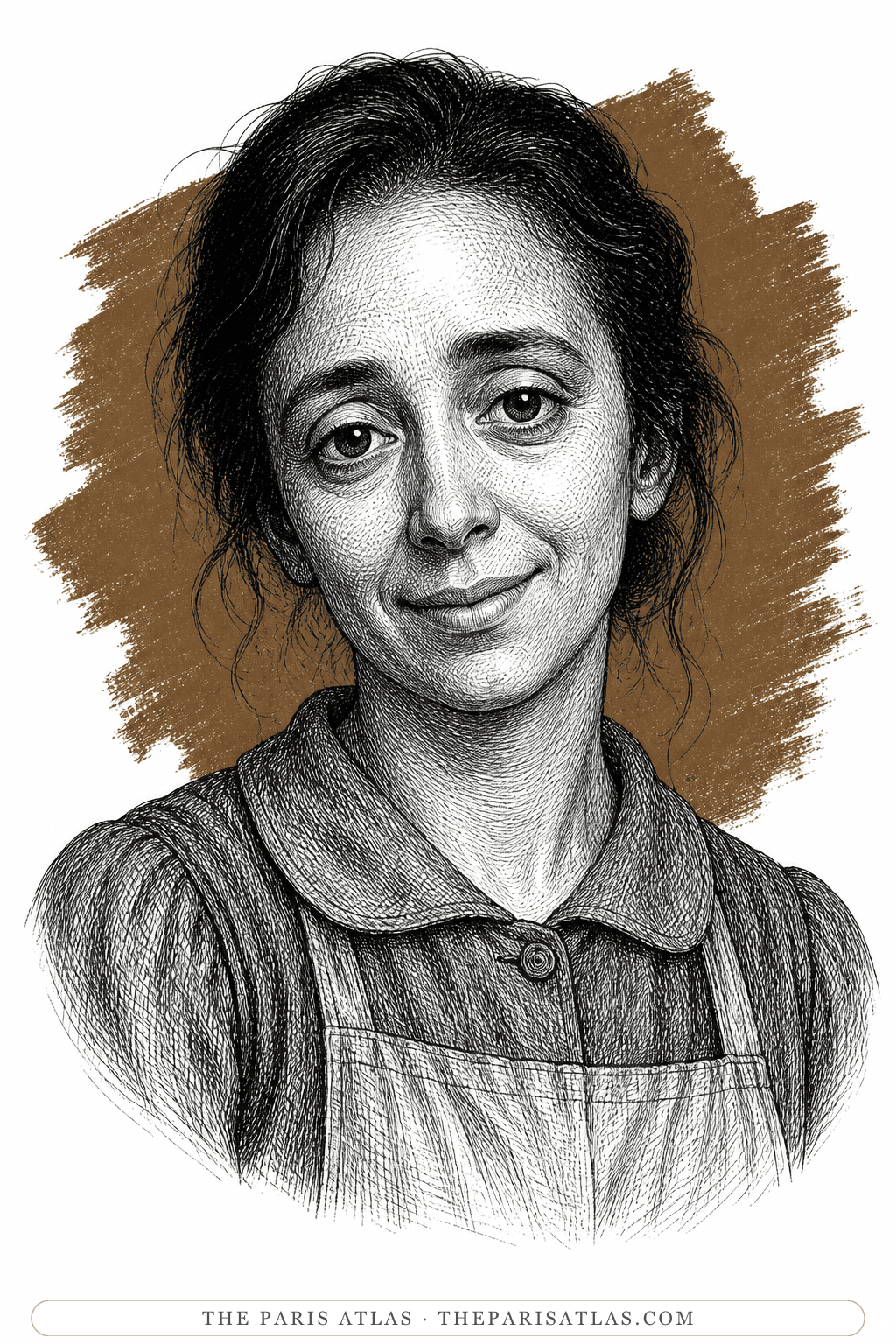
Emilia
The Spanish maid at Louveciennes. She opens the gate for almost everyone who arrives in this book.
The book

At a glance
- 'Emilia' — the Spanish maid at Louveciennes; no surname is given
- 1931 to 1933, whenever anyone arrives at the house
- Faithfulness, loyalty and devotion that went unnoticed at the time
Who they are in the book
Spoiler-freeEmilia was the Spanish maid in the house at Louveciennes, and the diary gives her no surname. She swings the big green gate open when the cars come up the gravel, pushes back the shutters in the morning, brings the post, and carries lunch out to the garden.
Nin draws her twice. Once in passing, as homely and gentle, in a scene where Henry Miller's attention lands on her. And once at length, at the end, when she leaves to be married: an asymmetrical Goya face, straggly oily black hair, heavy-lidded Spanish eyes, and singing while she worked. Nin writes that Emilia passed unnoticed, and that her loyalty and devotion helped to make a difficult life possible.
How Emilia Is Portrayed
- The gateA doorbell like a giant cowbell that goes on echoing after it is pulled, and Emilia swinging open the large green gate so the cars can crackle up the gravel (page 10).
- The portraitA Goya face, asymmetrical, with a bulging forehead, oily black hair, big heavy-lidded Spanish eyes, a sweet voice and an orphan's smile (page 263).
- The look Nin recordedIn an evening when June's superiority has irritated Henry Miller, he looks lingeringly at the maid. Nin sets it down as an offence, and writes that it made her love June more (page 32).
- The trousseauA Japanese valet asks to marry her. Nin buys the material and a wooden wedding chest and tells her to sew and embroider the whole thing by hand in the old Spanish way. Before it is finished Emilia has worked out that he does not love her (page 264).
- The partingShe leaves to marry a devoted Spaniard instead, and the trousseau goes with her. The two women kiss and weep (page 263).
If you like The Diary of Anaïs Nin, 1931–1934


If you like Anaïs Nin
Explore authors with a similar voice, perspective, and influence.
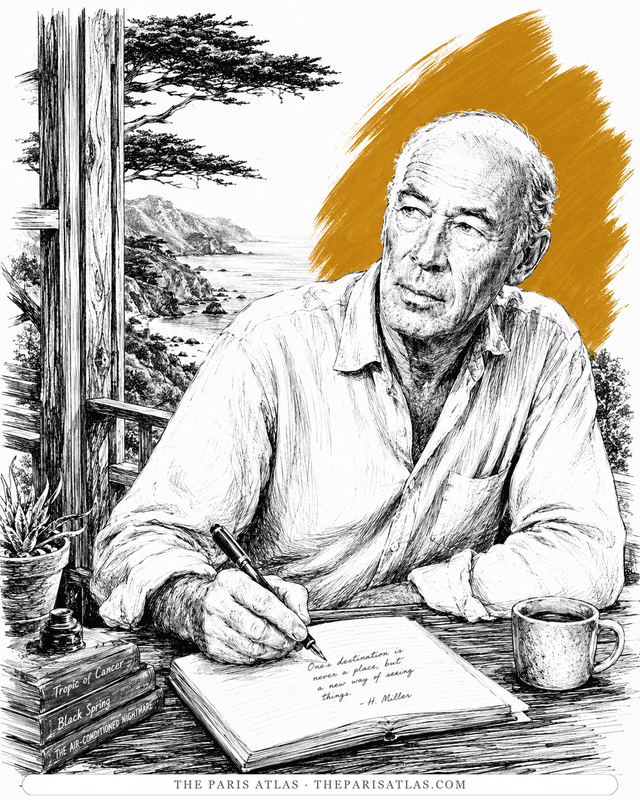
Henry Miller
The entangled careers of the Villa Seurat: she financed and prefaced his scandal, he detonated her prose — and each wrote the other into the century's record.
View author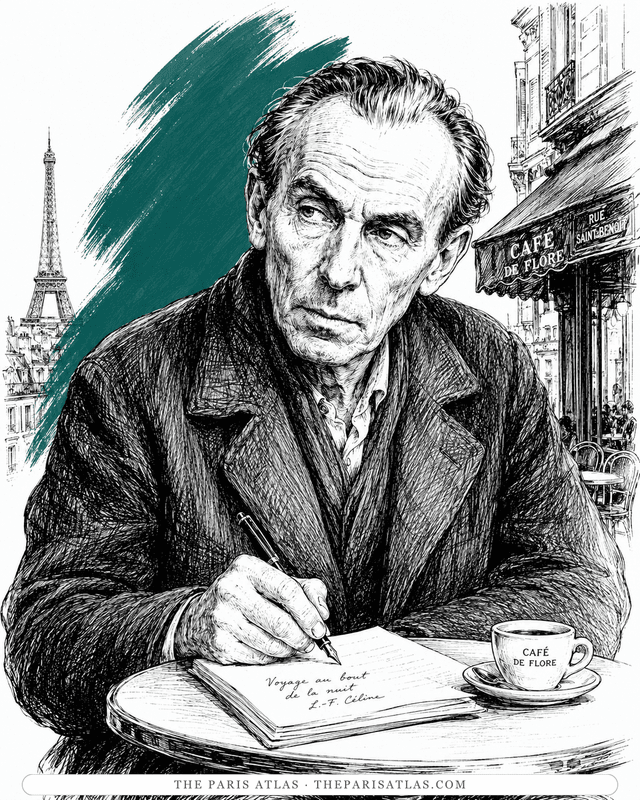
Louis-Ferdinand Céline
The doctor of the Paris slums who wrote the century's blackest, funniest novel — and changed the sound of French prose.
View author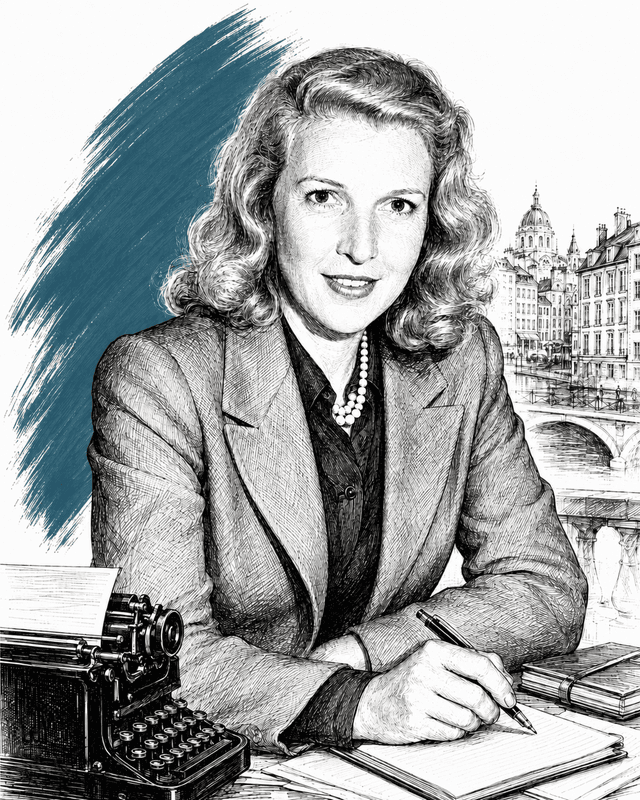
Martha Gellhorn
War correspondent who covered the Spanish Civil War, D-Day, and conflicts across five more decades; Hemingway's third wife, 1940–1945.
View author