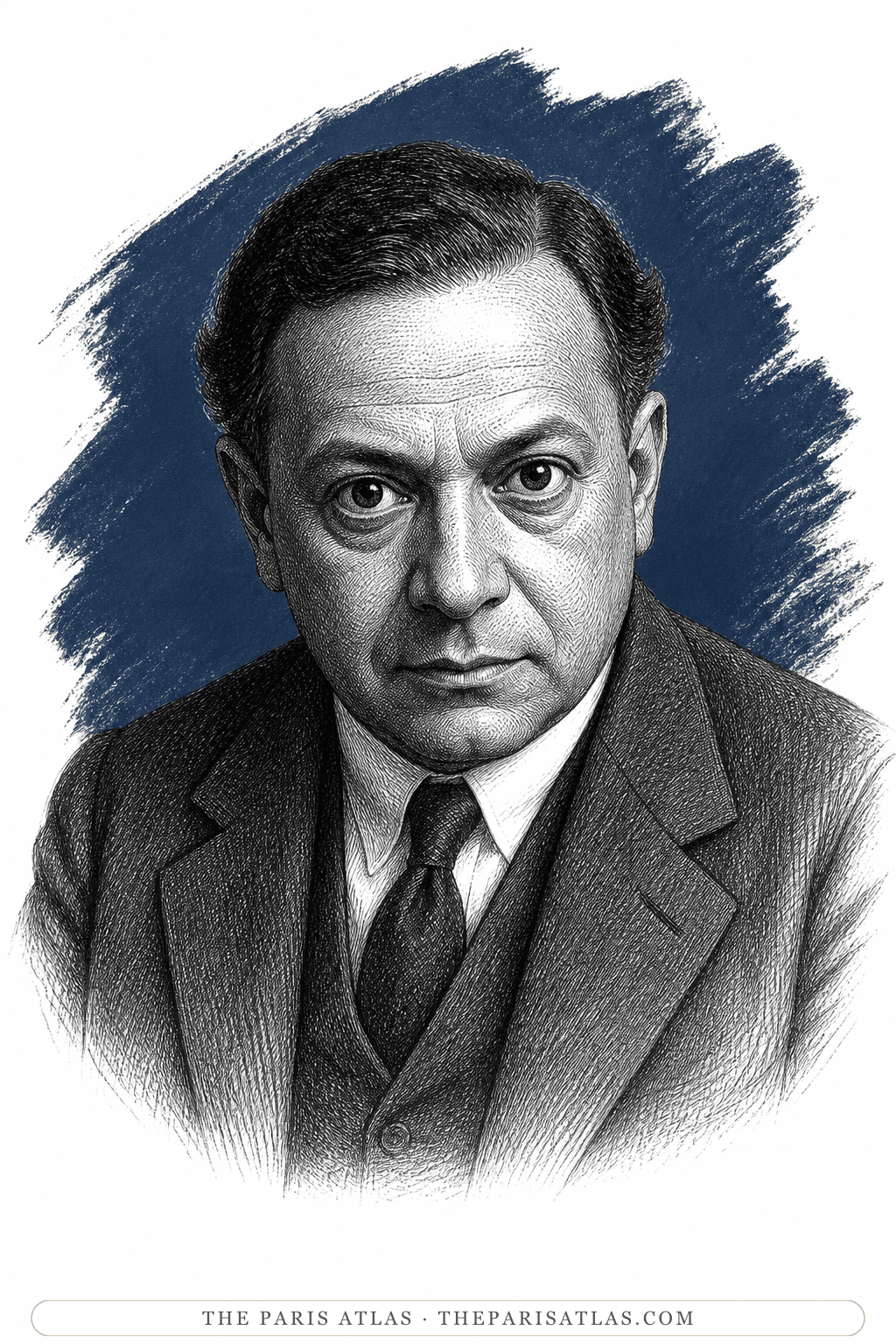
Otto Rank
The Viennese psychoanalyst who had been Freud's closest collaborator and then broke with him. He analysed Nin in 1933 and 1934, and she followed him to New York.
To live, after twenty years of only thinking.
The book

At a glance
- 'Dr Rank' — the analyst she goes to in 1933, after leaving René Allendy
- The last third of the volume
- Analyses her, trains her, and takes her into the profession
- "Wonderful. Too good, too good for the world" (page 338)
- Otto Rank · 1884–1939 · Vienna
Who they are in the book
Spoiler-freeOtto Rank was an Austrian psychoanalyst. He had been Sigmund Freud's secretary, editor and collaborator for twenty years before his book on the trauma of birth put him outside the circle; by the early 1930s he was practising alone in Paris. Nin knew his books before she knew him. She went to see him on a foggy afternoon in 1933 and sat on a bench in a small park by the Métro station first, working out what to say.
He is the only person in the volume she treats as a teacher. His method was fast and present-tense — he did not believe in long excavations of the past — and his subject was the artist. He argued that a neurotic is a creative person whose imagination has gone wrong, and that the cure is not adjustment to the world but making something.
He also took the diary away from her. She brought it to a session, he read the gesture as an offer, and she left it on the table between the chairs; afterwards he told her it was bad for her, and the entries break off and restart more than once in the second half of the book. When his Paris practice collapsed financially he left for New York, and the volume ends with her sailing after him to train as a lay analyst.
How Otto Rank Is Portrayed
- The lookShort, dark-skinned and round-faced, with large, fiery, dark eyes. She writes that she singled out the eyes in order to eclipse the rest of him (page 280).
- The first visitShe prepares on a park bench near the Métro, planning what she will invent for him, and then opens by confessing the planning instead. He tells her that her inventions are her too (pages 279–282).
- The diary on the tableShe arrives at a session carrying the diary, which by then contains the lies she had meant to tell him. He reads the carrying of it as a wish to share it and challenges the offer; she hesitates, puts it down on the low table between the two armchairs, and leaves (page 285).
- The methodHe tells her he does not believe in long-drawn-out analysis or in spending too much time exploring the past. The illness is to be attacked in the present, through its current symptoms, quickly and directly (page 286).
- FreudHe shows her the ring Freud gave him, and tells her Freud had wanted him to marry his daughter and inherit the work. The birth-trauma book and the disciples who wanted a united front finished it; in 1926 he resigned his Vienna offices and moved to Paris for good (pages 288–289).
- His wifeNin catches sight of a small, thin woman dressed all in black. Rank explains that she lost her father shortly before they married and has stayed in mourning ever since, and uses her as the opposite of what an artist does with a loss (page 303).
- The windowAt a dull teachers' seminar she swings her legs over a low sill and jumps into the garden for the sun. Rank and another doctor come out the same way. Helping her back in afterwards, he whispers how much he loved her doing it (page 336).
- The end of ParisRuined financially, losing his home, forced towards an American offer he does not want, he tells her that France was where he had begun to live, that his creation is done, that he has written enough, and that he wants to live (page 345).
If you like The Diary of Anaïs Nin, 1931–1934


If you like Anaïs Nin
Explore authors with a similar voice, perspective, and influence.
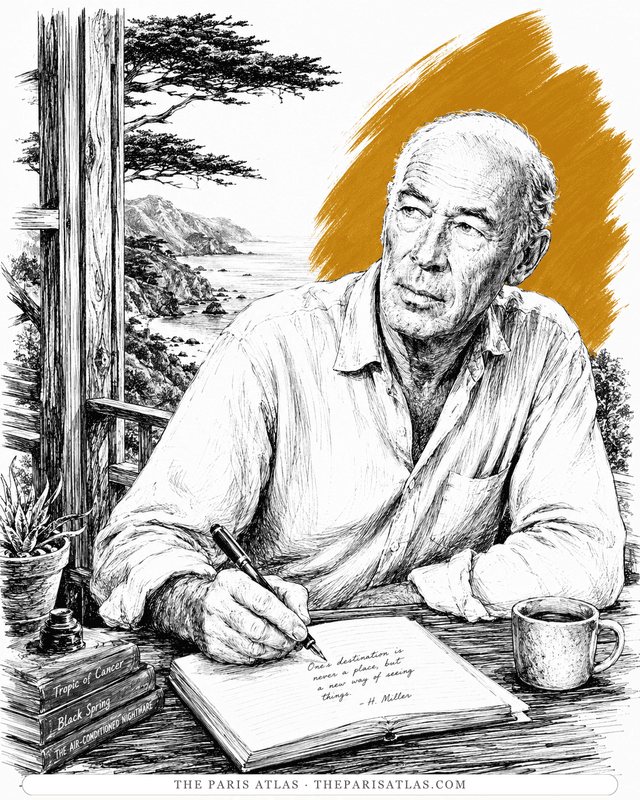
Henry Miller
The entangled careers of the Villa Seurat: she financed and prefaced his scandal, he detonated her prose — and each wrote the other into the century's record.
View author
Louis-Ferdinand Céline
The doctor of the Paris slums who wrote the century's blackest, funniest novel — and changed the sound of French prose.
View author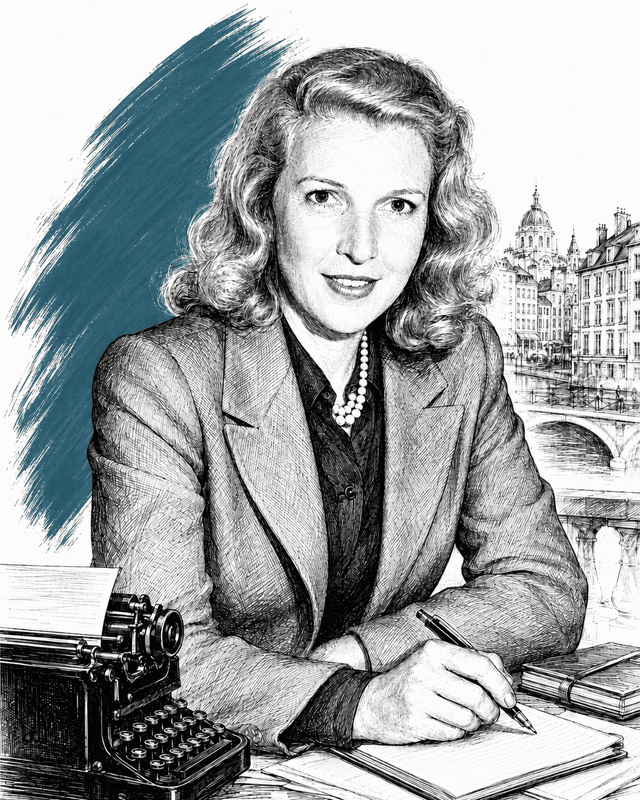
Martha Gellhorn
War correspondent who covered the Spanish Civil War, D-Day, and conflicts across five more decades; Hemingway's third wife, 1940–1945.
View author