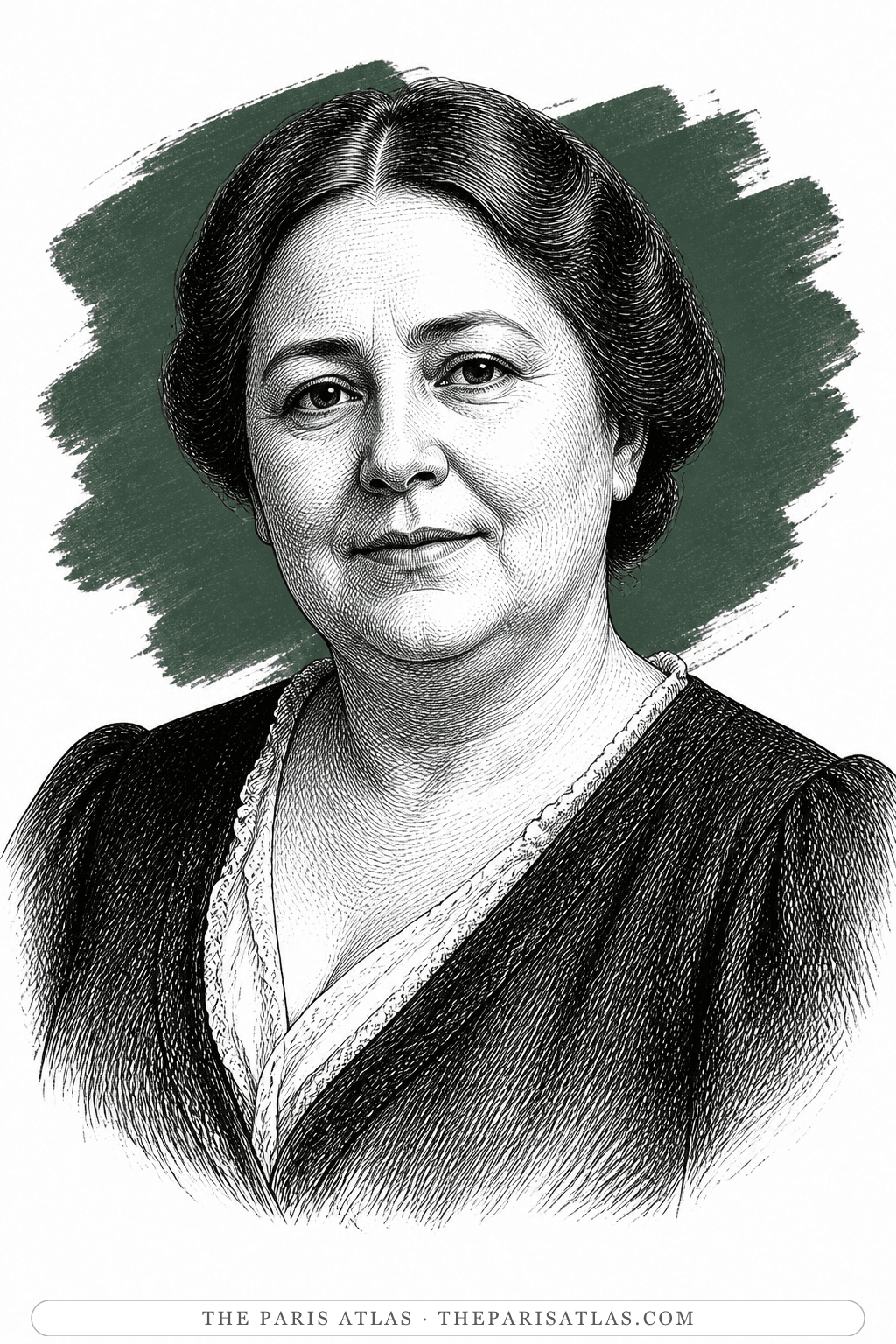
Rosa Culmell de Nin
Her mother, who raised the three children alone after her husband left, and who is living in the Louveciennes house all through the diary.
To keep her children clear of everything their father was.
The book

At a glance
- 'my mother'; she is called Rosa only in the account of her own courtship
- In the childhood passages, and in the present tense at Louveciennes throughout
- Anaïs and her younger son Joaquín, in the house outside Paris
- Rosa Culmell de Nin · Havana
Who they are in the book
Spoiler-freeRosa Culmell was born in Havana, the daughter of the Danish consul there. She was twenty-seven, unmarried and studying singing when she saw a nineteen-year-old Spanish pianist practising in the back room of a music shop. She married him against her family's wishes and went to live in Paris. After he left her she took the three children to New York, bought a brownstone with her sisters' help, and rented out rooms.
In the diary she is not only a memory. She lives in the house at Louveciennes with Anaïs and her younger son, has the finished volumes of the diary bound for twenty francs apiece, and looks out of the window without waving when her daughter goes into Paris too often. Nin writes that she loves her mother deeply now, for her humanity and her buoyancy.
Her account of her marriage is the fullest thing the book gives her, and the verdict at the end of it is not bitter.
How Rosa Culmell de Nin Is Portrayed
- The music shopHavana. He was nineteen, had come from Barcelona to escape military service, and was allowed to practise on the piano at the back of the shop. She was a society girl with a white lace umbrella, a very full figure and a corseted waist, and she had already turned down richer men (pages 111–112).
- Marrying against the familyHer father was desperately unhappy about it and the family opposed the courtship. She faced them down, married the penniless musician, and left for Paris (page 112).
- The courage Nin remembersIn Havana during her father's last illness, she was the only one who would give the doctor permission for the injection that ended his suffering. Nin calls the love brave and virile (page 112).
- The rooming houseNew York. No profession but classical singing, so the singing is given up. Housework, meals in the kitchen, plainer friends every year, and a warning to her sixteen-year-old daughter to beware of artists and beware of Catalonians (pages 228–229).
- The reproachShe never told the children directly what she held against their father. Every flare of temper, every lie, every piece of theatre was answered with one sentence: that they were just like him (page 228).
- What she said about the marriageAsked why she never married again, she said that after living with his charm and his talent for creating illusion, "all other men seemed dull and prosaic and shallow" (page 118).
- In the houseShe asks about the dyed sheets in the middle of her daughter's day, and whether she likes the binding on the last volume of the diary, which only cost twenty francs (page 192).
If you like The Diary of Anaïs Nin, 1931–1934


If you like Anaïs Nin
Explore authors with a similar voice, perspective, and influence.

Henry Miller
The entangled careers of the Villa Seurat: she financed and prefaced his scandal, he detonated her prose — and each wrote the other into the century's record.
View author
Louis-Ferdinand Céline
The doctor of the Paris slums who wrote the century's blackest, funniest novel — and changed the sound of French prose.
View author
Martha Gellhorn
War correspondent who covered the Spanish Civil War, D-Day, and conflicts across five more decades; Hemingway's third wife, 1940–1945.
View author